Yucatán's birthday-table coditos, elbow macaroni folded with diced jamón, pineapple in syrup, mayonesa, and media crema. Sweet, rich, and unapologetic, the pasta salad that anchors every fiesta from Mérida to Tizimín.
Salads
Mexican
Birthday
Potluck
Celebration
25 min
Active Time
12 min cook•2 hr 37 min total
Yield10 to 12 servings
This is from the Yucatán Peninsula. Not the Sonoran coditos with chile and lime, not the Mexico City macaroni salad with elote and crema. This one is sweet. Pineapple in syrup, jamón de pierna, mayonesa, media crema, queso crema. The Yucatecan birthday-party bowl that sits on the long table between the cochinita pibil and the relleno negro and somehow holds its own against both.
The peninsula has its own logic with food, and outsiders never quite understand it. Yucatecan cooks do not flinch at sweetness in a savory dish. Cochinita carries the perfume of naranja agria and achiote. The cebollas moradas are pickled in a brine that is acid and a little sweet. Even the relleno negro has cloves and cinnamon in the recado. So a pasta salad with pineapple and cream is not the anomaly people from the Bajío or the north assume. It is the peninsula being the peninsula. Cada estado, su propia cocina.
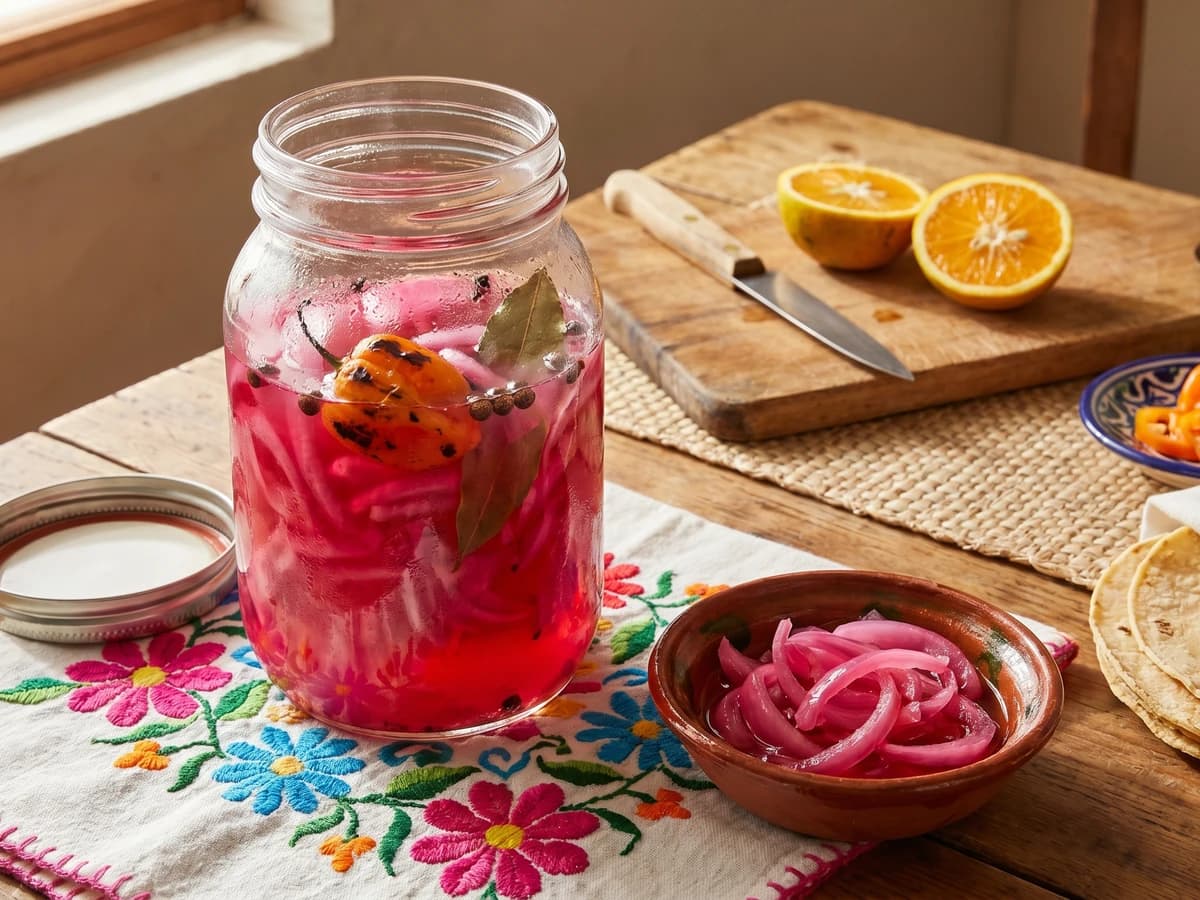
The trick is the balance at the table, not in the bowl. The coditos itself is sweet and rich. What rescues it from being a dessert masquerading as a salad is the cebollas moradas en escabeche and the side plate of habanero that every Yucatecan home cook puts beside it. You take a spoonful of coditos, you crown it with pink pickled onion, you nudge a sliver of habanero next to it on the fork. Sweet, sour, hot, rich, all in one bite. That is the dish. Serve the coditos without the onions and the chile and you have only done half the job.
My mother did not make this. She was from Jalisco and her notebook has nothing from the peninsula in it. I learned this version from Doña Conchita in a courtyard kitchen in Mérida in 2009, written on the back of an envelope while she dictated and I wrote. Her only insistence: drain the pineapple completely, and do not skip the queso crema. Saber cocinar es saber vivir, and saber cuándo callarse y copiar la receta de una señora yucateca también.
Pasta salads entered the Mexican home kitchen in the mid-20th century along with industrial mayonesa, canned media crema, and the spread of refrigeration into provincial households, and each region adapted the format to its own palate. The Yucatán version's marriage of pineapple, jamón, and cream reflects the peninsula's longstanding comfort with sweet-savory combinations rooted in pre-Columbian use of honey and tropical fruit alongside meat, a sensibility reinforced by Lebanese immigration to Mérida in the late 19th and early 20th centuries, which introduced additional sweet-savory pairings into the local repertoire. The dish became codified as a fiesta staple, alongside cochinita and relleno negro, through the 1960s and 1970s as canned piña en almíbar and Nestlé media crema became reliably available in peninsular tiendas.
The technique, the tradition, and the story behind every dish.
pickled red onions (cebollas moradas en escabeche) (optional)
Quantity
for serving
sliced chile habanero (optional)
Quantity
for serving on the side
Ingredient
Quantity
elbow macaroni (coditos)
1 pound (450g)
kosher salt for the pasta water
1 tablespoon
pineapple chunks in syrup (piña en almíbar)drained, syrup reserved
1 can (20 ounces)
jamón de piernacut into 1/4-inch dice
12 ounces
mayonesa (Mexican mayonnaise)
1 cup
media crema (Nestlé table cream)
1 can (7.6 ounces)
queso crema (Mexican-style cream cheese)softened
1/2 cup
reserved pineapple syrup
1/4 cup
pecansroughly chopped
1/2 cup
raisins (pasitas)
1/2 cup
small red apple (optional)cored and cut into 1/4-inch dice
1
kosher salt
1 teaspoon, plus more to taste
freshly ground white pepper
1/2 teaspoon
pickled red onions (cebollas moradas en escabeche) (optional)
for serving
sliced chile habanero (optional)
for serving on the side
Equipment Needed
•Large stockpot for the pasta
•Fine-mesh strainer or colander
•Large mixing bowl, at least 4-quart capacity
•Silicone spatula or large wooden spoon
•Sharp knife for dicing jamón and pineapple
Instructions
1
Cook the coditos properly
Bring a large pot of water to a hard boil. Add the tablespoon of salt. Add the coditos and cook for one minute less than the package says. You want them firm, not al dente in the Italian sense, but with body. A pasta salad sits for hours. Soft coditos at the start become mush at the table. Drain them and rinse under cold running water until the pasta is completely cool to the touch. Shake the colander hard to get the water out of the curls.
Rinsing pasta is something you never do for a hot dish. For coditos, you do it without apology. The cold water stops the cooking and washes off the starch that would turn the dressing gummy.
2
Drain and dice the pineapple
Open the can of piña en almíbar and pour it into a strainer set over a bowl. Let it drain for ten minutes. Do not skip the draining. Pineapple syrup is wet, and wet pineapple in a mayonesa dressing turns the whole bowl into soup. Reserve a quarter cup of the syrup for the dressing. The rest you can save for agua fresca or throw away. Once drained, cut any large chunks of pineapple in half so every spoonful gets a piece.
3
Build the dressing
In a large mixing bowl, whisk together the mayonesa, media crema, softened queso crema, and the quarter cup of reserved pineapple syrup. Whisk until smooth and pourable, with no lumps of cream cheese hiding at the bottom. Season with the teaspoon of salt and the white pepper. Taste it. It should be rich, slightly sweet, slightly tangy. The sweetness comes from the syrup. The richness comes from the three dairies working together. No me vengas con atajos: one component without the others gives you a thin, sad dressing.
Mexican mayonesa is sweeter and more acidic than American mayonnaise. If you only have American, add a teaspoon of fresh lime juice to bring it closer.
4
Combine everything
Add the cooled coditos to the bowl of dressing. Add the diced jamón, the drained pineapple, the pecans, the raisins, and the diced apple if using. Fold everything together with a large spoon or a silicone spatula. Move from the bottom up, turning the pasta gently. Do not stir like you are making a paste. You are coating, not mashing. Every piece of codito should wear the dressing.
5
Rest in the refrigerator
Cover the bowl and refrigerate for at least two hours. Coditos needs this rest. The pasta absorbs the dressing and the flavors marry. A coditos served the minute it is mixed tastes raw and disjointed. A coditos that has chilled for two hours tastes like a single dish. Three hours is better. Overnight is best for a birthday party because you free up the kitchen on the day.
6
Taste and adjust before serving
Pull the bowl from the refrigerator. The pasta will have drunk some of the dressing and the salad will look tighter than when you put it away. Stir gently. If it looks dry, add another two tablespoons of media crema and a tablespoon of mayonesa. Taste for salt. Cold dulls salt, so a coditos that tasted right warm will taste flat cold. Adjust until it sings. Transfer to a serving bowl or a clay cazuela.
7
Serve the Yucatecan way
Set the bowl on the table next to the cebollas moradas en escabeche and a side plate of sliced habanero. In Yucatán, you do not eat the coditos plain. The sweetness of the pineapple and the richness of the dressing are balanced by the acid of the pickled onion and the heat of the habanero. Each person builds their own bite. Cada estado, su propia cocina, and this is how the peninsula does pasta salad. Así se hace y punto.
Chef Tips
•Use Mexican jamón de pierna if you can find it. The texture is softer and the flavor sweeter than American deli ham. If you cannot, a good cooked ham from the deli counter, cut into a thick slab and diced at home, beats pre-diced ham every time.
•Pineapple in syrup is the recipe, not fresh pineapple. Fresh pineapple gives off enzymes that break down the dairy and make the dressing thin and weepy by hour three. La piña en almíbar is processed enough that the enzymes are dead, which is exactly what you want. This is one of those moments where the canned product is not a compromise, it is the correct ingredient.
•Do not substitute American sour cream for media crema. Media crema is shelf-stable, less acidic, and richer. If you cannot find it, use half crème fraîche and half whole milk. Sour cream will curdle against the pineapple acid and turn the bowl grainy.
•Pickled red onions are not optional even though I listed them that way. A coditos without cebollas moradas en escabeche on the side is a Yucatecan dish missing half its argument. Make them the day before with naranja agria if you have it, or a blend of lime and orange juice if you do not.
Advance Preparation
•Coditos is best made the day before serving. Mix it, cover it, refrigerate overnight, and check the consistency before serving. A loosener of two tablespoons each of media crema and mayonesa brings it right back.
•The cebollas moradas en escabeche should be made at least four hours ahead and ideally the night before. They keep refrigerated for two weeks and are worth keeping in a jar at all times during birthday season.
•Keeps refrigerated for three days. Past that, the pineapple breaks down the dressing texture and the pasta turns soft.
Frequently Asked Questions
Nutrition Information
1 serving (about 255g)
Calories
510 calories
Total Fat
26 g
Saturated Fat
7 g
Trans Fat
0 g
Unsaturated Fat
18 g
Cholesterol
45 mg
Sodium
740 mg
Total Carbohydrates
49 g
Dietary Fiber
3 g
Sugars
17 g
Protein
15 g
Where cooking meets culture.
Culinary guides, cultural storytelling, and the editorial depth that makes cooking meaningful.