Chef Lupita
Birria Tacos with Consome
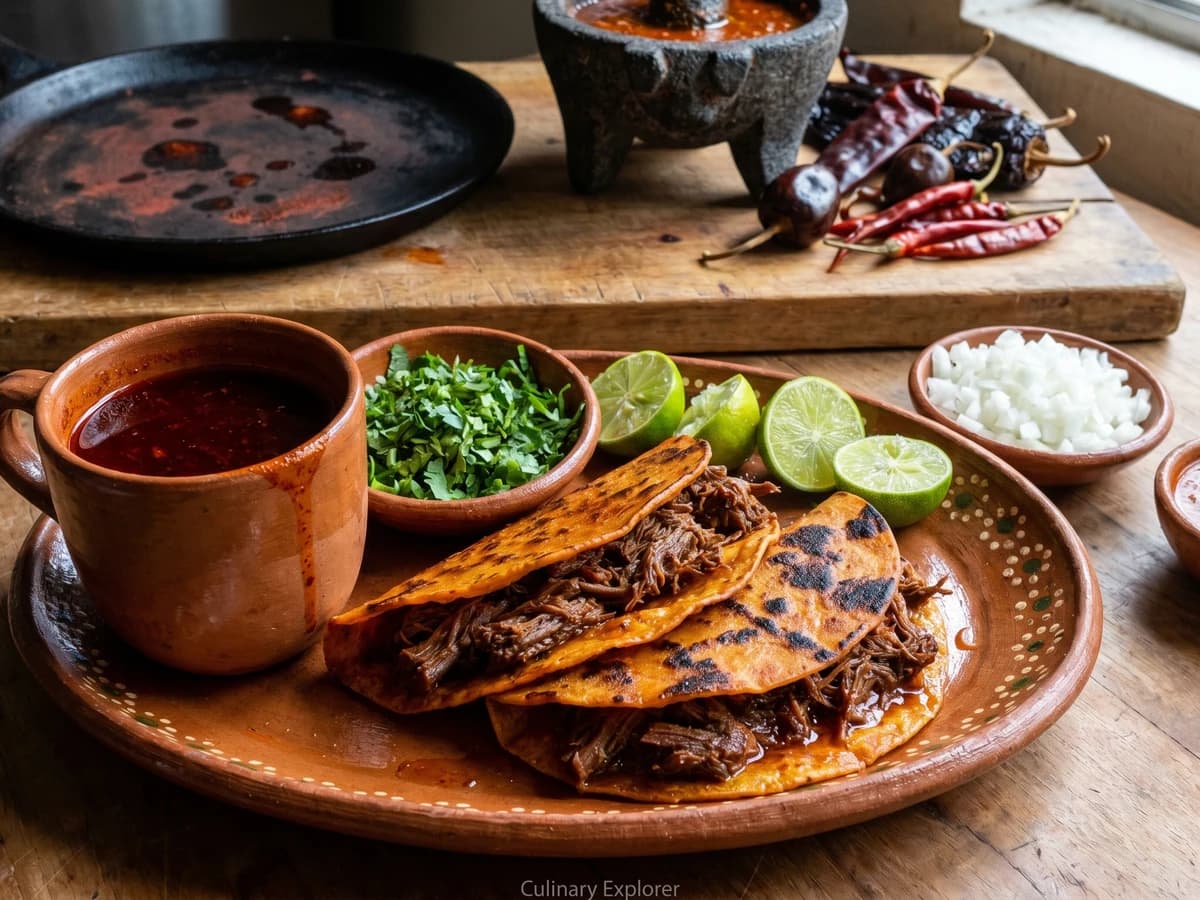
Jalisco's goat birria, born around Cocula and carried into Guadalajara's markets, slow-braised in ancho, guajillo, cascabel, and chile de arbol, then tucked into corn tortillas crisped in its own red fat.
A cooking platform built around craft, culture, and the stories behind what we eat.
Created by
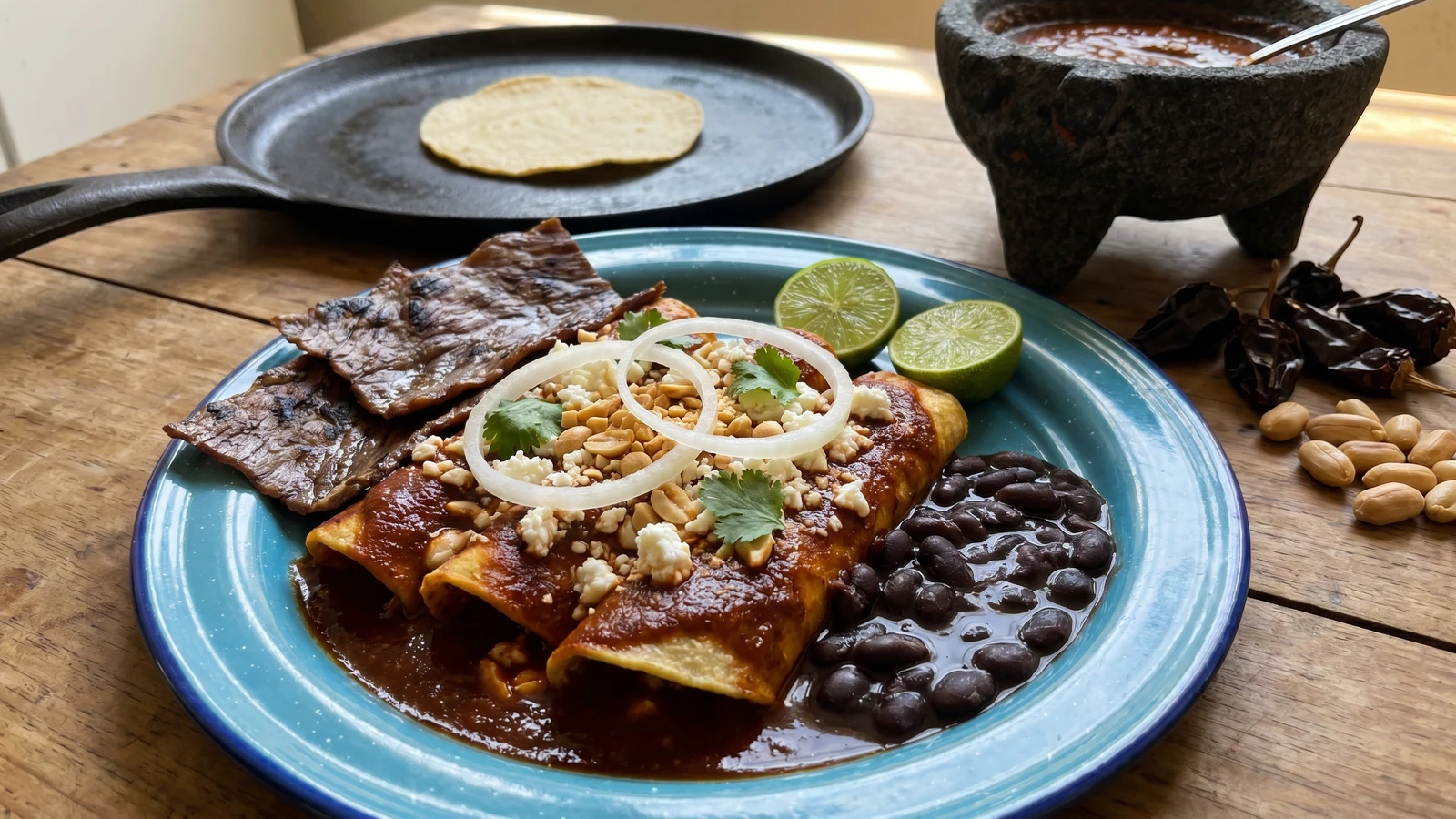
From the green, humid Huasteca where Veracruz climbs north into San Luis Potosí, corn tortillas bathed in toasted chile cascabel and jitomate salsa, layered with salt-cured cecina, black beans from the pot, and crumbled queso fresco.
This is the Huasteca veracruzana. Not the port of Veracruz, not Xalapa up in the mountains, not the son jarocho country of the south. The Huasteca is the north of the state, green and humid, where Veracruz climbs into San Luis Potosí and Hidalgo and the Téenek have worked the land for centuries. The food up there tells you exactly where you're standing. These enchiladas are one of those dishes.
They're built on chile cascabel. Not guajillo, not ancho, not the mulato base of the central highlands. Cascabel, the little round chile that rattles like a toy when you shake the dried seeds inside. You toast it on the comal until it smells like roasted nuts and woodsmoke, then blend it with charred jitomate. And here's the part outsiders miss: the Huasteca cook grinds a handful of toasted peanut into that salsa. The peanut gives it body and a low, earthy richness you can't get any other way. That peanut is the Huasteca on the plate. Esto no es comida de un solo México.
On top goes cecina, the salt-cured beef they cut in one long thin sheet across the Huasteca, cooked fast and hard on the comal until the edges char and catch. Then frijoles negros de la olla, black beans simmered with epazote, because in Veracruz the black bean rules the pot, not the pinto. Crumbled queso fresco. Raw onion rings. This is La Tercera Raíz on one plate: the Indigenous corn and chile, the Spanish beef and cheese, the African third root that runs through everything the Gulf coast cooks. And it's all bound with manteca de cerdo, because la manteca es el sabor and nothing else fries a tortilla the way lard does.
I learned this plate at the market in Tantoyuca, from a señora who'd been cutting cecina at the same stall for thirty years. She watched me toast the cascabel and told me I was rushing it. She was right. I wrote her corrections in the margin of my notebook the same way my mother wrote hers. The salsa has to be warm when the tortilla goes through it, the tortilla soft from the lard, the cecina just off the comal. Get the timing right and you understand why this region guards its table. Saber cocinar es saber vivir.
The Huasteca is not a state but a cultural region straddling six of them, Veracruz, San Luis Potosí, Hidalgo, Tamaulipas, Querétaro, and Puebla, named for the Huastec people, called Téenek in their own tongue, a group linguistically related to the Maya of the southeast despite living more than a thousand kilometers away. Cecina takes its name from the Latin 'siccus,' meaning dry, a Spanish salt-curing vocabulary grafted onto the older Indigenous practice of preserving meat, and in the Huasteca it is cut from beef in one long continuous sheet rather than the pork cecina of central Mexico. The chile cascabel, named for the rattle its loose seeds make inside the dried pod, lends the salsa a nutty, woody depth without the heat-forward bite of the guajillo and ancho base that dominates the central highlands.
Quantity
1 1/2 cups
picked over and rinsed
Quantity
1/4
Quantity
2
Quantity
2 sprigs
Quantity
12 to 15
stemmed and seeded
Quantity
4
Quantity
1/4
Quantity
3
Quantity
1/3 cup, plus more for garnish
Quantity
1/2 teaspoon
Quantity
1 teaspoon
Quantity
1 1/2 pounds
Quantity
12 to 16
Quantity
1 cup
divided
Quantity
1 cup
Quantity
1
sliced into thin rings
Quantity
2
halved
Quantity
for serving
Quantity
to taste
| Ingredient | Quantity |
|---|---|
| dried black beans (frijol negro)picked over and rinsed | 1 1/2 cups |
| white onion (for the beans) | 1/4 |
| garlic cloves (for the beans) | 2 |
| fresh epazote | 2 sprigs |
| dried chile cascabelstemmed and seeded | 12 to 15 |
| ripe jitomates (Roma or saladet tomatoes) | 4 |
| white onion (for the salsa) | 1/4 |
| garlic cloves (for the salsa) | 3 |
| raw peanuts (cacahuate) | 1/3 cup, plus more for garnish |
| cumin seed (comino) | 1/2 teaspoon |
| dried Mexican oregano | 1 teaspoon |
| cecina de res (thin salt-cured beef) | 1 1/2 pounds |
| corn tortillas | 12 to 16 |
| pork lard (manteca de cerdo)divided | 1 cup |
| crumbled queso fresco | 1 cup |
| white onion (for serving)sliced into thin rings | 1 |
| limeshalved | 2 |
| fresh cilantro leaves (optional) | for serving |
| kosher salt | to taste |
Put the black beans in a clay olla or heavy pot with the quarter onion, two cloves of garlic, and a tablespoon of the lard. Cover with water by three fingers. Bring to a boil, then drop to a low simmer. Do not salt yet. Salt early and the skins go tough. Simmer partially covered for an hour and a half to two hours, adding hot water as needed to keep them swimming, until the beans are soft and the broth has turned dark and silky. Now stir in the epazote and a good amount of salt, and simmer ten minutes more. In Veracruz it's the black bean in the pot, never the pinto.
Heat a dry comal over medium. Toast the stemmed, seeded cascabel chiles a few at a time, pressing them flat for three or four seconds a side, until they smell nutty and toasty and the color shifts. Cascabel is small and thin, so it burns fast. The moment it smells like roasted nuts, pull it off. Burnt chile turns the whole salsa bitter and there's no fixing it later. Drop the toasted chiles into a bowl of hot water, not boiling, and let them soften for fifteen minutes.
On the same comal, char the jitomates whole, turning them, until the skins blister and blacken in patches and the flesh goes soft, about eight to ten minutes. Char the quarter onion and the unpeeled garlic alongside, pulling the garlic the moment it's spotted and fragrant so it doesn't turn bitter. Charring on the comal, not boiling, is what gives this salsa its smoky backbone. While that happens, toast the peanuts in a dry pan until golden and fragrant, shaking the pan so they color evenly. Peel the garlic once it's cool enough to handle.
Drain the softened chiles. Put them in the blender with the charred tomatoes, the charred onion, the peeled garlic, the toasted peanuts, the cumin, and the oregano. Add a cup of the bean broth or water and blend until completely smooth. Give the peanut time to disappear into the sauce. You want a thick, pourable salsa the color of dark brick. If it's too stiff to move in the blender, add a little more liquid, just enough.
Melt three tablespoons of the lard in a wide skillet or cazuela over medium heat. When it shimmers, pour in the salsa. Stand back, it will spit. Cook it down for eight to ten minutes, stirring often, until it darkens, thickens, and the fat starts to rise to the edges. This is sazonar, and it's the step that turns raw blended chile into a finished salsa. Taste for salt. Keep it warm and loose over low heat. You'll be dipping tortillas in it.
Heat a comal or heavy skillet over medium-high with a little lard. Lay the cecina down in one layer, working in batches so you don't crowd the pan. It's thin and already salted, so it cooks fast, a minute or two a side, until the edges char and catch. Squeeze lime over it as it comes off the heat. Cut it into ribbons or leave the sheets whole, however you mean to serve it, and keep it warm.
In a small skillet, heat the remaining lard until hot but not smoking. Pass each corn tortilla through the lard for just a few seconds a side, only long enough to soften it and make it flexible. Don't let it crisp. Lift it out, let it drain for a second, then lay it straight into the warm cascabel salsa and turn it so both sides are coated. The lard keeps the tortilla from tearing and carries the flavor. The salsa soaks in. This is what makes it an enchilada and not a tostada.
Fold each bathed tortilla in half or in quarters and overlap two or three on each warm plate. Spoon a little extra salsa over the top. Lay the cecina alongside, add a generous spoonful of the black beans with their broth, and finish with crumbled queso fresco and raw onion rings. A few cilantro leaves and a scatter of crushed peanut if you like. Serve right away, while the tortilla is soft and the cecina is warm. These don't wait. No me vengas con atajos, and don't let them sit. Recetas probadas y garantizadas.
1 serving (about 510g)
Culinary guides, cultural storytelling, and the editorial depth that makes cooking meaningful.
Discover Culinary ExplorerChef Lupita
Jalisco's goat birria, born around Cocula and carried into Guadalajara's markets, slow-braised in ancho, guajillo, cascabel, and chile de arbol, then tucked into corn tortillas crisped in its own red fat.
Chef Lupita
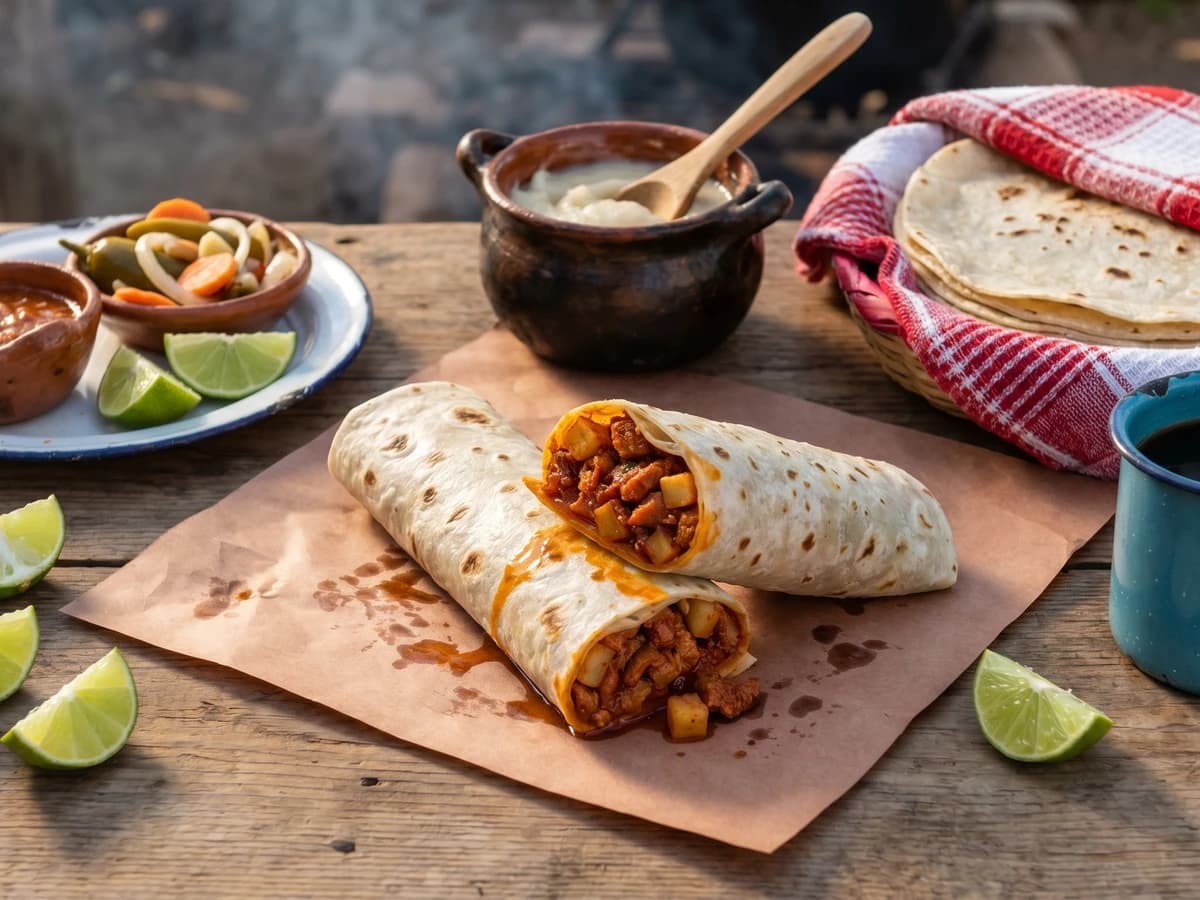
Sonora's working morning burrito: chicharrón de cáscara stewed in chile colorado with diced potato, rolled tight in a paper-thin tortilla sobaquera and eaten standing up at the carreta.
Chef Lupita
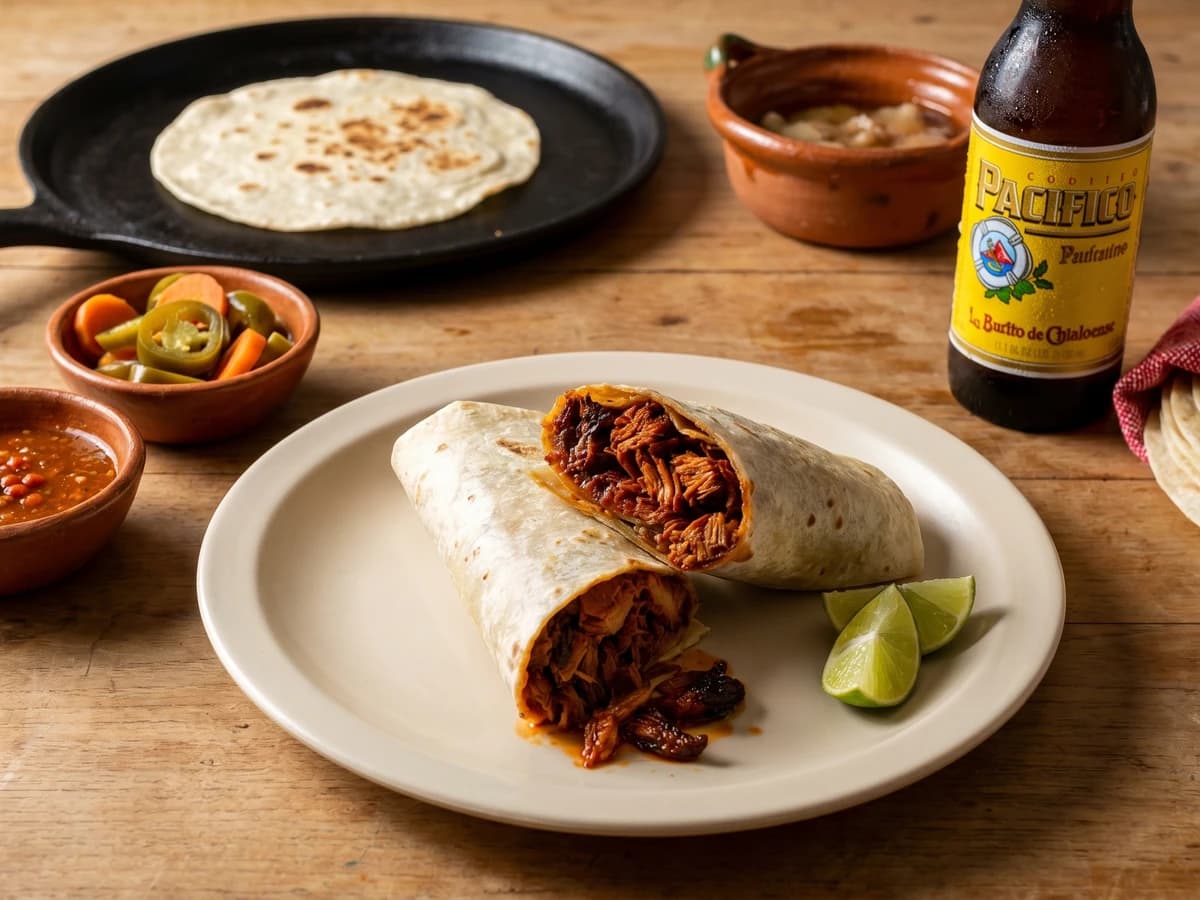
Mocorito's pork chilorio, shredded and confited in lard with chile ancho and pasilla, rolled into a thin handmade flour tortilla. The burrito Sinaloa sends out into the world.
Chef Lupita
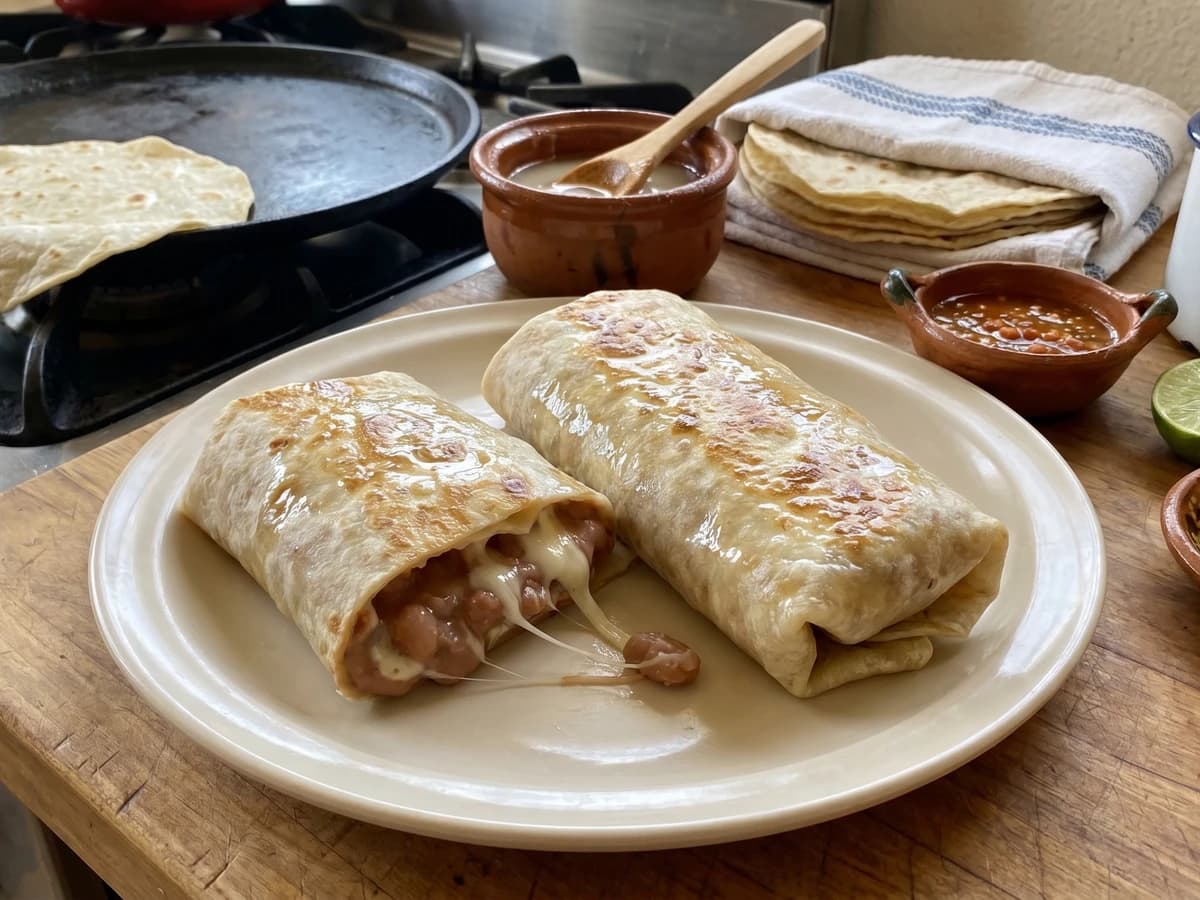
Sonora's morning burrito of mashed pinto frijoles puercos and melted queso asadero, wrapped in a paper-thin sobaquera and seared on the comal until the cheese pulls in long strings.