Chef Lupita
Birria Tacos with Consome
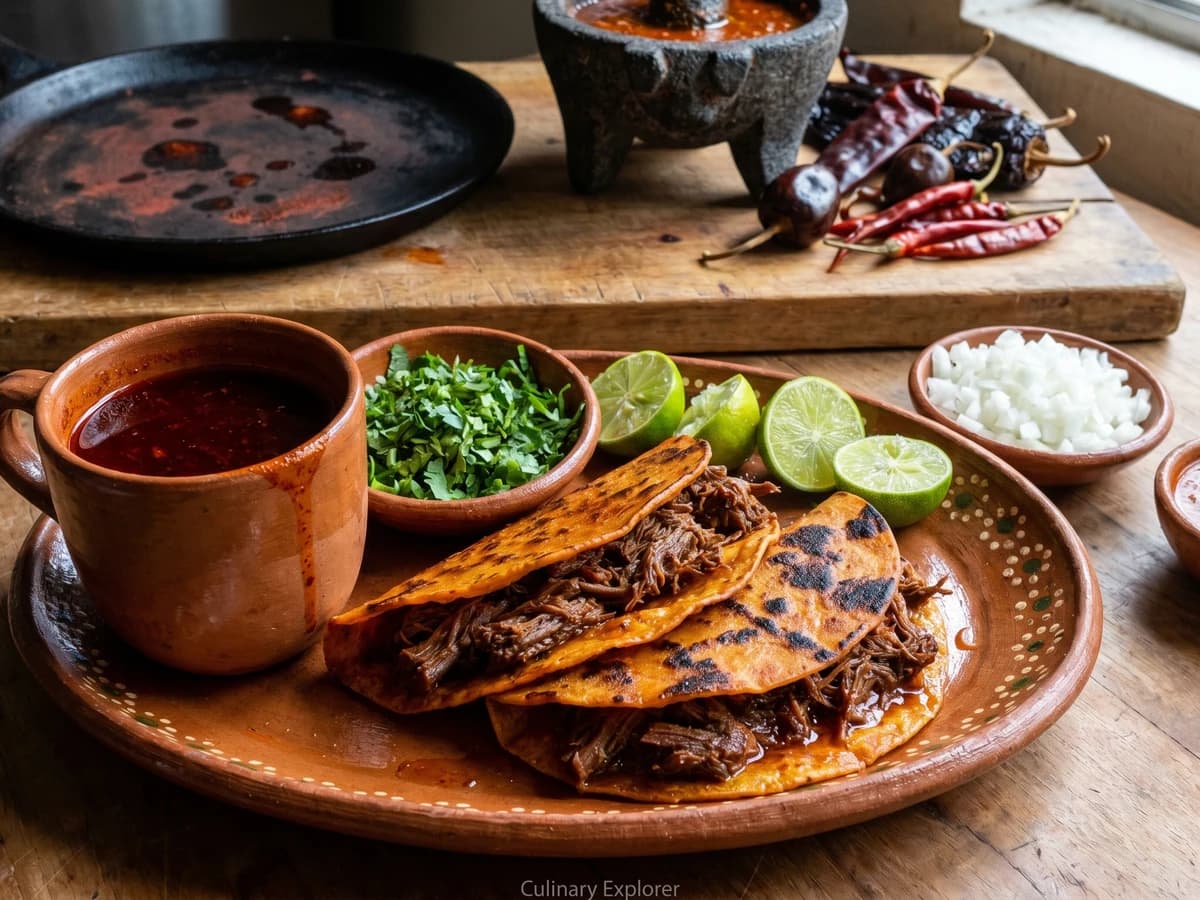
Jalisco's goat birria, born around Cocula and carried into Guadalajara's markets, slow-braised in ancho, guajillo, cascabel, and chile de arbol, then tucked into corn tortillas crisped in its own red fat.
A cooking platform built around craft, culture, and the stories behind what we eat.
Created by
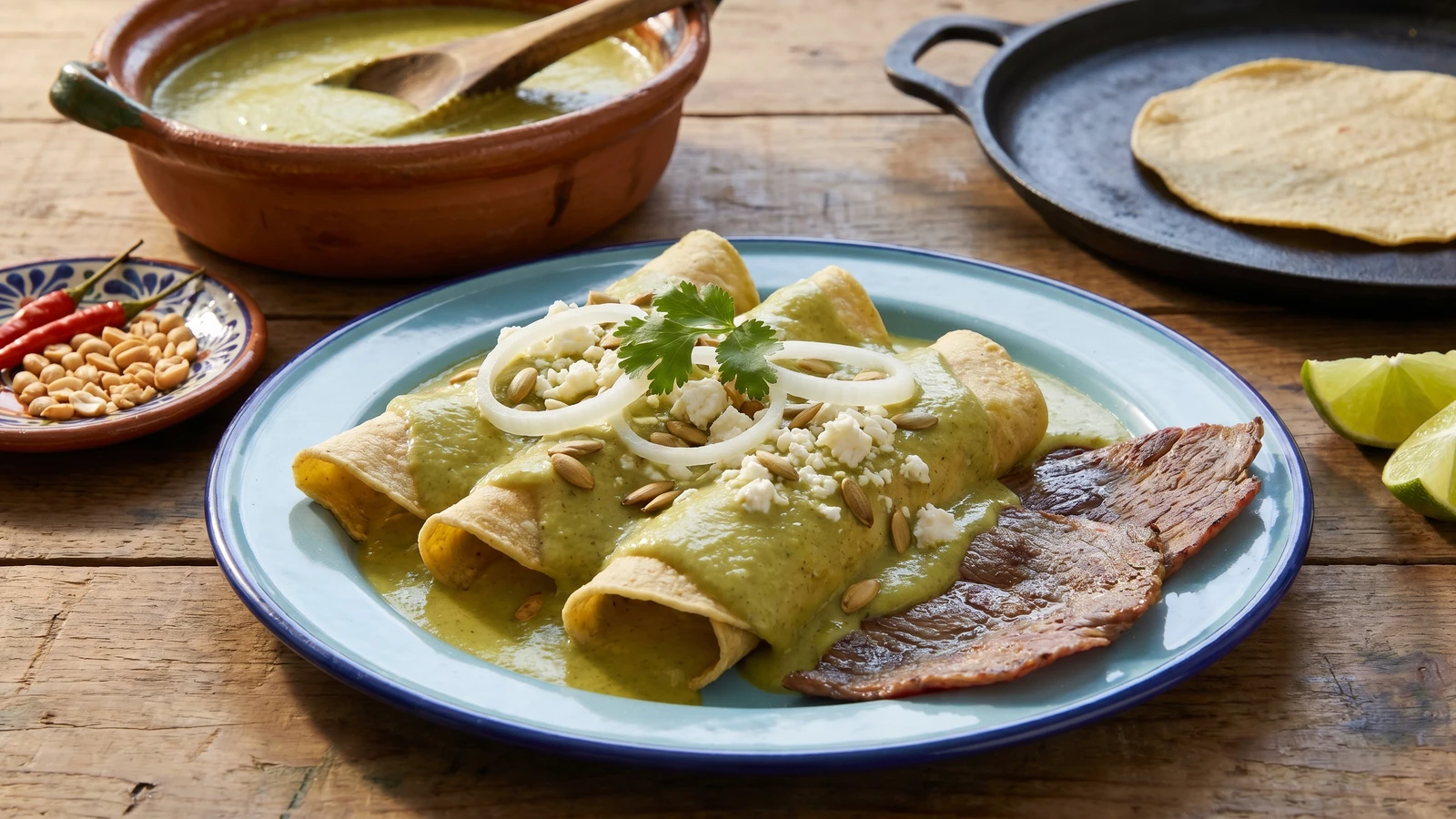
The Huasteca veracruzana's empepianadas: corn tortillas dipped and folded under a green sauce of ground toasted pepitas and chile serrano, finished with crumbled queso fresco and raw onion. Cecina on the side, the way they eat it up north.
This comes from the Huasteca veracruzana, the northern stretch of Veracruz where the state pushes up against Tamaulipas and San Luis Potosi. Down in the port they fold a flour-dusted bolillo around their lunch. Up here, in Teenek country, the corn tortilla rules and the sauce is built on the pepita, the hulled green pumpkin seed that has fed this land since long before the Spanish ever saw it. These are empepianadas: tortillas dipped, folded, and bathed in green pepián. No stuffing. No rolling. The sauce is the whole dish.
Pepián verde is two ingredients with nowhere to hide: toasted pepitas and fresh green chile. That is the minimalism the Huasteca is known for, and it is harder than it looks. Toast the pepitas too dark and the sauce turns muddy and bitter. Let it boil and the ground seed breaks, goes grainy, weeps oil. You cook this sauce low and slow, stirring without stopping, the way you coax something fragile. No me vengas con atajos. There is no shortcut through a pepián. The pot tells you when it is ready, not the clock.
My mother was from Jalisco. She never cooked a pepián in her life. I learned this one on the road, in a kitchen outside Tantoyuca, from a señora who ground her pepitas on a metate and laughed at my blender before she let me use it. She served the enchiladas with a sheet of cecina and a saucer of crushed peanut and chiltepín on the side, and that is the Huasteca on a plate: Indigenous seed, Spanish salt-cured beef, the Native and African hands that built this coast, La Tercera Raíz, all of it folded into one humble tortilla. Saber cocinar es saber vivir. Learn this sauce and you understand a whole region.
The pepita predates the conquest by millennia: squash was among the first plants domesticated in Mesoamerica, cultivated for its seeds before maize agriculture fully matured, which is why pumpkin-seed sauces like pepián and pipián still carry the Nahuatl name and the Indigenous technique of toasting and grinding the seed on a metate. The Huasteca, a cultural region straddling six states and home to the Teenek (Huastec) people, a Maya-linked group separated geographically from the southern Maya, developed its own pared-down enchilada tradition apart from the chile-paste enchiladas of the central highlands. Chef Zarela Martínez documented these northern Veracruz dishes in her 2001 book 'Zarela's Veracruz: Mexico's Simplest Cuisine,' arguing that the state's restraint, few ingredients and clean flavors, was a sign of confidence rather than poverty.
Quantity
1 1/2 cups, plus 2 tablespoons for garnish
Quantity
5
stemmed (use 4 for milder heat)
Quantity
3
unpeeled
Quantity
1/4, plus 1/2 onion sliced into thin rings for serving
Quantity
1/2 cup, lightly packed
Quantity
2
thick center rib removed
Quantity
3 to 4 cups
kept warm
Quantity
3 tablespoons, plus more for the tortillas
Quantity
to taste
Quantity
16
preferably a day old
Quantity
1 cup
Quantity
1/2 pound, for serving
Quantity
for serving
| Ingredient | Quantity |
|---|---|
| hulled raw pumpkin seeds (pepitas) | 1 1/2 cups, plus 2 tablespoons for garnish |
| fresh chile serranostemmed (use 4 for milder heat) | 5 |
| garlic clovesunpeeled | 3 |
| white onion | 1/4, plus 1/2 onion sliced into thin rings for serving |
| fresh cilantro leaves and tender stems | 1/2 cup, lightly packed |
| fresh hoja santa leaves (acuyo) (optional)thick center rib removed | 2 |
| chicken brothkept warm | 3 to 4 cups |
| lard (manteca de cerdo) | 3 tablespoons, plus more for the tortillas |
| kosher salt | to taste |
| corn tortillaspreferably a day old | 16 |
| crumbled queso fresco | 1 cup |
| cecina (optional) | 1/2 pound, for serving |
| lime wedges (optional) | for serving |
Set a dry comal or heavy skillet over medium-low heat. Add the pumpkin seeds, all of them including the 2 tablespoons for garnish, and toast them, stirring without stopping. In three or four minutes they will swell, hiss, and start to pop like small fireworks, turning a pale gold. Pull them off the heat the moment they smell nutty and a few have jumped. Do not let them brown. A dark pepita gives you a muddy, bitter sauce, and there is no fixing it later. Set 2 tablespoons aside for the garnish.
On the same comal, lay down the serranos and the unpeeled garlic cloves. Turn them until the chiles blister and soften and the garlic skins darken in spots, about five minutes. Slip the garlic out of its skins. This light charring rounds off the raw edge of the chile without cooking the green out of the sauce.
Combine the toasted pepitas (not the reserved garnish), the charred serranos, the peeled garlic, the 1/4 onion, the cilantro, the hoja santa, and 2 cups of the warm broth in a blender. Blend on high for a full two to three minutes, until the sauce is as smooth as you can make it. The seeds have to break down completely. Stop early and the pepián stays gritty and pasty on the tongue.
Melt the 3 tablespoons of lard in a wide clay cazuela or heavy pot over medium-low heat. Pour in the blended pepián, standing back because it will sputter. Now stir, and keep stirring, with a wooden spoon. Cook it gently for eight to ten minutes, until it thickens enough to coat the spoon and the color sets. Whatever you do, do not let it reach a hard boil. Ground pumpkin seed breaks when it overheats: it turns grainy and weeps oil, and a broken pepián cannot be put back together. Thin it with the remaining warm broth until it falls off the spoon in a soft ribbon. Season with salt. Hold it over the lowest possible heat, stirring now and then, while you work the tortillas.
In a small skillet, heat a thin film of lard over medium. Pass each tortilla through the hot fat for just a few seconds per side, only long enough to soften it and wake up the corn. You are not frying them crisp. A crisp tortilla will not fold, it will crack. Stack them on a cloth-lined plate as you go. La manteca es el sabor.
Working one at a time, lay a softened tortilla in the warm pepián and turn it to coat both sides. Lift it out, let the excess drip back into the pot, then fold it in half and in half again into a quarter. Set it on the serving plate. Repeat, overlapping four folded tortillas per plate. Move quickly. A tortilla that sits too long in the sauce turns pasty.
Ladle more warm pepián generously over the folded tortillas. Scatter the crumbled queso fresco, the thin onion rings, and the reserved toasted pepitas across the top. Finish with a squeeze of lime. Serve right away, with cecina seared on the comal alongside if you have it, the way they eat it up in the Huasteca. These do not wait. The tortillas drink the sauce, so plate them and carry them straight to the table. Recetas probadas y garantizadas.
1 serving (about 450g)
Culinary guides, cultural storytelling, and the editorial depth that makes cooking meaningful.
Discover Culinary ExplorerChef Lupita
Jalisco's goat birria, born around Cocula and carried into Guadalajara's markets, slow-braised in ancho, guajillo, cascabel, and chile de arbol, then tucked into corn tortillas crisped in its own red fat.
Chef Lupita
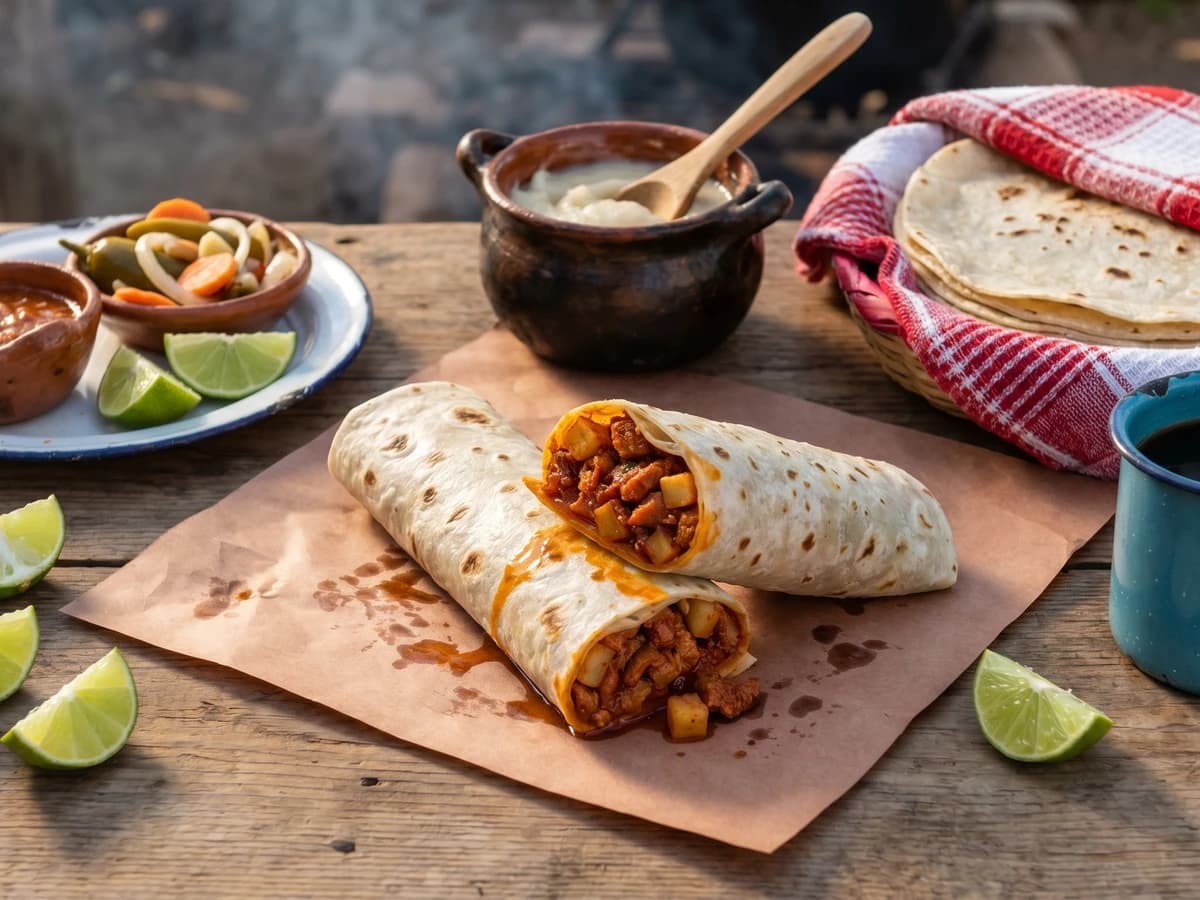
Sonora's working morning burrito: chicharrón de cáscara stewed in chile colorado with diced potato, rolled tight in a paper-thin tortilla sobaquera and eaten standing up at the carreta.
Chef Lupita
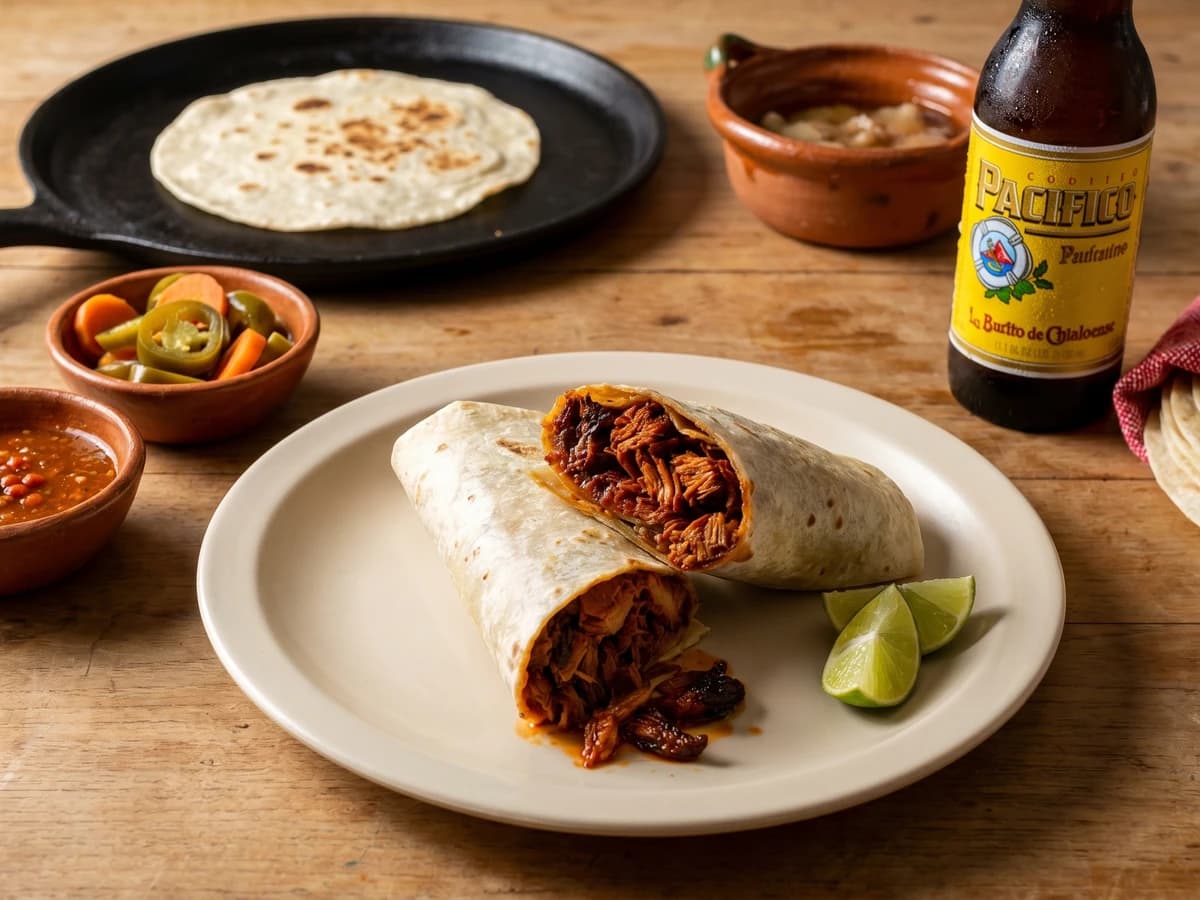
Mocorito's pork chilorio, shredded and confited in lard with chile ancho and pasilla, rolled into a thin handmade flour tortilla. The burrito Sinaloa sends out into the world.
Chef Lupita
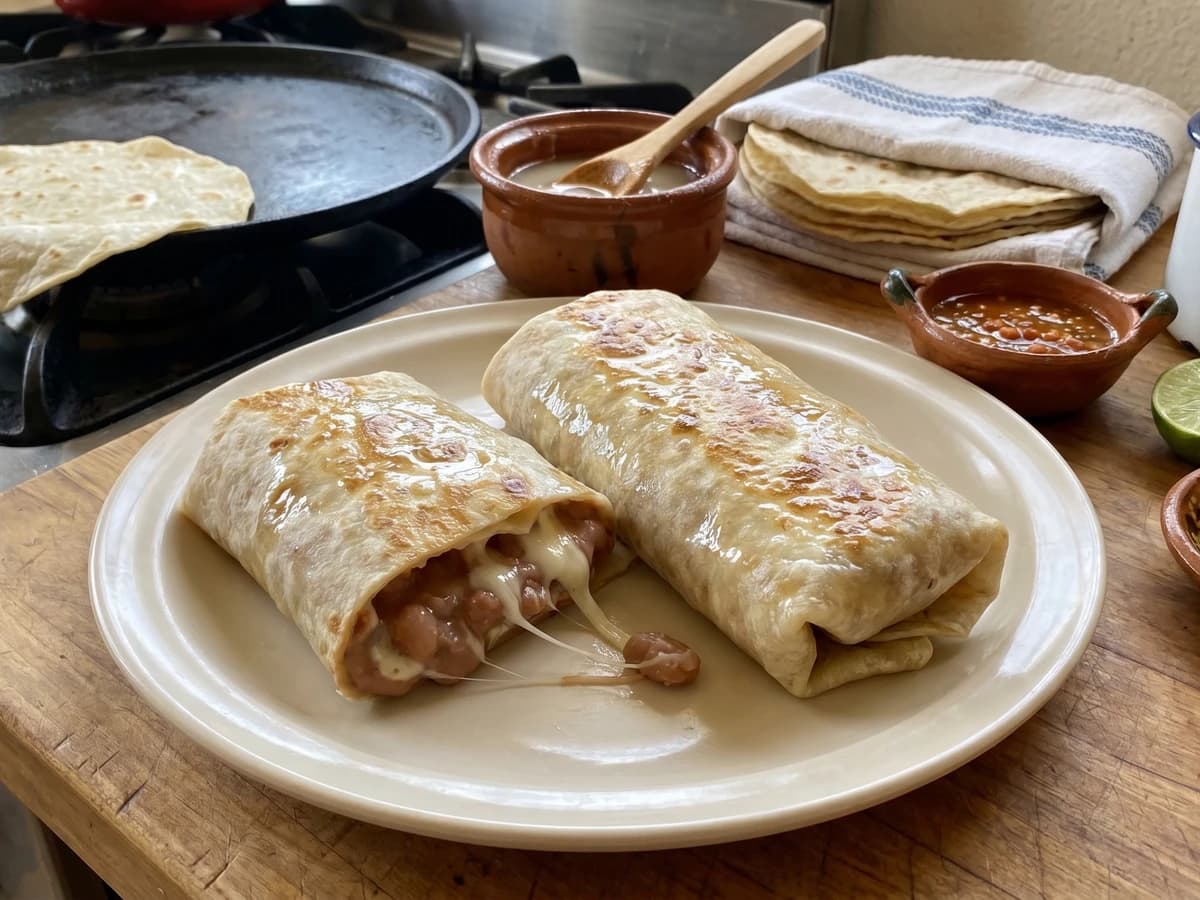
Sonora's morning burrito of mashed pinto frijoles puercos and melted queso asadero, wrapped in a paper-thin sobaquera and seared on the comal until the cheese pulls in long strings.