Chef Lupita
Birria Tacos with Consome
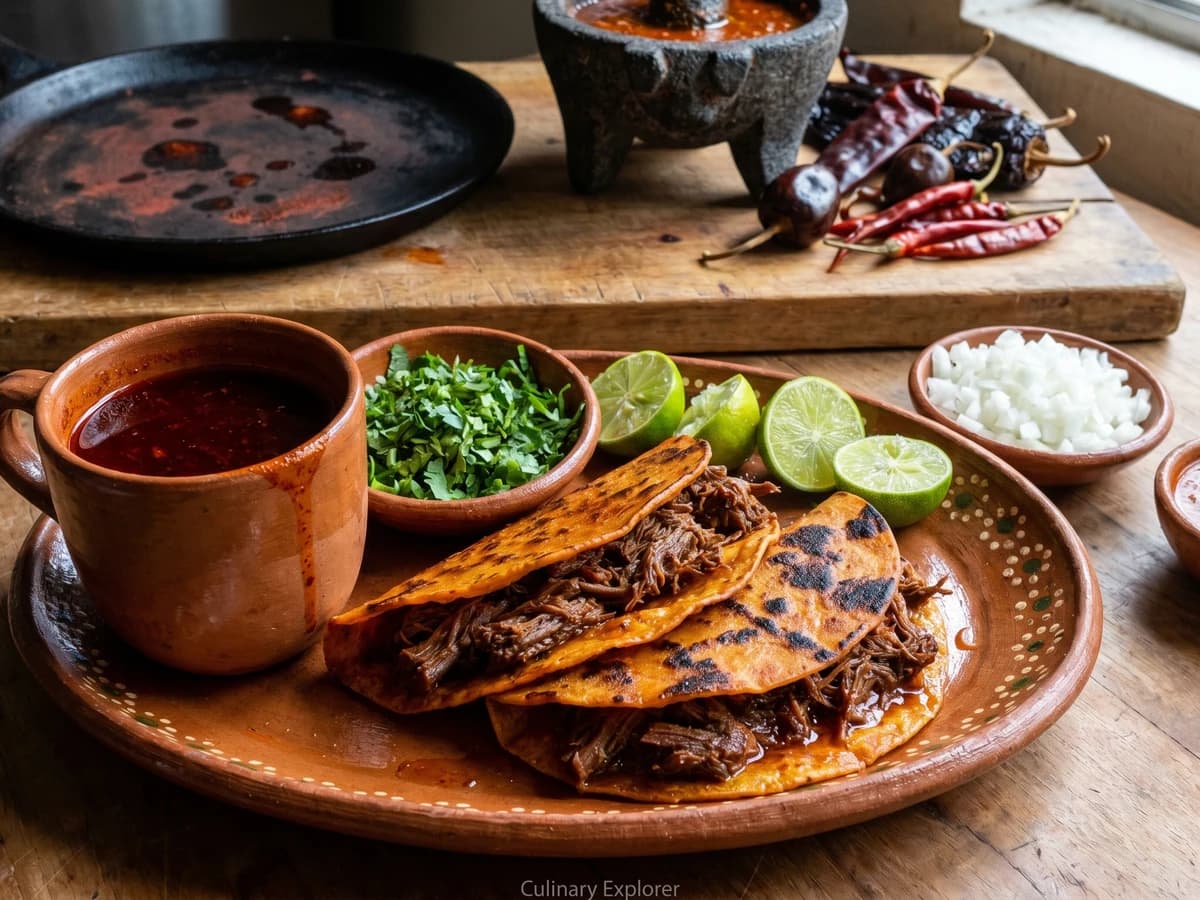
Jalisco's goat birria, born around Cocula and carried into Guadalajara's markets, slow-braised in ancho, guajillo, cascabel, and chile de arbol, then tucked into corn tortillas crisped in its own red fat.
A cooking platform built around craft, culture, and the stories behind what we eat.
Created by
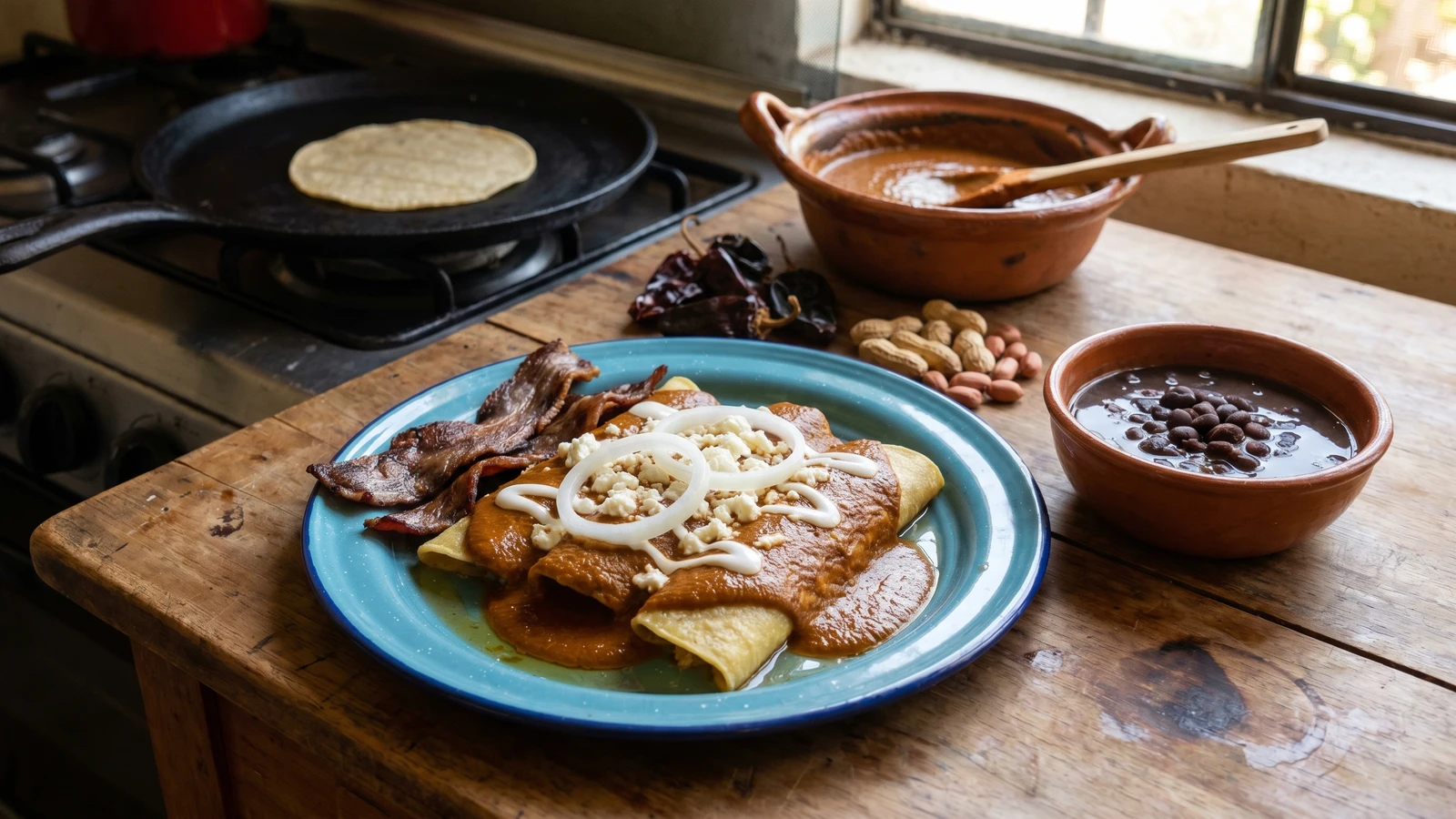
Northern Veracruz's enchiladas de cacahuate: toasted peanut and dried chile cascabel ground into a sauce as smooth as any mole, folded into warm corn tortillas and set beside seared cecina and a bowl of black beans cooked with epazote.
This is from the Huasteca veracruzana, the hot, green north of Veracruz where the state climbs toward Tamaulipas and San Luis Potosí. Téenek and Nahua country. Cattle land, citrus land, peanut land. When people picture Veracruz food they think of the port: seafood, rice, the Spanish and Caribbean hand. The Huasteca is a different kitchen. Up here the plate is built on corn, peanut, chile cascabel, and cecina, and these enchiladas de cacahuate hold all of it together.
The sauce is ground peanut and chile cascabel, nothing like the guajillo and ancho base of the central highlands. Cascabel is the round little chile that rattles when you shake it, woodsy and faintly smoky, and it was made for peanut. You toast the raw peanuts until the skins darken, char the jitomate and garlic on the comal, blend it all with a few allspice berries (pimienta gorda grows in these forests), then strain it and fry it in lard until it darkens and the fat rises. Smooth as a mole, because that is what it is: a peanut mole the rest of Mexico forgot to notice.
On the plate it never travels alone. Folded corn tortillas under a ladle of the sauce, queso fresco, raw onion, and beside them seared cecina and a bowl of frijoles negros de la olla cooked with epazote. Black beans, not pinto. That is the Gulf. Indigenous corn and peanut, Spanish cattle in the cecina, and the African root that runs through all of Veracruz. La Tercera Raíz on one plate, and nobody up here makes a speech about it. They just cook it.
I wrote this recipe down in a cocina económica in Tantoyuca, watching a señora dip tortillas with her bare fingers through sauce hot enough to make me wince. She told me her grandmother ground the peanuts on a metate and that the blender was the only thing she had changed. No me vengas con atajos, she said, laughing, when I asked if you could skip toasting the peanuts. Everything else stays. Saber cocinar es saber vivir.
The peanut is native to the Americas and was cultivated in Mesoamerica long before the conquest; the Spanish word 'cacahuate' comes from the Nahuatl 'tlalcacahuatl,' meaning 'earth cacao,' and pre-Columbian cooks already ground it into sauces that survive today as the family of dishes called encacahuatados. The chile cascabel takes its name from the Spanish word for 'rattle,' for the loose seeds that sound inside the dried pod. Cecina, thin salted beef, entered the Huasteca with the cattle the Spanish introduced to its lowland pastures, while the broader cuisine of Veracruz carries La Tercera Raíz, the African heritage that entered New Spain through the port of Veracruz, the principal point of disembarkation for enslaved Africans during the colonial centuries.
Quantity
1 1/2 cups
skins on
Quantity
8
stemmed and seeded
Quantity
2 medium
Quantity
1/4 medium
Quantity
3 cloves
unpeeled
Quantity
3
Quantity
4 chiltepin, or 1 chipotle
for heat
Quantity
4 cups, warm, plus more as needed
Quantity
6 tablespoons
divided
Quantity
to taste
Quantity
18
Quantity
1 cup
crumbled
Quantity
1/2
sliced into thin rings
Quantity
for serving
Quantity
1 pound
Quantity
1 1/2 cups
Quantity
1/4
Quantity
2 cloves
Quantity
2 sprigs
| Ingredient | Quantity |
|---|---|
| raw shelled peanutsskins on | 1 1/2 cups |
| dried chile cascabelstemmed and seeded | 8 |
| ripe tomatoes (jitomate) | 2 medium |
| white onion | 1/4 medium |
| garlicunpeeled | 3 cloves |
| whole allspice berries (pimienta gorda) | 3 |
| dried chiltepin or chile chipotle (optional)for heat | 4 chiltepin, or 1 chipotle |
| beef or chicken broth | 4 cups, warm, plus more as needed |
| manteca de cerdo (lard)divided | 6 tablespoons |
| kosher salt | to taste |
| corn tortillas | 18 |
| queso frescocrumbled | 1 cup |
| white onionsliced into thin rings | 1/2 |
| Mexican crema (optional) | for serving |
| cecina de res (thin salted beef) | 1 pound |
| dried black beans (frijoles negros) | 1 1/2 cups |
| white onion (for the beans) | 1/4 |
| garlic (for the beans) | 2 cloves |
| fresh epazote | 2 sprigs |
Rinse the dried black beans and put them in a heavy olla or pot with the 1/4 onion, 2 garlic cloves, and water to cover by three inches. Bring to a boil, then drop to a low simmer and cook partially covered for about two hours, adding hot water as needed to keep the beans submerged. When they are soft and the broth has turned dark, stir in the epazote and salt to taste and cook fifteen minutes more. Salt early and the skins toughen, so wait. Black beans, not pinto. This is the Gulf, and the bean rules the pot here.
Heat a dry comal or heavy skillet over medium. Add the raw peanuts with their skins and toast them, stirring often, for five to eight minutes, until the skins darken and the kitchen smells like a roadside peanut stand. Raw peanuts taste flat. Toasting is what gives the sauce its backbone, so do not skip it. Keep the skins on for color and depth.
Stem the chile cascabel and shake out the seeds. Toast them on the same comal for just a few seconds a side, pressing them flat, until they puff slightly and smell toasty. Cascabel is small and thin-fleshed, so it scorches in a blink. Cover them with hot water, not boiling, and soak twenty minutes until soft. Boiling water cooks the skins and turns the sauce bitter. Hot water softens the flesh and keeps the flavor clean.
On the comal over medium-high, char the whole tomatoes, the 1/4 onion, and the unpeeled garlic, turning them, until the tomato skins blister and blacken in spots and the garlic softens in its papery skin. This is the Veracruz hand: you char, you do not boil. The blistered skins give the sauce a quiet smokiness that no raw tomato can. Peel the garlic once it is cool enough to handle.
Drain the cascabel. In the blender, combine the toasted peanuts, drained chiles, charred tomatoes, onion, garlic, the allspice berries, the chiltepin or chipotle if you want heat, and two cups of the warm broth. Blend several minutes until very smooth. Now strain it through a fine-mesh sieve into a bowl, pressing hard on the solids. Peanuts are gritty, and the strain is what gives you a sauce smooth as a mole. Discard what stays in the sieve.
Melt 3 tablespoons of the manteca in a wide cazuela or deep skillet over medium heat. When it shimmers, pour in the strained sauce. It will sputter, so stand back. Cook twenty to twenty-five minutes, stirring often so it does not catch on the bottom, until the sauce darkens to a deep brick-brown, thickens, and you see the fat rise and separate at the edges. That is when it is sazonada. La manteca es el sabor. Add warm broth a little at a time to hold it at the consistency of a loose mole, one that coats a spoon but still pours. Season with salt. Keep it warm and loose for dipping.
Heat a comal or skillet over high with 1 tablespoon of the manteca. Lay the cecina in a single layer and sear it one to two minutes a side, until the edges brown and curl. It is thin and already salted, so it cooks fast and needs nothing else. Pull it off, let it rest a minute, and cut it into wide strips. Cecina is the beef of the Huasteca, and it belongs on this plate.
Warm the remaining manteca on the comal. Pass each corn tortilla through it for a few seconds a side, just until soft and pliable. A cold tortilla cracks when you fold it, and the fat makes it supple and carries flavor. Working one at a time, dip the warm tortilla fully through the peanut sauce to coat both sides, then fold it in half and in half again. Arrange the folded enchiladas overlapping on warm plates. Move quickly so they stay soft.
Ladle more of the warm peanut sauce over the folded enchiladas until they are well covered. Scatter the crumbled queso fresco and the raw onion rings over the top, and drizzle with crema if you like. Set the seared cecina alongside and spoon a bowlful of the black beans with their dark broth next to it. Serve right away, while the sauce is glossy and the tortillas are soft. Cada estado, su propia cocina, and this plate belongs to the Huasteca veracruzana.
1 serving (about 540g)
Culinary guides, cultural storytelling, and the editorial depth that makes cooking meaningful.
Discover Culinary ExplorerChef Lupita
Jalisco's goat birria, born around Cocula and carried into Guadalajara's markets, slow-braised in ancho, guajillo, cascabel, and chile de arbol, then tucked into corn tortillas crisped in its own red fat.
Chef Lupita
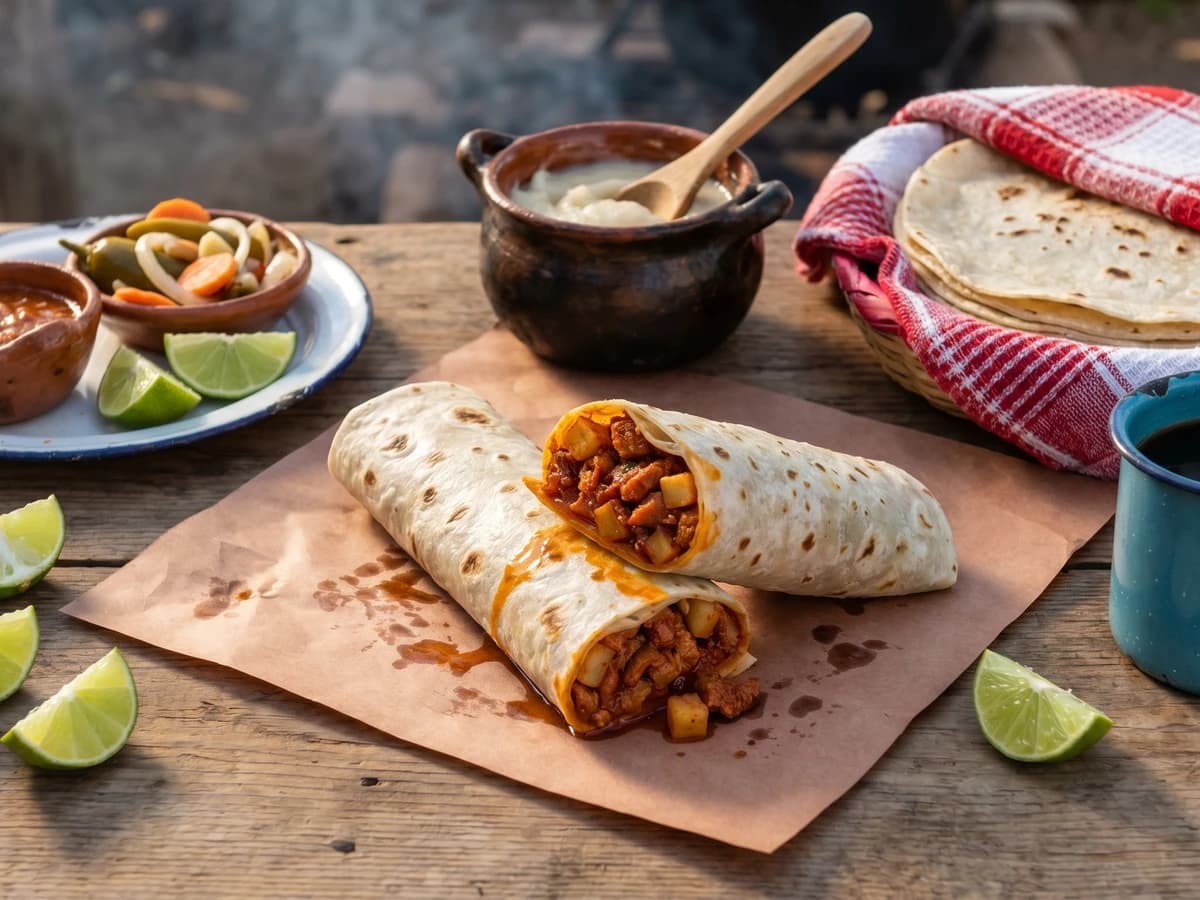
Sonora's working morning burrito: chicharrón de cáscara stewed in chile colorado with diced potato, rolled tight in a paper-thin tortilla sobaquera and eaten standing up at the carreta.
Chef Lupita
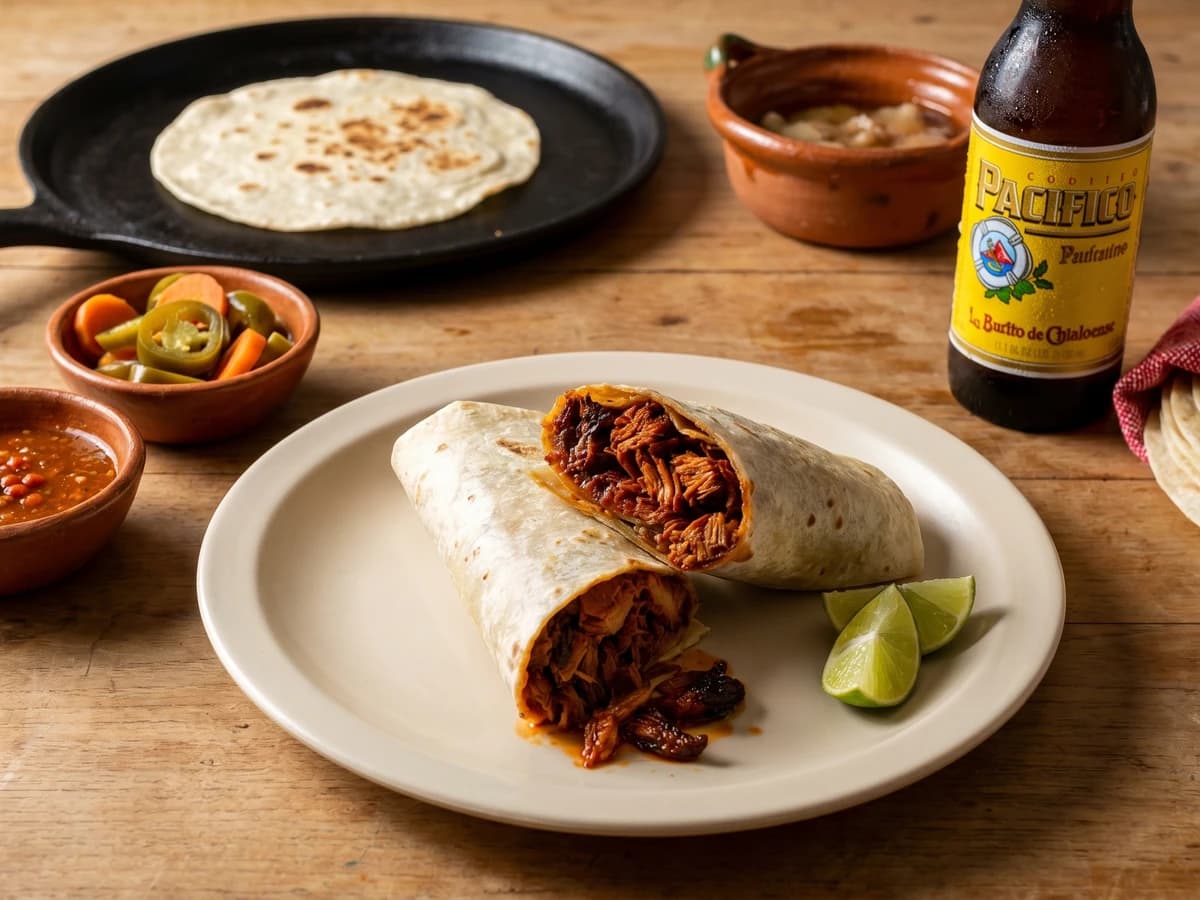
Mocorito's pork chilorio, shredded and confited in lard with chile ancho and pasilla, rolled into a thin handmade flour tortilla. The burrito Sinaloa sends out into the world.
Chef Lupita
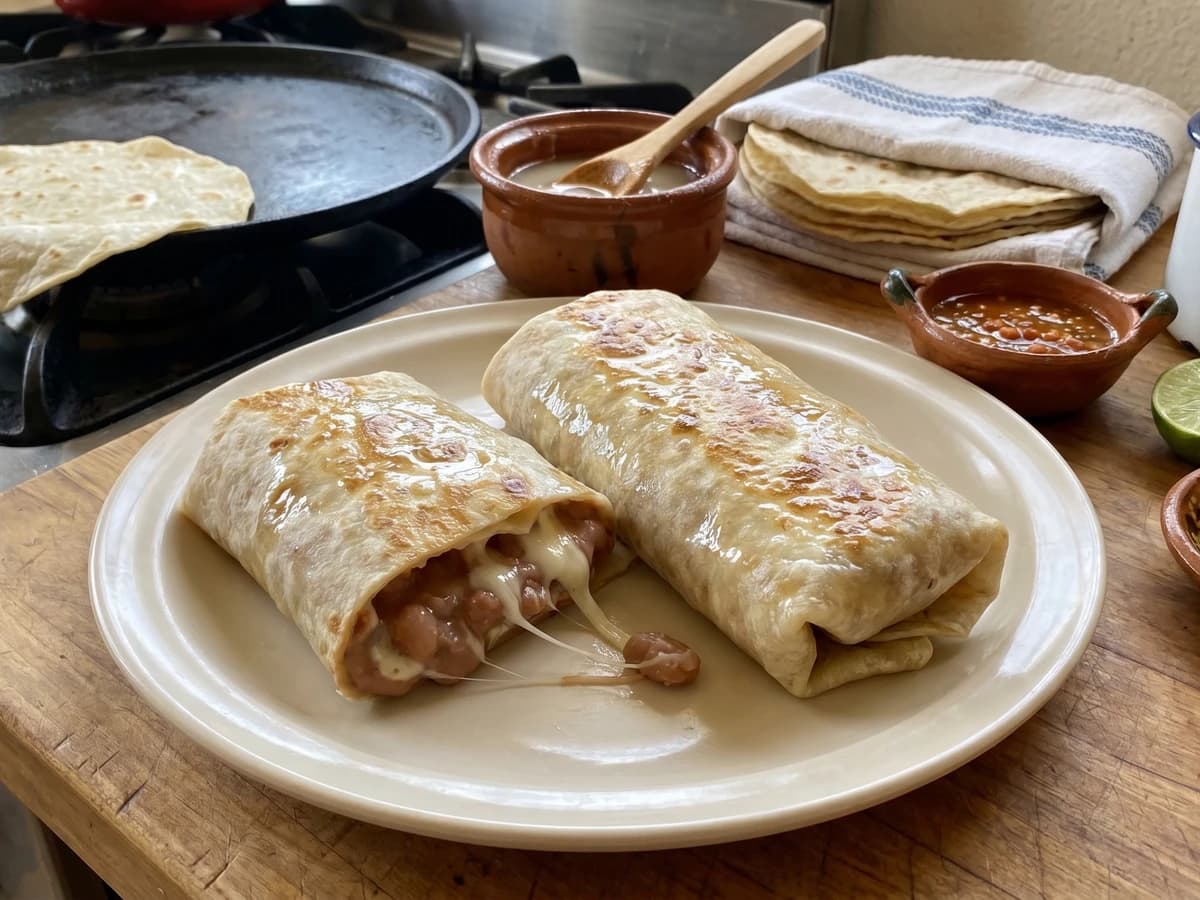
Sonora's morning burrito of mashed pinto frijoles puercos and melted queso asadero, wrapped in a paper-thin sobaquera and seared on the comal until the cheese pulls in long strings.