
Chef Klaus
Apfelschorle
Cloudy apple juice, sharp mineral water, and no sugar bowl: the German Schorle that belongs in school bags, beer gardens, picnic baskets, and the table when supper is quick.
A cooking platform built around craft, culture, and the stories behind what we eat.

Created by
Cold strong coffee over proper vanilla ice cream, whipped cream on top, no bottled syrup doing the work. Eiskaffee is the German cafe dessert that happens to drink through a straw.
Eiskaffee belongs to the warm-weather German cafe table: city Konditorei, garden terrace, Sunday afternoon when cake would be too much and plain coffee not enough. It isn't owned by one region. Im Norden anders, im Süden anders: one cafe pours chilled filter coffee, another uses a short strong espresso stretched cold, the Rhineland may sweeten a little more, and the south often treats the whipped cream like it has rights of its own.
The technique is simple and it decides the whole glass: cool the coffee completely before it touches the ice cream. Warm coffee melts the vanilla before the spoon reaches the table, and then you've made sweet coffee soup. Brew it strong because the ice cream and cream soften the bitterness, chill it properly, then build the glass quickly.
Nicht aus dem Glas. No coffee syrup, no canned cream, no packet powder pretending to be a cafe. Good cold coffee, good vanilla ice cream, cream whipped soft enough to spoon, and a little shaved chocolate. That's the dish. Schön ist, was schmeckt.
Eiskaffee spread through German-speaking cafe culture in the 20th century, when household refrigeration and commercial ice cream made a cold coffee dessert practical beyond large cafes and hotels. Its home is less a single region than the Konditorei and Eiscafe, the postwar city cafe where coffee, cake, and ice cream met on the same menu. The name can mislead English speakers: German Eiskaffee usually means coffee poured over ice cream, not coffee simply served over ice.
Quantity
600ml
cooled completely
Quantity
2 teaspoons
dissolved while the coffee is hot
Quantity
8 scoops
Quantity
250ml
Quantity
1 teaspoon
Quantity
30g
shaved or grated
Quantity
4
| Ingredient | Quantity |
|---|---|
| strong brewed coffeecooled completely | 600ml |
| sugar (optional)dissolved while the coffee is hot | 2 teaspoons |
| good vanilla ice cream | 8 scoops |
| cold whipping cream | 250ml |
| vanilla sugar or icing sugar | 1 teaspoon |
| dark chocolateshaved or grated | 30g |
| wafer rolls (optional) | 4 |
Brew 600ml coffee stronger than you would drink it hot, because ice cream and whipped cream will round off the bitterness. If you want sugar, stir it in now while the coffee is hot; cold coffee won't dissolve sugar cleanly, and grit at the bottom of the glass is not a recipe.
Let the coffee cool to room temperature, then refrigerate it until fully cold, at least 2 hours. Do not pour warm coffee over ice cream. It melts the scoops before they can hold their shape, and the glass turns thin and muddy.
Whip the cold cream with the vanilla sugar until it forms soft spoonable peaks, not stiff lumps. Soft cream sits on the coffee and folds into it as you drink; overwhipped cream breaks grainy and tastes of effort.
Put two scoops of vanilla ice cream into each tall chilled glass. Pour the cold coffee down the side so the scoops stay rounded and the coffee settles around them instead of knocking them apart.
Spoon the whipped cream over the top, scatter with shaved chocolate, and add a wafer roll if you use one. Serve at once with a long spoon and a straw, because Eiskaffee waits for nobody. Das braucht seine Zeit only until the coffee is cold.
1 serving (about 360g)
Culinary guides, cultural storytelling, and the editorial depth that makes cooking meaningful.
Discover Culinary ExplorerChef Klaus
Cloudy apple juice, sharp mineral water, and no sugar bowl: the German Schorle that belongs in school bags, beer gardens, picnic baskets, and the table when supper is quick.

Chef Klaus
Frankfurt's long drink for a warm table: dry Apfelwein, cold mineral water, and the ribbed Geripptes glass that tells you where you are.

Chef Klaus
Berlin's summer glass: sharp, pale Berliner Weisse softened with a red raspberry or green woodruff Schuss, cold enough to bead the glass and never from bottled syrup.
Chef Klaus
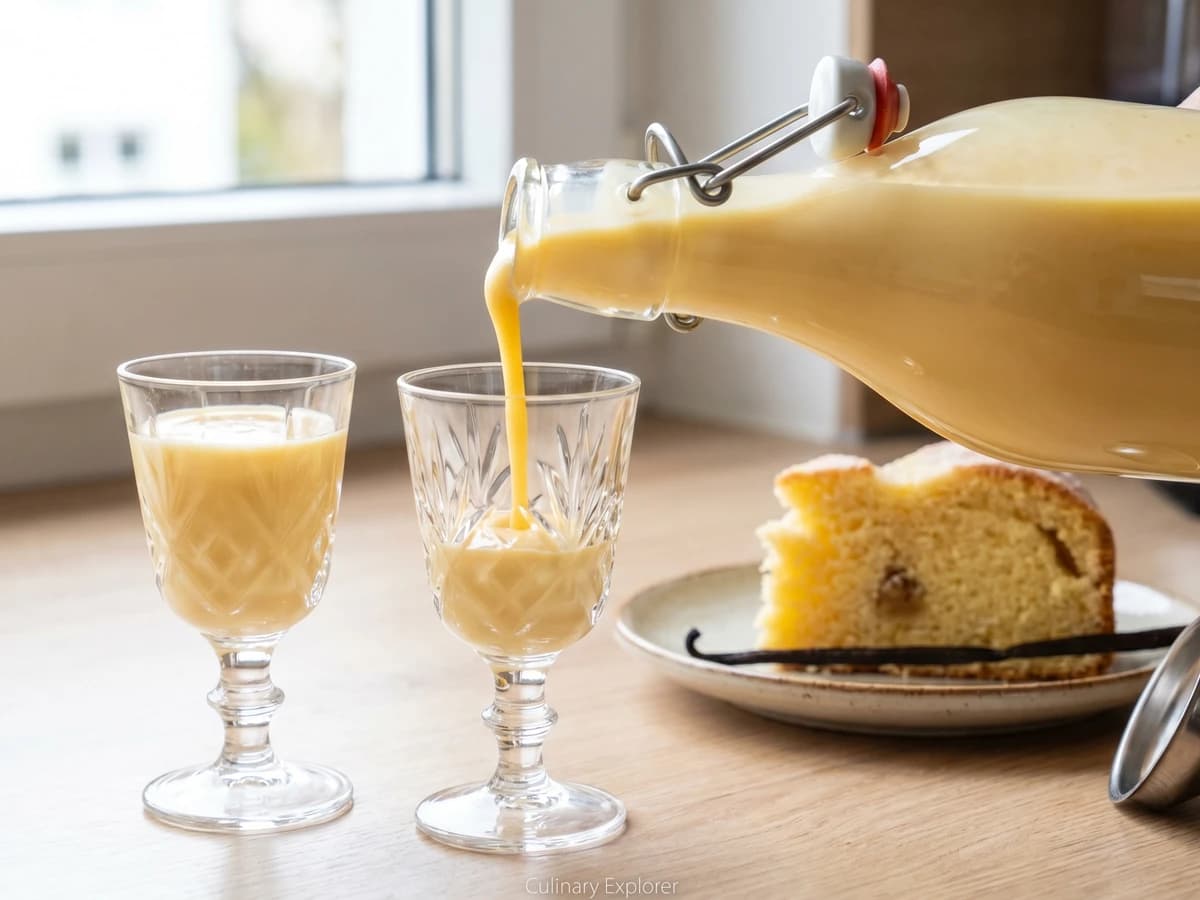
The Easter bottle from yolks, sugar, cream, and good spirit, beaten warm just enough to thicken, then cooled into a yellow liqueur for cake, coffee, and small glasses.