Chef Joost
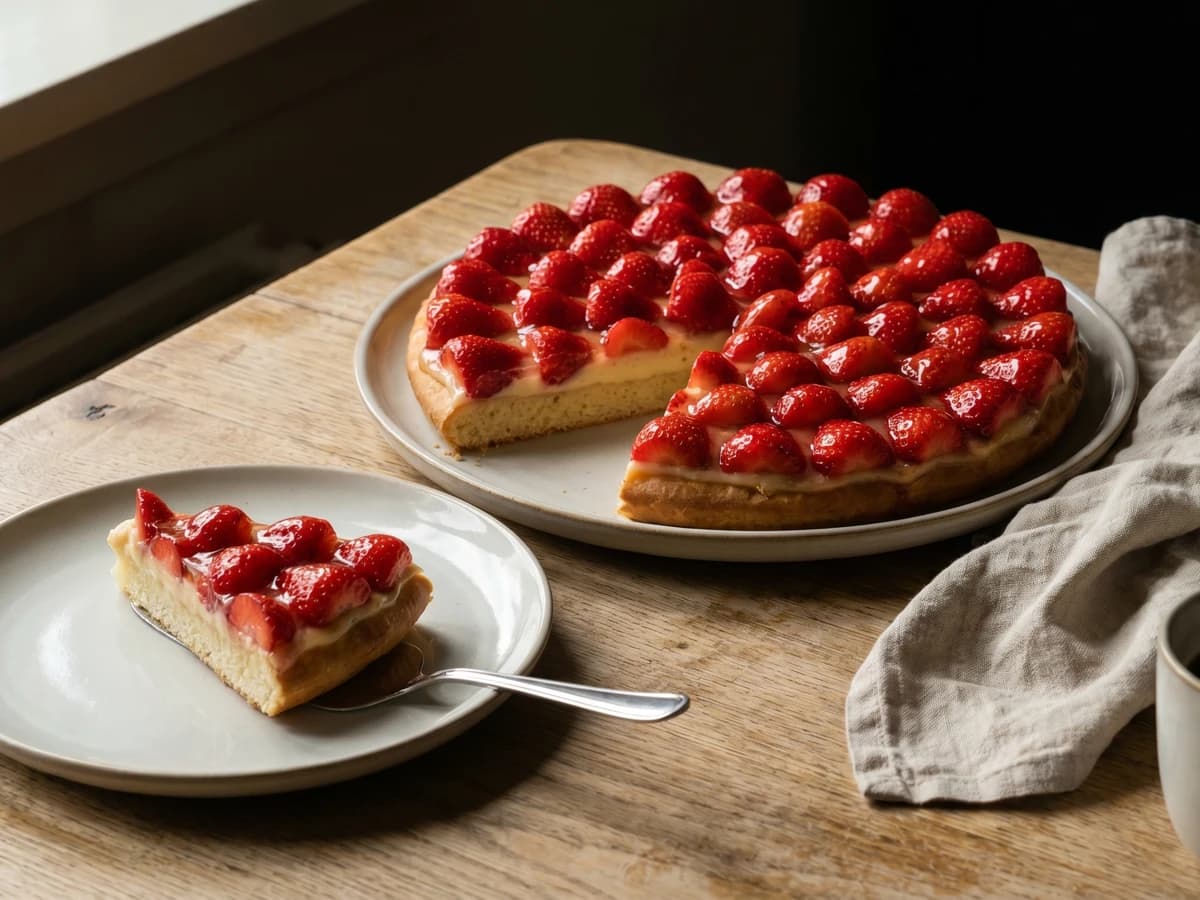
Aardbeienvlaai (Limburg Strawberry Vlaai)
The summer vlaai that politely breaks Limburg's baked-fruit rule: soft gistdeeg, cool pastry cream, and strawberries left fresh because June knows better than the oven.
A cooking platform built around craft, culture, and the stories behind what we eat.
Created by
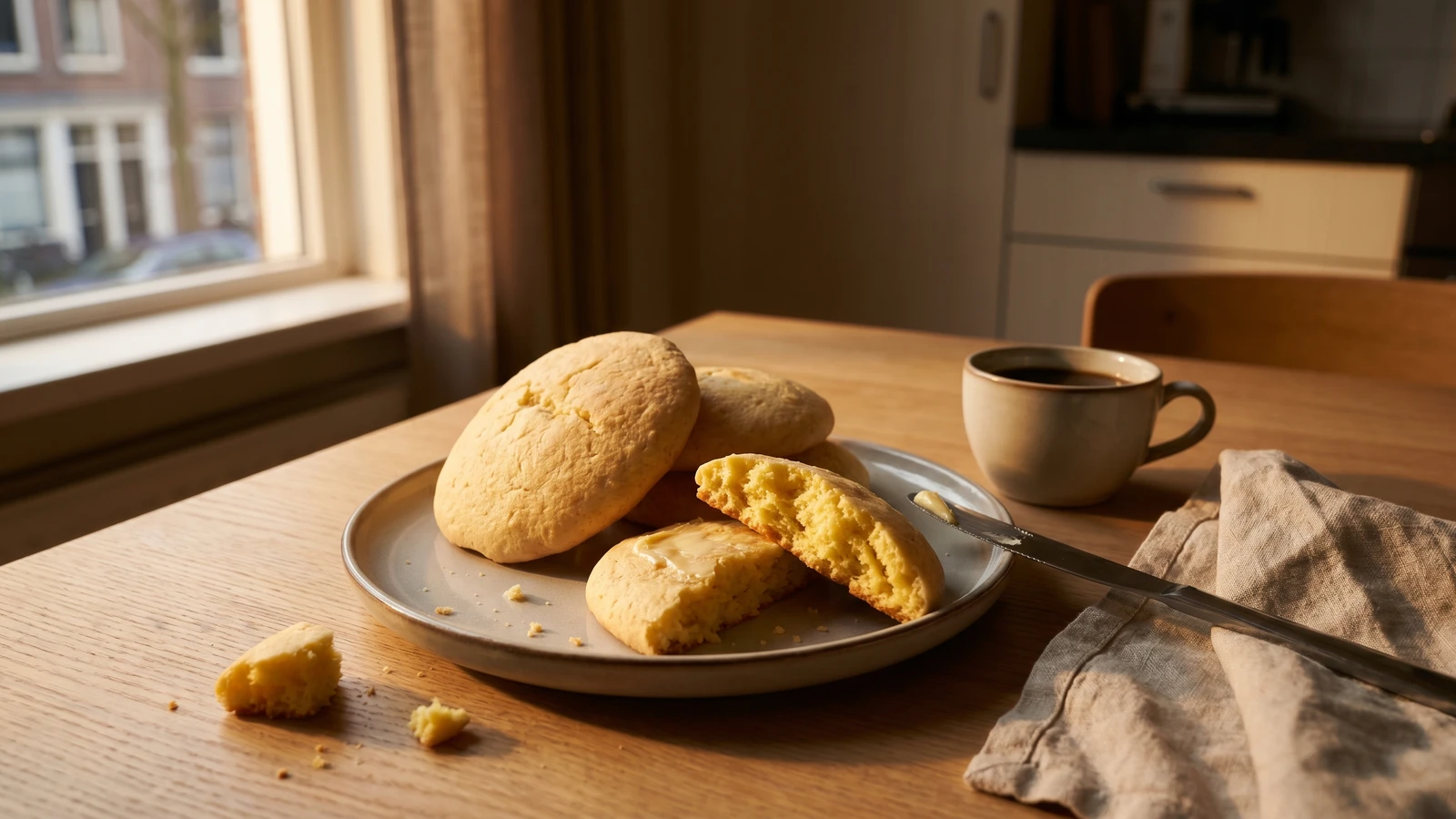
The name is wonderfully plain, egg cakes, yet the secret is all air: a bakery-shelf disc so light it belongs beside coffee, butter, and the small hunger before lunch.
In my grandmother's second notebook, eierkoeken sit in the margin, not among the feast-day cakes. That is exactly where they belong. They were the thing baked when eggs needed using and children needed feeding, the soft in-between that was not quite cake, not quite biscuit, not bread, pale as weak sun and tucked into a school bag with the quiet authority of something useful.
The name already tells you, with the blunt honesty of Dutch nouns: ei means egg, and koek is our broad old word for cake, cookie, or sweet baked round. English wants categories. Dutch wants something with coffee. But let me tell you a secret: the egg here is not decoration or flavoring, it is architecture. There is no butter in the batter, no cream, no rich disguise. The lift comes from eggs beaten until they hold air like a good story holds a room.
So the method is simple, but simple is not the same as careless. You beat the eggs and sugar until the batter falls in a ribbon because that ribbon is your rise; the baking powder only lends a shoulder. Fold the flour gently, bake just until the domes spring back, and stop before they brown. Hou het altijd simpel, always keep it simple. An eierkoek should taste of egg, sugar, lemon, and air.
The word eierkoek is plain Dutch: ei means egg, and koek is the old broad word for a cake, biscuit, or sweet baked round. Older Dutch household cookery used the term for several egg-rich cakes, while the modern domed bakery eierkoek, lean, soft, and often sold in pairs or stacks, settled into everyday Dutch bread shops and supermarkets in the twentieth century. Bergen op Zoom in North Brabant keeps its own local Bergse eierkoek tradition, and the cake's sudden fame in the 2000s after diet writer Sonja Bakker recommended it as a low-fat snack shows how a very ordinary baker's shelf can become national conversation.
Quantity
3
room temperature
Quantity
130g
Quantity
8g or 1 teaspoon
Quantity
1 teaspoon
finely grated
Quantity
1/4 teaspoon
Quantity
120g
sifted
Quantity
20g
sifted
Quantity
6g
Quantity
to serve
| Ingredient | Quantity |
|---|---|
| large eggsroom temperature | 3 |
| fine caster sugar | 130g |
| vanilla sugar or vanilla extract | 8g or 1 teaspoon |
| lemon zestfinely grated | 1 teaspoon |
| fine salt | 1/4 teaspoon |
| all-purpose floursifted | 120g |
| cornstarchsifted | 20g |
| baking powder | 6g |
| butter (optional) | to serve |
Heat the oven to 180C. Line two baking sheets with parchment. If you want tidy eierkoeken, draw eight circles about 9 centimetres wide on the underside of the paper; the batter spreads, and a little boundary saves you from making one large egg continent.
Put the eggs, caster sugar, vanilla sugar or extract, lemon zest, and salt in a large bowl. Beat with an electric mixer for 7 to 9 minutes, until the mixture is thick, pale, and falls from the whisk in a ribbon that sits on the surface for a few seconds before disappearing. This is the whole trick. The air you beat in now is the softness you eat later.
Whisk the flour, cornstarch, and baking powder together, then sift half over the egg foam. Fold it through with a broad spatula, turning the bowl as you go, then repeat with the rest. Stop as soon as no dry streaks remain. If a few flour freckles are hiding near the bottom, give three more folds, not thirty.
Spoon or pipe the batter into eight mounds on the prepared sheets, leaving plenty of room between them. Spread each mound gently to about 8 or 9 centimetres wide with the back of a damp spoon. Do not flatten them with ambition; they need enough height to dome.
Bake for 9 to 12 minutes, one tray at a time if your oven heats unevenly, until the tops are pale gold, the rims are just beginning to colour, and the centres spring back when touched lightly. Pull them before they look fully brown. A browned eierkoek is usually a dry eierkoek, and dryness is a poor reward for patience.
Let the eierkoeken cool on the tray for 5 minutes, then lift them to a rack. Serve them plain, or split and spread with butter while they are still soft enough to bend without cracking. Coffee is not required by law, but the table will understand if it appears.
1 serving (about 39g)
Culinary guides, cultural storytelling, and the editorial depth that makes cooking meaningful.
Discover Culinary ExplorerChef Joost
The summer vlaai that politely breaks Limburg's baked-fruit rule: soft gistdeeg, cool pastry cream, and strawberries left fresh because June knows better than the oven.

Chef Joost
A Limburg vlaai is not a pie trying to be grand. It is a thin yeast-dough round, fruit-bright and generous, made for birthdays, coffee, and second slices.

Chef Joost
The December bakery counter made small: cold leafed pastry wrapped around lemon-scented amandelspijs, brushed gold, and scattered with almonds so one person gets the whole holiday in both hands.

Chef Joost
A thin Amsterdam cookie carrying a cog ship in its name: caramelized butter dough, almond nougatine, and a 1934 contest that turned municipal pride into something for coffee.