Chef Joost
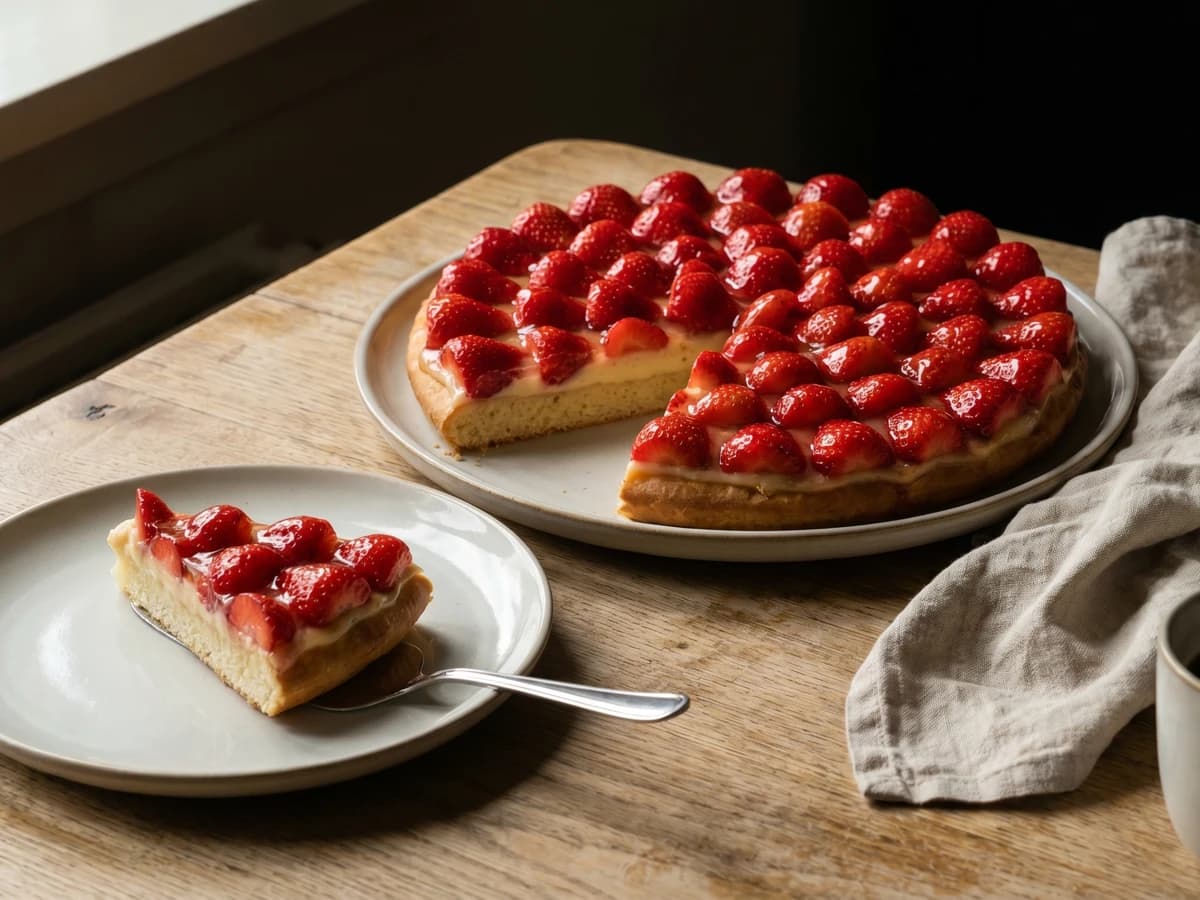
Aardbeienvlaai (Limburg Strawberry Vlaai)
The summer vlaai that politely breaks Limburg's baked-fruit rule: soft gistdeeg, cool pastry cream, and strawberries left fresh because June knows better than the oven.
A cooking platform built around craft, culture, and the stories behind what we eat.

Created by
Friesland's nearly vanished funnel cookie from Sneek is a verb made edible: batter dribbled in buttery loops until it sets into crisp lace, rich enough to command silence over coffee.
The first time I carried drabbelkoeken out of Sneek, I held the box on my lap all the way to Leeuwarden as if it contained old glass. That is not romance. It is common sense. A real drabbelkoek is lace made from butter, egg, and flour, and it breaks if you look at it with bureaucratic intent. Friesland has never needed permission from Holland to be itself: its own language, its own sugar bread, its own little anise biscuits, and this strange small miracle from Sneek.
The name already tells you, or at least it gestures with floury hands. Drabbelen is usually explained as letting something fall in small irregular streams, and here the batter does exactly that: it runs from a funnel into hot butter, looping and crossing until a cookie appears where a drawing was. But let me tell you a secret: the wonder is not the lace. It is the restraint. You do almost nothing except keep the butter steady and your hand relaxed.
These are celebration cookies because they are ordinary to make and ridiculous to transport, the best sort of regional pride. They belong to the coffee table, to a careful box brought from Sneek, to the guest you like enough to risk crumbs for. The Golden Age spice chest can wait for speculaas. Drabbelkoeken are proof that Friesland could turn butter and a verb into a city specialty.
Hou het altijd simpel, always keep it simple. Clarify the butter, make a thin batter, let it rest, then draw loops in the pan without trying to be an artist. Holes are not mistakes. They are the cookie. If one breaks, that is the cook's share, and no court in Friesland would convict you.
Drabbelkoeken are associated above all with Sneek, Snits in Frisian, one of Friesland's historic eleven cities, where local bakers kept the hand-dribbled method alive long after most Dutch cookies became easier to ship and sell. The name is generally connected with drabbelen, to let batter fall in a thin, irregular stream, which describes the technique more plainly than any legend could. Their fragility explains their rarity: a cookie built from fried lace does not travel like a factory biscuit, so it remained a local Frisian secret.
Quantity
500g
clarified, or use 350g ghee
Quantity
250g
Quantity
35g
Quantity
1/2 teaspoon
Quantity
3
Quantity
250ml, plus 2 tablespoons if needed
Quantity
30g
melted and cooled
Quantity
40g
for dusting
| Ingredient | Quantity |
|---|---|
| unsalted butter (roomboter) for fryingclarified, or use 350g ghee | 500g |
| plain flour | 250g |
| fine sugar | 35g |
| fine sea salt | 1/2 teaspoon |
| large eggs | 3 |
| whole milk | 250ml, plus 2 tablespoons if needed |
| unsalted butter for the battermelted and cooled | 30g |
| icing sugarfor dusting | 40g |
Melt the 500g butter gently in a small pan until the milk solids sink and the clear golden fat sits above them. Skim off the foam, then pour the clear butter into your frying pan, leaving the white sediment behind. This is the small bit of discipline the cookie asks from you: whole butter burns before the lace crisps, while clarified butter keeps the butter taste without the bitterness.
Whisk the flour, sugar, and salt in a bowl. Beat the eggs with the milk, pour this into the flour, and whisk until smooth. Stir in the melted butter. The batter should run from a spoon like thin cream, not sit there like pancake batter. If it falls in heavy ropes, whisk in a spoonful or two of milk.
Let the batter rest for 20 minutes, then whisk it once more. Heat the clarified butter in a small heavy pan to 170C to 175C. Set a wire rack over a tray. Dip a spoon into the batter and let a thread fall back into the bowl; it should draw a line for a second, then disappear. That vanishing line is the texture you want.
Cover the opening of a small funnel with your finger, fill it with 2 to 3 tablespoons of batter, then release the batter over the hot butter in loose overlapping loops, about 10 to 12cm wide. Do not make a solid pancake. The holes are the architecture. Let the cookie fry until the underside is pale gold and set, about 60 to 90 seconds.
Turn the cookie carefully with a spider or two forks and fry the second side for 30 to 45 seconds, just until crisp and lightly amber at the edges. Lift it out and drain it on the rack. The first one often breaks. Eat the evidence and continue.
Repeat with the remaining batter, letting the butter return to 170C to 175C between cookies. Dust the cooled drabbelkoeken lightly with icing sugar. Serve them with coffee, and handle them like old paper: confidently, but with respect.
1 serving (about 38g)
Culinary guides, cultural storytelling, and the editorial depth that makes cooking meaningful.
Discover Culinary ExplorerChef Joost
The summer vlaai that politely breaks Limburg's baked-fruit rule: soft gistdeeg, cool pastry cream, and strawberries left fresh because June knows better than the oven.

Chef Joost
A Limburg vlaai is not a pie trying to be grand. It is a thin yeast-dough round, fruit-bright and generous, made for birthdays, coffee, and second slices.

Chef Joost
The December bakery counter made small: cold leafed pastry wrapped around lemon-scented amandelspijs, brushed gold, and scattered with almonds so one person gets the whole holiday in both hands.

Chef Joost
A thin Amsterdam cookie carrying a cog ship in its name: caramelized butter dough, almond nougatine, and a 1934 contest that turned municipal pride into something for coffee.