Chef Lupita
Birria Tacos with Consome
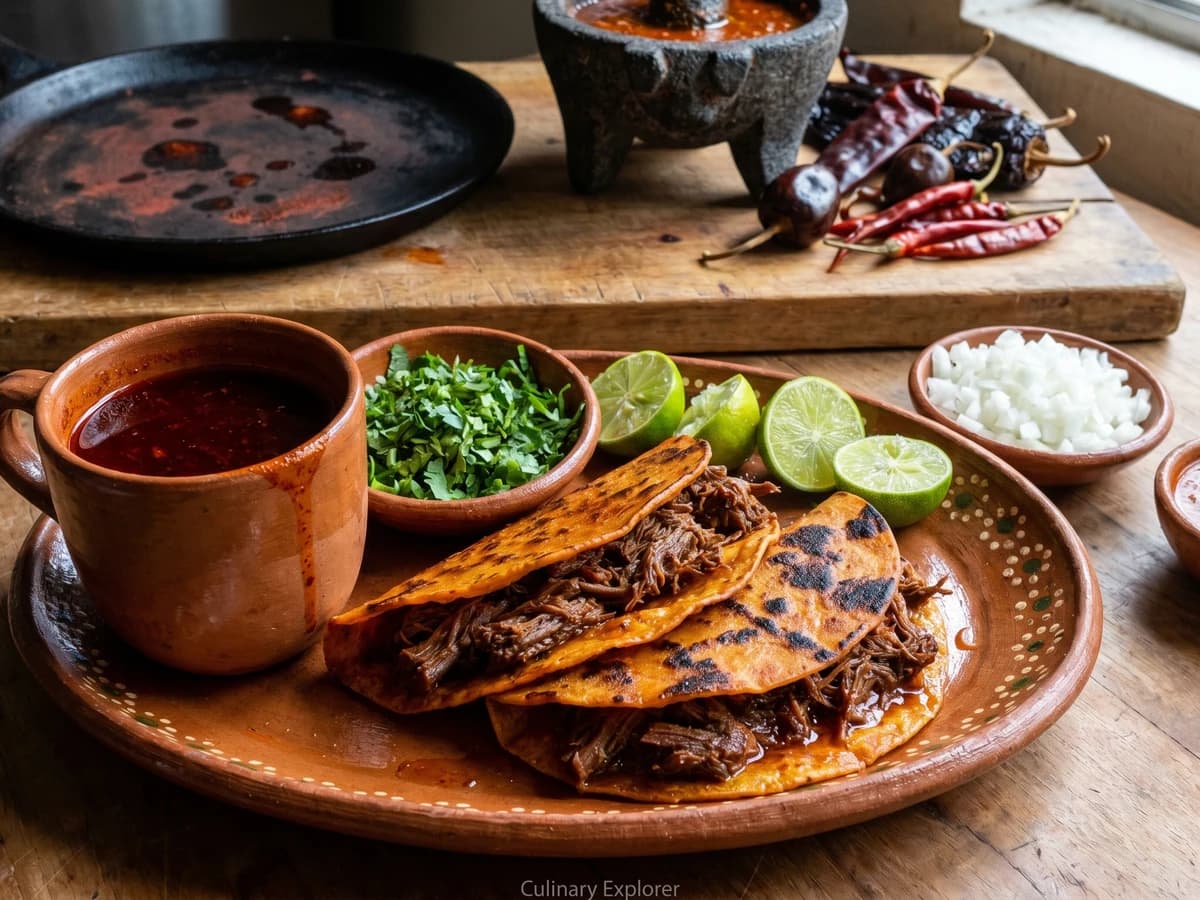
Jalisco's goat birria, born around Cocula and carried into Guadalajara's markets, slow-braised in ancho, guajillo, cascabel, and chile de arbol, then tucked into corn tortillas crisped in its own red fat.
A cooking platform built around craft, culture, and the stories behind what we eat.
Created by
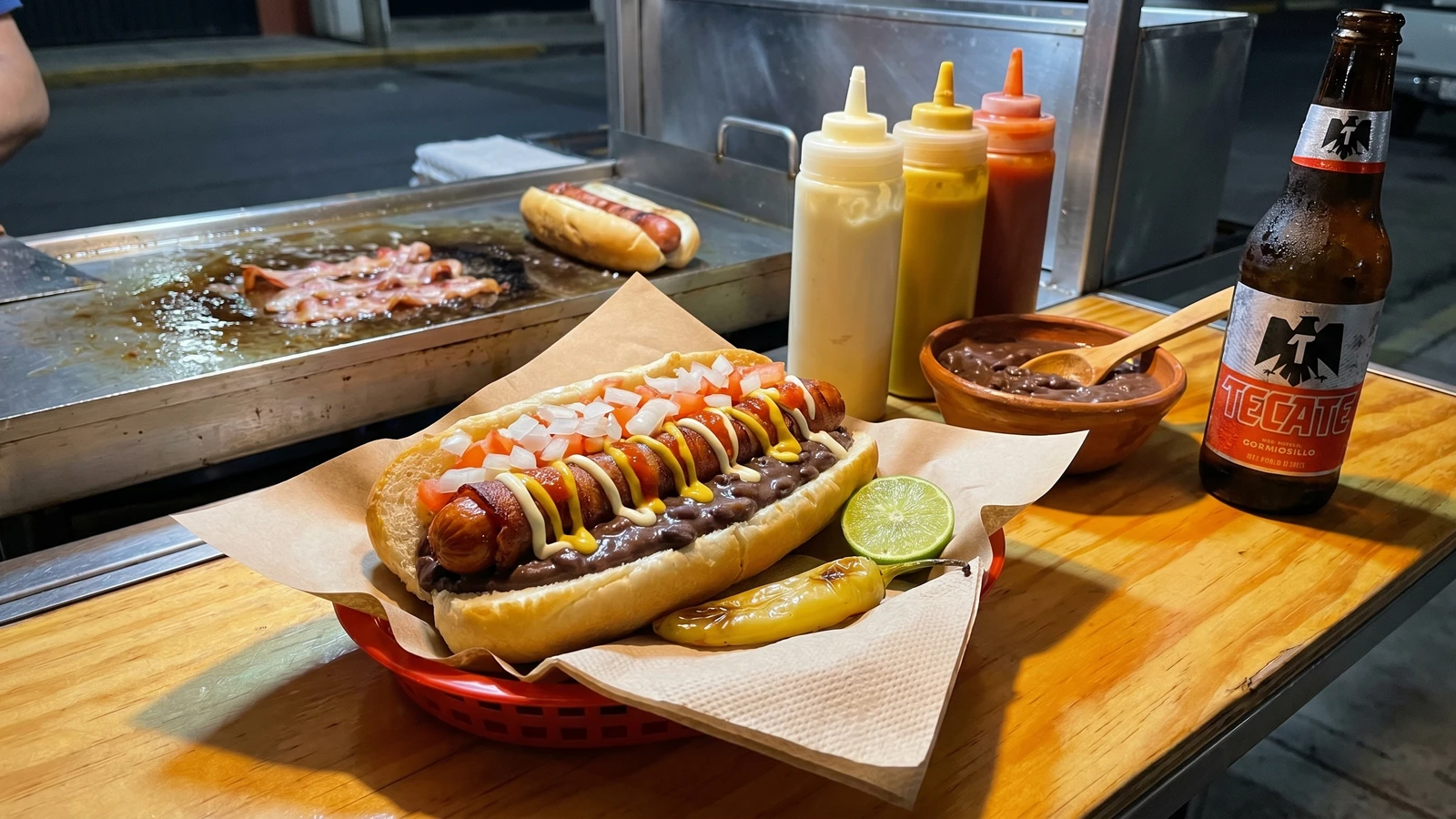
Hermosillo's late-night carreta classic, a bacon-wrapped beef frank tucked into a soft steamed bolillo with pinto beans, tomato, onion, three squeeze-bottle stripes, and a chile guero toreado on the side.
This is from Sonora. Specifically from Hermosillo, the capital, where the dogo took shape on the carretas, the rolling food carts, that line the streets after dark. Tucson likes to claim it. Tucson did not invent it. The Sonoran hot dog walked north across the border in the 1980s and the carretas of Hermosillo and Ciudad Obregon are where it was born.
The dogo is a Sonoran sandwich and Sonora is the land of beef and wheat. That is why the bun is a bolillo, not a slack American hot dog roll, and why the frank is a real beef frank wrapped in thin bacon and crisped on a flat top until the bacon shrinks and seals onto the dog. The bed of frijoles puercos underneath is not a topping. It is the foundation. Without the beans, you are eating something else.
The finish is the Hermosillo signature: tomato, white onion, mayonnaise, mustard, salsa de tomate, and a chile guero toreado on the side. The chile is whole, blistered on a dry comal until the heat wakes up, salt and lime on top. You bite the dogo, you bite the chile, you take a sip of something cold. That is the rhythm of a dogo eaten standing up at a carreta at one in the morning.
No me vengas con atajos. Bun-length pink wieners and squishy hot dog rolls give you a different sandwich. The dogo sonorense wants beef frank, thin bacon, bolillo, frijoles puercos, and a yellow chile. Cada estado, su propia cocina, and Sonora's is built on beef, wheat, and the heat of the desert.
The dogo sonorense emerged in Hermosillo in the late 1960s and early 1970s as a street-cart adaptation of American hot dogs encountered through the close cross-border ties between Sonora and Arizona, with Sonoran cooks rebuilding the sandwich around their own pantry: beef, bacon, wheat bolillos, and pinto beans. The carreta format, a wheeled cart with a flat top griddle and squeeze bottles, became fixed in Hermosillo neighborhoods like Pitic and the area around the Plaza Zaragoza, then spread north across the border to Tucson in the 1980s and 1990s, where it was renamed the Sonoran hot dog and frequently misattributed as a Tucson invention. The use of frijoles puercos, pinto beans cooked with pork lard and chorizo, places the dogo squarely in the Noroeste tradition that also produced the bacon-wrapped seafood and beef dishes of coastal Sonora.
Quantity
6
the long thin kind, not bun-length cocktail dogs
Quantity
6 strips
Quantity
6
split lengthwise without cutting all the way through
Quantity
2 tablespoons
Quantity
2 cups
warmed and loose
Quantity
1 large
finely diced
Quantity
1 small
finely diced
Quantity
1/4 cup
Quantity
3 tablespoons
Quantity
3 tablespoons
Quantity
1/2 cup
Quantity
6
Quantity
for serving
Quantity
for serving
Quantity
to taste
| Ingredient | Quantity |
|---|---|
| all-beef frankfurtersthe long thin kind, not bun-length cocktail dogs | 6 |
| thin-cut bacon | 6 strips |
| bolillos or pan estilo media nochesplit lengthwise without cutting all the way through | 6 |
| pork lard (manteca de cerdo) or bacon drippings | 2 tablespoons |
| frijoles puercos (refried pinto beans cooked with lard)warmed and loose | 2 cups |
| ripe Roma tomatofinely diced | 1 large |
| white onionfinely diced | 1 small |
| Mexican-style mayonnaise (Mayonesa McCormick or con Limon) | 1/4 cup |
| yellow mustard | 3 tablespoons |
| salsa de tomate (Mexican ketchup made with cane sugar, like Del Fuerte) | 3 tablespoons |
| grated queso Chihuahua or queso asadero (optional) | 1/2 cup |
| chiles gueros (yellow wax chiles, also called chile caribe) | 6 |
| Maggi Jugo or salsa Huichol (optional) | for serving |
| lime halves (optional) | for serving |
| kosher salt | to taste |
Lay each frankfurter on the cutting board and spiral a strip of thin-cut bacon around it from end to end, overlapping just slightly so the bacon stays put as it cooks. No toothpicks. The bacon shrinks onto the frank as it renders and seals itself. Use thin bacon, not the thick American slab cut. Thick bacon will not crisp before the frank dries out.
Heat a dry comal or heavy skillet over medium-high. Lay the whole chiles gueros on the dry surface and roll them around with tongs until the skin blisters in spots and turns from yellow to a softer translucent gold, about 4 to 6 minutes. A toreado is not a roasted chile and not a fried chile. It is a chile bruised on a hot surface until the heat wakes up. Sprinkle them with a pinch of salt and a squeeze of lime and set aside. One chile guero per dogo, on the side. Asi se hace y punto.
Wipe the comal clean and add the lard or bacon drippings over medium heat. Lay the wrapped franks seam side down to set the bacon in place for the first 90 seconds. Then roll them around steadily for 8 to 10 minutes total, until the bacon is crackling and dark amber on every side and the frank is plumped and starting to split slightly. The fat that renders into the pan is what fries the bun in the next step. Do not pour it out.
The Sonoran bolillo for a dogo is steamed soft, not crusty, with the inside warm and pliable. Wrap the split bolillos loosely in a damp cotton cloth and set them in a covered steamer basket or over a low pot of simmering water for 3 to 4 minutes until they soften. Then lay each one cut side down on the comal in the rendered fat for 30 seconds, just to warm and lightly toast the inside. Soft outside, slightly crisped where the beans will sit. That contrast is the point.
Open the warm bolillo. Spread a generous spoonful of frijoles puercos along the bottom of the split, edge to edge. The beans are the foundation of a dogo sonorense. They glue everything together and they soak up the bacon fat. Loose, not stiff. If your beans are stiff from the refrigerator, loosen them with a splash of bean broth or water on the comal before they go in.
Press a hot bacon-wrapped frank into the bed of beans. Top with a stripe of diced tomato and a stripe of diced white onion straight down the length of the dog. Zigzag mayonnaise across the top, then mustard, then salsa de tomate. The three-stripe finish is the Hermosillo signature. If you are using cheese, scatter the grated queso Chihuahua over the hot frank before the cold toppings go on so it just melts at the edges.
Set each dogo on a paper-lined plate or in a small basket the way the carretas do it. Rest a chile guero toreado across the top or on the side. Lime halves and a small dish of Maggi Jugo or salsa Huichol go on the table. Eat immediately, with both hands, leaning forward over the plate. The dogo sonorense is not a dignified sandwich. It is a Hermosillo street food and it is best eaten standing up at midnight.
1 serving (about 310g)
Culinary guides, cultural storytelling, and the editorial depth that makes cooking meaningful.
Discover Culinary ExplorerChef Lupita
Jalisco's goat birria, born around Cocula and carried into Guadalajara's markets, slow-braised in ancho, guajillo, cascabel, and chile de arbol, then tucked into corn tortillas crisped in its own red fat.
Chef Lupita
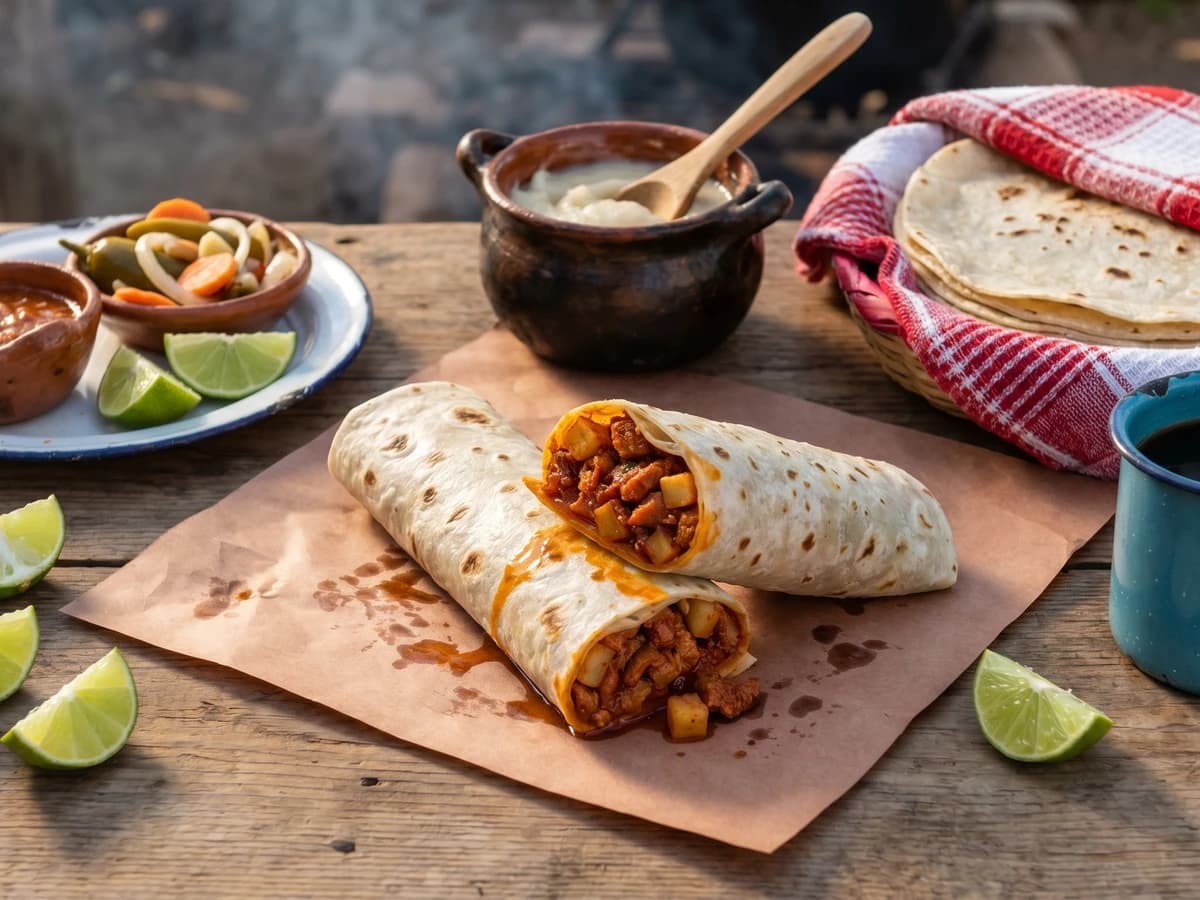
Sonora's working morning burrito: chicharrón de cáscara stewed in chile colorado with diced potato, rolled tight in a paper-thin tortilla sobaquera and eaten standing up at the carreta.
Chef Lupita
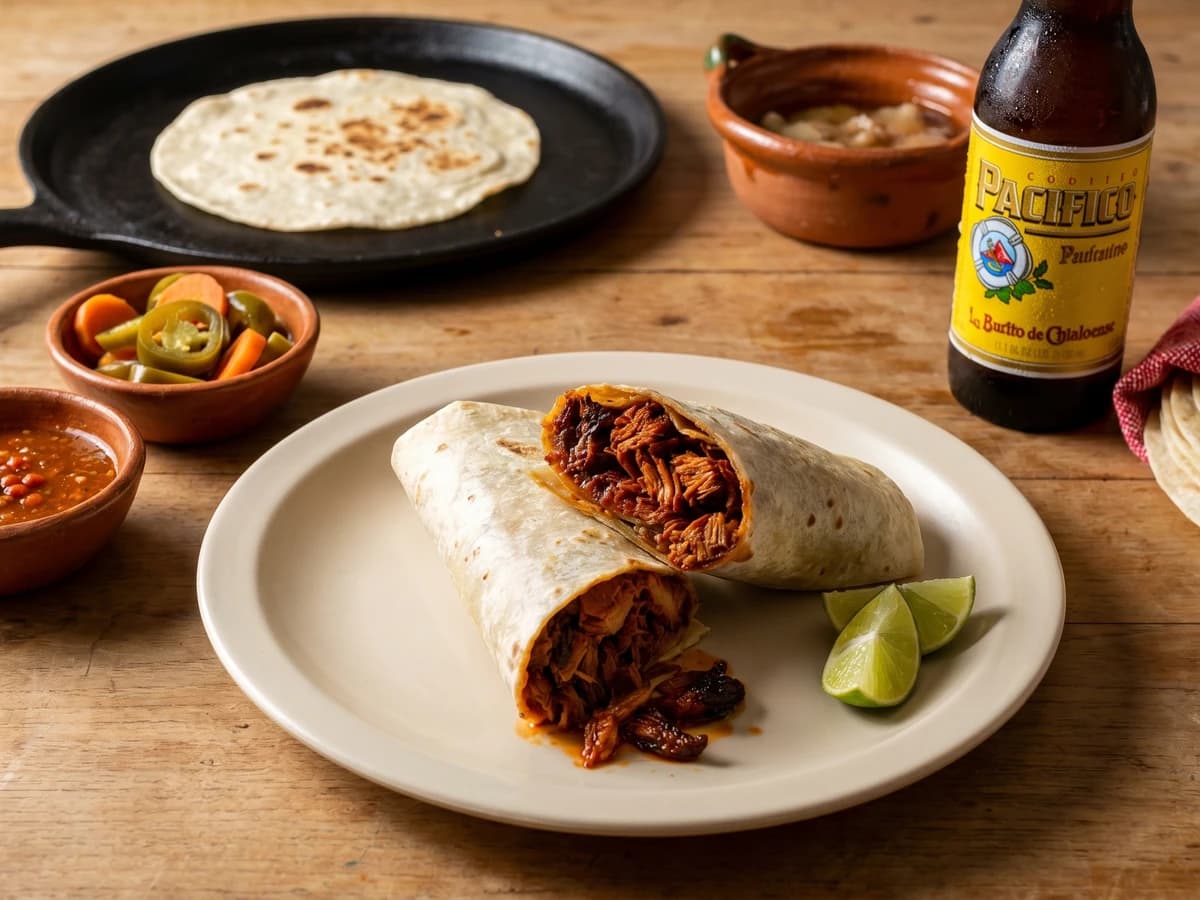
Mocorito's pork chilorio, shredded and confited in lard with chile ancho and pasilla, rolled into a thin handmade flour tortilla. The burrito Sinaloa sends out into the world.
Chef Lupita
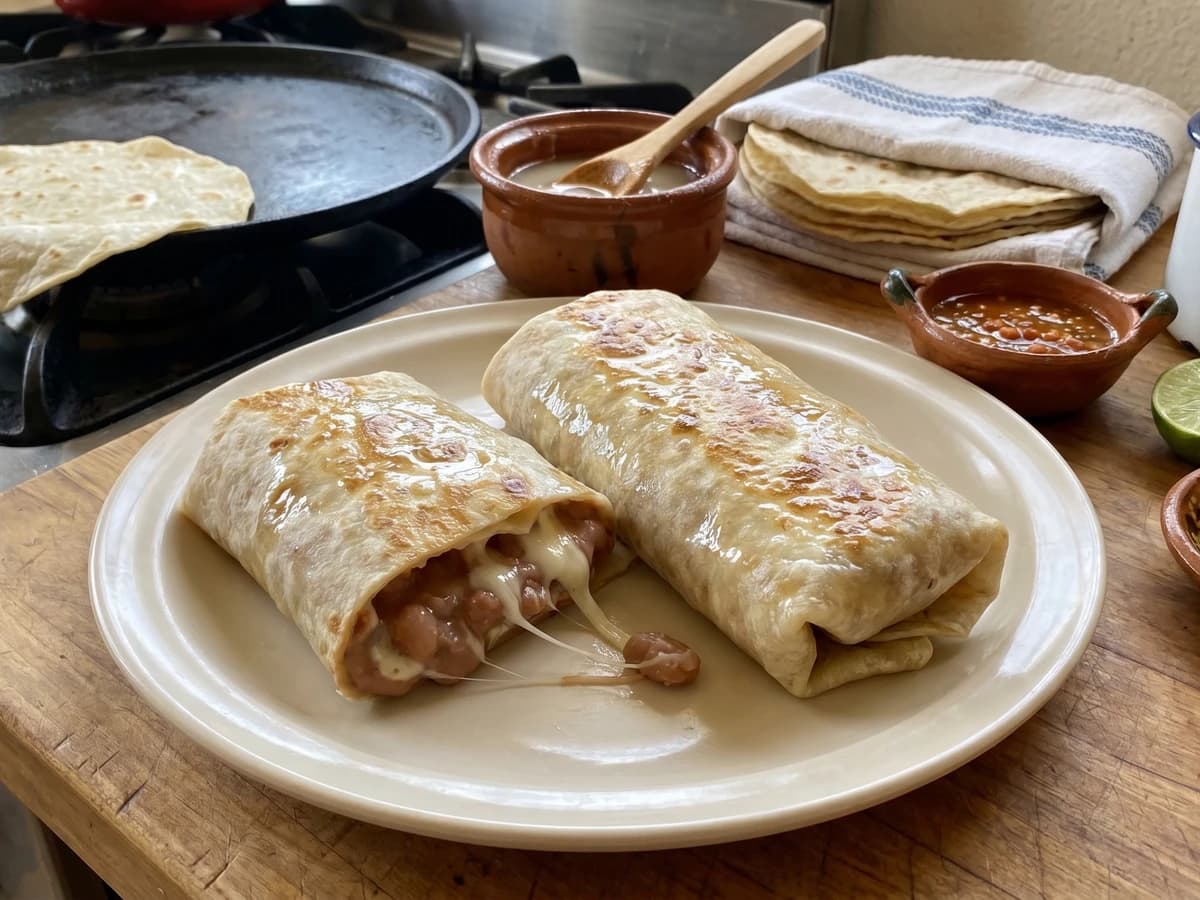
Sonora's morning burrito of mashed pinto frijoles puercos and melted queso asadero, wrapped in a paper-thin sobaquera and seared on the comal until the cheese pulls in long strings.