
Chef Juliana
Ambrosia Baiana
You think curdled milk means you ruined dessert. Good. Tonight you'll do it on purpose, with lemon, yolks, cravo, and sugar, until the pot turns into golden gruminhos.
A cooking platform built around craft, culture, and the stories behind what we eat.
Created by
You think sliceable fruit paste is for old doceiras with copper pans. It isn't. Marmelo, sugar, a heavy pot, and patience will teach your spoon the ponto.
You look at a block of marmelada, dark and firm enough to slice, and that little voice says, isso não é pra mim. Good. Bring that voice to the stove. A gente is going to make it watch fruit turn into doce, one plain step at a time.
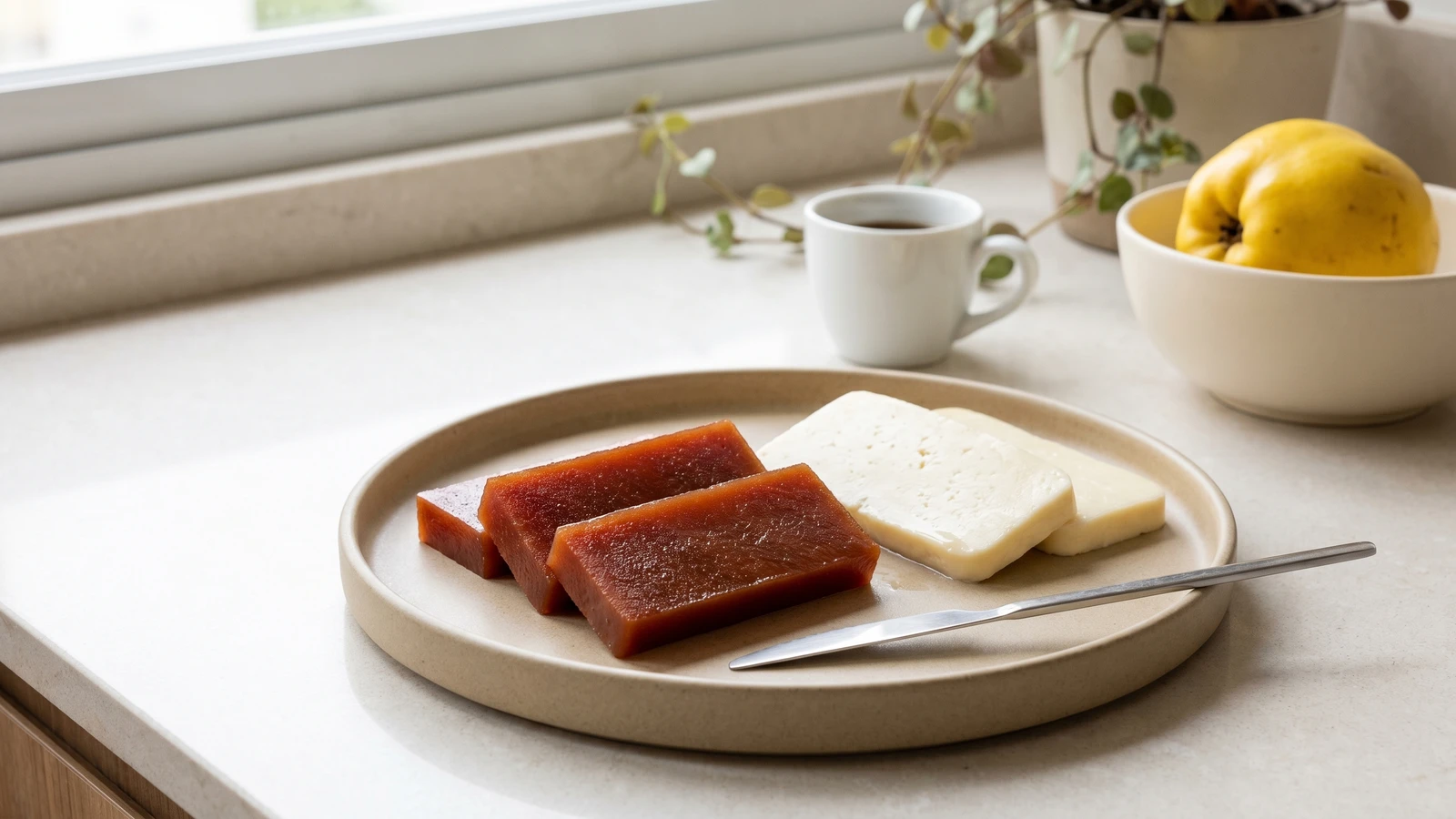
This is not the sweet that solves dinner like rice and beans do, but it belongs beside the everyday Brazilian plate anyway. After the pê-efe, rice, feijão, a bit of meat or egg, something green, comes coffee, a sliver of queijo Minas, and a square of something saved in the pantry because someone knew how to turn a harvest into the year. That's comida de verdade too.
The ponto is the whole game. You cook the marmelo first so it softens enough to pass through the food mill. You measure the pulp so the sugar is honest, not guessed. Then you stir until the paste pulls from the bottom of the pan and the spoon leaves a path that stays open for a breath. Not magic. Method. Cozinhar não é dom, é um aprendizado.
We're not using powder, packet, coloring, or perfume pretending to be fruit. Marmelo already smells like flowers and apples had a serious conversation. Your job is to keep it from catching, cook it thick, and let it set.
Marmelada originally meant quince paste, from the Portuguese word marmelo, and only later did the name travel into other fruit preserves and citrus marmalades. In Minas Gerais, especially around São Bartolomeu near Ouro Preto, quince sweets belong to the old farm-pantry tradition of the gold-rush region, where doceiras turned seasonal fruit into blocks, pastes, and caldas that could last beyond the harvest. Sabará, Araxá, and the Serra da Canastra region carry their own doce and cheese traditions too, and this home version borrows the method without pretending to replace the women who kept those kitchens alive.
Quantity
1.5 kg
washed, fuzz rubbed off
Quantity
4 cups, plus more if needed
Quantity
2 tablespoons
Quantity
3/4 the volume of cooked quince pulp, usually 3 to 4 cups
Quantity
1 pinch
Quantity
1 teaspoon
for greasing the mold
| Ingredient | Quantity |
|---|---|
| ripe quince (marmelo)washed, fuzz rubbed off | 1.5 kg |
| water | 4 cups, plus more if needed |
| lemon juice | 2 tablespoons |
| granulated sugar | 3/4 the volume of cooked quince pulp, usually 3 to 4 cups |
| salt | 1 pinch |
| neutral oilfor greasing the mold | 1 teaspoon |
Rub the fuzz off the marmelos under running water, then quarter them with a steady knife. Keep the peels and cores for now, because they carry pectin, the natural thing that helps the paste set. Cut away any bruised or brown spots. If the fruit fights you, that's normal. Marmelo is hard before it becomes generous.
Put the quince pieces in a heavy 4-liter pot with the water and lemon juice. Bring to a boil, then lower to a steady simmer and cook until the fruit is soft enough to crush with a spoon, about 35 to 45 minutes. Keep the water just covering the bottom half of the fruit, adding a splash if the pot dries. This first cooking softens the flesh and pulls pectin from the peels and cores, so the final doce sets instead of sulking in a spoonable puddle.
Lift the softened fruit into a food mill or press it through a coarse sieve. Discard the peels, cores, and seeds left behind. Measure the smooth pulp in cups. For every 1 cup of pulp, measure 3/4 cup sugar. This is how you stop guessing. Too little sugar and the paste won't keep or set well; too much and the marmelo disappears under sweetness.
Wash the pot if any fruit stuck to it, then return the pulp, sugar, and salt to the pot. Stir over medium heat until the sugar dissolves and the mixture loosens, about 5 minutes. It should look glossy and smell floral, not burnt. A clean pot matters here because old stuck bits scorch early and bitter the whole batch. Ask me how I learned. Actually, don't. It was ugly.
Lower the heat to medium-low and cook, stirring often with a wooden spoon, until the paste thickens, darkens to reddish brown, and starts pulling away from the sides and bottom of the pan, about 35 to 50 minutes. Drag the spoon across the bottom. When the path stays open for 2 seconds before the paste slowly closes, you're close. Keep stirring, especially at the corners, because thick fruit paste burns where the spoon forgets to go.
Lightly grease a small loaf pan or shallow glass dish with neutral oil. Scrape in the hot marmelada and smooth the top with the back of a wet spoon. It should fall in thick mounds, not pour like syrup. Let it cool uncovered, then cover and rest at room temperature overnight. The rest finishes the set, because fruit paste keeps firming as the pectin network relaxes into place.
Unmold the marmelada and slice it with a thin knife wiped clean between cuts. Serve small squares with queijo Minas and coffee, or tuck slices into a lunchbox for the sweet after the pê-efe. The texture should be firm, smooth, and sliceable, with a clean edge and a deep perfume. If it's softer than you wanted, call it pasta de marmelo and eat it with a spoon. Dinner is not a courtroom.
1 serving (about 60g)
Culinary guides, cultural storytelling, and the editorial depth that makes cooking meaningful.
Discover Culinary ExplorerChef Juliana
You think curdled milk means you ruined dessert. Good. Tonight you'll do it on purpose, with lemon, yolks, cravo, and sugar, until the pot turns into golden gruminhos.

Chef Juliana
You are not ruining the milk. You're curdling it on purpose, slowly, until sugar, eggs, cinnamon, and patience turn cheap ingredients into dessert.

Chef Juliana
You think curdled milk means failure. Not here. Milk, yolks, sugar, and lemon cook into golden curds in amber whey, a Minas sweet where the ponto teaches the whole recipe.

Chef Juliana
You already trust rice for dinner. Trust it for dessert: cook it gently with milk, coconut, and canela until each grain turns soft, creamy, and impossible to blame on lack of talent.