Chef Joost
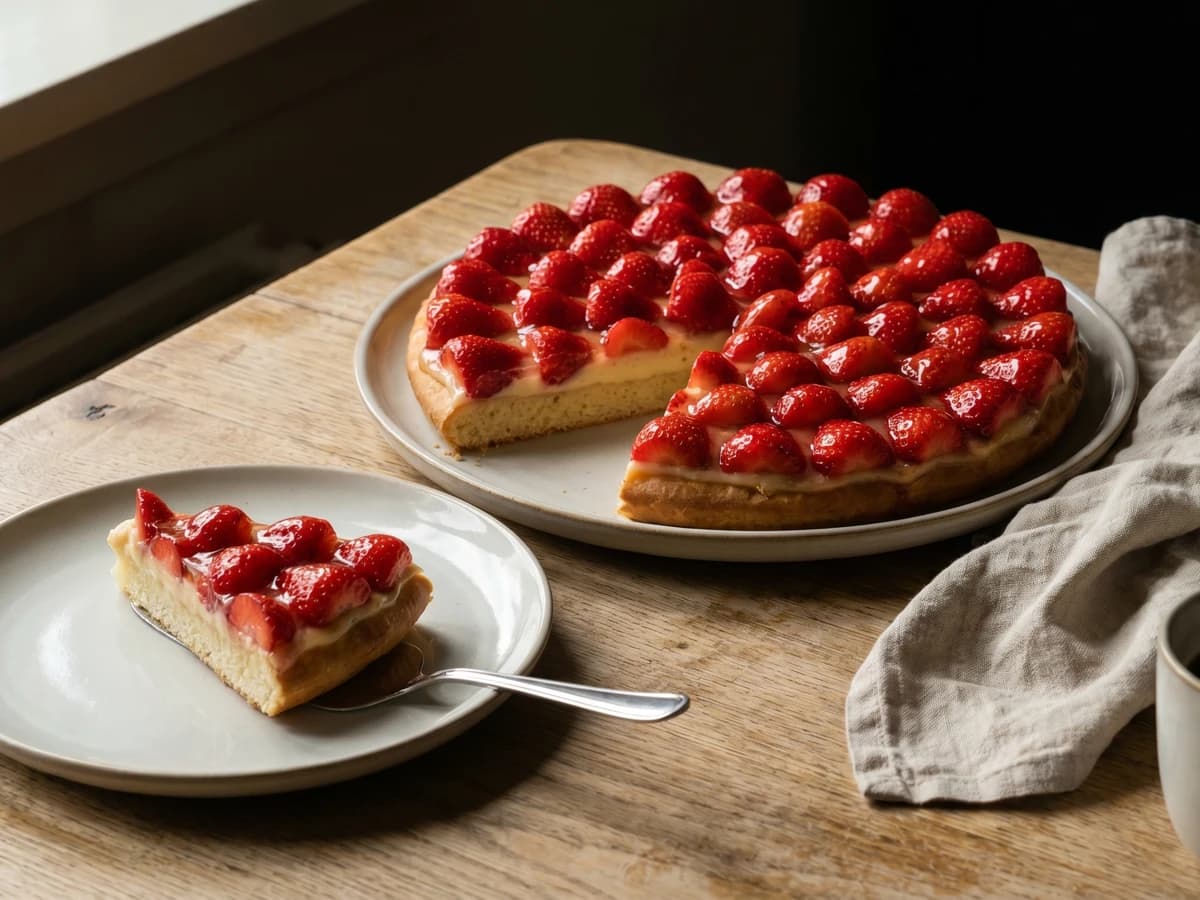
Aardbeienvlaai (Limburg Strawberry Vlaai)
The summer vlaai that politely breaks Limburg's baked-fruit rule: soft gistdeeg, cool pastry cream, and strawberries left fresh because June knows better than the oven.
A cooking platform built around craft, culture, and the stories behind what we eat.
Created by
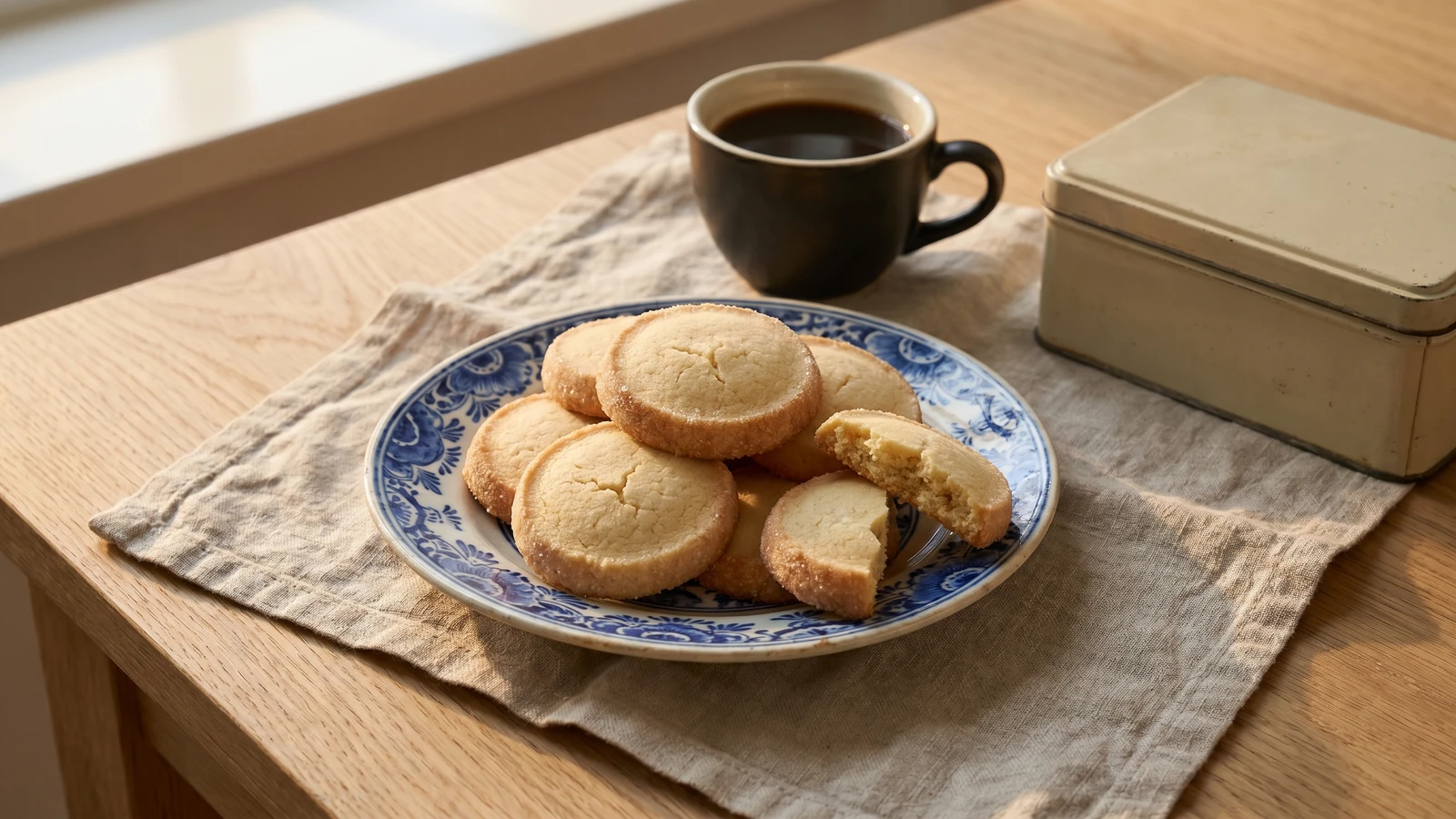
A small butter cookie from Dalfsen, carrying an Overijssel dialect word, a village bakery secret, and the quiet Dutch genius of making butter, sugar, and flour worth remembering.
Some dishes cross oceans. Dalfser Moppen cross the village in a paper bag, from the bakery counter to the coffee table, and that journey is not smaller. Dalfsen sits on the Vecht in Overijssel, where food history often speaks softly: a biscuit tin opened after church, a cup poured before the visitor has taken off his coat, a little cookie placed beside it as if this were nothing. It is never nothing.
The name already tells you the useful part. Dalfser means from Dalfsen, and in eastern Dutch speech a mop or mopke is a small cookie. That is not a grand etymology, thank heavens. It is better: a local word still doing its work. But let me tell you a secret. The real Dalfser Mop recipe is kept closed by the bakers who inherited it, and any home cook who claims to possess it should be asked a few firm questions over coffee.
So this is not the guarded bakery recipe. It is a respectful household version in the same spirit: butter first, sugar close behind, flour only as much as needed, and patience in the cold. The chilling matters because butter cookies are honest but unforgiving; warm dough spreads into sadness, chilled dough keeps its little round shoulders. Hou het altijd simpel, always keep it simple. A small cookie should not arrive dressed for court.
Dalfser Moppen belong to Dalfsen in Overijssel, where the local butter-cookie tradition is described as more than 235 years old and has been recorded as Dutch intangible heritage. The protected recipe remains unpublished, while the regional word mop or mopke names the small cookie itself, tying the pastry to eastern Dutch speech as much as to the bakery. Its survival shows how Dutch culinary history often lives not in national cookbooks, but in village bakers, dialect words, and the biscuit tin on the table.
Quantity
250g
Quantity
150g
softened but cool
Quantity
120g
Quantity
1
Quantity
1 teaspoon vanilla sugar or 1/2 teaspoon extract
Quantity
1 teaspoon
finely grated
Quantity
3g
Quantity
1 to 2 tablespoons
Quantity
2 tablespoons
for the edges
| Ingredient | Quantity |
|---|---|
| all-purpose flour | 250g |
| unsalted buttersoftened but cool | 150g |
| fine caster sugar | 120g |
| egg yolk | 1 |
| vanilla sugar or vanilla extract | 1 teaspoon vanilla sugar or 1/2 teaspoon extract |
| lemon zest (optional)finely grated | 1 teaspoon |
| fine sea salt | 3g |
| milk (optional) | 1 to 2 tablespoons |
| coarse sugarfor the edges | 2 tablespoons |
Beat the cool softened butter, caster sugar, vanilla sugar, lemon zest if using, and salt for about two minutes, just until creamy and pale. Do not whip it into a cloud. A mop is a butter cookie, not a sponge, and too much air makes it lose its tidy little shape.
Beat in the egg yolk until the mixture looks smooth and glossy. The yolk gives tenderness and a little colour, which is exactly what you want: a cookie that breaks cleanly under the teeth but does not crumble into sand.
Add the flour and mix gently until the dough gathers in soft clumps. If dry flour remains at the bottom of the bowl, add milk one teaspoon at a time until it comes together. Stop as soon as it does. Flour has no manners when overworked; it turns a tender cookie tough.
Divide the dough in two and roll each half into a neat log about 3cm wide. Scatter the coarse sugar on the work surface and roll the logs through it so the edges pick up a light crust. Wrap and chill for at least one hour, until firm.
Heat the oven to 175C. Slice the chilled logs into coins about 8mm thick and set them on a parchment-lined tray with a little space between them. Bake for 12 to 14 minutes, until the edges are light gold and the centres still look pale. Let them cool on the tray for five minutes before moving them; small cookies need a moment to find their backbone.
1 serving (about 18g)
Culinary guides, cultural storytelling, and the editorial depth that makes cooking meaningful.
Discover Culinary ExplorerChef Joost
The summer vlaai that politely breaks Limburg's baked-fruit rule: soft gistdeeg, cool pastry cream, and strawberries left fresh because June knows better than the oven.

Chef Joost
A Limburg vlaai is not a pie trying to be grand. It is a thin yeast-dough round, fruit-bright and generous, made for birthdays, coffee, and second slices.

Chef Joost
The December bakery counter made small: cold leafed pastry wrapped around lemon-scented amandelspijs, brushed gold, and scattered with almonds so one person gets the whole holiday in both hands.

Chef Joost
A thin Amsterdam cookie carrying a cog ship in its name: caramelized butter dough, almond nougatine, and a 1934 contest that turned municipal pride into something for coffee.