
Chef Isabel
Acedías Fritas de Cádiz
Acedías fritas belong to Cádiz: tiny wedge sole, salted, dusted in frying flour, and dropped into very hot olive oil so the rims crisp while the fish stays tender.
A cooking platform built around craft, culture, and the stories behind what we eat.
Created by
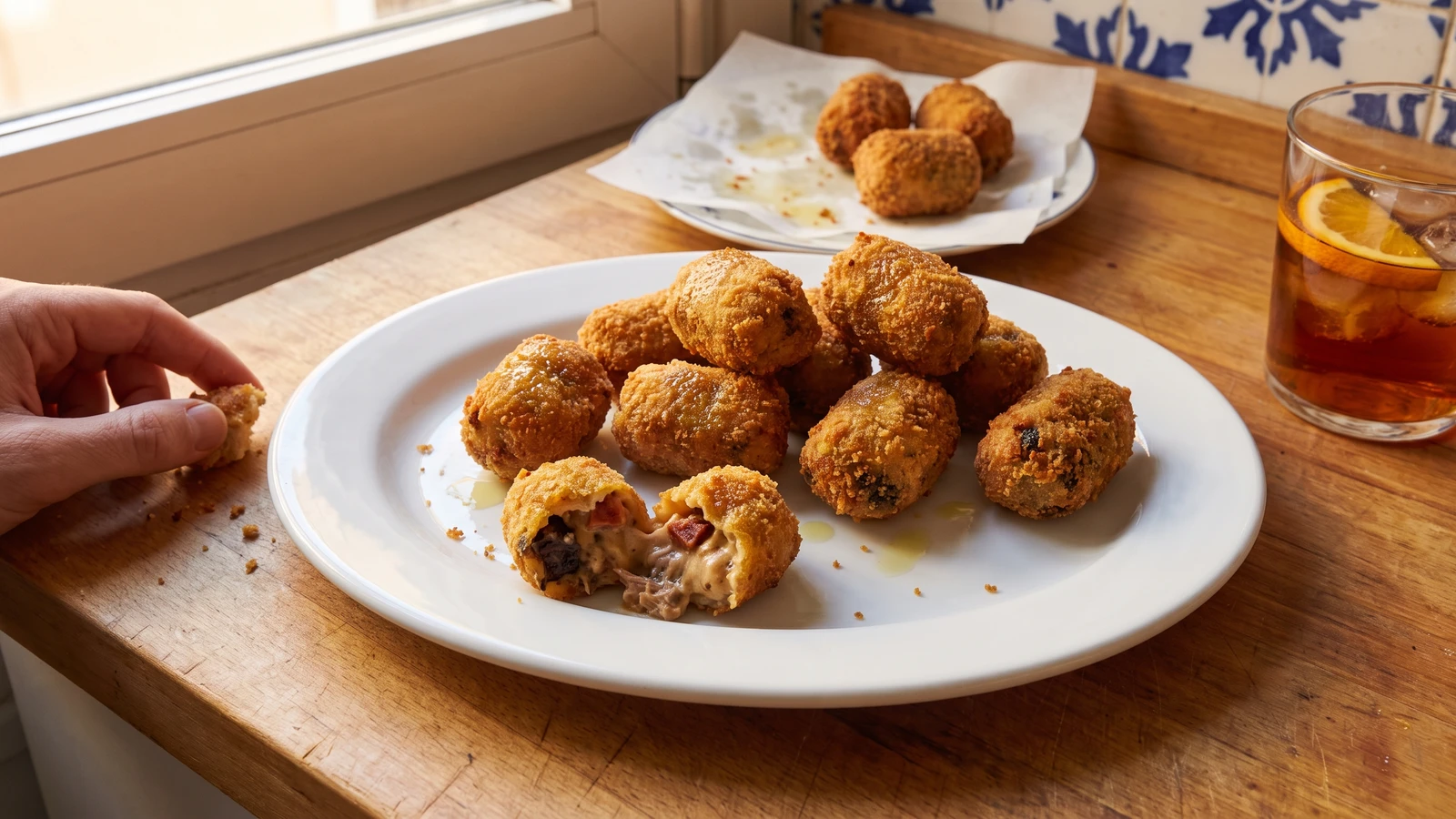
Croquetas de cocido are Madrid's second meal from the stew pot: minced cocido meats folded into a thick bechamel, chilled firm, breaded, and fried until the shell is crisp and the middle stays creamy.
Croquetas de cocido madrileño belong to Madrid because they start with cocido madrileño, the city's great chickpea and meat stew. The next day, the beef, pork, chorizo, and morcilla are minced fine and folded into bechamel, so nothing good from the pot is wasted. That's what makes these croquetas what they are, not plain ham croquetas with a different name.
The method that decides them is the masa, the thick bechamel paste. Cook the flour properly in the fat, then add the milk little by little and stir until the mixture pulls from the pan in one heavy, glossy mass. If the masa is loose, the croquetas burst in the oil. If it's cooked right and chilled cold, siempre sale, si lo sigues.
If you don't have leftovers from a full cocido, no hace falta haber pisado España. Use tender cooked beef shank, a little cooked pork shoulder, Spanish chorizo, and morcilla if you can get it. Without morcilla, add a little more chorizo and know the filling will be less dark and earthy. That is a compromise, not a crime.
My Margin says the same thing beside every croqueta recipe: chill longer than you think. Hot hands, warm masa, thin coating, all of them make trouble. Cold paste, double crumbs, hot oil. Nadie nace sabiendo, but this one is very forgiving when you respect those three things.
Croquetas de cocido grew from the Madrid habit of stretching cocido madrileño beyond its first serving: soup, chickpeas, vegetables, and meats, then leftovers worked into another meal. The croqueta itself arrived through the French bechamel technique, but Madrid made it domestic and thrifty by filling it with the pringá, the chopped meats from the stew pot. In many homes and tabernas, these croquetas are the proof that the cocido was not only a Sunday meal but a small economy for the days after.
Quantity
250g
finely minced, using beef, pork, chorizo, and morcilla
Quantity
75g
Quantity
40ml
Quantity
120g
very finely minced
Quantity
95g
for the bechamel
Quantity
650ml
warmed
Quantity
100ml
warmed
Quantity
1/4 teaspoon
Quantity
1/2 teaspoon, plus more to taste
Quantity
to taste
Quantity
2
beaten
Quantity
150g
Quantity
60g
for coating
Quantity
1 litre
for frying
| Ingredient | Quantity |
|---|---|
| cooked meats from cocido madrileñofinely minced, using beef, pork, chorizo, and morcilla | 250g |
| unsalted butter | 75g |
| extra virgin olive oil | 40ml |
| onionvery finely minced | 120g |
| plain flourfor the bechamel | 95g |
| whole milkwarmed | 650ml |
| cocido broth or light meat stockwarmed | 100ml |
| freshly grated nutmeg | 1/4 teaspoon |
| fine salt | 1/2 teaspoon, plus more to taste |
| freshly ground black pepper | to taste |
| large eggsbeaten | 2 |
| fine dry breadcrumbs | 150g |
| plain flourfor coating | 60g |
| mild olive oil or sunflower oilfor frying | 1 litre |
Pick through the cocido meats and remove any hard gristle or loose skins. Mince the beef, pork, chorizo, and morcilla very fine with a knife, not to a paste. You want little pieces through the bechamel, so each bite tastes of the stew pot.
Melt the butter with the olive oil in a wide heavy pan over medium-low heat. Add the onion and cook for 10 to 12 minutes, stirring often, until soft, sweet, and pale gold, not browned. This small sofrito, the slow onion base, gives the croqueta body without shouting over the cocido.
Add the 95g flour and stir it into the fat and onion for 3 minutes. It should smell warm and nutty, with no raw flour scent left, but it must not darken. Pésalo, no lo adivines: too little flour gives a loose masa, too much gives a heavy one.
Pour in the warm milk a little at a time, stirring hard after each addition until smooth before adding more. Add the warm cocido broth, nutmeg, salt, and pepper. Keep stirring over medium-low heat for 12 to 15 minutes, until the bechamel is thick, glossy, and pulls away from the sides of the pan in one heavy mass.
Stir in the minced cocido meats and cook for 2 minutes more, just until the filling is even and smells of chorizo and broth. Taste carefully and adjust the salt. Remember that the coating has almost no seasoning, so the masa should taste complete now.
Scrape the masa into a shallow dish, smooth the top, and press baking paper or film directly onto the surface. Chill for at least 4 hours, and overnight is better. Warm masa is trouble; cold masa holds its shape and fries clean.
Set out three dishes: 60g flour, beaten eggs, and breadcrumbs. With lightly oiled hands, shape the cold masa into logs about 35g each. Roll each one in flour, then egg, then breadcrumbs. For a stronger shell, dip again in egg and breadcrumbs. That double crumb is not fancy, it is insurance.
Heat the frying oil to 175 C in a deep pan. Fry the croquetas in small batches for 2 to 3 minutes, turning gently, until evenly deep gold and crisp. Do not crowd the pan or the oil cools and the coating drinks fat. Drain on a rack or paper, salt lightly, and wait 3 minutes before eating so the center settles creamy instead of scorching your mouth.
1 serving (about 50g)
Culinary guides, cultural storytelling, and the editorial depth that makes cooking meaningful.
Discover Culinary ExplorerChef Isabel
Acedías fritas belong to Cádiz: tiny wedge sole, salted, dusted in frying flour, and dropped into very hot olive oil so the rims crisp while the fish stays tender.

Chef Isabel
Afuega'l Pitu Roxu is Asturias in a small cheese: cow's milk set slowly to a dense curd, drained without squeezing, then kneaded with pimentón until it turns orange and grips the throat.

Chef Isabel
Albergínies farcides are Mallorca's summer stuffed aubergines: tender boiled shells, a slow pork sofrito with moraduix, and a plain breadcrumb cap baked until the top turns crisp and golden.

Chef Isabel
Carxofes farcides are Catalan stuffed artichokes: tender hearts filled with jamón, slow sweet onion, and breadcrumbs, then baked in a light creamy sauce until the tops turn golden.