
Chef Takumi
Awamori Mizuwari (泡盛水割り, awamori with water)
Awamori mizuwari is not a trick of the bar. It is three parts awamori, seven parts cold water, and enough patience to let the black-kōji aroma open.
A cooking platform built around craft, culture, and the stories behind what we eat.
Created by
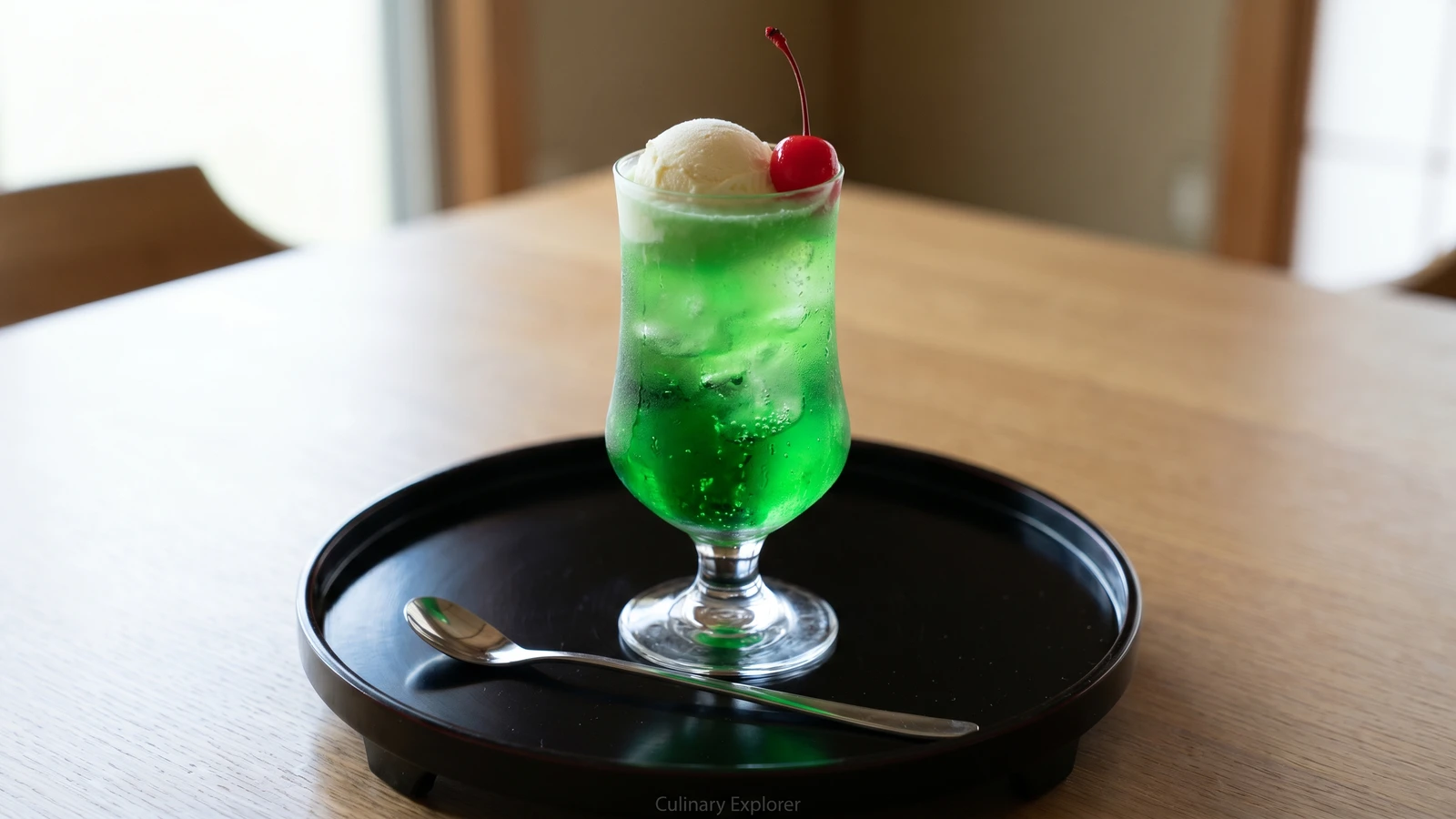
The kissaten cream soda asks for no hidden trick: bright melon syrup, hard cold soda, a neat scoop of vanilla, and one red cherry placed with a steady hand.
The color arrives before the flavor. That clear green, almost too cheerful to be serious, is half the point of Japanese cream soda. Then comes the white scoop, the red cherry, the tall glass, and suddenly a simple drink behaves like an occasion.
Don't make it grander than it is. Cream soda belongs to the kissaten, the old coffee shop, where it sits beside toast, coffee, and quiet booths. The method is plain: keep everything cold, pour gently, and use a small firm scoop so the ice cream floats instead of collapsing into sweet milk. The one detail that decides it is temperature. Cold glass, cold soda, cold scoop. Miss that and the drink loses its clean edges.
This is not washoku built on dashi and soy, of course. It is yōshoku-adjacent kissaten culture, a Western idea made thoroughly Japanese by habit, proportion, and presentation. Honmono here means restraint: emerald soda below, vanilla above, one cherry on top, nothing hidden, nothing improved by fussing. Leave it room in the glass and serve it before it thinks too much about melting.
Japanese cream soda became a familiar kissaten item in the postwar decades, when Western-style sweets, soda fountains, and cafe menus spread through urban Japan. The standard form settled into melon-flavored soda with vanilla ice cream and a red cherry, a combination closely tied to the Showa-era coffee shop rather than to older washoku. Today it remains a nostalgic cafe drink, especially in retro kissaten that preserve the tall glass, long spoon, and vivid green color as part of the service.
Quantity
1/4 cup
Quantity
1 1/2 cups
well chilled
Quantity
1 cup
Quantity
2 small scoops
Quantity
2
stems on if possible
| Ingredient | Quantity |
|---|---|
| melon syrup | 1/4 cup |
| plain soda waterwell chilled | 1 1/2 cups |
| ice cubes | 1 cup |
| vanilla ice cream | 2 small scoops |
| maraschino cherriesstems on if possible | 2 |
Put two tall glasses in the refrigerator or freezer for at least ten minutes. Cream soda is a cold drink, not a melted dessert with bubbles, and a chilled glass helps the soda stay sharp while the ice cream floats.
Pour 2 tablespoons melon syrup into each glass, then add a small handful of ice. The syrup goes in first so it can mix cleanly from the bottom when the soda arrives, instead of streaking lazily around the scoop like a child avoiding homework.
Slowly pour 3/4 cup chilled soda water into each glass, aiming down the inside wall rather than straight into the center. This keeps the bubbles lively without making a foam cap before the ice cream has its place. Stir once or twice from the bottom, just enough to make the green even.
Set one small, firm scoop of vanilla ice cream on top of each drink. A small scoop is the point: it should sit proudly above the soda and melt slowly into it, not sink and turn the glass cloudy at once.
Place one red cherry on each scoop and serve immediately with a long spoon and straw. The cherry is not decoration pretending to be optional. In this drink, that little red point against green and white is part of the memory of the form.
1 serving (about 330g)
Culinary guides, cultural storytelling, and the editorial depth that makes cooking meaningful.
Discover Culinary ExplorerChef Takumi
Awamori mizuwari is not a trick of the bar. It is three parts awamori, seven parts cold water, and enough patience to let the black-kōji aroma open.

Chef Takumi
Hot awamori asks for one small discipline: pour the hot water first, then the spirit. Do that, and the glass turns round, fragrant, and calmer than its strength suggests.

Chef Takumi
Bancha is the honest daily cup: late-season leaves, hot water, a short steep, and a clean amber-green liquor that asks for no ceremony to be good.

Chef Takumi
Whole black soybeans, roasted until their skins split, make a clear amber tea with a roasted sweetness and no caffeine. Drink it plain, then eat the softened beans while they still hold their warmth.