
Chef Juliana
Abobrinha Refogada
You think you'll turn zucchini into mush. Fine. Anota aí: high heat, wide pan, salt at the end, and suddenly this little green side starts solving dinner.
A cooking platform built around craft, culture, and the stories behind what we eat.
Created by
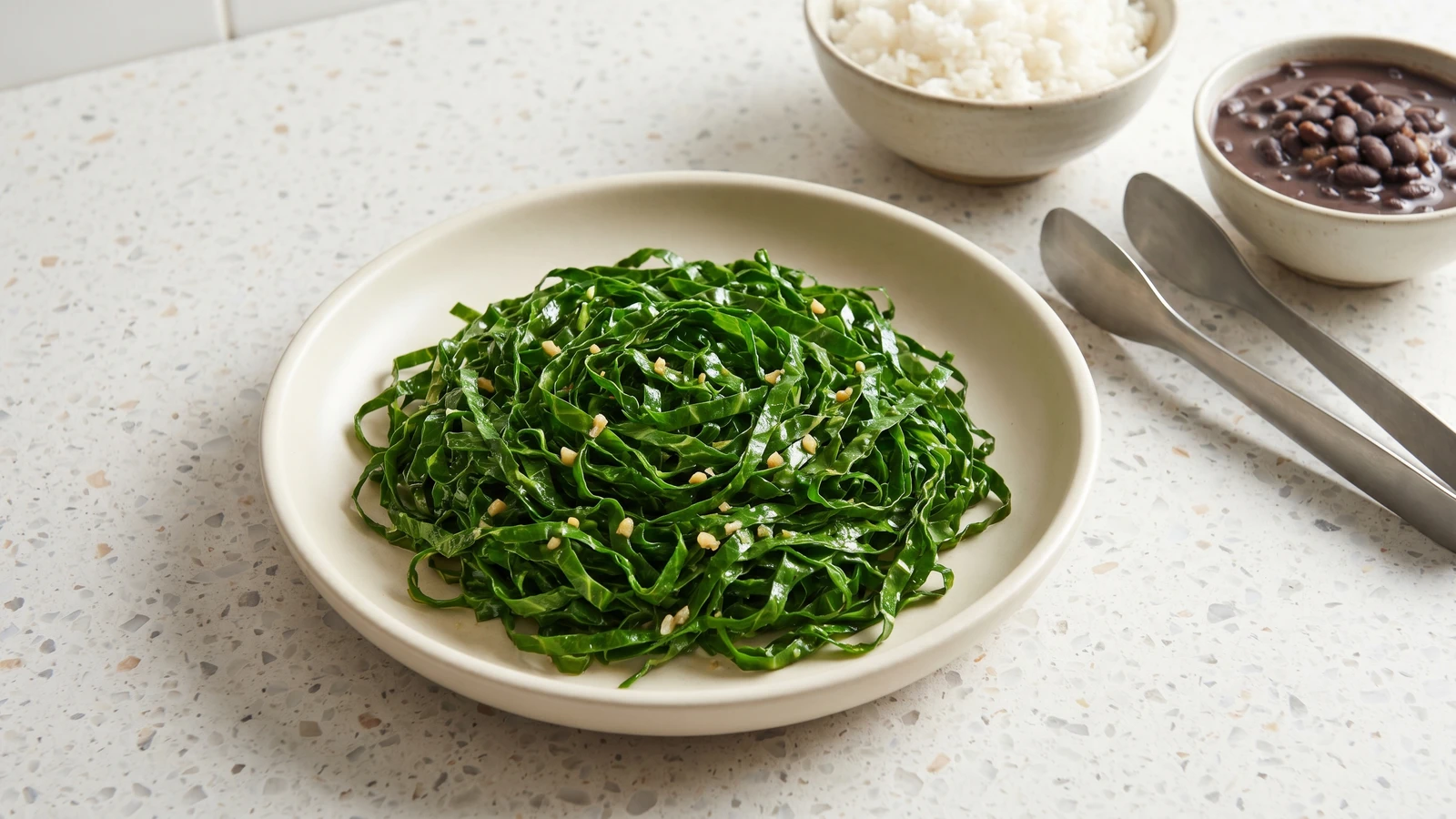
The person who says isso não é pra mim needs a hot pan, a tight roll of leaves, and two minutes. Bright couve is the something green that makes the pê-efe complete.
You say isso não é pra mim, and I know what that sentence usually means. The rice is on, the beans need their refogado, and now somebody says the plate needs something green. It sounds like one more job. It isn't. This is the part of dinner that rewards speed, not suffering.
A gente stacks the leaves, rolls them tight, slices them fine, and gives them a hot pan for two minutes. Thin cut means every ribbon touches garlic and fat. A hot pan means the greens murchar without drowning. Short time means bright green, not grey. Anota aí: the pan does more work than you do.
On the pê-efe, rice and beans and meat or egg or more beans, the something green isn't decoration. It wakes the plate up. It brings color, bite, and that clean garlicky smell that says comida de verdade happened here, not a packet pretending to be dinner.
I learned this late too. My first greens were so overcooked they looked apologetic. Then I wrote down the method: dry leaves, fine slice, hot fat, garlic watched closely, two minutes. Cozinhar não é dom, é um aprendizado. By the end, you'll have couve bright enough to sit beside feijão and rice like it belongs there. Because it does.
The name points to Minas Gerais, where finely sliced collards became a standard companion to bean-and-corn dishes in mining and farm kitchens by the eighteenth and nineteenth centuries. Collards in Brazil descend from Portuguese brassica traditions, but the Mineiro treatment is narrow ribbons cooked fast in fat, often beside feijão tropeiro, angu, rice, and beans. Bacon appears in many homes, but it is not the law; the shared marker is the fine cut and the quick refogado that keeps the leaves green.
Quantity
1 large bunch, about 12 large leaves or 300 g
washed, dried very well, tough stems removed
Quantity
2 tablespoons
divided if using bacon
Quantity
3 cloves
finely minced or thinly sliced
Quantity
1/2 teaspoon, plus more to taste
Quantity
2 tablespoons
Quantity
1 pinch
| Ingredient | Quantity |
|---|---|
| collard greens (couve)washed, dried very well, tough stems removed | 1 large bunch, about 12 large leaves or 300 g |
| olive oil, neutral oil, lard, or rendered bacon fatdivided if using bacon | 2 tablespoons |
| garlicfinely minced or thinly sliced | 3 cloves |
| fine salt | 1/2 teaspoon, plus more to taste |
| finely diced bacon (optional) | 2 tablespoons |
| black pepper (optional) | 1 pinch |
Pull the tough center stems from the collard leaves. Wash the leaves, then dry them very well in a salad spinner or between clean towels until they feel barely damp, not wet. Water rides into the pan and drops the heat; then the couve sweats in its own puddle instead of refogar in the fat.
Stack 4 or 5 leaves, roll them tightly like a cigar, and slice across the roll as fine as you can, about 1/8 inch or 3 mm. The fine cut is not prettiness, it's timing. Thin ribbons cook evenly in two minutes; thick strips need longer, and longer is how bright green becomes grey.
Set a large skillet over medium-high heat for 2 minutes. If using bacon, cook it with 1 teaspoon of the measured fat until the edges brown and the pan has about 2 tablespoons of glossy fat; if it looks dry, add more of the measured fat. If not using bacon, add the 2 tablespoons fat and let it shimmer. Add the garlic and stir for 30 to 45 seconds, just until it smells sweet and turns pale gold. This is the refogado doing its small, serious job. Brown garlic now and bitterness goes everywhere.
Add all the sliced couve if it fits in a loose mound; if the pan is crowded, add half now and half after the first half murchar. Sprinkle in the salt and toss constantly with tongs for 1 1/2 to 2 minutes, until the leaves turn bright green, glossy, and just tender. Stop while the ribbons still hold their shape. The goal is to coat and wilt, not cook it into submission; too much time gives you grey leaves with no bite.
Turn off the heat and taste one ribbon. It should be tender but not soft, garlicky, and salty enough to wake the leaf up. Adjust the salt, add the black pepper if using, and move the couve to a serving dish right away. The hot skillet keeps cooking it even when the flame is off. Serve beside arroz soltinho and feijão, with whatever meat, egg, or extra beans are solving dinner that night. That's the pê-efe doing its quiet work.
1 serving (about 70g)
Culinary guides, cultural storytelling, and the editorial depth that makes cooking meaningful.
Discover Culinary ExplorerChef Juliana
You think you'll turn zucchini into mush. Fine. Anota aí: high heat, wide pan, salt at the end, and suddenly this little green side starts solving dinner.

Chef Juliana
You think this is sacred enough to be impossible. It isn't. Acaçá is patience, stirring, and ponto, taught plainly, with respect for the terreiros that carry it.

Chef Juliana
You think cornmeal will turn into lumps and shame. It won't. Cold water first, patient stirring, and a real garlic base give you angu that solves dinner.

Chef Juliana
Everyone swears they can't make good rice. They're wrong. Refogue onion and garlic, use two parts water to one rice, then close the lid and leave the poor thing alone.