
Chef Juliette
Flan aux Carottes
A pale short-paste shell holds silken, lightly sweet carrot purée beneath neat glazed half-discs, their butter syrup catching the light: a classical tart poised between vegetable course and sweet.
A cooking platform built around craft, culture, and the stories behind what we eat.

Created by
Soft Cook Islands doughnuts, enriched with condensed milk and egg, fried golden and rolled in sugar, the kind you meet at a Rarotonga market stall or family function.
The table in the Cook Islands knows the old canoe crops, taro, ʻuru, coconut, and it also knows the sweet things that came later and stayed because the people made room for them. These doughnuts belong to the Cook Islands hand, the kind you find warm at a Punanga Nui Market stall in Avarua, Rarotonga, or piled high at a church function where everyone eats and talks at once.
This is not the deep food of the umukai, the Cook Islands earth oven, and I won't pretend it is. The umukai sits with taro, rukau, pig, fish, and the old fire. These donuts sit beside that life as everyday joy: flour from the ship, condensed milk from the tin, eggs, yeast, hot oil, sugar on your fingers. The islands eat now too. Keeper, not gatekeeper.
Across the Triangle the cousins have their own fried sweets: Sāmoan panikeke, Tongan faikakai in its sweet forms, Māori paraoa parai, Hawaiian malasadas by way of the Portuguese families who made a home there. Same ocean, different bowl. For these Cook Islands doughnuts, keep the dough soft, let the yeast take its time, and fry only when the oil is steady. Eat what you have, yeah, but give the dough patience.
Cook Islands doughnuts are part of the modern market and church-function table, shaped by mission-era and colonial pantry staples like wheat flour, sugar, and condensed milk rather than the older canoe-crop base of taro, breadfruit, coconut, and banana. In Rarotonga today, especially around Avarua and Punanga Nui Market, they sit naturally beside plates of ika mata, rukau, and umukai foods, showing how Cook Islands food keeps both the old root and the lived present. Their cousins across Polynesia are not one generic fried sweet: Sāmoa has panikeke, Aotearoa has paraoa parai, Tonga has its own festival sweets, and Hawaiʻi has malasadas through Portuguese plantation history.
Cook Islands doughnuts are soft, hand-shaped yeast doughnuts enriched with condensed milk and egg, fried golden and rolled in sugar. Sold warm at Rarotonga's Punanga Nui Market and served at family functions across the islands, they are denser and richer than ring doughnuts, closer to a Pacific-style beignet.
Quantity
3 1/2 cups
plus more for dusting
Quantity
2 1/4 teaspoons
Quantity
1/2 cup
about 105F to 110F
Quantity
1/2 cup
Quantity
1/4 cup
plus 1/2 cup for coating
Quantity
2
room temperature
Quantity
4 tablespoons
melted and cooled
Quantity
1 teaspoon
Quantity
1 teaspoon
Quantity
4 to 6 cups
for frying
| Ingredient | Quantity |
|---|---|
| all-purpose flourplus more for dusting | 3 1/2 cups |
| active dry yeast | 2 1/4 teaspoons |
| warm waterabout 105F to 110F | 1/2 cup |
| sweetened condensed milk | 1/2 cup |
| granulated sugarplus 1/2 cup for coating | 1/4 cup |
| large eggsroom temperature | 2 |
| unsalted buttermelted and cooled | 4 tablespoons |
| vanilla extract | 1 teaspoon |
| fine sea salt | 1 teaspoon |
| neutral oilfor frying | 4 to 6 cups |
Stir the yeast into the warm water with a pinch of the sugar and let it stand 5 to 10 minutes, until the surface gets foamy and alive. If it sits flat, no blame the dough. Your yeast is tired, and tired yeast won't lift a market table's worth of donuts.
In a large bowl, whisk the condensed milk, remaining sugar, eggs, melted butter, vanilla, and salt. Stir in the foamy yeast, then work in the flour until a soft, sticky dough comes together. It should cling a little to your fingers, not sit dry and stiff.
Turn the dough onto a lightly floured bench and knead 8 to 10 minutes, adding only enough flour to keep it moving. You want smooth and springy, with a little tack left in it. Too much flour makes a heavy donut, and nobody came to the Punanga Nui stall for that.
Set the dough in a lightly oiled bowl, cover it, and let it rise in a warm place for 60 to 90 minutes, until doubled. It should look puffy and relaxed, and when you press it with one finger the mark should slowly fill back in.
Tip the dough out gently and pat it about 1/2 inch thick. Cut rounds with a 3-inch cutter, or pinch off small pieces and roll them into rough balls the home way. Cover and rest 20 to 30 minutes, until light and a little swollen.
Heat the oil in a heavy pot to 350F. Fry a few donuts at a time, 1 to 2 minutes per side, until deep golden and puffed, with a soft seam around the middle. Keep the oil between 340F and 355F so the outside browns while the inside cooks through.
Drain the donuts on a rack or paper towels for a minute, then roll them in sugar while still warm and lightly glossy from the fryer. Serve them in a heap, not counted too tight. Celebration food should leave room for one more hand.
1 serving (about 55g)
Culinary guides, cultural storytelling, and the editorial depth that makes cooking meaningful.
Discover Culinary ExplorerChef Juliette
A pale short-paste shell holds silken, lightly sweet carrot purée beneath neat glazed half-discs, their butter syrup catching the light: a classical tart poised between vegetable course and sweet.
Chef Juliette
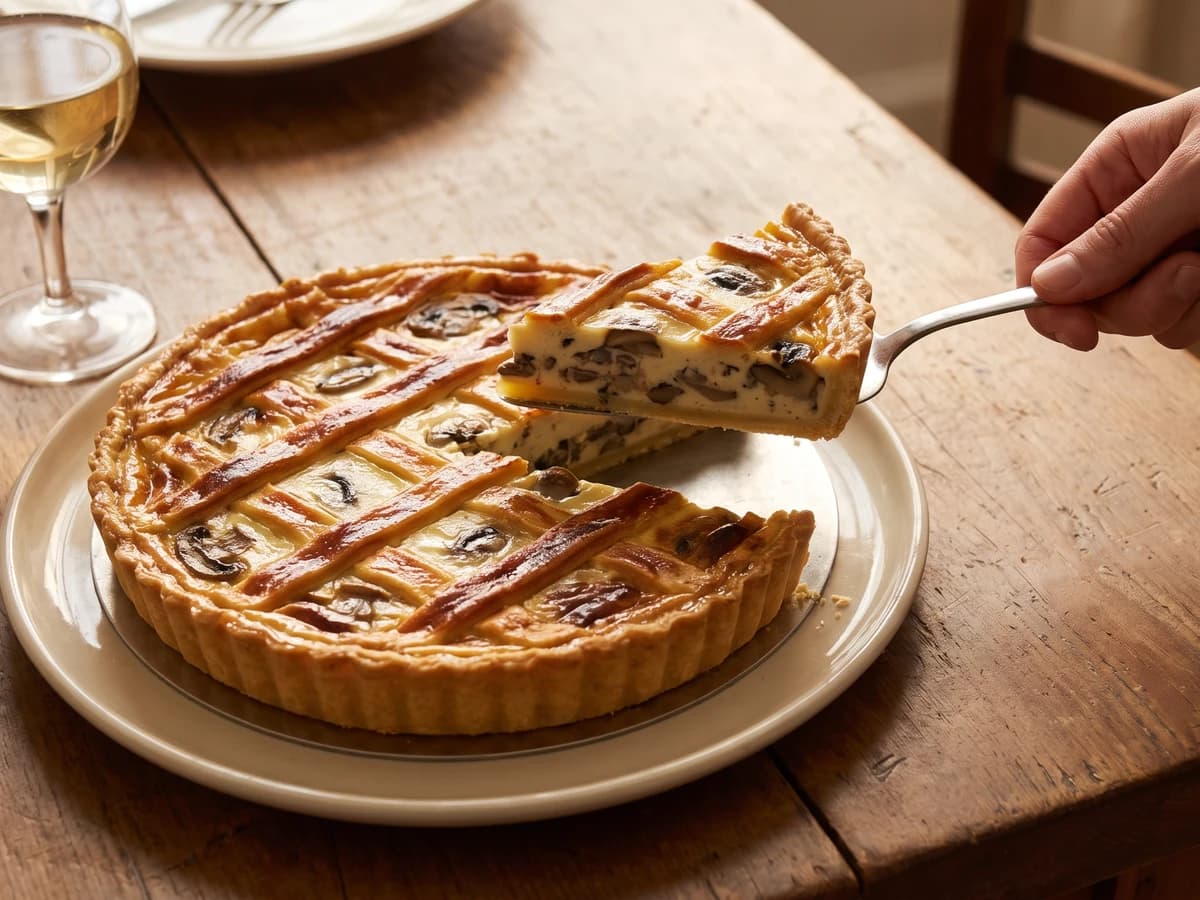
A hot mushroom flan under a butter-gold lattice, with cream reduced close around barely opened caps and a crisp short-paste base protected by one discipline: cool the filling completely.
Chef Juliette
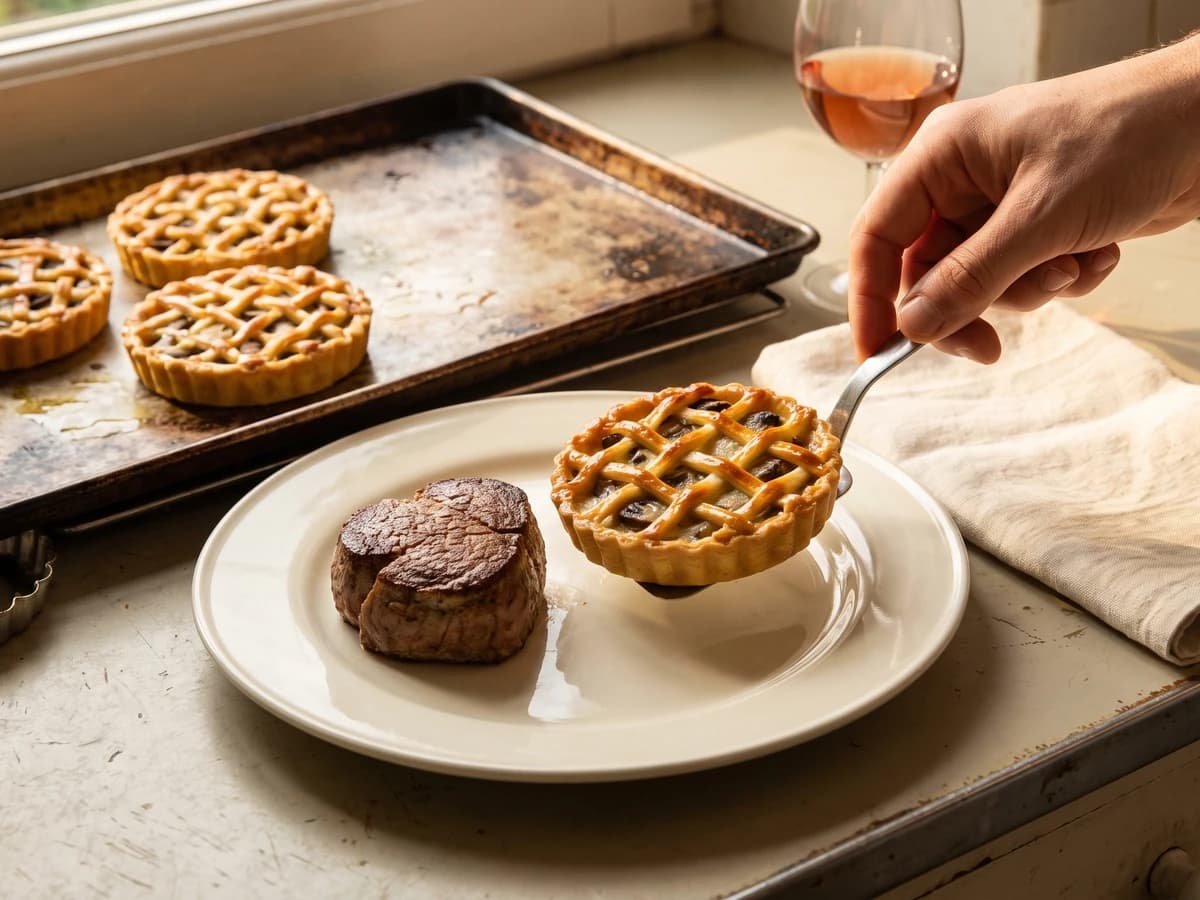
Four little mushroom flans, latticed and gilded, baked hard and fast until butter-gold: a classical garnish scaled to the meat it accompanies and served before its crispness has time to fade.

Chef Juliette
Morels surrender their liquor, then take it back as a glossy cream-and-butter sauce inside burnished puff pastry. The lesson is simple and absolute: reduce with patience, then heat gently and never boil.