Chef Isabel
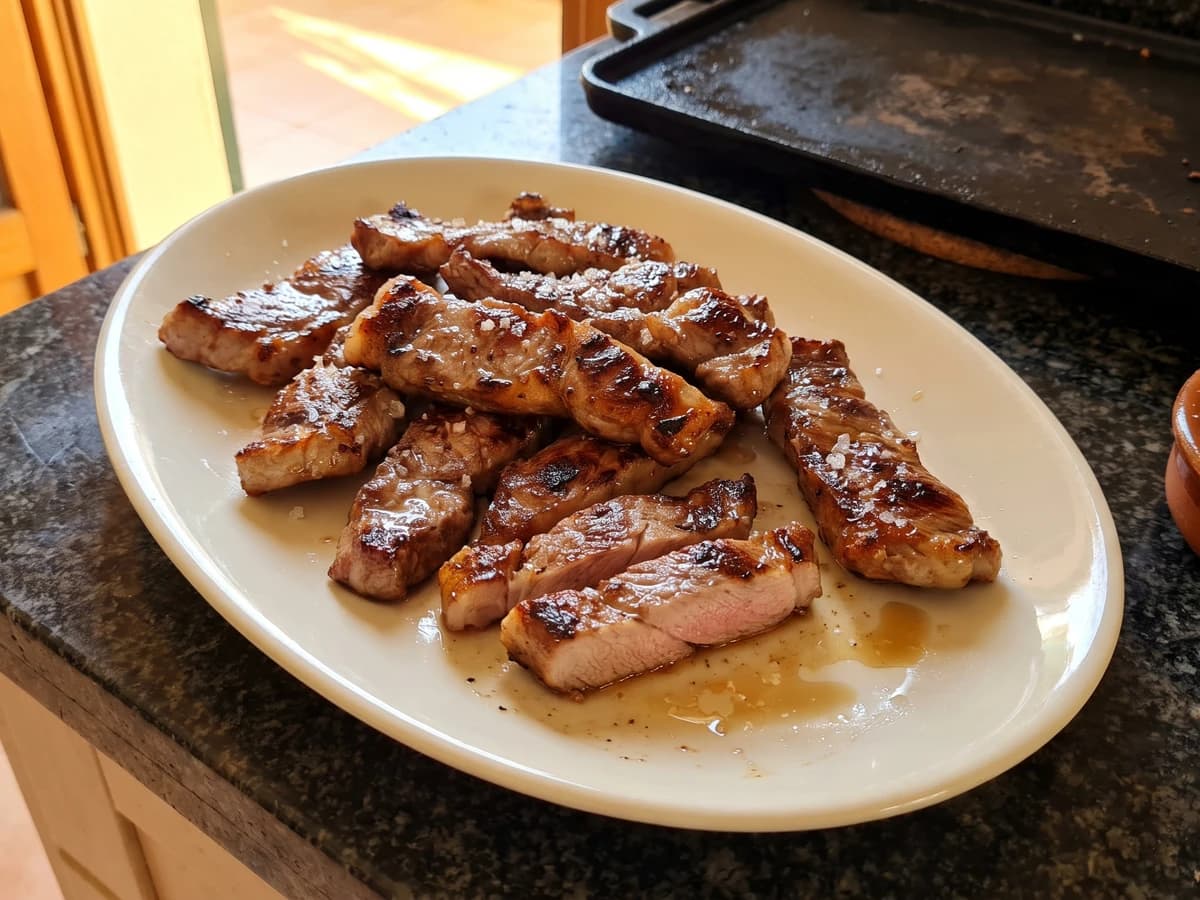
Abanico Ibérico a la Plancha
Extremadura's dehesa gives us this fan-shaped, marbled rib cut: salt it at the last moment, lay it on a fierce plancha, and count in seconds so the centre stays juicy.
A cooking platform built around craft, culture, and the stories behind what we eat.
Created by
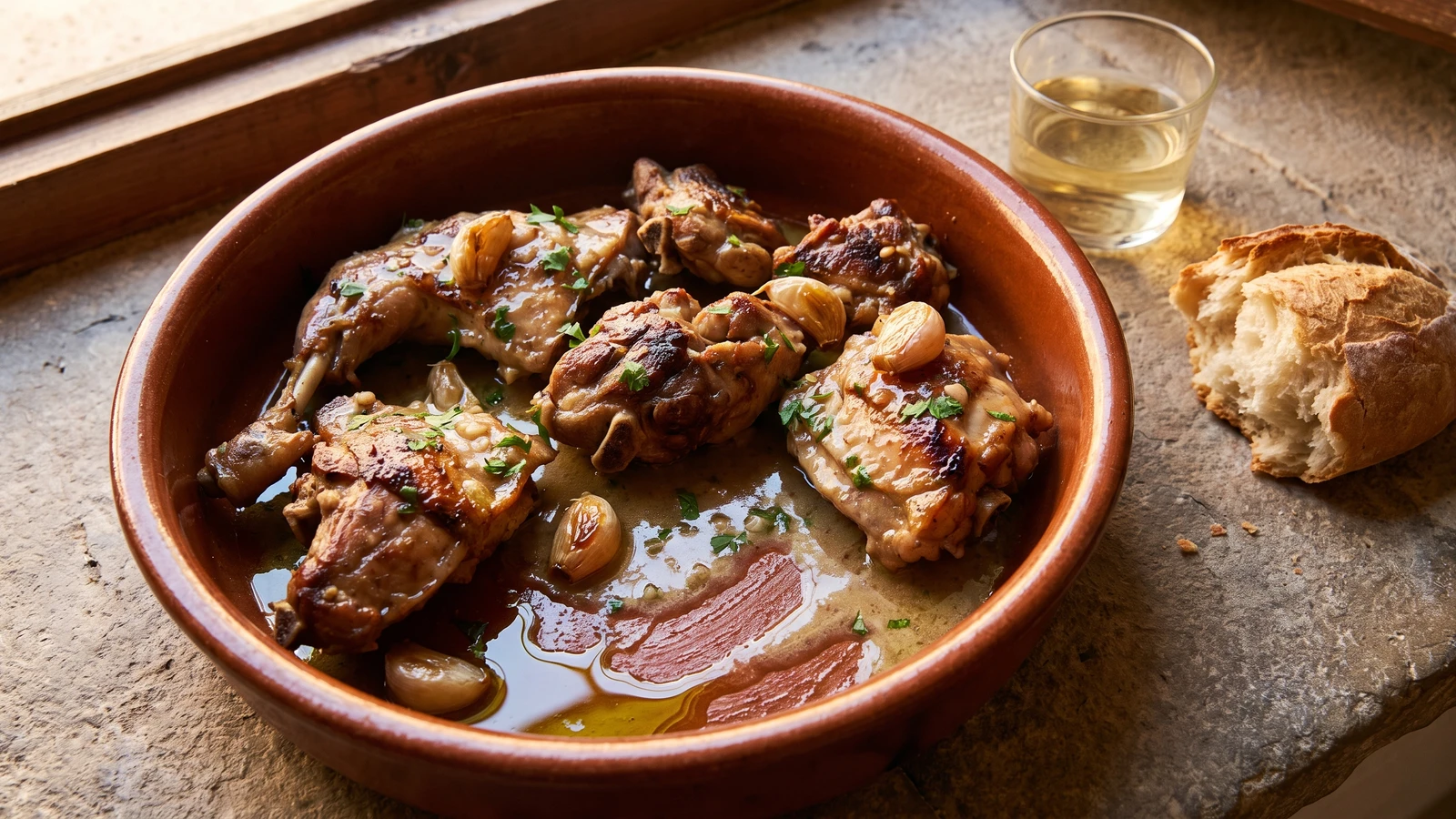
Castilla-La Mancha's garlic rabbit is browned deeply, then gently braised with a whole head of garlic, bay and white wine until the lean meat turns tender and the glossy sauce clings.
Conejo al ajillo is Castilla-La Mancha country cooking: jointed rabbit browned in olive oil, then simmered with a whole head of garlic, bay and dry white wine until the juices reduce to a glossy sauce. La Mancha has other rabbit dishes, with tomato, peppers, or rice, but this one keeps the sauce golden and the garlic in charge. Bread belongs beside it, because leaving that sauce in the pan would be foolish.
The browning decides it. I dry the pieces well, give them room, and let every side take a dark golden crust before the wine enters. Crowd the pan and the rabbit releases water, goes grey, and leaves the sauce thin. Fry the garlic only to pale gold and lift it out while the rabbit browns, then return it for the gentle braise. A whole head becomes sweet and soft this way, not scorched and bitter.
No rabbit where you are? Use bone-in chicken thighs and drumsticks. The dish then becomes pollo al ajillo, another proper home dish, with richer meat and more fat in the sauce. No hace falta haber pisado España, you don't need to have set foot in Spain. The Margin beside mine says, do not hurry the colour. Siempre sale, si lo sigues, it turns out if you follow it.
Rabbit has long been common in the dry plains and low scrub of Castilla-La Mancha, where hunted and farmed animals supplied lean meat for household pans. The region's bond with garlic is especially strong around Las Pedroñeras in Cuenca, whose purple garlic became a defining crop of the comarca. Cooking rabbit al ajillo relied on durable inland staples, garlic, olive oil, bay, and wine, and required neither tomatoes nor a fresh garden.
Quantity
1.3kg
jointed into 10 to 12 pieces
Quantity
12g
divided
Quantity
1g
Quantity
80ml
Quantity
1 large head (about 70g or 12 to 14 cloves)
cloves separated, unpeeled, and lightly crushed
Quantity
2
Quantity
2 small sprigs
Quantity
200ml
Quantity
120ml, plus up to 60ml if needed
Quantity
8g
finely chopped
| Ingredient | Quantity |
|---|---|
| young farmed rabbitjointed into 10 to 12 pieces | 1.3kg |
| fine sea saltdivided | 12g |
| freshly ground black pepper | 1g |
| extra virgin olive oil | 80ml |
| garliccloves separated, unpeeled, and lightly crushed | 1 large head (about 70g or 12 to 14 cloves) |
| dried bay leaves | 2 |
| fresh thyme | 2 small sprigs |
| dry, unoaked white wine | 200ml |
| water | 120ml, plus up to 60ml if needed |
| flat-leaf parsleyfinely chopped | 8g |
Check the rabbit pieces for loose bone fragments, then pat them completely dry with kitchen paper. Do not rinse them. Season all over with 10g of the salt and the black pepper, then leave them for 15 minutes while you prepare the garlic. A dry surface is what lets the meat brown instead of stew in its own water.
Heat the olive oil in a wide 30cm heavy pan over medium heat. Add the lightly crushed, unpeeled cloves, called ajos en camisa, garlic in their jackets. Turn them for 3 to 4 minutes, until the skins blister and the exposed edges turn pale gold. Lift them onto a plate before they darken.
Raise the heat to medium-high. Brown the rabbit in two batches, leaving space between the pieces. Set each piece down and leave it untouched for about 3 minutes before turning; continue until every side is deeply golden, about 7 minutes per batch. Transfer the browned pieces to the plate with the garlic. Pésalo, no lo adivines applies to salt, but colour you judge with your eyes: properly browned, never burnt.
Lower the heat to medium and pour in the white wine. Scrape the browned cooking juices from the base of the pan and boil for 3 to 4 minutes, until the wine has reduced by roughly half and no longer smells sharply alcoholic. Return the rabbit, its resting juices, and the garlic. Add the bay, thyme, and 120ml water.
Bring the liquid to a gentle simmer, cover, and lower the heat. Cook for 20 to 25 minutes, turning the pieces once. Keep the liquid at a quiet bubble because rabbit is lean and a hard boil tightens it. The thickest thigh should reach at least 71°C without the thermometer touching bone, and the joint should move easily. If the pan dries before the meat is tender, add the extra water 30ml at a time.
Remove the lid and raise the heat to medium. Turn the rabbit through the liquid for 6 to 10 minutes, until the wine and cooking juices reduce to a glossy coating and a spoon drawn across the pan leaves a clear track for a moment. Stir in the parsley, taste, and add up to the remaining 2g salt only if needed. Rest for 5 minutes, then bring the pan to the table with plenty of bread.
1 serving (about 220g)
Culinary guides, cultural storytelling, and the editorial depth that makes cooking meaningful.
Discover Culinary ExplorerChef Isabel
Extremadura's dehesa gives us this fan-shaped, marbled rib cut: salt it at the last moment, lay it on a fierce plancha, and count in seconds so the centre stays juicy.

Chef Isabel
Alboronía is Andalucía's old pumpkin and aubergine stew, deepened with tomato, pimentón, and cumin, then cooked without hurry until the vegetables settle into a glossy, sweet, spoon-soft whole.

Chef Isabel
Aletría Murciana is Murcia's humble noodle guiso: fine fideos, pork ribs, potato, saffron, and a dark sweet sofrito. Get that base right and the pot knows where it's going.

Chef Isabel
Asturias opens clams in tart natural cider over a slow onion and garlic sofrito, making a bright, briny sauce that asks for bread and rewards one rule: lift each clam as it opens.