
Chef Takumi
Awamori Mizuwari (泡盛水割り, awamori with water)
Awamori mizuwari is not a trick of the bar. It is three parts awamori, seven parts cold water, and enough patience to let the black-kōji aroma open.
A cooking platform built around craft, culture, and the stories behind what we eat.
Created by
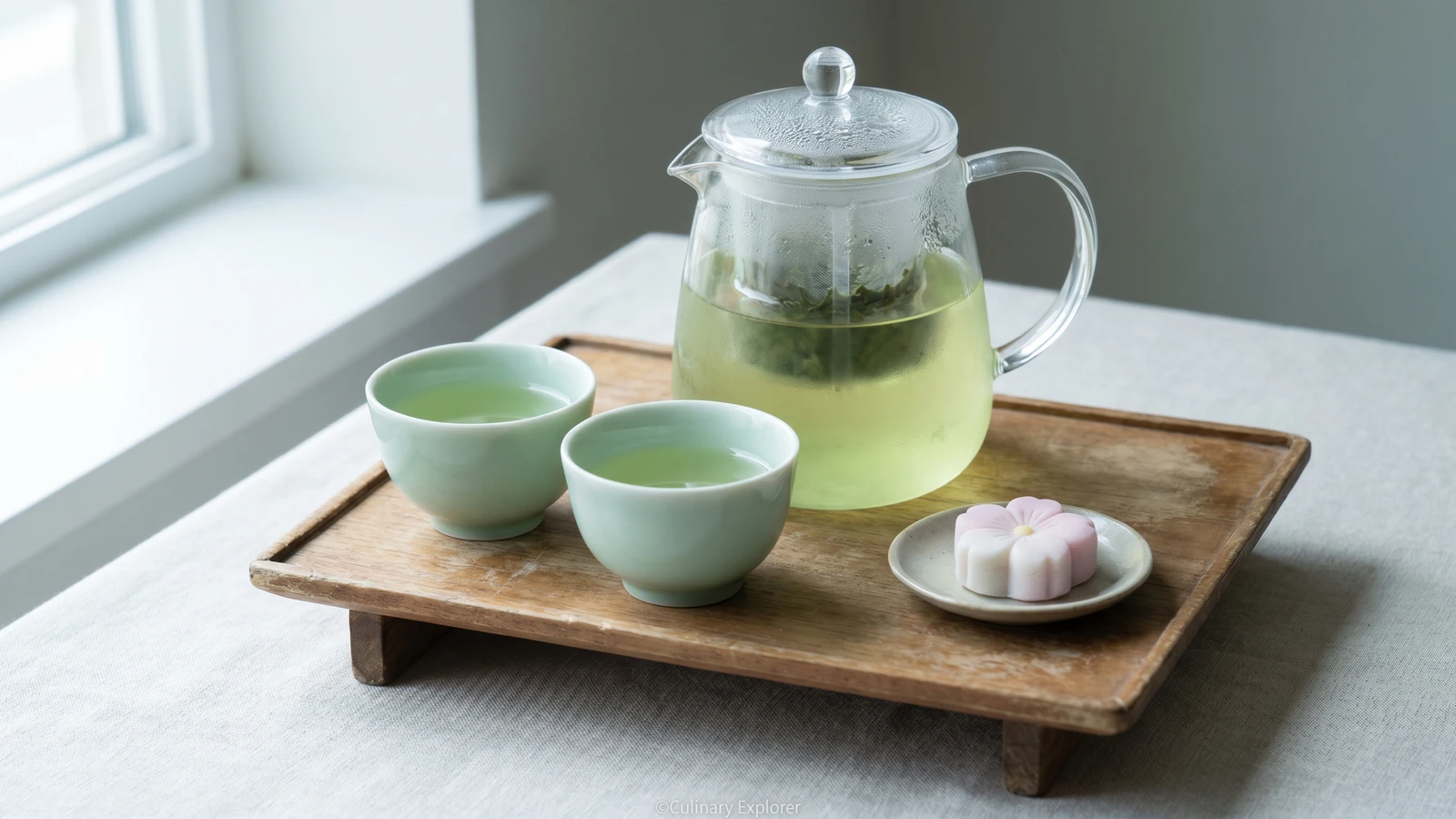
Summer sencha asks for patience, not heat: cold water, good leaves, and enough time for sweetness to come forward while bitterness stays behind.
Sencha is often blamed for the bitterness that careless water gives it. Boil the water, pour it straight over the leaves, walk away too long, and yes, the cup will scold you. Mizudashi sencha is kinder. Cold water draws slowly, and what it draws first is sweetness, color, and the green scent of the leaf.
The first secret of tea is always water temperature. Here, the temperature is simply cold. That isn't a shortcut, it's the method. Tannin and sharpness come out reluctantly in cold water, while the sweet amino acids and soft leaf fragrance have time to gather. The second secret is dose and time: 10 grams of sencha to 1 liter of water, three to six hours in the refrigerator. More leaves make a fuller cup; more time after the leaf is spent only makes it tired.
This is shun for summer, the cup we make when hot tea feels too stern for the weather. Use good sencha, especially shincha if spring's first tea is still fresh in your tin, and don't ask old leaves to behave like new ones. Nothing hidden here. A glass pitcher, a fine strainer, and a quiet afternoon are enough for honmono.
Sencha became Japan's dominant everyday green tea in the Edo period after Nagatani Sōen of Ujitawara refined the green-tea steaming and hand-rolling method in 1738. Cold-brewed green tea is a modern household extension of that tradition, especially suited to summer and to bottles prepared ahead for picnics and outdoor meals. The method fits Japanese tea practice because it respects the same principle used for hot sencha and gyokuro: water temperature decides what the leaf gives up.
Quantity
10g
Quantity
1 liter
Quantity
as needed
| Ingredient | Quantity |
|---|---|
| sencha green tea leaves | 10g |
| cold filtered water | 1 liter |
| ice cubes (optional) | as needed |
Use good sencha with a fresh green scent and leaves that still look vivid, not dusty gray. Cold brewing is gentle, so it won't hide stale tea under heat or sharpness. If the leaves smell flat in the tin, make a shorter, everyday cup and buy better leaves for this.
Put 10 grams of sencha into a cold-brew tea pitcher, glass jug, or clean jar. Add 1 liter of cold filtered water and stir once, gently, just to wet the leaves. Cold water draws sweetness and fragrance slowly, while leaving much of the bitterness behind.
Cover and refrigerate for 3 to 6 hours. At 3 hours the tea will be light, clear, and grassy; at 6 hours it will be deeper and rounder. Don't shake the pitcher while it steeps. Agitation pulls fine leaf particles into the liquor, and the cup loses its clean look.
Pour the tea through a fine-mesh strainer, or lift out the filter basket if your pitcher has one. Let it drain naturally and don't press the leaves. Pressing forces out cloudy, rough flavors from leaves that have already given what you wanted.
Pour into small cups or yunomi, filling them only partway so the color and coolness can be seen. Serve as it is, or over one or two ice cubes if the day is severe. Drink it the same day. Sencha is a fresh leaf tea, not a syrup, and its fragrance fades by tomorrow.
1 serving (about 250g)
Culinary guides, cultural storytelling, and the editorial depth that makes cooking meaningful.
Discover Culinary ExplorerChef Takumi
Awamori mizuwari is not a trick of the bar. It is three parts awamori, seven parts cold water, and enough patience to let the black-kōji aroma open.

Chef Takumi
Hot awamori asks for one small discipline: pour the hot water first, then the spirit. Do that, and the glass turns round, fragrant, and calmer than its strength suggests.

Chef Takumi
Bancha is the honest daily cup: late-season leaves, hot water, a short steep, and a clean amber-green liquor that asks for no ceremony to be good.

Chef Takumi
Whole black soybeans, roasted until their skins split, make a clear amber tea with a roasted sweetness and no caffeine. Drink it plain, then eat the softened beans while they still hold their warmth.