Chef Isabel
Abanico Ibérico a la Plancha
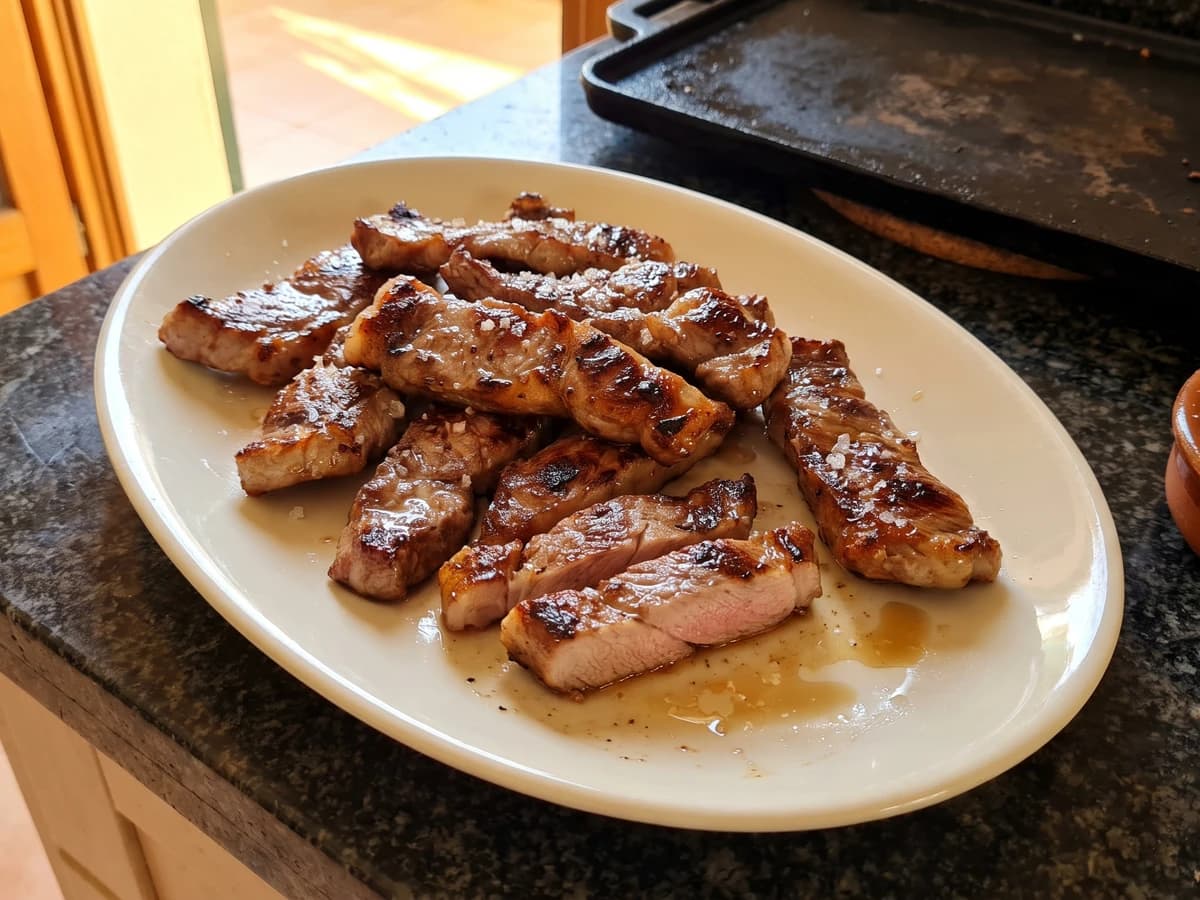
Extremadura's dehesa gives us this fan-shaped, marbled rib cut: salt it at the last moment, lay it on a fierce plancha, and count in seconds so the centre stays juicy.
A cooking platform built around craft, culture, and the stories behind what we eat.
Created by
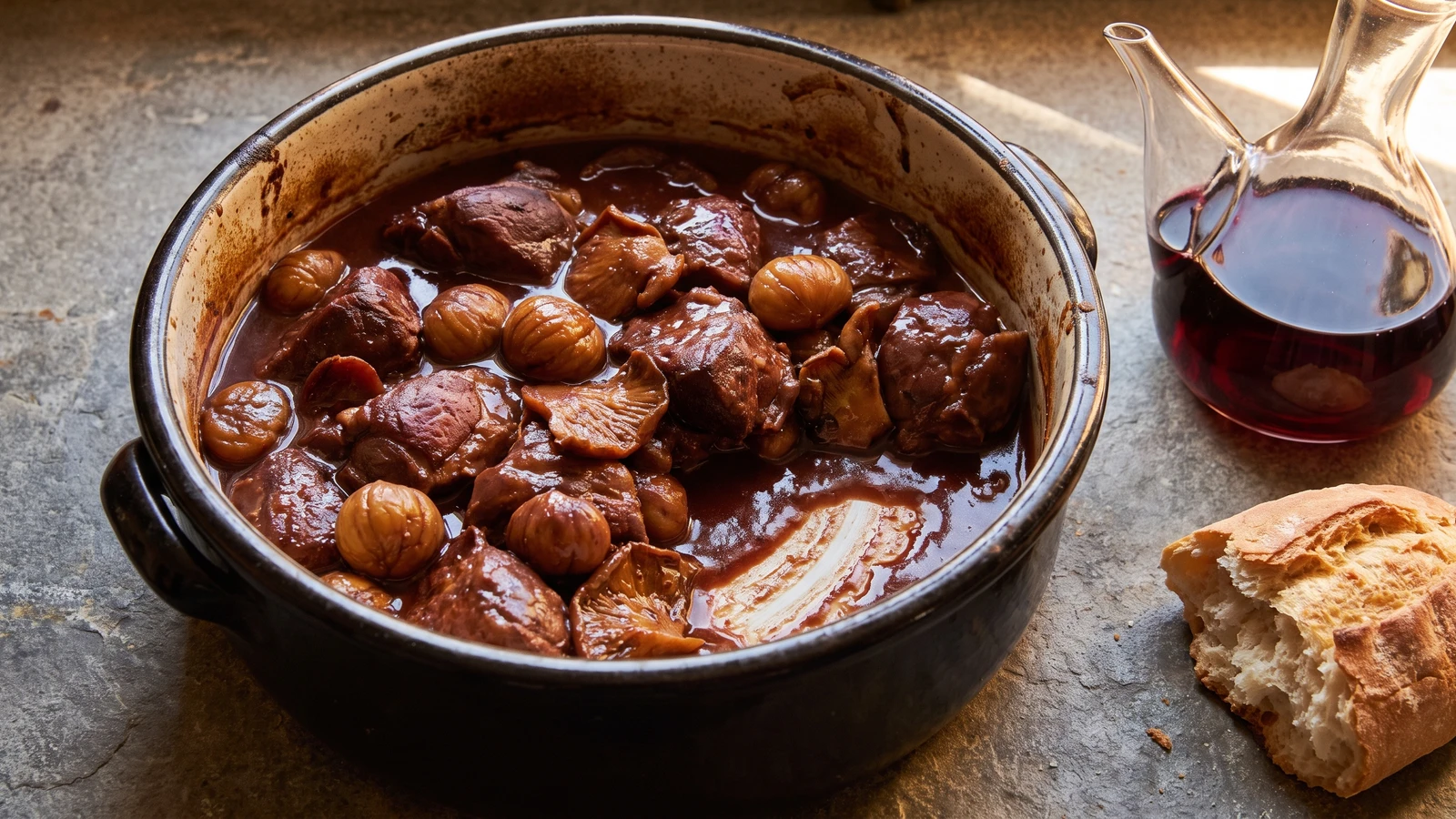
The mountain civet of Catalonia’s Conca de Barberà, where wine softens the wild boar, autumn mushrooms and chestnuts fill the pot, and blood added gently at the end gives the sauce its dark, silken body.
Civet de senglar is Catalan mountain cooking, and in the Conca de Barberà it means wild boar marinated in red wine, braised slowly with chestnuts and forest mushrooms, then finished with blood. That last addition is what makes it a civet rather than an ordinary estofat, or stew. The sauce comes out dark, glossy, and deep enough to stand up to meat that has spent its life running through the hills.
The boar needs a full night in wine, then a patient braise until a fork turns easily in it. But the method that decides the dish comes at the end. Whisk the acidulated blood with hot sauce little by little before it enters the pot, then keep it between 75 and 80°C without boiling. Gentle heat cooks and thickens it; a hard boil makes it grainy. Raw blood is not a place for improvisation.
No wild boar where you live? Farmed wild boar is perfectly good. Venison shoulder is the closest widely available substitute, lean and properly gamey, though the result becomes civet de cérvol rather than de senglar. Food-grade pig’s blood from a licensed butcher binds the sauce just as reliably as boar blood, with a slightly gentler mineral taste. If you cannot buy inspected food-grade blood, finish the pot with the picada alone. You will have a fine estofat de senglar, but not a civet.
Use preserved tomato rather than a pale winter one, firm mushrooms if rovellons are beyond reach, and cooked peeled chestnuts that hold their shape. The Margin beside this recipe says only la sang al final, the blood at the end. Keep that rule and the rest is patience. Siempre sale, si lo sigues.
In the Conca de Barberà, below the Prades mountains, senglar entered rural pots through the autumn and winter hunt, when its firm meat was softened with the comarca’s red wine and long cooking. The blood was caught with vinegar before it clotted and stirred in at the end; that final binding is what separates a civet from an ordinary estofat de senglar. Chestnuts and rovellons belong to the same forest season, so they enriched the pot when both were at hand.
Quantity
1.8kg
trimmed and cut into 4-5cm pieces
Quantity
750ml
Quantity
400g
thinly sliced
Quantity
200g
cut into 1cm rounds
Quantity
150g
washed and sliced
Quantity
6 cloves
lightly crushed
Quantity
2
Quantity
6 sprigs
Quantity
1 small sprig
Quantity
1 piece, 5cm long
Quantity
2g
Quantity
300g
Quantity
75ml
Quantity
350ml, plus up to 150ml if needed
Quantity
500g
cleaned and halved
Quantity
350g
kept whole
Quantity
40g
Quantity
35g
Quantity
20g
Quantity
2 cloves
peeled
Quantity
10g
Quantity
12g
Quantity
180ml
Quantity
20ml
Quantity
100ml
divided
Quantity
22g
divided
Quantity
3g
| Ingredient | Quantity |
|---|---|
| inspected wild boar shoulder or necktrimmed and cut into 4-5cm pieces | 1.8kg |
| dry red wine | 750ml |
| yellow onionsthinly sliced | 400g |
| carrotscut into 1cm rounds | 200g |
| leekwashed and sliced | 150g |
| garliclightly crushed | 6 cloves |
| bay leaves | 2 |
| thyme | 6 sprigs |
| rosemary | 1 small sprig |
| cinnamon stick | 1 piece, 5cm long |
| whole black peppercorns | 2g |
| jarred or canned crushed tomato | 300g |
| brandy | 75ml |
| unsalted game or chicken stock | 350ml, plus up to 150ml if needed |
| rovellons or other firm mushroomscleaned and halved | 500g |
| peeled cooked chestnutskept whole | 350g |
| day-old country bread | 40g |
| toasted almonds | 35g |
| toasted hazelnuts | 20g |
| garlic for the picadapeeled | 2 cloves |
| flat-leaf parsley leaves | 10g |
| dark chocolate, 70% cocoa | 12g |
| refrigerated food-grade wild boar blood, or food-grade pig’s blood | 180ml |
| red wine vinegar | 20ml |
| olive oildivided | 100ml |
| fine sea saltdivided | 22g |
| freshly ground black pepper | 3g |
Put the boar in a close-fitting nonreactive container with the wine, onions, carrots, leek, six crushed garlic cloves, bay, thyme, rosemary, cinnamon, and peppercorns. Cover and refrigerate for 24 hours, turning the meat once after 12 hours so every piece spends time beneath the wine. Keep it at or below 4°C.
Set a colander over a bowl and drain the marinade. Reserve the vegetables and wine separately. Discard the bay, herb stems, and cinnamon. Pat the meat thoroughly dry. Pour the wine into a saucepan, bring it to a full boil for 5 minutes, and skim away the grey foam. Keep it ready for the braise.
Heat 60ml of the olive oil in a 6-7 litre heavy casserole over medium-high heat. Season the boar with 14g salt and all the ground pepper. Brown it in four uncrowded batches, giving each broad side 3-4 minutes to take on a dark crust. Transfer each batch to a tray. Pale, crowded meat releases water, and the sauce loses depth before it has even begun.
Lower the heat to medium and add the drained marinade vegetables to the same casserole. Cook for about 12 minutes, stirring, until their water has evaporated. Turn the heat low and continue for 18-20 minutes, until the onion is dark gold and soft. Add the crushed tomato and cook for another 12-15 minutes, until it is dense, sweet-smelling, and the oil shows around its edges. This is the sofregit, the slow vegetable base. Rush it and the wine stays sharp.
Heat the oven to 150°C. Pour the brandy into the sofregit and scrape up every browned bit, then let it bubble for 1 minute. Return the boar and its collected juices. Add the boiled marinade and 350ml stock; the liquid should reach about three-quarters of the way up the meat. Bring it just to a simmer, cover, and braise in the oven for 2 hours 15 minutes. Turn the pieces once, then cook for another 30-60 minutes, until a fork twists easily in the meat and its centre has passed 71°C. Add a little of the reserved stock only if the pot looks dry.
While the boar cooks, heat 10ml olive oil in a small frying pan and toast the bread until crisp and deep gold. Pound it in a mortar with the almonds, hazelnuts, two peeled garlic cloves, parsley, and chocolate until you have a coarse paste. Loosen it with about 100ml liquid taken from the casserole. This picada gives the sauce body without turning it heavy.
Heat the remaining 30ml olive oil in a wide frying pan over medium-high heat. Add the mushrooms and cook for 8-10 minutes, turning only after they have browned, until their released liquid has evaporated. Season them with 3g salt. When the boar is tender, set the casserole over low heat and add the mushrooms, chestnuts, and picada. Simmer uncovered for 20-25 minutes, stirring gently so the chestnuts remain whole.
Keep the blood refrigerated until this moment. Pass it through a fine sieve into a bowl and whisk in the vinegar. Slowly whisk 250ml hot sauce from the casserole into the blood, one ladle at a time. Turn the casserole to its lowest heat and stir the tempered mixture back into the pot. Cook for 8-10 minutes, stirring gently, until the sauce reaches 75-80°C and coats the back of a spoon. Do not let it boil. Taste and use the remaining 5g salt as needed.
Take the casserole off the heat and rest it for 20 minutes. The sauce will settle, darken, and cling more evenly to the meat. Serve the boar with chestnuts, mushrooms, and plenty of sauce in warmed deep plates, with pa de pagès or another sturdy country bread beside it. Tal com es fa allí, exactly as it is made there.
1 serving (about 560g)
Culinary guides, cultural storytelling, and the editorial depth that makes cooking meaningful.
Discover Culinary ExplorerChef Isabel
Extremadura's dehesa gives us this fan-shaped, marbled rib cut: salt it at the last moment, lay it on a fierce plancha, and count in seconds so the centre stays juicy.

Chef Isabel
Alboronía is Andalucía's old pumpkin and aubergine stew, deepened with tomato, pimentón, and cumin, then cooked without hurry until the vegetables settle into a glossy, sweet, spoon-soft whole.

Chef Isabel
Aletría Murciana is Murcia's humble noodle guiso: fine fideos, pork ribs, potato, saffron, and a dark sweet sofrito. Get that base right and the pot knows where it's going.

Chef Isabel
Asturias opens clams in tart natural cider over a slow onion and garlic sofrito, making a bright, briny sauce that asks for bread and rewards one rule: lift each clam as it opens.