
Chef Jeong-sun
Albaechu-mul-kimchi (Baby Cabbage Water Kimchi)
Tender baby napa cabbage in a clear pear-garlic brine, lightly fermented until the broth turns clean and bright, the summer kimchi a beginner can make without a kimjang floor.
A cooking platform built around craft, culture, and the stories behind what we eat.
Created by
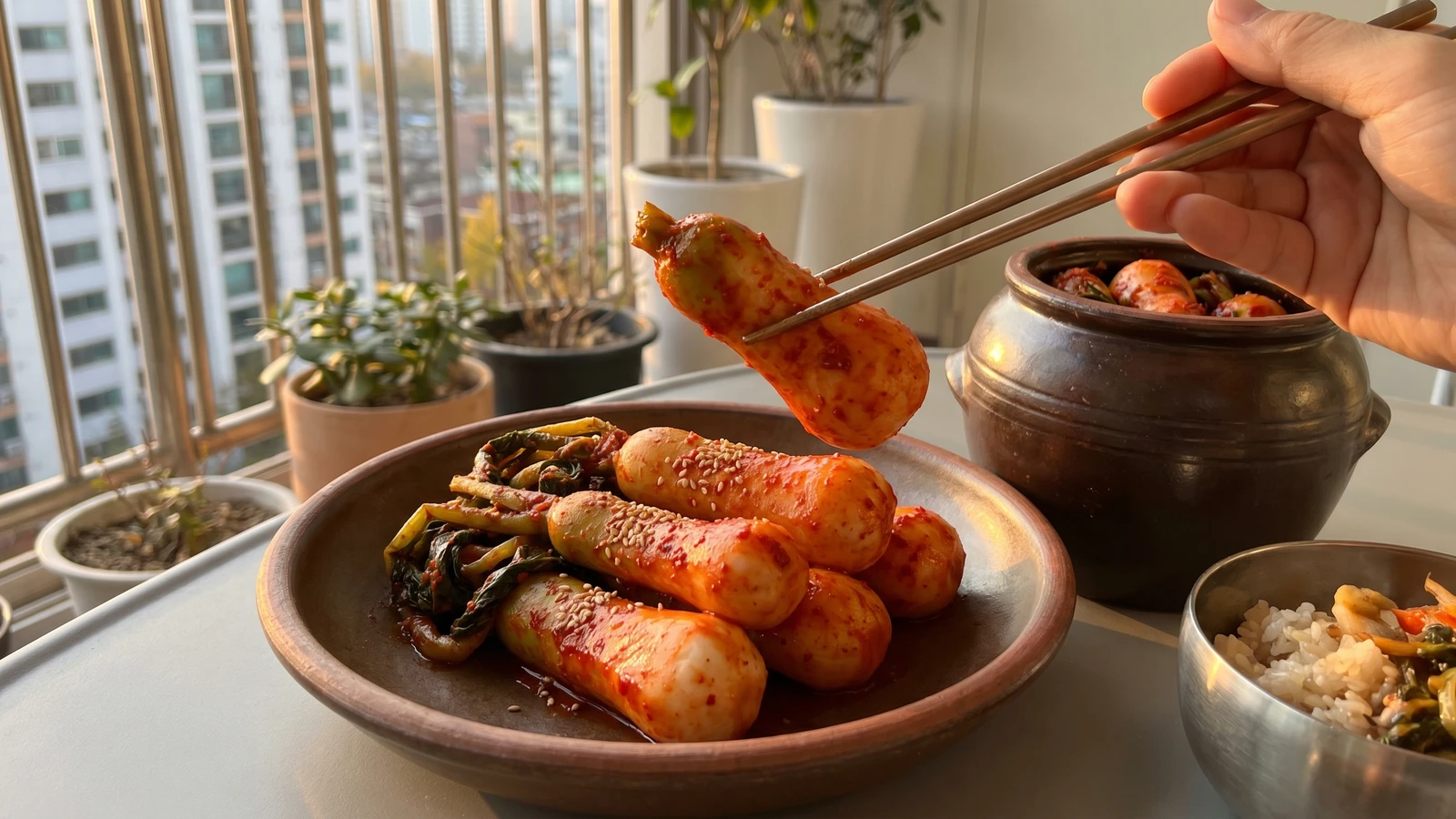
Whole young radishes fermented with their greens, crisp at the root and bright at the stem, salted carefully so the ponytail stays tender while the kimchi keeps its bite.
Chonggak-kimchi begins at the market, not at the mixing bowl. Look for young radishes with round white shoulders, thin skins, and greens that still stand up. Autumn is the best season, when the root is sweet and dense, but spring radishes make a lighter jar if you salt them gently. Cook the month you're standing in.
The mistake is treating the root and the greens as one thing. They are attached, yes, but they don't salt at the same speed. The white root needs time to bend and season through. The greens need less salt and a shorter rest, or they come out tired before fermentation even begins. My teacher Master Seong-nyeo made us salt them in stages, and Notebook 31 still says, in the margin, "the green is not a rope. Don't wring it."
This kimchi asks for trimming, salting, draining, and patient packing. It isn't difficult, but it will punish hurry. Leave the skin on so the root keeps its snap, rub the paste into the shoulder where the greens begin, and pack the jar tight enough that air has no comfortable place to sit. In a week, you have a kimchi that eats with rice, seolleongtang, kalguksu, or a plain fried egg, sharp enough to wake the table but still tasting clearly of radish.
Write down the size of your radishes and how long they took to salt. 손맛 is real. I still measure it, so it can be handed on.
Chonggak-kimchi is made from small young radishes called chonggak-mu or altari-mu, fermented whole with their greens and especially valued in autumn, when Korean radishes turn dense and sweet. The name chonggak means an unmarried young man, and the common explanation ties it to the leafy top resembling the old braided topknot worn by bachelors in late Joseon Korea. It is an everyday kimchi rather than a court dish, often made beside larger kimjang batches because its firm root keeps a crisp bite for weeks.
Quantity
2 kg
Quantity
1/2 cup
divided
Quantity
4 cups
for brining the greens
Quantity
1 tablespoon
Quantity
1/2 cup
for rice paste
Quantity
1 cup
medium-coarse if possible
Quantity
1/3 cup
Quantity
2 tablespoons
finely chopped
Quantity
6 cloves
minced
Quantity
1 tablespoon
minced
Quantity
1/2 medium
grated
Quantity
1/2
grated
Quantity
2 tablespoons syrup or 1 tablespoon sugar
Quantity
4
cut into 2-inch lengths
Quantity
1 tablespoon
| Ingredient | Quantity |
|---|---|
| chonggak-mu or altari-mu (young ponytail radishes with greens) | 2 kg |
| coarse Korean sea salt (cheonilyeom)divided | 1/2 cup |
| waterfor brining the greens | 4 cups |
| glutinous rice flour | 1 tablespoon |
| waterfor rice paste | 1/2 cup |
| gochugaru (Korean chili flakes)medium-coarse if possible | 1 cup |
| Korean fish sauce (myeolchi-aekjeot) | 1/3 cup |
| salted shrimp (saeujeot)finely chopped | 2 tablespoons |
| garlicminced | 6 cloves |
| gingerminced | 1 tablespoon |
| oniongrated | 1/2 medium |
| Korean pear or sweet apple (optional)grated | 1/2 |
| maesil-cheong (green plum syrup) or sugar | 2 tablespoons syrup or 1 tablespoon sugar |
| scallionscut into 2-inch lengths | 4 |
| toasted sesame seeds (optional) | 1 tablespoon |
Choose young radishes no thicker than 3 cm across the shoulder, with firm white roots and lively greens. Cut the greens down to 8 to 10 cm, keeping the tender stems and discarding yellow or tough leaves. Scrape away root hairs and dark spots with the back of a knife, but do not peel the radish. The skin is where the bite lives.
Put the radishes in a large basin. Sprinkle 6 tablespoons of the coarse salt over the roots, rubbing more salt on the white radish than on the greens. Pour 4 cups water around the side of the basin, not directly over the salt. Let sit 45 minutes, turning every 15 minutes, until the roots bend slightly but still feel firm.
After the first 20 minutes, gather the greens into the brine and sprinkle the remaining 2 tablespoons salt over them. Greens salt faster than roots, so they go in later. If you salt them from the beginning, they ferment limp and stringy, and no amount of paste will repair that.
Rinse the radishes twice in cool water, lifting them gently so the greens do not tear. Taste a cut edge of one root. It should be seasoned through but not salty like the sea. Drain in a colander for 25 to 30 minutes, cut side down if split. Wet radishes thin the paste and make a watery jar.
Whisk 1 tablespoon glutinous rice flour with 1/2 cup water in a small pot. Cook over medium-low heat, stirring, for 3 to 5 minutes until it turns glossy and lightly thick, like a loose porridge. Cool completely. The paste helps the seasoning cling to the slick radish skin and feeds fermentation gently.
In a large bowl, mix the cooled rice paste, gochugaru, fish sauce, chopped salted shrimp, garlic, ginger, grated onion, pear if using, and maesil-cheong. Let it stand 10 minutes so the gochugaru blooms and softens. Taste the paste before it touches the radish. It should be salty, savory, and bright, because the radish will dilute it as it ferments.
Add the drained radishes and scallions to the paste. Wearing gloves, rub seasoning over each root and into the base where the greens meet the radish. Do not crush the greens. Fold them along the root so each piece looks tied by its own ponytail. This is why the dish has its name, and also how it packs neatly.
Pack the radishes tightly into a clean 2-liter glass jar or small onggi, laying them in one direction and pressing down to remove air pockets. Leave 3 cm headspace. Scrape any remaining paste over the top and press a piece of plastic wrap directly onto the surface if your container has extra air. Air is not flavor here; it is spoilage trying to enter.
Leave the jar at cool room temperature, about 18 to 21 C, for 24 to 48 hours, setting it on a plate in case the brine rises. Open once a day to press the radishes under their liquid with a clean spoon. When the brine smells lightly sour and bubbles gather at the sides, refrigerate. It is ready in 5 to 7 days and best from the second week, when the root is still crisp but the seasoning has entered it.
1 serving (about 190g)
Culinary guides, cultural storytelling, and the editorial depth that makes cooking meaningful.
Discover Culinary ExplorerChef Jeong-sun
Tender baby napa cabbage in a clear pear-garlic brine, lightly fermented until the broth turns clean and bright, the summer kimchi a beginner can make without a kimjang floor.

Chef Jeong-sun
The kimchi from before chili, salted napa cabbage packed with radish, pear, jujube, and pine nuts in a clear brine that turns quietly tart in the jar.

Chef Jeong-sun
A pale summer cucumber kimchi, split and stuffed with radish and chives, then held in a cool pear brine so the cucumber stays clean, crunchy, and plainly itself.

Chef Jeong-sun
Flat spring bomdong cabbage, lightly brined and tucked into a clear pear-radish kimchi broth, made without chili and eaten young while the leaves still taste like spring.