
Chef Lupita
Arroz a la Oaxaqueña
Oaxaca's red rice, stained with tomato and fried in lard, steamed with carrots, ejotes, black beans, and epazote. The side that anchors a Oaxacan family meal and earns its place beside the main.
A cooking platform built around craft, culture, and the stories behind what we eat.
Created by
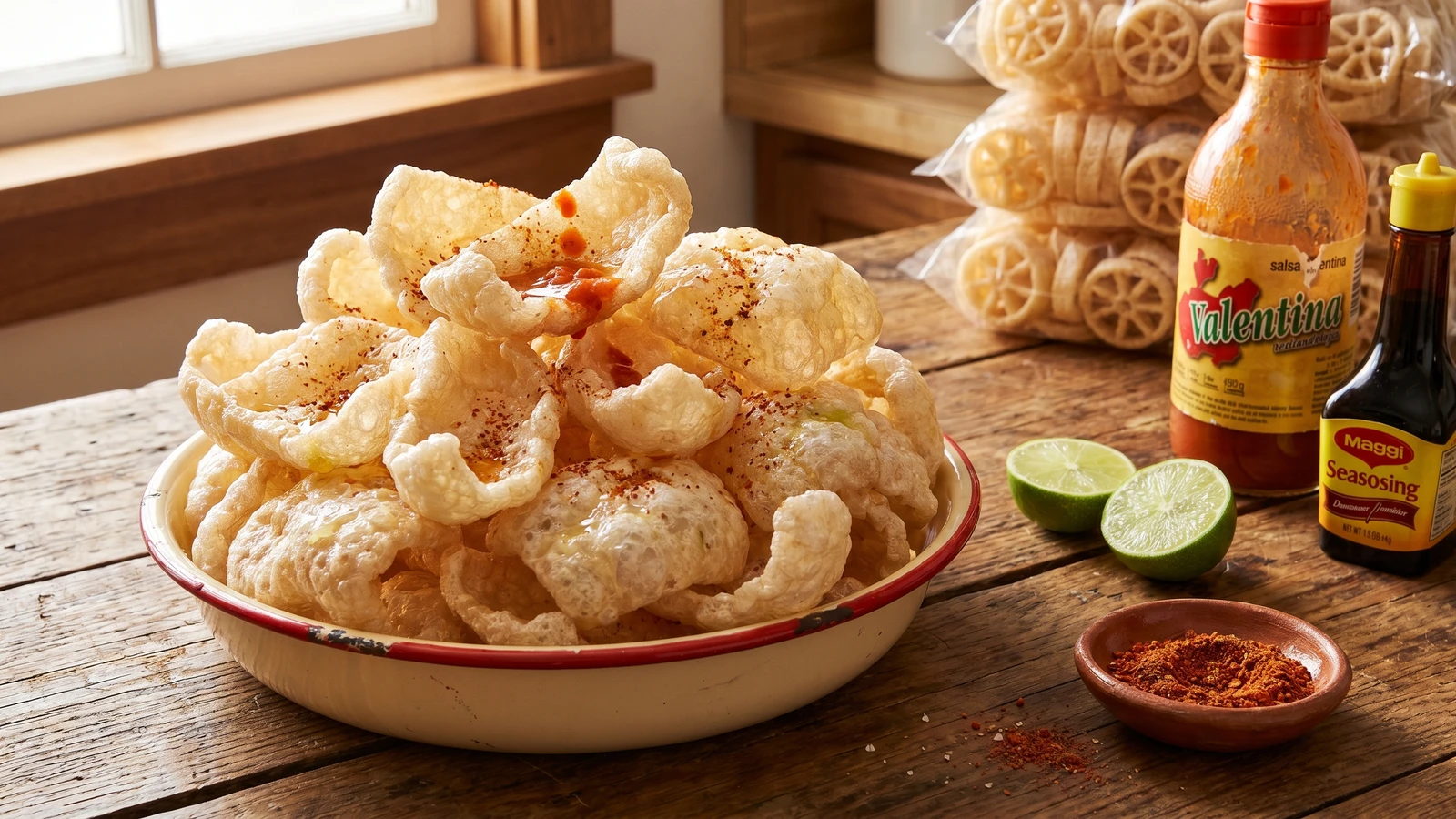
Sonora's wheat-flour duros, dried pasta wheels that puff into airy curls in hot lard, hit at the table with lime, sea salt, and ground chiltepin. Norteño plaza snack at its most honest.
These are from the north. Sonora claims them loudest, but you will find chicharrones de harina sold from cellophane bags hanging at every tienda and street stall from Hermosillo to Mexicali to Ciudad Juarez. Northern Mexico is wheat country. Flour tortillas are northern. So is the pasta-wheel duro you are about to fry. Cada estado, su propia cocina, and the south can keep its corn chicharrones. These belong to us up here.
The duro itself is wheat flour, water, salt, sometimes a little baking soda, rolled thin, cut into shapes, and dried hard as glass in the desert air. You do not make them at home. You buy them dried from a Mexican market and you fry them. That is the whole recipe. The transformation happens in the lard. A pale, plastic-looking disc drops into hot manteca and within seconds it puffs into an airy, crisp curl two or three times its original size. It is one of the most satisfying things to watch in a kitchen.
The seasoning is northern: lime, sea salt, ground chiltepin, the wild bird chile that grows on the Sonoran hillsides and that norteños use the way central Mexico uses arbol. Most plaza vendors finish them with Valentina or Huichol and a squeeze of Maggi for the kids. My notebook has a page with the words 'chiltepin molido, sal de mar, limon mexicano,' copied from a senora who sold them in bolsas de celofan outside the cathedral in Hermosillo. She did not give me a recipe. She told me the order: salt first, chiltepin second, lime last. Saber cocinar es saber vivir.
Chicharrones de harina, also called duros or duritos, are a 20th-century norteño adaptation of the broader Latin American tradition of fried dried wheat pasta snacks, with direct cousins in the Philippines (chicharon) where Spanish colonial wheat-flour frying methods landed by way of the Manila galleon trade. The northern Mexican states industrialized wheat cultivation in the late 19th century under porfirian agricultural policy, displacing corn as the dominant grain in Sonora, Chihuahua, Coahuila, and Nuevo Leon, and the duro emerged as a shelf-stable street snack that capitalized on cheap dried wheat pasta and abundant rendered lard from the region's cattle and pig ranches. The chiltepin chile dusted on top is the only chile native to what is now the United States and northern Mexico, and the Sonoran wild harvest of chiltepin remains a protected cultural practice in the Sierra Madre Occidental.
Quantity
8 ounces
Quantity
4 cups
enough for 2 inches of depth in the pot
Quantity
2 teaspoons
Quantity
1 teaspoon
or chile piquin if chiltepin is unavailable
Quantity
4
halved
Quantity
for serving
Quantity
for serving
| Ingredient | Quantity |
|---|---|
| dried chicharrones de harina (wheat-flour pasta wheels) | 8 ounces |
| pork lard (manteca de cerdo)enough for 2 inches of depth in the pot | 4 cups |
| fine sea salt | 2 teaspoons |
| ground chiltepinor chile piquin if chiltepin is unavailable | 1 teaspoon |
| Mexican limeshalved | 4 |
| salsa Valentina or salsa Huichol (optional) | for serving |
| Maggi sauce (optional) | for serving |
Pull the chicharrones de harina out of the bag and look at them. They should be pale, dusty, slightly translucent, and hard as plastic. That is what dried wheat pasta looks like before it meets hot fat. If yours feel soft or bend at all, the package has taken on humidity and they will not puff cleanly. Northern Mexico is dry country, and these duros are built for dry storage. Asi se hace y punto.
Pour the lard into a deep, heavy pot. You want at least two inches of depth so the duros can move and turn. Heat over medium-high until the lard reaches 375 to 400 degrees Fahrenheit. La manteca es el sabor. Vegetable oil will fry them, yes, but the flavor will be flat. Lard is what they use in Sonora and lard is what you use here. No me vengas con atajos.
Drop a small handful of duros into the hot lard, no more than will float in a single layer. They will puff and curl within seconds, doubling and sometimes tripling in size, turning from translucent to a pale opaque cream color. Use a slotted spoon or kitchen spider to keep them moving and submerged. Total time per batch is about 10 to 15 seconds. Pull them out before they take on any real color. Brown chicharrones de harina are overcooked chicharrones de harina.
Lift each batch onto a sheet pan lined with brown paper or a clean kitchen towel. While they are still hot and the surface is glossy with rendered lard, hit them with sea salt and a pinch of ground chiltepin. The seasoning sticks to hot duros. It slides off cold ones. This is the moment to season, not later.
Pile the chicharrones de harina into a wide bowl or onto a platter while still warm. Squeeze fresh lime juice across the top right before serving. Drizzle with salsa Valentina or salsa Huichol to taste. A few drops of Maggi if you like it the way the kids in Mexicali eat them. The lime softens the edges slightly and that texture, half crisp and half chewed by the citrus, is the point. Eat them right away. Recetas probadas y garantizadas.
1 serving (about 40g)
Culinary guides, cultural storytelling, and the editorial depth that makes cooking meaningful.
Discover Culinary ExplorerChef Lupita
Oaxaca's red rice, stained with tomato and fried in lard, steamed with carrots, ejotes, black beans, and epazote. The side that anchors a Oaxacan family meal and earns its place beside the main.

Chef Lupita
Sinaloa's home-cook white rice topped with cold cubes of cream cheese that soften into the warm grain, finished with crema and a sprinkle of chiltepin at the table. The trick that makes a side dish feel like a small luxury.

Chef Lupita
Sonora's white rice, toasted in butter and steamed with sweet corn and tender peas. The clean, quiet partner to a plate of carne asada, not the red rice of central Mexico.

Chef Lupita
Yucatán's white rice with sweet corn kernels, toasted in lard with garlic and onion. The quiet base that holds up against the peninsula's bold achiote-stained stews.