
Chef Lupita
Acúmara Tatemada al Comal
Michoacán's Lake Pátzcuaro acúmara, a whole kurucha from the lago tatemada on a comal de leña and served with chile perón atápakua, corn tortillas, and P'urhépecha discipline.
A cooking platform built around craft, culture, and the stories behind what we eat.
Created by
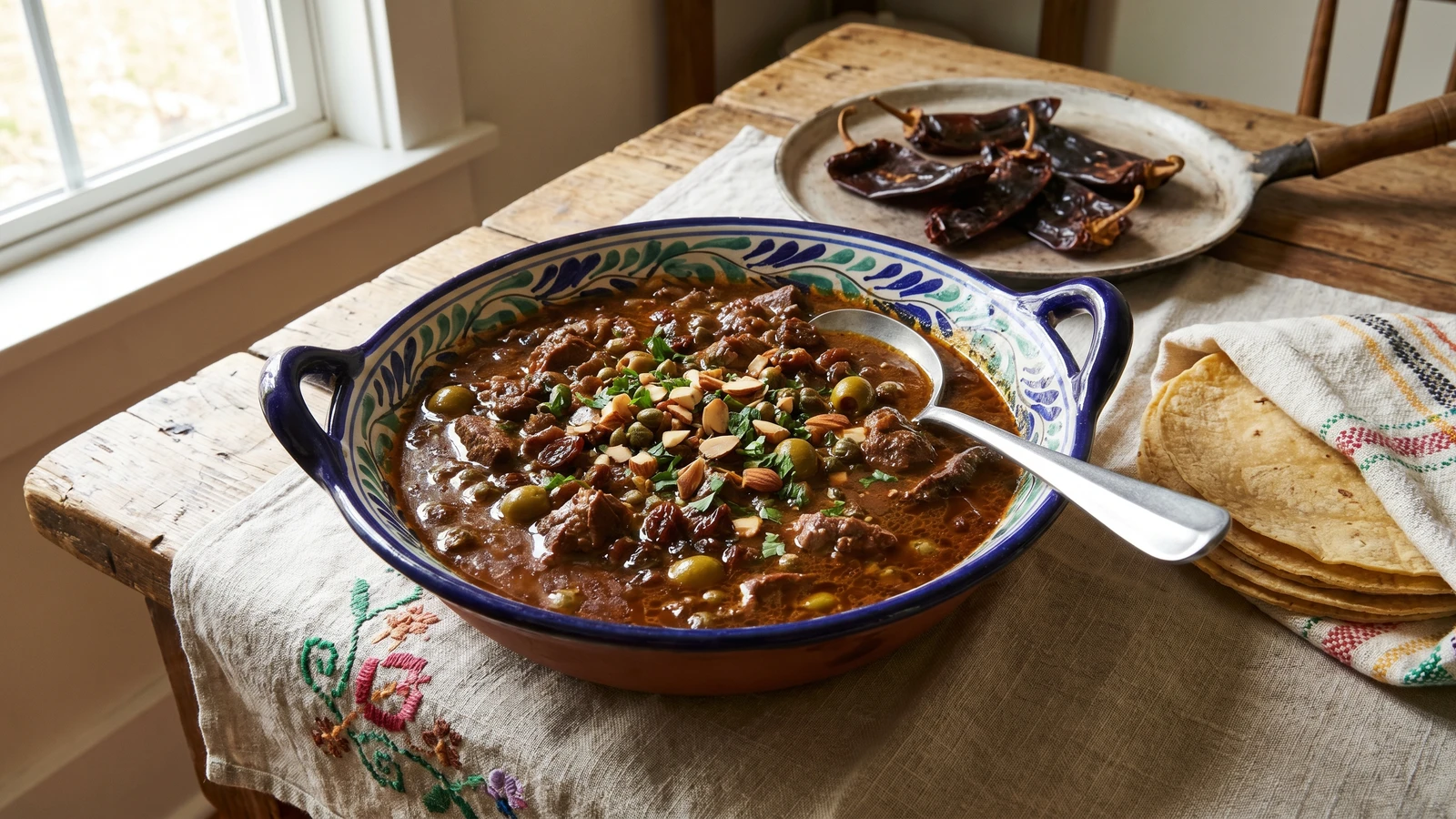
Puebla's convent chanfaina, built from lamb heart, liver, and kidney in a chile ancho broth with almonds, raisins, olives, capers, and the discipline of the cloister kitchen.
Puebla de los Angeles gave this dish its baroque convent voice. Not the street Puebla of cemitas and chalupas, the cloister Puebla of Santa Monica and Santa Clara, where women turned scarcity, abstinence rules, and an Old World pantry into serious cooking.
Chanfaina is organ meat. Liver, kidney, heart. If that makes you nervous, good. Pay attention. The convent cooks knew how to clean, blanch, brown, and braise each piece so it tasted like itself, not like punishment. The chile ancho gives the broth its deep red-brown body, and the almonds, raisins, olives, capers, cinnamon, and clove are not decoration. They are the architecture of the dish.
I first tasted a Poblana version in a house near the old convent district, served in talavera with thick corn tortillas and a spoon heavy enough to respect the stew. The señora who taught it to me said, 'No lo apures.' Don't hurry it. She was right. You cook the organs separately at first because they don't behave the same. Then you bring them together in the chile broth until the sharp edges soften. Así se hace y punto.
This is a 32-state cuisine. Puebla's convent food is not Oaxaca's mole tradition, not Yucatan's recados, not Sonora's flour tortilla table. Cada estado, su propia cocina.
Chanfaina entered New Spain through Iberian offal stews associated with sheep slaughter, especially in Extremadura and Castile, then changed in Puebla's convent kitchens during the 18th century when chile ancho, tomato, and native herbs met almonds, raisins, olives, capers, cinnamon, and clove from the Spanish colonial pantry. Poblano convent recipe collections linked to Santa Monica and Santa Clara show how nuns turned organ meats into structured festival and refectory dishes rather than waste cooking. Unlike Lenten vigil dishes, chanfaina belonged to meat days, but it carried the same convent logic: economy disciplined by technique.
Quantity
1 pound
trimmed and cut into 1-inch pieces
Quantity
1 pound
membrane removed and cut into 1-inch pieces
Quantity
12 ounces
split, white core removed, and cut into 1-inch pieces
Quantity
2 tablespoons
for soaking the kidney
Quantity
1 teaspoon, plus more to taste
Quantity
4 tablespoons
divided
Quantity
1 medium
finely chopped
Quantity
4
finely chopped
Quantity
5
stemmed and seeded
Quantity
2
stemmed and seeded
Quantity
2 medium
roasted on a comal
Quantity
1 thick slice
toasted
Quantity
1/4 cup
toasted
Quantity
2 tablespoons
toasted
Quantity
1/3 cup
Quantity
1/3 cup
sliced
Quantity
2 tablespoons
rinsed
Quantity
1 small
Quantity
2
Quantity
1/4 teaspoon
Quantity
1
Quantity
3 cups
Quantity
1 tablespoon
Quantity
1 tablespoon
Quantity
2 tablespoons
chopped
Quantity
for serving
| Ingredient | Quantity |
|---|---|
| lamb hearttrimmed and cut into 1-inch pieces | 1 pound |
| lamb livermembrane removed and cut into 1-inch pieces | 1 pound |
| lamb kidneysplit, white core removed, and cut into 1-inch pieces | 12 ounces |
| white vinegarfor soaking the kidney | 2 tablespoons |
| kosher salt | 1 teaspoon, plus more to taste |
| manteca de cerdodivided | 4 tablespoons |
| white onionfinely chopped | 1 medium |
| garlic clovesfinely chopped | 4 |
| dried chile anchostemmed and seeded | 5 |
| dried chile mulatostemmed and seeded | 2 |
| Roma tomatoesroasted on a comal | 2 medium |
| day-old bolillo or teleratoasted | 1 thick slice |
| blanched almondstoasted | 1/4 cup |
| sesame seedstoasted | 2 tablespoons |
| raisins | 1/3 cup |
| pimiento-stuffed green olivessliced | 1/3 cup |
| capersrinsed | 2 tablespoons |
| Mexican cinnamon stick | 1 small |
| whole cloves | 2 |
| dried Mexican oregano | 1/4 teaspoon |
| bay leaf | 1 |
| warm lamb or beef broth | 3 cups |
| grated piloncillo | 1 tablespoon |
| apple cider vinegar | 1 tablespoon |
| fresh parsley (optional)chopped | 2 tablespoons |
| warm corn tortillas (optional) | for serving |
Rinse the heart, liver, and kidney under cold water and pat them dry. Put the kidney in a bowl with cold water, the white vinegar, and a pinch of salt for 20 minutes, then drain and rinse again. Remove every bit of the white kidney core. That core is where harshness lives. Leave it in and the whole pot will tell on you.
Bring a small pot of salted water to a simmer. Add the heart pieces and cook for 8 minutes, then drain well. Heart is muscle. It needs a head start before it meets the chile broth. The liver does not. The kidney does not. Treating all organs the same is how cooks ruin chanfaina.
Heat a dry comal over medium. Toast the chile ancho and chile mulato one at a time, about 20 to 30 seconds per side, just until the skins soften, darken slightly, and smell sweet. Do not blacken them. Burned chile turns bitter and bitterness will sit in this stew like bad gossip.
Place the toasted chiles in a bowl and cover with hot water, not boiling. Let them soak for 20 minutes until pliable. Drain them, saving 1 cup of the soaking liquid only if it tastes clean and not bitter. Taste before you use it. The chile vendor at La Merced would tell you the same.
In a blender, combine the soaked chiles, roasted tomatoes, toasted bolillo, toasted almonds, toasted sesame seeds, cinnamon, cloves, oregano, and 1 cup of warm broth. Blend until completely smooth. Take your time. A convent sauce should be polished, not gritty. Strain through a fine-mesh sieve and press firmly on the solids.
Heat 2 tablespoons of manteca de cerdo in a wide clay cazuela or heavy Dutch oven over medium-high heat. Brown the blanched heart first, 4 to 5 minutes, then remove it to a bowl. Brown the kidney for 2 minutes and remove it. Brown the liver last, only 60 to 90 seconds per side. Liver toughens when you bully it. The goal is color, not full cooking.
Lower the heat to medium and add the remaining 2 tablespoons of manteca. Add the onion and cook until soft and golden at the edges, about 8 minutes. Add the garlic and cook for 1 minute. La manteca es el sabor. Olive oil belongs elsewhere today. This is Puebla's convent pot, and the fat carries the chile.
Pour the strained chile mixture into the cazuela. It will sputter, so stand back and stir with a wooden spoon. Cook for 8 to 10 minutes, scraping the bottom, until the sauce darkens to brick brown and the fat begins to show at the edges. This frying step is where the sauce stops tasting raw. No me vengas con atajos.
Return the browned heart and kidney to the cazuela. Add the bay leaf, raisins, olives, capers, piloncillo, vinegar, remaining 2 cups of warm broth, and 1 teaspoon salt. Bring to a gentle simmer, cover partially, and cook for 45 minutes, stirring now and then, until the heart is tender and the sauce coats the spoon.
Add the browned liver and simmer uncovered for 8 to 10 minutes more. Taste for salt and vinegar. The finished sauce should be deep, slightly sweet from the raisins and piloncillo, sharp from the capers and vinegar, and rounded by the chile ancho. Fish out the bay leaf, cinnamon, and cloves if you see them.
Let the chanfaina rest off the heat for 15 minutes before serving. Organ meat tastes better when the sauce settles into it. Spoon it into a talavera serving bowl, scatter parsley only if you want that old convent green on top, and serve with warm corn tortillas. Recetas probadas y garantizadas.
1 serving (about 375g)
Culinary guides, cultural storytelling, and the editorial depth that makes cooking meaningful.
Discover Culinary ExplorerChef Lupita
Michoacán's Lake Pátzcuaro acúmara, a whole kurucha from the lago tatemada on a comal de leña and served with chile perón atápakua, corn tortillas, and P'urhépecha discipline.

Chef Lupita
Puebla's weekday adobo of pork shoulder braised in a thick guajillo and ancho sauce sharpened with vinegar, cumin, and clove. The deep red of a market spice stall, the dish a poblana cooks without thinking.

Chef Lupita
Loreto's pit-roasted clams, planted hinge-up in beach sand and tatemadas under a fast fire of dried romerillo brush, the resinous Baja desert shrub that gives this dish its smoke.

Chef Lupita
Oaxaca's eighth mole, the silky, almond-and-cinnamon almendrado, served over poached chicken. Mild, sweet, restrained, and a quiet rebuttal to anyone who thinks Mexican food has to be hot to be Mexican.