
Chef Lupita
Arroz a la Oaxaqueña
Oaxaca's red rice, stained with tomato and fried in lard, steamed with carrots, ejotes, black beans, and epazote. The side that anchors a Oaxacan family meal and earns its place beside the main.
A cooking platform built around craft, culture, and the stories behind what we eat.
Created by
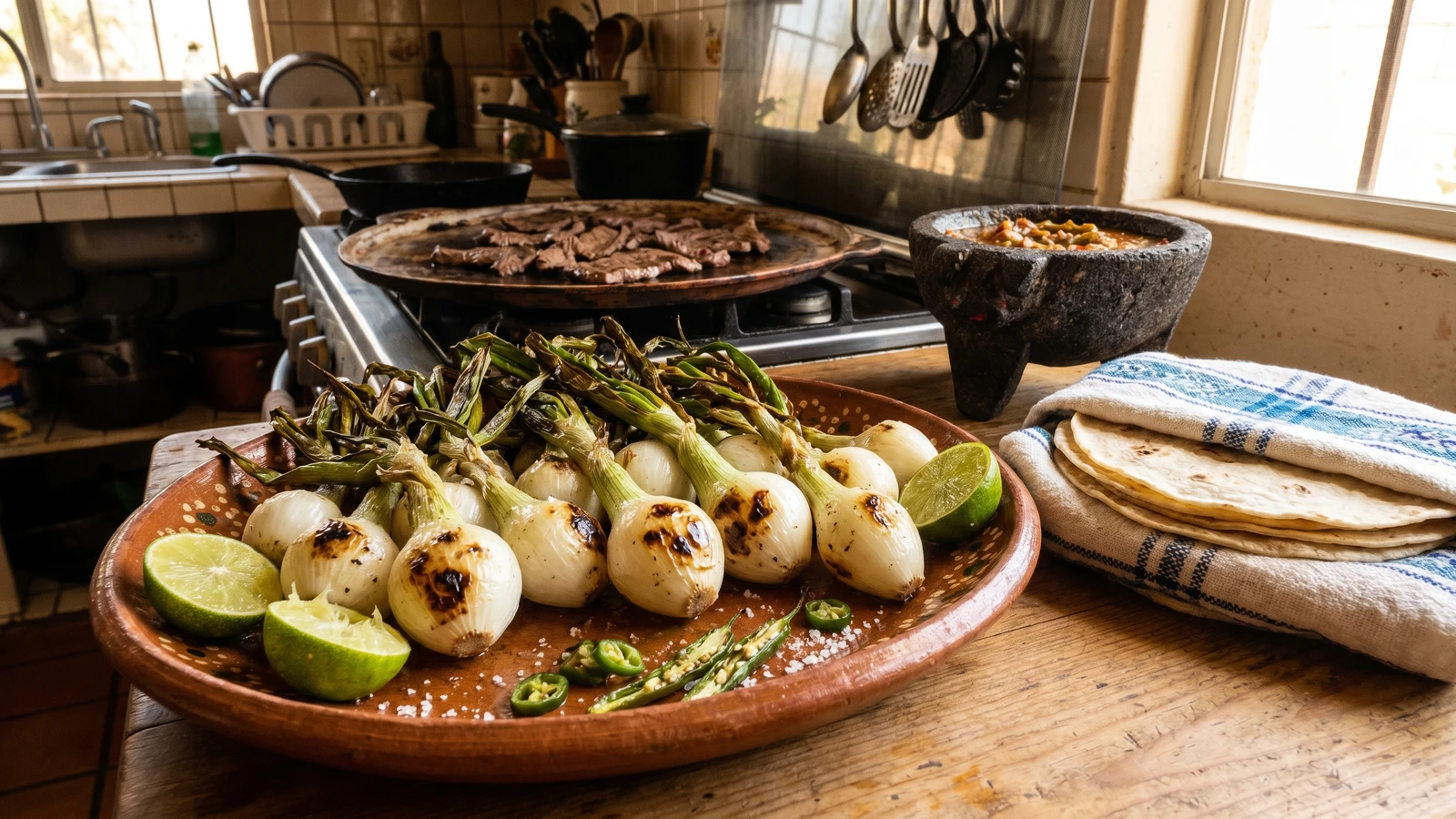
Sonora's carne asada table is not complete without cambray onions blistered beside the beef, their bulbs sweet, their green tops crisp, and lime waiting at the table.
Sonora, the north, cattle country. These cebollitas live next to the carne asada, on the same parrilla where the beef hits hard heat and the flour tortillas wait in a cloth servilleta. This is not a garnish. This is part of the meal.
Use cebollitas cambray, the small bulb onions with green tops still attached. The bulb turns sweet when it chars. The greens darken and crisp at the edges. In Hermosillo, I watched women set them along the cooler side of the grill while the meat took the center, turning them with fingers that had learned heat better than any tongs. Pregúntale a las señoras del mercado. They know which bunches are fresh and which ones are already tired.
The fat is simple here: a little neutral oil or a rub of manteca de cerdo if the grill is working hard and the onions need help. The finish is lime and sal de grano. No sauces poured over them, no cheese, no nonsense. Northern cooking knows restraint when the ingredient is good. Cada estado, su propia cocina.
Cebollitas asadas belong to the carne asada culture of northern Mexico, especially Sonora, where cattle ranching expanded during the colonial period and outdoor grilling became a social way to feed families and workers. The cebollita cambray itself is a small spring onion used across Mexico, but grilling it whole beside beef is most strongly tied to the northern parrilla table. The pairing reflects Sonora's regional logic: beef, flour tortillas, grilled onions, lime, and salsa, each one doing its own work without pretending to be from another state.
Quantity
3 bunches
roots trimmed and outer tired leaves removed
Quantity
1 tablespoon
Quantity
1 teaspoon, plus more to taste
Quantity
2
halved
Quantity
1
grilled and sliced
Quantity
for serving
| Ingredient | Quantity |
|---|---|
| cebollitas cambrayroots trimmed and outer tired leaves removed | 3 bunches |
| neutral oil or melted pork lard (manteca de cerdo) | 1 tablespoon |
| sal de grano or kosher salt | 1 teaspoon, plus more to taste |
| limeshalved | 2 |
| fresh chile serrano (optional)grilled and sliced | 1 |
| warm Sonoran flour tortillas (optional) | for serving |
Trim only the stringy roots from the cebollitas cambray, leaving the bulbs whole and the green tops attached. Pull away any dry or yellow outer leaves. Rinse well, especially where dirt hides between the bulb and the greens, then dry them completely. Wet onions steam before they char. That is not what you want.
Rub the onions with the oil or melted manteca de cerdo and sprinkle with sal de grano. Use just enough fat to make the surface shine. The onion should taste like onion, grill, lime, and salt. No me vengas con atajos that turn a clean side dish into a mess.
Heat a charcoal grill or gas grill to medium-high. If you are cooking carne asada, the beef gets the hottest center and the onions go along the edge where they can blister without burning to ash. On a stovetop, use a cast iron comal or heavy skillet until it is hot enough that a drop of water jumps and disappears.
Lay the cebollitas across the grill grates with the bulbs over stronger heat and the green tops angled toward a cooler spot. Cook 8 to 12 minutes, turning every few minutes, until the bulbs are browned in patches, softened at the center, and lightly collapsed. The greens should be dark at the edges and crisp in places, not burned through.
Move the hot cebollitas to a clay plate. Squeeze lime over them while they are still glossy, then add another pinch of sal de grano. If using the grilled chile serrano, slice it and scatter it on the side, not all over the onions. Not every Mexican dish needs to be hot. This one needs balance.
Serve immediately beside carne asada, warm Sonoran flour tortillas, salsa tatemada, and beans. Pick up a cebollita by the green top and bite through the sweet bulb. That is the point. Así se hace y punto.
1 serving (about 120g)
Culinary guides, cultural storytelling, and the editorial depth that makes cooking meaningful.
Discover Culinary ExplorerChef Lupita
Oaxaca's red rice, stained with tomato and fried in lard, steamed with carrots, ejotes, black beans, and epazote. The side that anchors a Oaxacan family meal and earns its place beside the main.

Chef Lupita
Sinaloa's home-cook white rice topped with cold cubes of cream cheese that soften into the warm grain, finished with crema and a sprinkle of chiltepin at the table. The trick that makes a side dish feel like a small luxury.

Chef Lupita
Sonora's white rice, toasted in butter and steamed with sweet corn and tender peas. The clean, quiet partner to a plate of carne asada, not the red rice of central Mexico.

Chef Lupita
Yucatán's white rice with sweet corn kernels, toasted in lard with garlic and onion. The quiet base that holds up against the peninsula's bold achiote-stained stews.