
Chef Lupita
Acúmara Tatemada al Comal
Michoacán's Lake Pátzcuaro acúmara, a whole kurucha from the lago tatemada on a comal de leña and served with chile perón atápakua, corn tortillas, and P'urhépecha discipline.
A cooking platform built around craft, culture, and the stories behind what we eat.
Created by
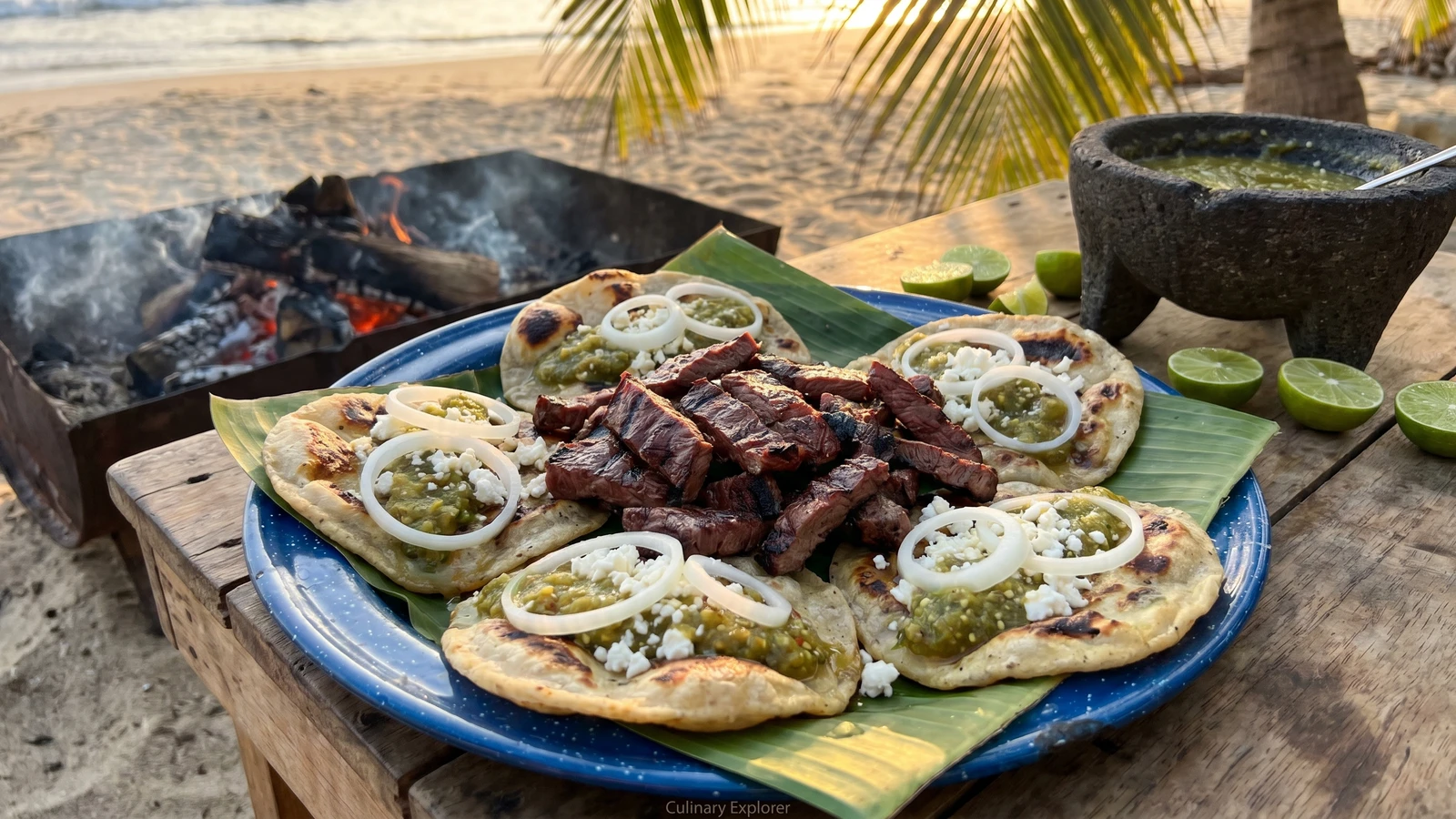
The Costa Chica's salt-cured, air-dried beef, grilled over coconut-wood coals and folded into hot memelas with salsa verde and lime. The Afro-Mexican weekend ritual of Cuajinicuilapa, where the sea breeze does half the cooking.
This is from the Costa Chica, the stretch of Pacific coast that runs from Guerrero down into Oaxaca. Cuajinicuilapa specifically, the town everyone there just calls Cuaji, the heart of Afro-Mexican Mexico. This is the food of la tercera raíz, the third root, the descendants of Africans who have lived and cooked on this coast for four hundred years. Their cooking is not a footnote to Mexican cuisine. On these tables it is the main plate. Cada estado, su propia cocina, and this coast has its own.
Carne oreada is beef that the sea air cures before the fire ever touches it. You salt it heavy and you let it dry. Oreada means aired, hung in the coastal breeze and the sun until the surface firms and the flavor concentrates. Then it goes over coconut-wood coals, leña de coco, the wood that grows right there on the coast. That smoke is half the dish. The other half is salt, time, and good beef from the cattle the Afro-Mexican vaqueros have raised on this coast for generations.
On the weekends this is how Cuaji eats. The meat comes off the coals and gets chopped on a board, folded into hot memelas brushed with manteca, drowned in salsa verde ground in the molcajete, and hit hard with lime. Around it sits the rest of the coastal larder: plátano macho, yuca, cacahuate, ajonjolí, the African pantry that took root here. I learned this plate standing next to a fire in Cuaji, watching a woman chop the meat with a knife older than me. She told me the breeze does the real work. She was right.
Do not rush the drying and do not reach for a gas grill. The two things that make this dish are the air and the coconut wood, and there is no shortcut for either. No me vengas con atajos. Saber cocinar es saber vivir, and on this coast, knowing how to cook is also knowing how to remember.
The Afro-Mexican communities of the Costa Chica descend from enslaved West and Central Africans brought to Mexico's Pacific coast during the colonial period, beginning in the 16th century, to labor on cattle haciendas and cotton lands. Salt-curing and air-drying beef, the method behind carne oreada and the closely related tasajo and cecina, was a preservation technique born of necessity in a hot coastal climate without refrigeration, tied to a cattle-ranching economy in which Afro-Mexican vaqueros were central. The chile costeño, a thin, fruity, fiery chile in red and yellow varieties, is endemic to this coast and rarely grown elsewhere. Mexico did not recognize its Afro-Mexican population in the federal constitution until a reform to Article 2 in 2019, and the national census counted them for the first time in 2020, registering roughly two and a half million people.
Quantity
2 pounds
butterflied into thin sheets about 1/4 inch thick
Quantity
3 tablespoons
Quantity
2 cloves
mashed to a paste
Quantity
1 pound
husked and rinsed
Quantity
3 to 4
stemmed
Quantity
2 cloves
unpeeled
Quantity
1/4
Quantity
1/2 cup
leaves and tender stems
Quantity
1 teaspoon, plus more to taste
Quantity
2 cups
Quantity
1 1/2 cups, plus more as needed
Quantity
1 teaspoon
Quantity
1/4 cup
for brushing
Quantity
1 cup
warm
Quantity
1/2 cup
crumbled
Quantity
for grilling
Quantity
3
halved
Quantity
for serving
| Ingredient | Quantity |
|---|---|
| beef top round or flankbutterflied into thin sheets about 1/4 inch thick | 2 pounds |
| coarse sea salt (sal de mar) | 3 tablespoons |
| garlic (optional)mashed to a paste | 2 cloves |
| tomatilloshusked and rinsed | 1 pound |
| fresh chile costeño verde (or fresh serrano)stemmed | 3 to 4 |
| garlicunpeeled | 2 cloves |
| white onion | 1/4 |
| fresh cilantroleaves and tender stems | 1/2 cup |
| coarse salt | 1 teaspoon, plus more to taste |
| masa harina (or 1 pound fresh masa) | 2 cups |
| warm water | 1 1/2 cups, plus more as needed |
| fine salt | 1 teaspoon |
| manteca de cerdo (lard) or asientofor brushing | 1/4 cup |
| refried black beans (optional)warm | 1 cup |
| queso fresco or queso seco costeño (optional)crumbled | 1/2 cup |
| coconut wood or lump charcoal | for grilling |
| limeshalved | 3 |
| coarse sea salt (for the table) (optional) | for serving |
Lay the butterflied beef flat on a cutting board. If the butcher left it thick, slice it down into sheets no more than a quarter inch thick. The thinner it is, the better it dries. Coat both sides generously with coarse sea salt, pressing it in with your hands. This is not seasoning, it is curing. The salt draws the moisture to the surface and concentrates the flavor of the meat. On the Costa Chica they use sal de mar straight from the coastal salt flats. Use the coarsest sea salt you can find, and do not be shy with it.
Lay the salted beef flat on a wire rack set over a sheet pan, in a single layer. Set it in the refrigerator, uncovered, for 8 to 24 hours. Overnight is the right amount. The surface will darken, dry to the touch, and the meat will turn firm and a little tacky. This is what oreada means: aired. In Cuaji the women hang the salted beef in the sea breeze and the coastal sun and let the salt air do the work over a day. At home, the cold dry air of the refrigerator does the same job safely. Do not skip this and do not rush it. The drying is the dish. Grill a fresh steak with salt and you have a fresh steak. Carne oreada is something else entirely.
Heat a dry comal or heavy skillet over medium-high. Char the tomatillos, the chiles, the garlic, and the onion, turning them until they blister and blacken in spots and the tomatillos slump and soften. The garlic is done when it is soft inside, then peel it. Now the molcajete. Grind the peeled garlic, the salt, and the chiles to a rough paste first. Add the onion, then crush in the tomatillos a few at a time until you have a loose, textured salsa. Fold in the cilantro at the end. A molcajete salsa is not a blender salsa. The stone tears the ingredients and the salsa holds its body. If all you have is a blender, pulse it, do not puree it. You want texture, not soup.
Combine the masa harina and fine salt in a bowl and work in the warm water until it comes together into a soft, smooth dough with the feel of wet clay. Knead it for a minute. Press a piece flat between your fingers: if the edges crack, the masa is too dry, so work in more warm water a spoonful at a time until it presses smooth. Cover with a damp cloth and let it rest 20 minutes. If you can buy fresh masa from a tortillería, use it and skip the mixing. Si no conoces el mercado, no conoces la cocina.
Light the coconut wood or lump charcoal and let it burn down until the flames die and the coals glow under a coat of gray ash. You want steady, medium-high heat, not flames. Coconut wood is what they burn on the Costa Chica, leña de coco, and the smoke it throws is part of the flavor of the meat. Lump charcoal is the next best thing. Do not use a gas grill for this. There is no smoke in gas, and the smoke is the point.
Divide the rested masa into balls a little smaller than a golf ball. Press each one into an oval about a quarter inch thick, by hand or in a tortilla press lined with plastic. Cook them on a hot comal until the underside sets and freckles with brown, about a minute. Flip, and as the second side cooks, pinch a low raised rim around the edge of each one so it can hold salsa later. Cook until both sides are firm and spotted with toasty brown. Brush the tops with manteca or, if you have it, asiento, the browned lard sediment left from making chicharrón. La manteca es el sabor. Spread a little warm refried black beans across each if you like, and keep them warm under a cloth.
Lay the dried beef directly on the grate over the hot coals. If you want the garlic, rub it on first. The meat is thin and already cured, so it cooks fast, a minute or two a side at most. Press it down so it takes the heat evenly. You are after a hard, dark char on the outside and the smoke driven into the meat. The edges will curl and crisp. Pull it off the second it is charred and just cooked through. Overcook dried beef and it goes to leather, and there is no saving it. Así se hace y punto.
Rest the meat a minute on the board, then chop it across the grain into rough strips with a heavy knife, the way they do it next to the fire. Pile the hot meat onto the memelas, spoon the salsa verde over the top, scatter a little crumbled queso if using, and squeeze lime across everything. Put the platter in the middle of the table with the extra limes and salsa and let people build their own. Eat it with your hands, standing around the coals, on a weekend, the way Cuajinicuilapa has always eaten it. La tercera raíz no es nota al pie. Es plato principal.
1 serving (about 310g)
Culinary guides, cultural storytelling, and the editorial depth that makes cooking meaningful.
Discover Culinary ExplorerChef Lupita
Michoacán's Lake Pátzcuaro acúmara, a whole kurucha from the lago tatemada on a comal de leña and served with chile perón atápakua, corn tortillas, and P'urhépecha discipline.

Chef Lupita
Puebla's weekday adobo of pork shoulder braised in a thick guajillo and ancho sauce sharpened with vinegar, cumin, and clove. The deep red of a market spice stall, the dish a poblana cooks without thinking.

Chef Lupita
Loreto's pit-roasted clams, planted hinge-up in beach sand and tatemadas under a fast fire of dried romerillo brush, the resinous Baja desert shrub that gives this dish its smoke.

Chef Lupita
Oaxaca's eighth mole, the silky, almond-and-cinnamon almendrado, served over poached chicken. Mild, sweet, restrained, and a quiet rebuttal to anyone who thinks Mexican food has to be hot to be Mexican.