
Chef Ally
Beignets with Powdered Sugar
Pillowy squares of yeasted dough, fried until golden and hollow inside, then buried beneath a mountain of powdered sugar. Simple enough for a Sunday morning, celebratory enough for any occasion worth marking.
A cooking platform built around craft, culture, and the stories behind what we eat.
Created by Chef Remy
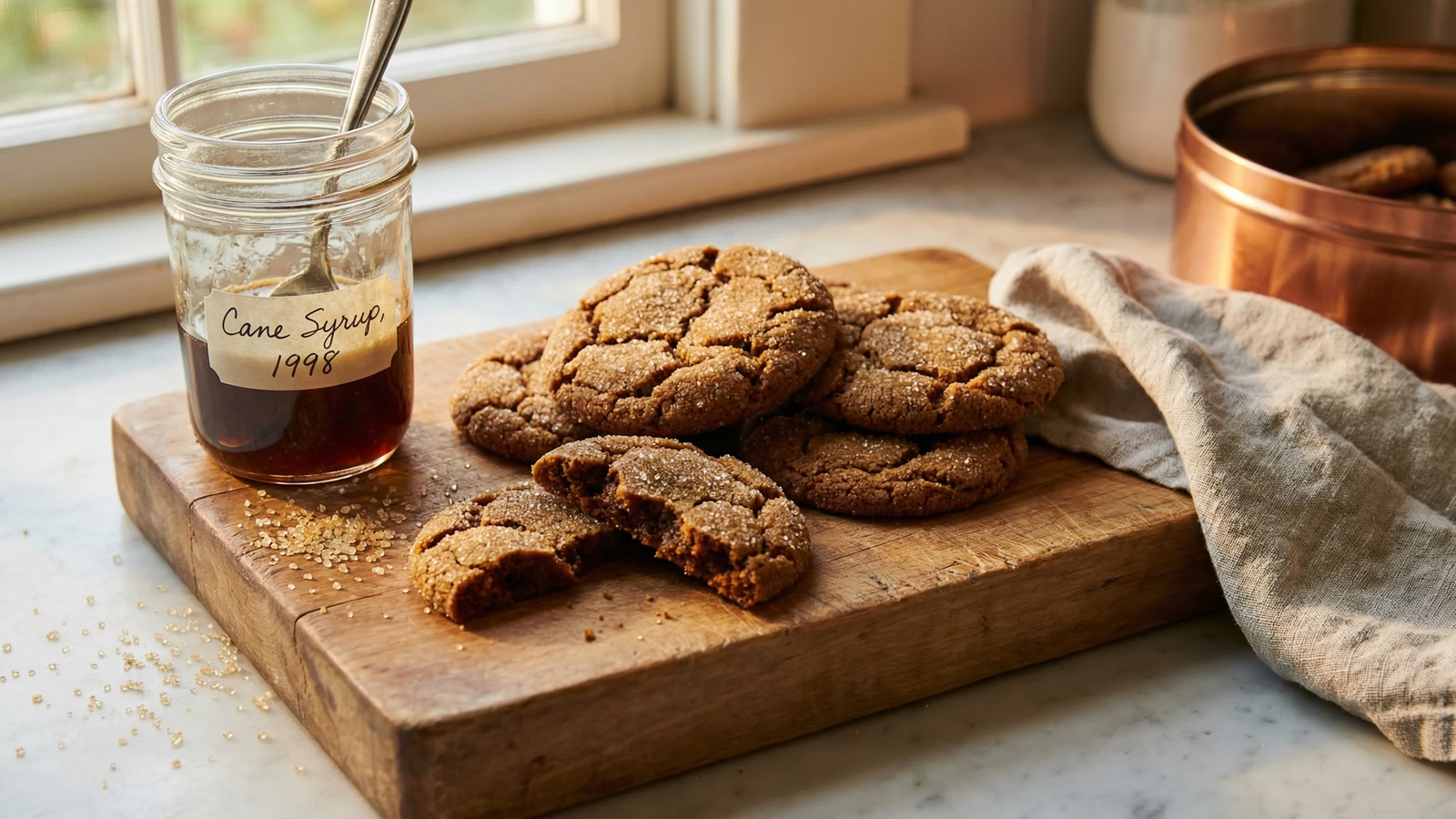
Soft, crackle-topped spice cookies made the Louisiana way, with pure cane syrup instead of molasses bringing a lighter, more complex sweetness that tastes like the sugarcane fields in autumn.
My grandmother Evangeline kept a jar of Steen's cane syrup on her counter year-round, but come November it came out every single day. She made these cookies by feel, no recipe, just her hands knowing exactly how much flour, how much spice, how long to let them rest. I spent years trying to capture what she did, and these cookies are as close as I've gotten.
The secret is the cane syrup. Most spice cookie recipes call for molasses, but down here in Louisiana we know better. Pure cane syrup is lighter, sweeter, with a warmth that molasses can't match. It tastes like the sugarcane fields during harvest, when the whole parish smells of caramelized sweetness. Molasses gives you that bitter, almost burnt edge. Cane syrup gives you butterscotch and vanilla and something gentler underneath.
These cookies crack across the top as they bake, covered in a sparkle of granulated sugar that catches the light. The outside has just enough crunch to make the soft, chewy center feel like a reward. The spice blend hits you with ginger first (fresh and ground, because one isn't enough), then cinnamon warming your chest, then cloves and allspice lingering at the finish. At Lagniappe, we put these out every December and people lose their minds. Now you can make them in your own kitchen.
Quantity
2 1/4 cups (280g)
Quantity
2 teaspoons
Quantity
1 1/2 teaspoons
Quantity
1/2 teaspoon
Quantity
1/4 teaspoon
Quantity
1 teaspoon
Quantity
1/2 teaspoon
Quantity
3/4 cup (1 1/2 sticks/170g)
softened
Quantity
1 cup (200g), plus 1/2 cup for rolling
Quantity
1
at room temperature
Quantity
1/4 cup (85g)
Quantity
1 tablespoon
finely grated
| Ingredient | Quantity |
|---|---|
| all-purpose flour | 2 1/4 cups (280g) |
| ground ginger | 2 teaspoons |
| ground cinnamon | 1 1/2 teaspoons |
| ground cloves | 1/2 teaspoon |
| ground allspice | 1/4 teaspoon |
| baking soda | 1 teaspoon |
| fine sea salt | 1/2 teaspoon |
| unsalted buttersoftened | 3/4 cup (1 1/2 sticks/170g) |
| granulated sugar | 1 cup (200g), plus 1/2 cup for rolling |
| large eggat room temperature | 1 |
| pure Louisiana cane syrup | 1/4 cup (85g) |
| fresh gingerfinely grated | 1 tablespoon |
Whisk together the flour, ground ginger, cinnamon, cloves, allspice, baking soda, and salt in a medium bowl. Take a moment to smell that blend. It should hit you with warmth and make you think of holidays. If your spices don't smell like anything, they're too old and they'll give you flat, disappointing cookies. That's the bayou way: start with ingredients that have something to say.
Beat the softened butter and one cup of sugar in a stand mixer fitted with the paddle attachment on medium speed. Work it for a full three to four minutes until the mixture turns pale and fluffy. Scrape down the sides halfway through. You're building structure here, incorporating tiny air pockets that give these cookies their tender crumb. Rush this step and you'll know it when you bite into a dense, sad cookie.
Beat in the egg until fully incorporated. Now pour in the cane syrup and add that fresh grated ginger. Mix until smooth. Here's where these cookies become something special. Louisiana cane syrup isn't molasses, though folks often confuse them. Cane syrup is lighter, sweeter, with notes of vanilla and butterscotch that molasses just doesn't have. It's liquid gold from the sugarcane fields, and it makes these cookies taste like home.
Add the flour mixture in two additions, mixing on low speed just until the flour disappears. The dough will be soft and slightly sticky, the color of café au lait with speckles of ginger throughout. Stop the mixer the moment you don't see dry streaks. Overworked cookie dough gets tough, and nobody wants a chewy cookie that fights back.
Cover the bowl tightly with plastic wrap and refrigerate for at least two hours, or overnight. The dough needs this time. It firms up so you can roll it into balls, the flour hydrates for better texture, and the spices meld together into something deeper than what you started with. Patience rewards you here.
Preheat your oven to 350°F. Line baking sheets with parchment paper. Pour that half cup of sugar into a shallow bowl. Scoop tablespoon-sized portions of dough and roll them between your palms into smooth balls. Drop each ball into the sugar and roll it around until completely coated. Place them two inches apart on your prepared sheets.
Bake one sheet at a time in the center of the oven for nine to eleven minutes. The cookies are done when they've puffed up, cracked across the top like a dry riverbed, and the edges look set but the centers still appear slightly underdone. They'll look almost too soft. That's exactly right. They firm up as they cool, and those cracks become the signature of a proper spice cookie.
Let the cookies rest on the baking sheet for five minutes. They're too fragile to move right away. Transfer to a wire rack and let them cool completely before storing. The texture develops as they sit: the outside gets that slight crunch from the sugar coating while the inside stays soft and chewy. Store in an airtight container at room temperature, where they'll keep beautifully for a week, though they rarely last that long.
1 serving (about 25g)
Culinary guides, cultural storytelling, and the editorial depth that makes cooking meaningful.
Discover Culinary ExplorerChef Ally
Pillowy squares of yeasted dough, fried until golden and hollow inside, then buried beneath a mountain of powdered sugar. Simple enough for a Sunday morning, celebratory enough for any occasion worth marking.

Chef Remy
Sandy, crumbly shortbread rounds perfumed with deeply nutty brown butter and studded with toasted Louisiana pecans, finished with a whisper of flaky salt that makes every bite sing.

Chef Remy
Tender, fluffy buttermilk biscuits with golden tops and soft centers, split warm from the oven and flooded with dark, earthy Louisiana cane syrup, the way four generations of bayou families have started their mornings.

Chef Remy
Soft, golden yeast rolls cradling spicy Cajun boudin in every bite, where Czech-Texan baking tradition meets Louisiana sausage-making, proving that good cooks have always borrowed from their neighbors.