
Chef Lupita
Arroz a la Oaxaqueña
Oaxaca's red rice, stained with tomato and fried in lard, steamed with carrots, ejotes, black beans, and epazote. The side that anchors a Oaxacan family meal and earns its place beside the main.
A cooking platform built around craft, culture, and the stories behind what we eat.
Created by
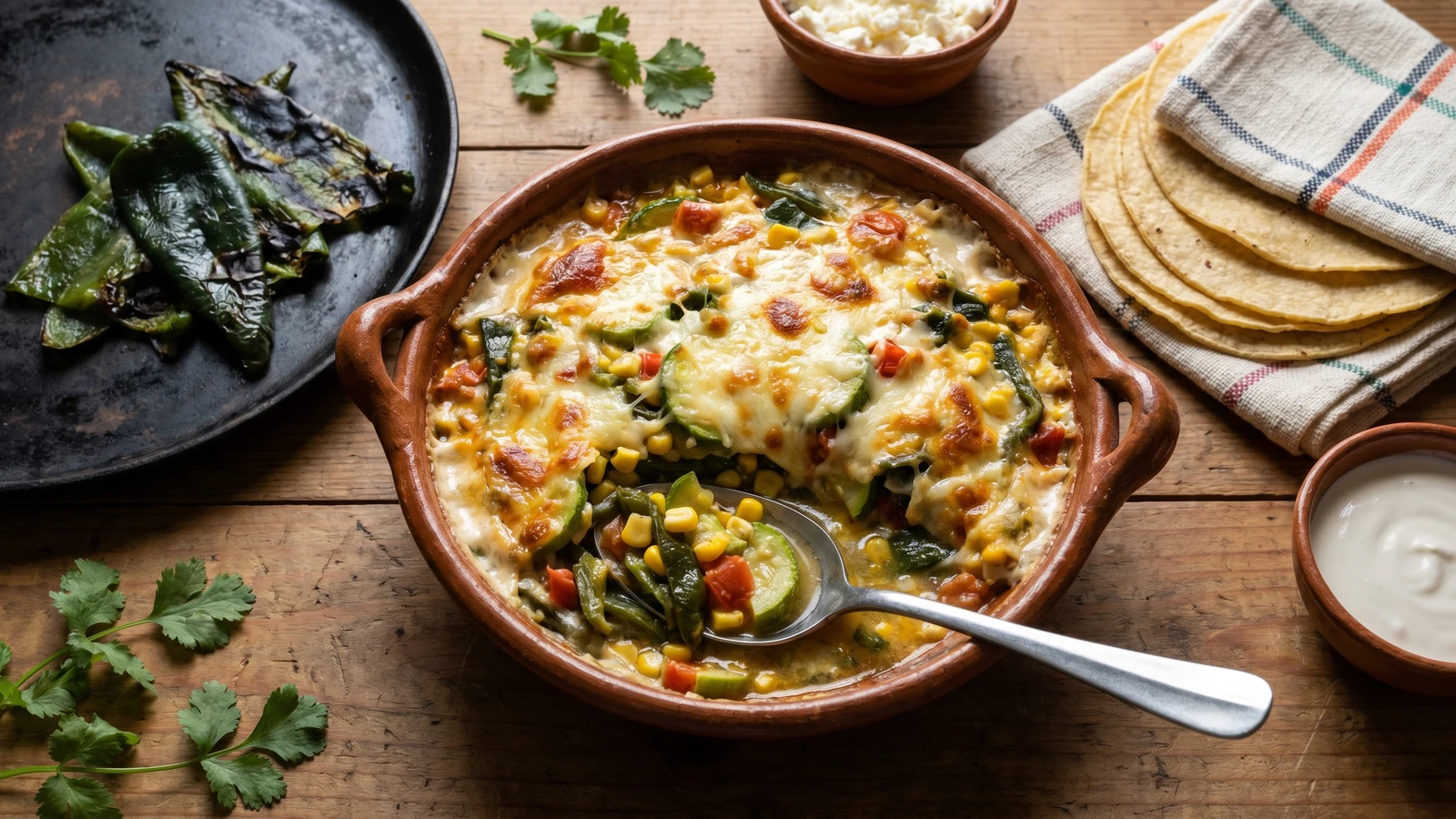
Puebla's central highland calabacitas layered with elote, chile poblano, jitomate, crema, and queso, baked in a cazuela until the top bronzes and the squash stays tender.
Puebla, in the central highlands, knows what to do with squash, corn, tomato, and chile poblano. This dish lives in home kitchens more than restaurants, the kind of cazuela that appears beside arroz rojo, frijoles de olla, or roasted chicken when a family needs one generous vegetable dish to feed the table.
The chile that marks this version is chile poblano, roasted until the skin blisters, peeled by hand, and cut into rajas. Do not use canned green chiles. Those belong to a different conversation. The poblano gives the dish its green depth without turning it into a contest of heat. Not all Mexican food is about fire. Some of it is about balance, sweetness from elote, acidity from jitomate, milk richness from crema, and the soft bite of calabacita criolla.
I learned a version like this from a señora near Atlixco who baked hers in a glazed clay cazuela and set it on the table with a towel wrapped around the handles. She used manteca to start the onion because, claro, la manteca es el sabor. Then crema, queso fresco, and a little queso Oaxaca over the top so it melts properly. The oven is modern. The logic is older: layer what the milpa gives you, season it correctly, and do not drown the squash. Saber cocinar es saber vivir.
Calabacita, maize, and chile belong to the milpa system, the Mesoamerican agricultural triad cultivated in central Mexico long before the Spanish conquest. Dairy entered Puebla's kitchens after the 16th century through Spanish cattle and convent cooking, which helped normalize baked vegetable dishes finished with cream and cheese in the central highlands. The phrase "a la mexicana" usually signals the colors of the flag through tomato, white onion, and green chile, but in Puebla the fresh chile poblano gives that green element a local identity.
Quantity
5 medium
cut into 1/2-inch half-moons
Quantity
3
Quantity
2 tablespoons
Quantity
1 medium
thinly sliced
Quantity
3
finely chopped
Quantity
3 medium
chopped
Quantity
2 cups
cut from 3 ears of elote
Quantity
1 teaspoon, plus more to taste
Quantity
1/2 teaspoon
Quantity
2 sprigs
Quantity
1 cup
Quantity
1/2 cup
Quantity
1 cup
crumbled
Quantity
1 1/2 cups
shredded by hand
Quantity
2 tablespoons
chopped, for finishing
| Ingredient | Quantity |
|---|---|
| calabacitas criollas or Mexican gray squashcut into 1/2-inch half-moons | 5 medium |
| fresh chile poblano | 3 |
| manteca de cerdo | 2 tablespoons |
| white onionthinly sliced | 1 medium |
| garlic clovesfinely chopped | 3 |
| ripe jitomateschopped | 3 medium |
| fresh corn kernelscut from 3 ears of elote | 2 cups |
| kosher salt | 1 teaspoon, plus more to taste |
| freshly ground black pepper | 1/2 teaspoon |
| fresh epazote | 2 sprigs |
| Mexican crema | 1 cup |
| whole milk | 1/2 cup |
| queso frescocrumbled | 1 cup |
| queso Oaxacashredded by hand | 1 1/2 cups |
| fresh cilantro (optional)chopped, for finishing | 2 tablespoons |
Set the chile poblanos directly over a gas flame or on a hot comal. Turn them until the skins blister and blacken in patches on all sides. Put them in a bowl and cover with a clean towel for 10 minutes. Peel off the loosened skin with your fingers, then remove the stems and seeds. Cut the flesh into thin rajas. The poblano should smell green and roasted, not burned all the way through.
Heat the oven to 375F. Melt the manteca de cerdo in a wide skillet over medium heat. Add the onion and cook for 5 minutes, until it softens and turns glossy. Add the garlic and cook for 30 seconds. The kitchen should smell sweet from the onion and sharp from the garlic. This is the base. No me vengas con atajos.
Add the chopped jitomates and salt. Cook for 8 to 10 minutes, stirring often, until the tomato collapses and its liquid thickens into a red sauce that clings to the onion. Raw tomato makes the gratin watery. Cook it down now or pay for it later.
Stir in the calabacitas, fresh corn kernels, black pepper, epazote sprigs, and poblano rajas. Cook for 6 to 8 minutes, just until the squash begins to soften at the edges but still holds its shape. It will finish in the oven. If you cook it to death in the skillet, the cazuela will weep water. Remove and discard the epazote sprigs.
In a bowl, whisk the Mexican crema with the whole milk until loose enough to pour. Stir in half of the queso fresco. Taste the cooked squash mixture for salt before layering. Crema and cheese bring salt, yes, but vegetables need their own seasoning. A bland squash casserole is nobody's regional pride.
Grease a 2-quart clay cazuela or baking dish with a little extra manteca. Spoon in half the squash mixture. Pour over half the crema mixture. Add half the queso Oaxaca. Repeat with the remaining squash, crema, queso Oaxaca, and the rest of the queso fresco. The layers should look generous but not drowned. You want vegetables held together by crema, not swimming in it.
Bake uncovered for 25 to 30 minutes, until the edges bubble and the cheese on top melts into golden patches. Let the cazuela rest for 10 minutes before serving. That rest matters. The crema settles, the squash firms up, and the first spoonful comes out clean instead of collapsing into a puddle.
Scatter the chopped cilantro over the top if using. Serve warm from the cazuela, family-style, with arroz rojo, frijoles de olla, or warm corn tortillas. This is a side dish, yes, but a serious one. Cada estado, su propia cocina.
1 serving (about 320g)
Culinary guides, cultural storytelling, and the editorial depth that makes cooking meaningful.
Discover Culinary ExplorerChef Lupita
Oaxaca's red rice, stained with tomato and fried in lard, steamed with carrots, ejotes, black beans, and epazote. The side that anchors a Oaxacan family meal and earns its place beside the main.

Chef Lupita
Sinaloa's home-cook white rice topped with cold cubes of cream cheese that soften into the warm grain, finished with crema and a sprinkle of chiltepin at the table. The trick that makes a side dish feel like a small luxury.

Chef Lupita
Sonora's white rice, toasted in butter and steamed with sweet corn and tender peas. The clean, quiet partner to a plate of carne asada, not the red rice of central Mexico.

Chef Lupita
Yucatán's white rice with sweet corn kernels, toasted in lard with garlic and onion. The quiet base that holds up against the peninsula's bold achiote-stained stews.