Chef Lupita
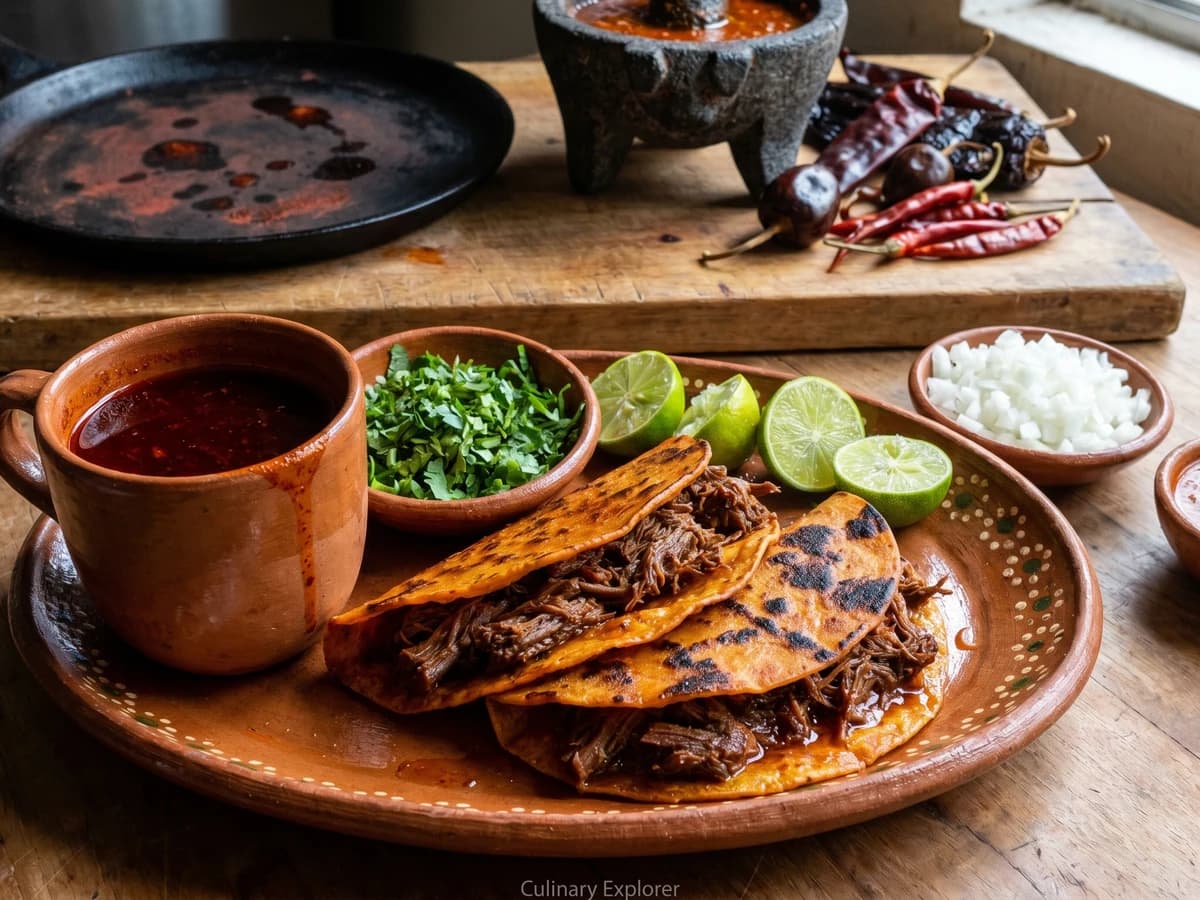
Birria Tacos with Consome
Jalisco's goat birria, born around Cocula and carried into Guadalajara's markets, slow-braised in ancho, guajillo, cascabel, and chile de arbol, then tucked into corn tortillas crisped in its own red fat.
A cooking platform built around craft, culture, and the stories behind what we eat.

Created by
Hermosillo's nighttime monster, named for a draft horse: mesquite-grilled carne asada, melted queso Chihuahua, whole avocado, frijoles, and crema rolled in a 20-inch sobaquera so thin you can read through it.
This is from Sonora. Specifically from Hermosillo, where the burro percheron belongs to the late-night carretas parked along the avenues and to the food trucks that open after the sun finally lets go of the desert. The burro percheron is not a Mission burrito. It is older, simpler, and rooted in a different geography: the cattle country of the Mexican northwest, where flour tortillas are a birthright and mesquite is the cooking fuel.
The sobaquera is the soul of this dish. A flour tortilla so thin and so wide it drapes over the cook's forearm while she stretches it. The name comes from sobaco, the armpit, because that is roughly where it ends up. Sonoran women have been making them this way for generations, in wheat-growing country where corn was always the second grain. If you serve a burro percheron on a small store-bought flour tortilla, you have made a burrito. You have not made a percheron.
The meat is arrachera grilled over mesquite. Not gas. Not propane. Mesquite. The smoke is dry and faintly sweet and the desert wood is what makes Sonoran carne asada taste like Sonoran carne asada. The cheese is Chihuahua or asadero, melted onto the tortilla so it pulls in long strings when you lift it. The avocado is whole, not mashed. The crema is real Mexican crema, not sour cream. Cada estado, su propia cocina, and this one belongs to the noroeste.
The burro is named for the percheron, the heavy draft horse, because it is supposed to be huge. Two-handed huge. The kind of food you eat once a week and remember for the rest of it. La manteca es el sabor and so is the size. No me vengas con atajos.
The flour tortilla tradition of Sonora and the broader Mexican noroeste dates to the 17th and 18th centuries, when Spanish colonists introduced wheat cultivation to the arid northwest and indigenous Yaqui, Mayo, and Opata women adapted the grain to the comal in place of corn, which grew poorly in the desert. The sobaquera, sometimes called tortilla de agua, is the regional refinement of that tradition: stretched by hand to enormous diameters, paper-thin, and impossibly elastic. The burro percheron itself is a 20th-century street-cart invention from Hermosillo, named for the percheron draft horse to advertise its size, and it predates by decades the more famous Mission-style burrito of San Francisco; the chimichanga, often credited to Tucson, descends from the same Sonoran chivichanga tradition of frying a stuffed flour tortilla, a fact that Sonoran cooks have been quietly correcting for years.
Quantity
2 pounds
trimmed of silverskin
Quantity
1/2 cup (about 6 limes)
Quantity
4
smashed
Quantity
1 tablespoon
Quantity
1 teaspoon
Quantity
1 teaspoon
crumbled
Quantity
4
Quantity
12 ounces
shredded (substitute queso asadero or Menonita)
Quantity
2
halved and sliced
Quantity
1 cup
Quantity
2 cups
warmed
Quantity
1 cup
tomato, white onion, serrano, cilantro, lime, salt
Quantity
1/2 cup
or salsa de chile de arbol
Quantity
1 cup
soaked 30 minutes (or mesquite lump charcoal)
Quantity
for the comal
Quantity
for serving
Quantity
for serving
| Ingredient | Quantity |
|---|---|
| beef arrachera or skirt steaktrimmed of silverskin | 2 pounds |
| fresh lime juice | 1/2 cup (about 6 limes) |
| garlic clovessmashed | 4 |
| kosher salt | 1 tablespoon |
| coarsely cracked black pepper | 1 teaspoon |
| dried Mexican oreganocrumbled | 1 teaspoon |
| sobaquera flour tortillas, 18 to 20 inches across | 4 |
| queso Chihuahuashredded (substitute queso asadero or Menonita) | 12 ounces |
| large Hass avocadoshalved and sliced | 2 |
| crema mexicana | 1 cup |
| frijoles puercos or refried pinto beanswarmed | 2 cups |
| pico de gallotomato, white onion, serrano, cilantro, lime, salt | 1 cup |
| salsa de chiltepinor salsa de chile de arbol | 1/2 cup |
| mesquite wood chipssoaked 30 minutes (or mesquite lump charcoal) | 1 cup |
| manteca de cerdo | for the comal |
| pickled jalapenos and carrots (optional) | for serving |
| lime wedges (optional) | for serving |
Lay the meat in a shallow dish. Rub it with the lime juice, smashed garlic, salt, pepper, and oregano. Cover and refrigerate for 30 minutes, no longer. Sonoran carne asada is not ceviche. The lime is for fragrance and a little bite. Leave it overnight and the meat turns mealy. Asi se hace y punto.
Light a charcoal grill and let the coals burn down to a glowing bed with white ash on top. Scatter the soaked mesquite chips over the coals, or use mesquite lump charcoal from the start. Mesquite is the cooking fuel of the Sonoran Desert. The smoke is dry, sweet, and faintly resinous, and it is what separates Sonoran carne asada from any other grilled beef in Mexico.
Pull the meat from the marinade and shake off the garlic. Lay it directly over the hottest part of the fire. Sonoran arrachera is thin. Two to three minutes per side, no more. You want a deep char on the outside and a rosy pink interior. Pull it onto a wooden cutting board and let it rest five minutes before chopping it into rough small pieces. The juices stay where they belong.
A sobaquera is the flour tortilla of Sonora and northwest Mexico, paper-thin and stretched until it is wide enough to drape over the cook's forearm. The name comes from sobaco, the armpit, because that is roughly where it ends up while she works it. Heat a wide comal over medium-low and rub it with a film of manteca. Lay one sobaquera on the comal for 20 seconds per side, just to soften and pick up a few light brown freckles. It must stay pliable. A crisp tortilla cannot roll a burro percheron without splitting.
While the second side warms, scatter a generous handful of shredded queso Chihuahua across the center of the tortilla. Cover with a wide metal bowl or a sheet pan for 30 seconds so the cheese melts into the surface and pulls in long strings when you lift it. Queso Chihuahua, asadero, or Menonita. No cheddar. No yellow shredded blend. The cheese has to be Norteno or the burro is wrong.
Slide the cheesed tortilla onto a clean board, melted side up. Down the center, in a straight line, build the burro: a generous spoon of frijoles puercos first, then a quarter of the chopped carne asada, then half an avocado fanned out, then a few spoons of pico de gallo, a drizzle of crema, and a spoon of salsa de chiltepin. Be generous. The burro percheron is named for the percheron horse, the heavy draft animal. It is supposed to be huge. A polite burro is not a percheron.
Fold the bottom edge of the tortilla up over the filling, then fold in both sides, then roll forward, keeping the bundle tight. The sobaquera is forgiving because it is thin and elastic. Lay the rolled burro seam-side down on the comal for 30 seconds to seal it shut. Cut it in half on the bias if you want to see the layers, or leave it whole and let the eater wrestle it. La cocina no es decoracion, es trabajo.
Set the burro percheron on a small plate or a square of butcher paper. Pickled jalapenos and carrots in a small bowl. Lime wedges. More salsa de chiltepin on the side for the brave. This is street food from Hermosillo and it should be eaten standing up, late at night, with cold beer in hand. Recetas probadas y garantizadas.
1 serving (about 785g)
Culinary guides, cultural storytelling, and the editorial depth that makes cooking meaningful.
Discover Culinary ExplorerChef Lupita
Jalisco's goat birria, born around Cocula and carried into Guadalajara's markets, slow-braised in ancho, guajillo, cascabel, and chile de arbol, then tucked into corn tortillas crisped in its own red fat.
Chef Lupita
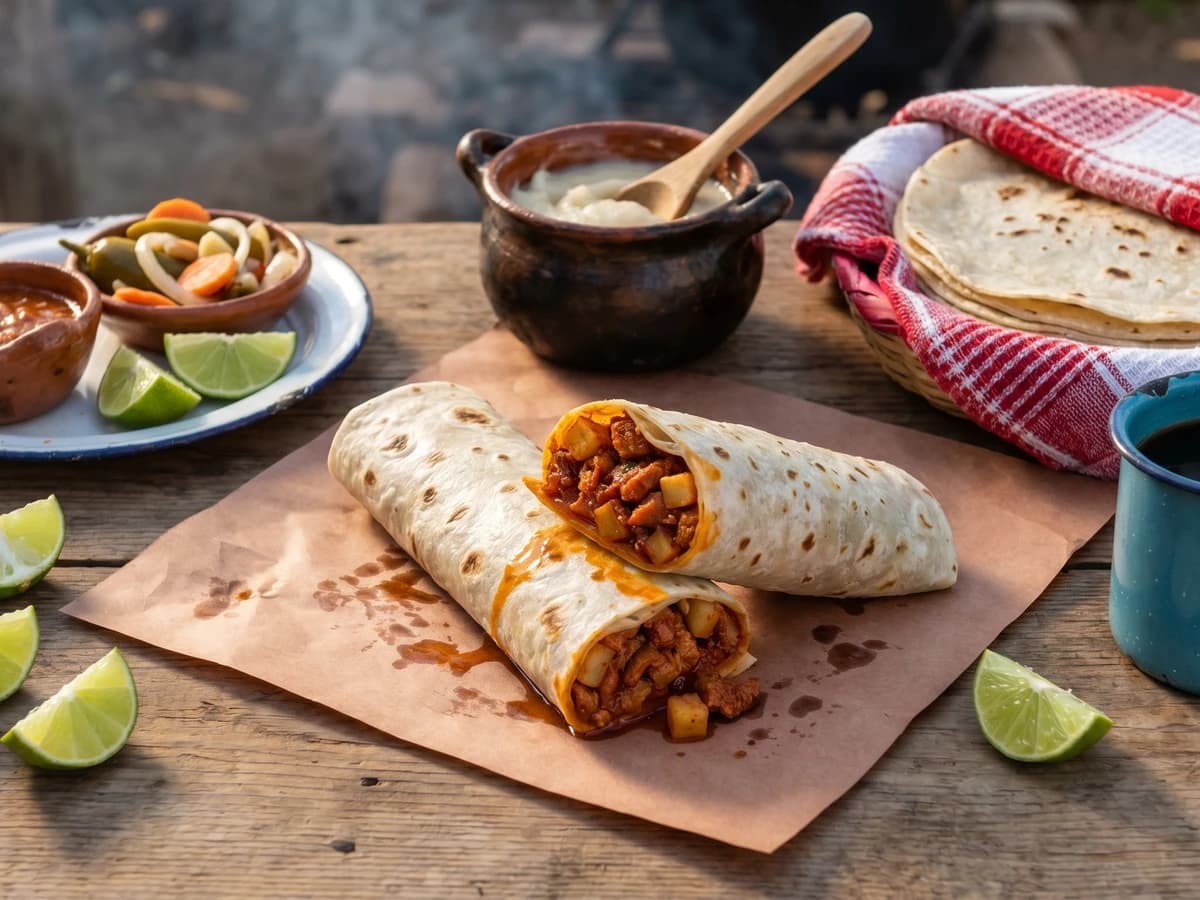
Sonora's working morning burrito: chicharrón de cáscara stewed in chile colorado with diced potato, rolled tight in a paper-thin tortilla sobaquera and eaten standing up at the carreta.
Chef Lupita
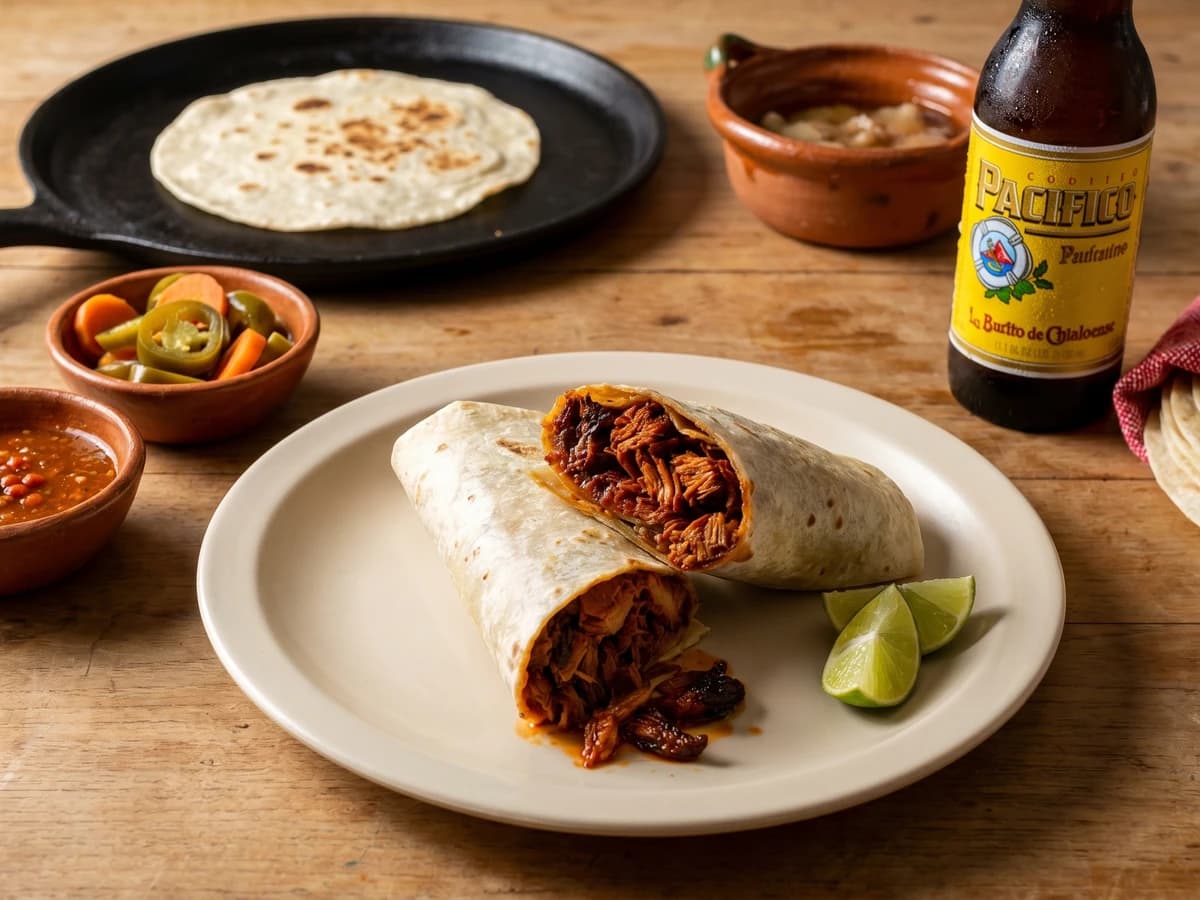
Mocorito's pork chilorio, shredded and confited in lard with chile ancho and pasilla, rolled into a thin handmade flour tortilla. The burrito Sinaloa sends out into the world.
Chef Lupita
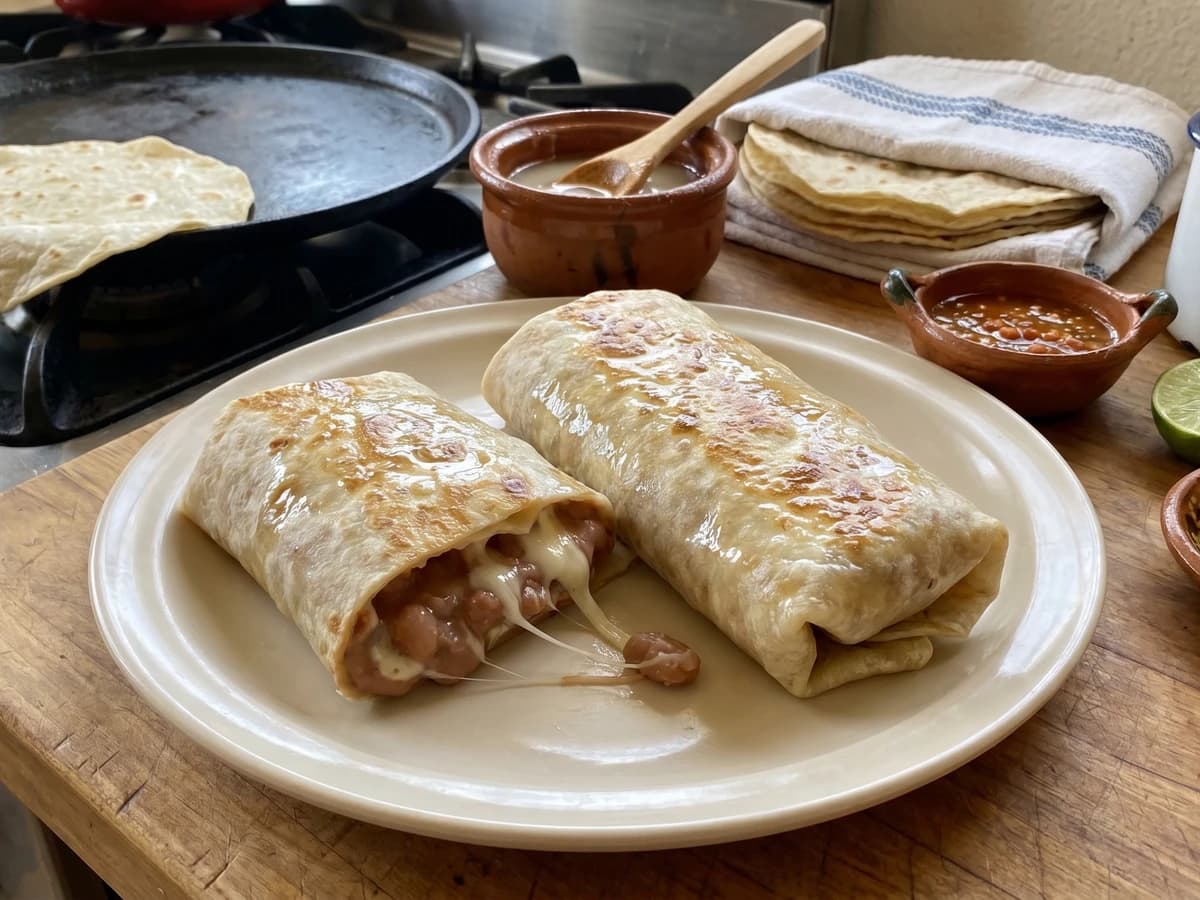
Sonora's morning burrito of mashed pinto frijoles puercos and melted queso asadero, wrapped in a paper-thin sobaquera and seared on the comal until the cheese pulls in long strings.