
Chef Lupita
Arroz a la Oaxaqueña
Oaxaca's red rice, stained with tomato and fried in lard, steamed with carrots, ejotes, black beans, and epazote. The side that anchors a Oaxacan family meal and earns its place beside the main.
A cooking platform built around craft, culture, and the stories behind what we eat.
Created by
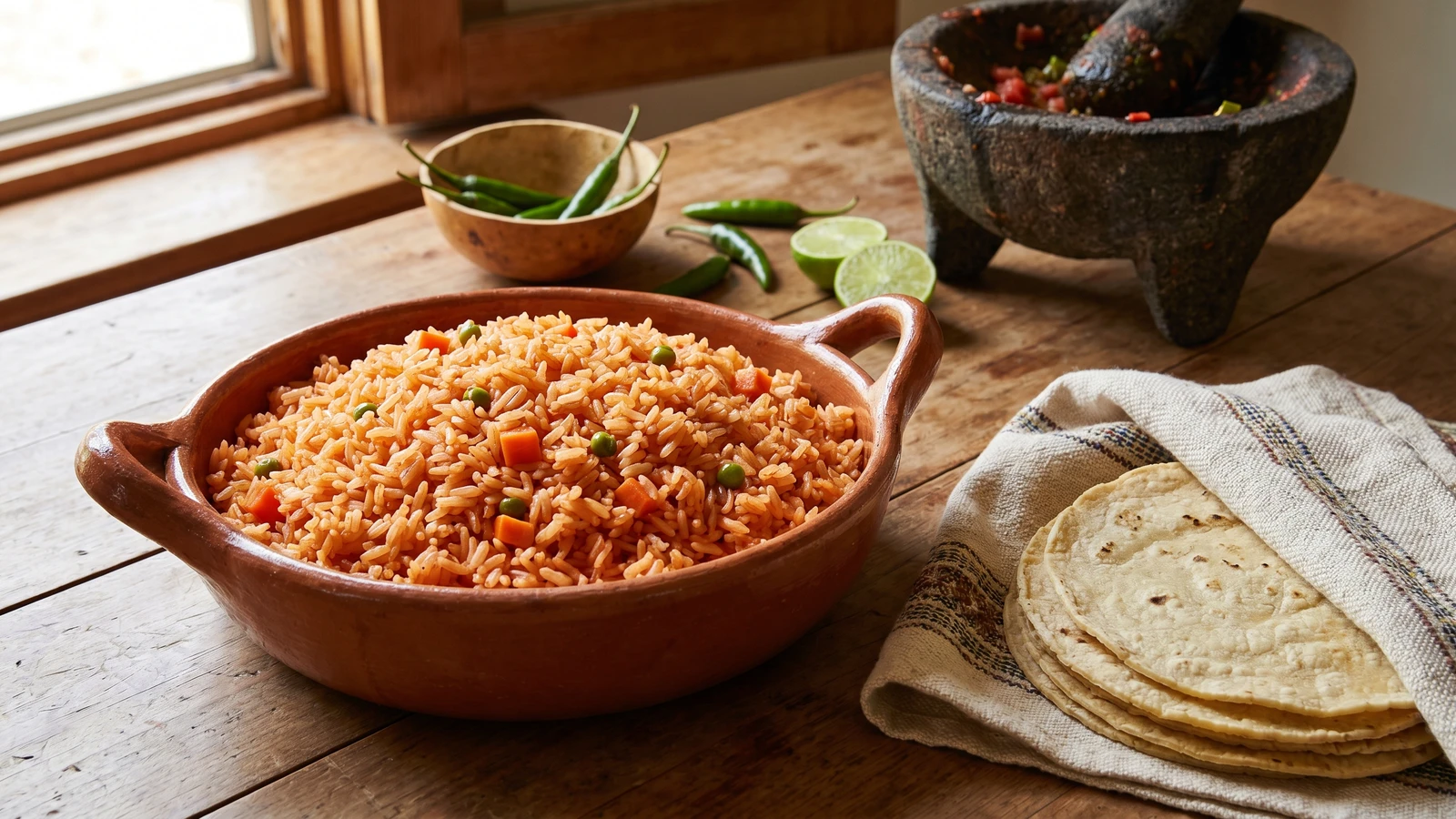
Tabasco's everyday red rice, long-grain grains fried in manteca, stained with tomato, and simmered in chicken broth until each grain stands separate.
Tabasco, in the wet lowlands between the Grijalva and Usumacinta rivers, eats rice with the confidence of a state that knows water. This arroz rojo belongs to the midday comida in Villahermosa, Comalcalco, Cunduacan, and the small kitchens where a cazuela of rice sits beside chicken in recado, fried plantain, beans, or fish from the river.
The color here comes from ripe tomate rojo, onion, and garlic blended smooth, then fried into the rice after the grains have been toasted in manteca de cerdo. Not chile powder. Not bottled sauce. If there is chile, it is chile amashito on the table, tiny, green, and sharp, for the person who wants to bite into heat. The rice itself is not supposed to shout.
I learned this version from a señora near the Pino Suarez market in Villahermosa who washed the rice three times, drained it until dry, and told me the pan would punish impatience. She was right. Wet rice clumps. Untoasted rice breaks. Too much stirring turns it heavy. Arroz rojo looks easy because women perfected it by making it every day. La cocina no es decoración, es trabajo.
Use lard. Use good broth. Use tomatoes that taste like tomatoes. If the market tomatoes are pale and hard, cook something else or use a small spoon of tomato paste to help them. Pregúntale a las señoras del mercado. They know before your recipe does.
Rice arrived in Mexico through Spanish colonial trade in the 16th century and became especially important in humid regions where water, river transport, and coastal commerce made it practical. In Tabasco, rice entered the everyday comida alongside cacao, plantain, freshwater fish, and poultry, forming part of the state's lowland kitchen rather than the corn-centered cooking outsiders expect from all of Mexico. The local chile amashito, a small wild or semi-wild Capsicum common in Tabasco, is usually served raw or crushed at the table, which is why many Tabasco red rice recipes are aromatic and tomato-red, not aggressively hot.
Quantity
2 cups
Quantity
3 tablespoons
Quantity
3 medium
roughly chopped
Quantity
1/4 medium
roughly chopped
Quantity
2
peeled
Quantity
2 1/4 cups
preferably homemade
Quantity
1 teaspoon, plus more to taste
Quantity
1
peeled and diced small
Quantity
1/2 cup
Quantity
1 sprig
Quantity
2
whole, for serving on the side
Quantity
for serving
| Ingredient | Quantity |
|---|---|
| long-grain white rice | 2 cups |
| manteca de cerdo (pork lard) | 3 tablespoons |
| ripe tomate rojo or Roma tomatoesroughly chopped | 3 medium |
| white onionroughly chopped | 1/4 medium |
| garlic clovespeeled | 2 |
| warm chicken brothpreferably homemade | 2 1/4 cups |
| kosher salt | 1 teaspoon, plus more to taste |
| small carrotpeeled and diced small | 1 |
| fresh or frozen peas | 1/2 cup |
| fresh epazote (optional) | 1 sprig |
| fresh chile amashito (optional)whole, for serving on the side | 2 |
| lime halves (optional) | for serving |
Put the rice in a bowl and cover it with cool water. Swish it with your hand, drain it, and repeat until the water runs mostly clear. Spread the rice in a fine-mesh strainer and let it drain for at least 10 minutes. The grains need to be dry before they meet the lard. Wet rice steams before it fries, and then you get clumps.
Blend the tomate rojo, white onion, garlic, and 1/2 cup of the chicken broth until smooth. This is the red base. Taste the tomatoes before blending. If they taste like nothing, add 1 tablespoon of tomato paste. That is a correction, not an upgrade.
Melt the manteca in a wide heavy saucepan or clay cazuela over medium heat. Add the drained rice and stir often for 6 to 8 minutes, until the grains turn opaque white with a few pale gold edges. Listen to the pan. The rice should sound dry and sandy as it moves. La manteca es el sabor, and it also coats each grain so the finished rice separates cleanly.
Pour the blended tomato mixture into the toasted rice. It will hiss. Stir and cook for 4 to 5 minutes, until the raw tomato smell softens and the color deepens from pink-red to brick-red. This frying matters. If you pour broth over raw tomato, the rice tastes thin.
Add the remaining 1 3/4 cups warm chicken broth, salt, diced carrot, peas, and epazote if using. Stir once, just to distribute everything. Bring to a gentle boil, then lower the heat to the lowest setting and cover tightly. No me vengas con atajos. Once the lid goes on, leave it alone.
Cook covered for 15 minutes. Do not lift the lid and do not stir. The liquid should be absorbed and the rice should show small holes across the surface. If you still see liquid at the edges, cover and cook 3 minutes more.
Turn off the heat and let the rice rest, still covered, for 10 minutes. Remove the epazote sprig. Fluff gently with a fork from the edges toward the center. The grains should be separate, tomato-red, and glossy from the lard, not wet and heavy.
Spoon the rice into a warm clay serving bowl. Put whole chile amashito and lime halves on the table, not buried in the rice. The person eating decides. Serve with beans, chicken, plantain, or river fish. Cada estado, su propia cocina.
1 serving (about 210g)
Culinary guides, cultural storytelling, and the editorial depth that makes cooking meaningful.
Discover Culinary ExplorerChef Lupita
Oaxaca's red rice, stained with tomato and fried in lard, steamed with carrots, ejotes, black beans, and epazote. The side that anchors a Oaxacan family meal and earns its place beside the main.

Chef Lupita
Sinaloa's home-cook white rice topped with cold cubes of cream cheese that soften into the warm grain, finished with crema and a sprinkle of chiltepin at the table. The trick that makes a side dish feel like a small luxury.

Chef Lupita
Sonora's white rice, toasted in butter and steamed with sweet corn and tender peas. The clean, quiet partner to a plate of carne asada, not the red rice of central Mexico.

Chef Lupita
Yucatán's white rice with sweet corn kernels, toasted in lard with garlic and onion. The quiet base that holds up against the peninsula's bold achiote-stained stews.