
Chef Lupita
Arroz a la Oaxaqueña
Oaxaca's red rice, stained with tomato and fried in lard, steamed with carrots, ejotes, black beans, and epazote. The side that anchors a Oaxacan family meal and earns its place beside the main.
A cooking platform built around craft, culture, and the stories behind what we eat.
Created by
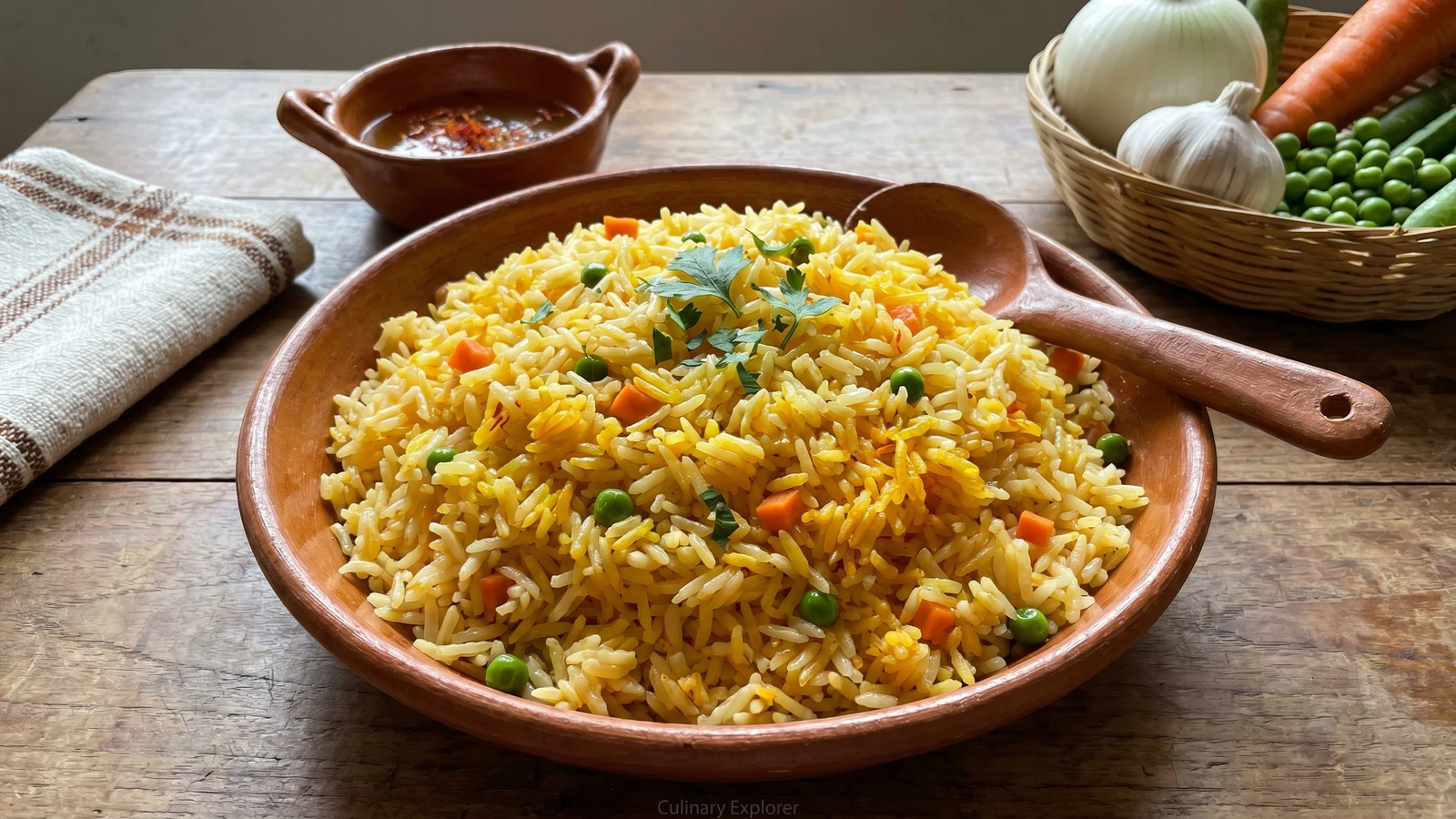
Comitán's golden rice from the Chiapas highlands, gently fried first, then steamed with saffron threads, chicken broth, onion, and garlic until each grain stays separate.
Chiapas, specifically Comitán de Domínguez in the highlands near the Guatemalan border, gives you this arroz con azafrán. Not all Mexican rice is red. Not all Mexican food announces itself with chile. This rice is golden, quiet, and serious, the kind of side dish that sits beside lengua en pebre, pollo en fiesta, or a Sunday roast when the family table is set with the good clay bowls.
The defining ingredient is azafrán, saffron threads, not turmeric and not yellow food coloring. In Comitán, cooks learned to stretch a few costly threads through the whole pot by blooming them first in warm broth. That is the technique. You do not throw saffron into dry rice and hope. You wake it in liquid, then let the rice carry the color slowly as it steams.
I learned this version from a señora near the mercado in Comitán who rinsed the rice three times, dried it on a towel, and fried it in manteca de cerdo until the grains sounded like tiny stones against the cazuela. She did not rush. Rice teaches discipline because every mistake shows. Too much stirring and it breaks. Too much broth and it turns heavy. Enough patience and the grains stand apart, yellow from saffron, fragrant from garlic, ready for the table. Cada estado, su propia cocina.
Saffron entered Mexican kitchens through Spanish colonial trade beginning in the 16th century, carried across Atlantic routes and then inland through convent, merchant, and ranching households. In southern highland towns such as Comitán, saffron rice became a special-occasion dish because the spice was expensive, portable, and powerful enough to mark an ordinary pot of white rice as festive. Some Mexican cooks use safflower sold as azafrán del país, but true saffron threads remain the older luxury version for formal tables.
Quantity
2 cups
Quantity
2 3/4 cups
preferably homemade
Quantity
1/2 teaspoon
Quantity
2 tablespoons
Quantity
1 tablespoon
Quantity
1/2 small
finely chopped
Quantity
2
finely minced
Quantity
1
peeled and cut into tiny dice
Quantity
1/2 cup
Quantity
1 teaspoon, plus more to taste
Quantity
1
Quantity
1 tablespoon
chopped
| Ingredient | Quantity |
|---|---|
| long-grain white rice | 2 cups |
| warm chicken brothpreferably homemade | 2 3/4 cups |
| saffron threads | 1/2 teaspoon |
| manteca de cerdo | 2 tablespoons |
| unsalted butter | 1 tablespoon |
| white onionfinely chopped | 1/2 small |
| garlic clovesfinely minced | 2 |
| small carrotpeeled and cut into tiny dice | 1 |
| fresh peas or thawed frozen peas | 1/2 cup |
| kosher salt | 1 teaspoon, plus more to taste |
| bay leaf | 1 |
| fresh flat-leaf parsley (optional)chopped | 1 tablespoon |
Place the rice in a bowl and cover it with cool water. Swirl with your hand until the water turns cloudy, then drain. Repeat two or three times, until the water runs mostly clear. Spread the rice on a clean kitchen towel for 10 minutes so the surface dries. Wet rice jumps straight to mush in the cazuela. Dry rice fries properly.
Crush the saffron threads lightly between your fingers and stir them into 1/2 cup of the warm chicken broth. Let them sit for 10 minutes. The liquid should turn deep gold and smell floral, not harsh. This is how you make a small amount of saffron season the whole pot. No me vengas con atajos.
Heat the manteca de cerdo and butter in a heavy clay cazuela or wide saucepan over medium heat. Add the drained rice and stir steadily for 5 to 7 minutes, until the grains turn opaque white and begin to sound dry against the pot. Do not brown it hard. You are sealing the grain so it steams separate, not making toasted rice.
Stir in the white onion, garlic, and diced carrot. Cook for 2 minutes, just until the onion softens and the garlic smells sweet. If the garlic browns, the heat is too high. This rice should taste clean and golden, not scorched.
Pour in the saffron broth, the remaining warm chicken broth, salt, and bay leaf. Stir once, scraping the bottom so no grains stick. Bring to a gentle boil, then lower the heat to the smallest flame, cover tightly, and cook for 15 minutes. Do not lift the lid. Rice needs trapped heat, not curiosity.
Scatter the peas over the top, cover again, and remove the pot from the heat. Let it rest for 10 minutes. The residual heat will warm the peas without turning them dull. Remove the bay leaf, fluff gently with a fork, and taste for salt. Add parsley only if your table expects it. The saffron is the point.
Spoon the rice into a warm clay serving bowl, keeping the grains loose and generous. Serve beside roast chicken, lengua en pebre, or beans from the pot. This is a supporting dish, yes, but a proper Comiteco table knows the support has to be strong.
1 serving (about 190g)
Culinary guides, cultural storytelling, and the editorial depth that makes cooking meaningful.
Discover Culinary ExplorerChef Lupita
Oaxaca's red rice, stained with tomato and fried in lard, steamed with carrots, ejotes, black beans, and epazote. The side that anchors a Oaxacan family meal and earns its place beside the main.

Chef Lupita
Sinaloa's home-cook white rice topped with cold cubes of cream cheese that soften into the warm grain, finished with crema and a sprinkle of chiltepin at the table. The trick that makes a side dish feel like a small luxury.

Chef Lupita
Sonora's white rice, toasted in butter and steamed with sweet corn and tender peas. The clean, quiet partner to a plate of carne asada, not the red rice of central Mexico.

Chef Lupita
Yucatán's white rice with sweet corn kernels, toasted in lard with garlic and onion. The quiet base that holds up against the peninsula's bold achiote-stained stews.