Chef Joost
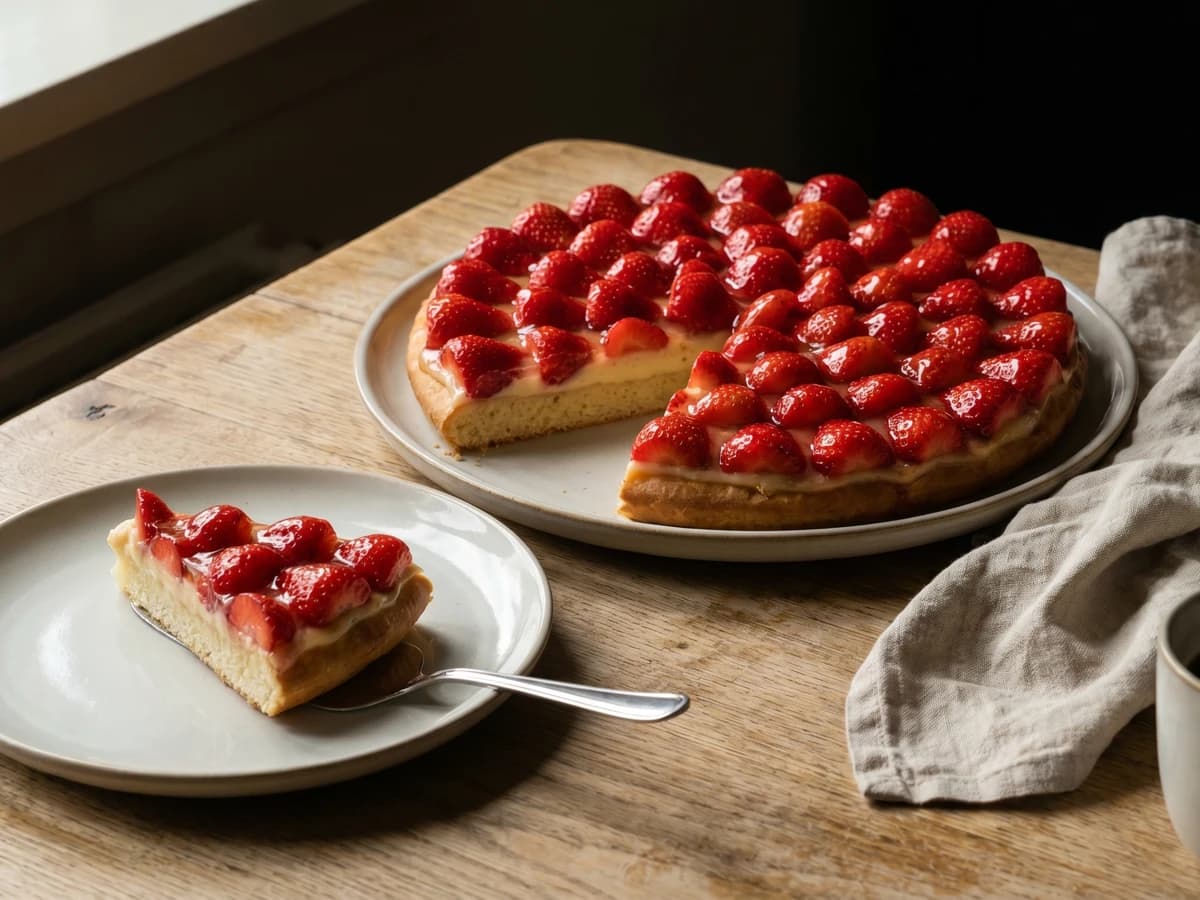
Aardbeienvlaai (Limburg Strawberry Vlaai)
The summer vlaai that politely breaks Limburg's baked-fruit rule: soft gistdeeg, cool pastry cream, and strawberries left fresh because June knows better than the oven.
A cooking platform built around craft, culture, and the stories behind what we eat.

Created by
Limburg's apple vlaai is not a French tart in Dutch clothing: it is yeast dough, orchard fruit, birthday coffee, and a province insisting on its own table.
The first thing to understand about appelvlaai is that it is not a tart trying to be elegant. It is bread remembering an orchard. In Limburg, where birthdays are measured less by candles than by how many vlaaien appear beside the coffee, this round of yeast dough and apple belongs to the family table before it belongs to the bakery window.
The name already tells you the useful part, if not the whole ancestry. Appel is plain enough, apple, but vlaai is the Limburg word that matters: a low, round pie made with yeasted dough, filled before baking, and shared in slices thin enough that a polite guest can take two. But let me tell you a secret. The world sees a fruit tart and reaches for French habits, crisp pastry, glossy arrangement, architectural apples. Limburg does something older and homelier. The dough is alive. The fruit cooks into it.
That is why the method is so simple and so particular. You make a soft yeasted dough, roll it thin, give the apples a little cinnamon, and protect the base with breadcrumbs or crushed beschuit, that dry Dutch rusk that has rescued many a wet bottom without asking for applause. Hou het altijd simpel, always keep it simple. The vlaai should taste of autumn apples, gentle spice, and coffee poured at a table where somebody has already moved the good plate closer to you.
Vlaai is the distinctive celebration pastry of Dutch and Belgian Limburg, with written references to filled bread-like pies in the region from the early modern period and a strong bakery tradition tied to kermis fairs, birthdays, and Sunday coffee. In 2024, Limburgse vlaai received European protected recognition, requiring production in Dutch or Belgian Limburg and preserving the yeasted-dough form that separates it from shortcrust fruit tarts. Appelvlaai became one of the most common household versions because apples stored well through autumn and winter, making the orchard a year-round guest at the Limburg table.
Quantity
300g
plus extra for dusting
Quantity
7g
Quantity
35g
Quantity
1/2 teaspoon
Quantity
150ml
Quantity
50g
softened
Quantity
1
beaten and divided
Quantity
1kg
peeled, cored, and diced
Quantity
75g
Quantity
1 teaspoon
Quantity
1 tablespoon
Quantity
25g
Quantity
1 tablespoon
for finishing
| Ingredient | Quantity |
|---|---|
| plain flourplus extra for dusting | 300g |
| instant yeast | 7g |
| caster sugar | 35g |
| fine salt | 1/2 teaspoon |
| lukewarm milk | 150ml |
| unsalted buttersoftened | 50g |
| eggbeaten and divided | 1 |
| tart applespeeled, cored, and diced | 1kg |
| light brown sugar | 75g |
| ground cinnamon | 1 teaspoon |
| lemon juice | 1 tablespoon |
| fine breadcrumbs or beschuit crumbs | 25g |
| coarse sugar (optional)for finishing | 1 tablespoon |
Mix the flour, yeast, sugar, and salt in a bowl. Add the lukewarm milk, softened butter, and half the beaten egg, then knead for eight to ten minutes until the dough is smooth, soft, and only lightly tacky. Cover and let it rise until puffy and nearly doubled, about one hour.
Peel, core, and dice the apples into small pieces, not thin slices. Toss them with the brown sugar, cinnamon, and lemon juice. Vlaai wants fruit that bakes into the dough, not a polished fan on top, so keep the pieces honest and a little irregular.
Butter a 28cm shallow vlaai tin or tart tin. Roll two thirds of the dough into a thin round and lay it into the tin, pressing it into the base and sides without stretching. Trim the edge neatly, then scatter the breadcrumbs or beschuit crumbs over the base. They are not filler; they are quiet engineering, catching apple juice before it soaks the bread-like crust.
Pile the spiced apple pieces into the lined tin and spread them evenly. Roll the remaining dough thin, cut it into strips, and lay a simple lattice over the apples. Press the strips to the rim and trim away the excess. If the lattice looks a little village-made, good. Limburg never needed Paris to approve its pies.
Cover the vlaai loosely and let it rest for twenty to thirty minutes while the oven heats to 190C. Brush the lattice and rim with the remaining beaten egg and sprinkle with coarse sugar. The dough should look awake, not swollen; too long a prove gives you bread where you wanted vlaai.
Bake for thirty to thirty five minutes, until the crust is golden, the lattice is firm, and the apple juices look glossy in the openings. Cool in the tin for ten minutes, then slide the vlaai onto a rack. Serve just warm or at room temperature, cut into narrow wedges, preferably with coffee and people who understand that the first slice is never the neatest.
1 serving (about 125g)
Culinary guides, cultural storytelling, and the editorial depth that makes cooking meaningful.
Discover Culinary ExplorerChef Joost
The summer vlaai that politely breaks Limburg's baked-fruit rule: soft gistdeeg, cool pastry cream, and strawberries left fresh because June knows better than the oven.

Chef Joost
A Limburg vlaai is not a pie trying to be grand. It is a thin yeast-dough round, fruit-bright and generous, made for birthdays, coffee, and second slices.

Chef Joost
The December bakery counter made small: cold leafed pastry wrapped around lemon-scented amandelspijs, brushed gold, and scattered with almonds so one person gets the whole holiday in both hands.

Chef Joost
A thin Amsterdam cookie carrying a cog ship in its name: caramelized butter dough, almond nougatine, and a 1934 contest that turned municipal pride into something for coffee.