Chef Joost
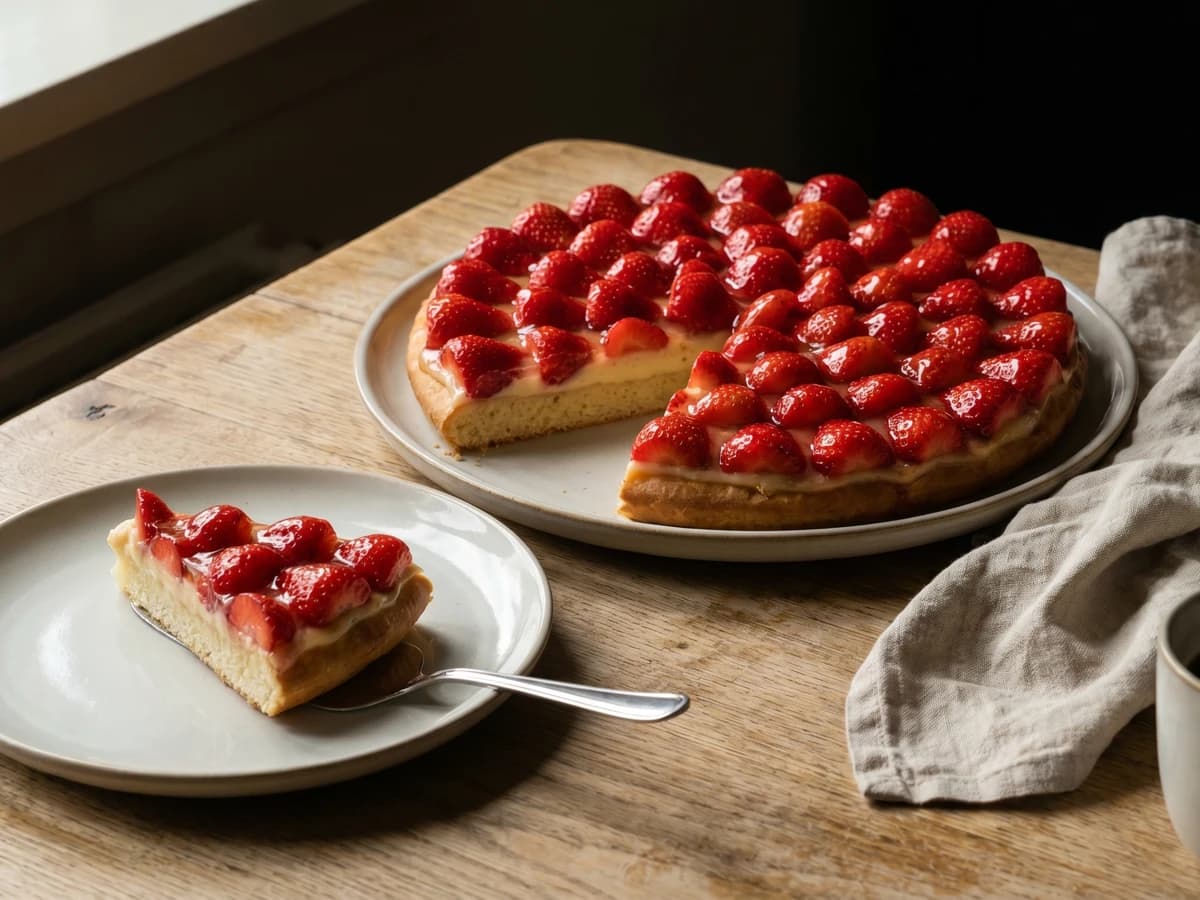
Aardbeienvlaai (Limburg Strawberry Vlaai)
The summer vlaai that politely breaks Limburg's baked-fruit rule: soft gistdeeg, cool pastry cream, and strawberries left fresh because June knows better than the oven.
A cooking platform built around craft, culture, and the stories behind what we eat.

Created by
The name means exactly what it promises: a point of apple, crisp below, spiced within, and finished with cream for the Dutch hour when coffee becomes an occasion.
The name already tells you, if you let it. Appel is apple, punt is point or wedge, and in a Dutch banketbakkerij, the pastry shop, that little triangle in the display case carries more social weight than its modest name admits. It belongs to koffietijd, coffee time, that civilized pause when nobody says they are having dessert and yet a plate appears anyway. For obvious reasons, we are not fooled.
But let me tell you a secret. The applepunt is not grand apple pie trying to impress the room. It is the neat bakery cousin: crisp pastry, soft cinnamon apple, a few raisins if your household allows common sense, and whipped cream piped or spooned on top with the confidence of a country that pretends to be restrained. History and cookery, they cannot be separated; cinnamon and nutmeg made their way into Dutch baking through trade, then settled so deeply into apple dishes that a plain apple filling now tastes unfinished without them.
The method asks for less drama than you think. Keep the puff pastry cold, cook the apples just enough so they won't weep into the base, and let the finished slab cool before cutting clean wedges. Hou het altijd simpel, always keep it simple. A sharp knife, honest tart apples, and cream beaten softly rather than stiff as plaster. That is the difference between bakery pleasure and a sweet roof tile.
The appelpunt belongs to the Dutch pastry-shop tradition of gebak, individual sweets served with coffee in bakeries, department-store lunchrooms, and home visits throughout the twentieth century. Its name is descriptive rather than ancient: punt means a triangular slice or point, the same word used for a wedge of appeltaart. The filling reflects a long Dutch baking habit in which tart apples, raisins, cinnamon, and sometimes nutmeg turn imported spice into everyday household flavor rather than festival luxury.
Quantity
2 sheets, about 500g total
thawed but cold
Quantity
900g
peeled, cored, and diced
Quantity
75g
Quantity
60g
Quantity
1 tablespoon
Quantity
1 1/2 teaspoons
Quantity
1/4 teaspoon
Quantity
1 tablespoon
Quantity
1
beaten
Quantity
1 tablespoon
Quantity
250ml
Quantity
1 tablespoon
Quantity
1/2 teaspoon
| Ingredient | Quantity |
|---|---|
| all-butter puff pastrythawed but cold | 2 sheets, about 500g total |
| tart applespeeled, cored, and diced | 900g |
| raisins | 75g |
| light brown sugar | 60g |
| lemon juice | 1 tablespoon |
| ground cinnamon | 1 1/2 teaspoons |
| freshly grated nutmeg | 1/4 teaspoon |
| cornstarch | 1 tablespoon |
| eggbeaten | 1 |
| coarse sugar | 1 tablespoon |
| cold whipping cream | 250ml |
| icing sugar | 1 tablespoon |
| vanilla extract | 1/2 teaspoon |
Put the diced apples, raisins, brown sugar, lemon juice, cinnamon, and nutmeg into a wide pan over medium heat. Cook for 8 to 10 minutes, stirring now and then, until the apples have softened at the edges but still hold their shape. Stir in the cornstarch and cook for 1 minute more, until the juices look glossy and cling to the fruit. Spread the filling on a plate and let it cool completely.
Heat the oven to 200C. Line a baking tray with parchment. Lay one cold puff pastry sheet on the tray and prick it all over with a fork, leaving a 2 cm border untouched. Spoon the cooled apple filling over the pricked pastry, keeping that border clean, then brush the border with beaten egg.
Lay the second pastry sheet over the apples and press the edges firmly together with a fork. Trim only if you must; a slightly uneven edge is still a bakery edge once it is sugared. Brush the top with beaten egg, cut three small slashes in the surface, and scatter with coarse sugar.
Bake for 30 to 35 minutes, until the pastry is deep golden, puffed, and crisp at the edges. If the top browns before the underside feels firm when lifted gently with a spatula, move the tray to a lower oven rack for the last 5 minutes. Soggy bottoms have no defender in the archive.
Let the pastry cool on the tray for at least 30 minutes. Cut it first into four squares, then cut each square diagonally to make eight punten, points. Wipe the knife between cuts if you want the apple layers to show cleanly.
Beat the cold cream with the icing sugar and vanilla until it holds soft folds. Spoon or pipe a generous cloud onto each apple point just before serving. The cream should sit lightly, not stand at military attention.
1 serving (about 210g)
Culinary guides, cultural storytelling, and the editorial depth that makes cooking meaningful.
Discover Culinary ExplorerChef Joost
The summer vlaai that politely breaks Limburg's baked-fruit rule: soft gistdeeg, cool pastry cream, and strawberries left fresh because June knows better than the oven.

Chef Joost
A Limburg vlaai is not a pie trying to be grand. It is a thin yeast-dough round, fruit-bright and generous, made for birthdays, coffee, and second slices.

Chef Joost
The December bakery counter made small: cold leafed pastry wrapped around lemon-scented amandelspijs, brushed gold, and scattered with almonds so one person gets the whole holiday in both hands.

Chef Joost
A thin Amsterdam cookie carrying a cog ship in its name: caramelized butter dough, almond nougatine, and a 1934 contest that turned municipal pride into something for coffee.