Chef Joost
Aardbeienvlaai (Limburg Strawberry Vlaai)
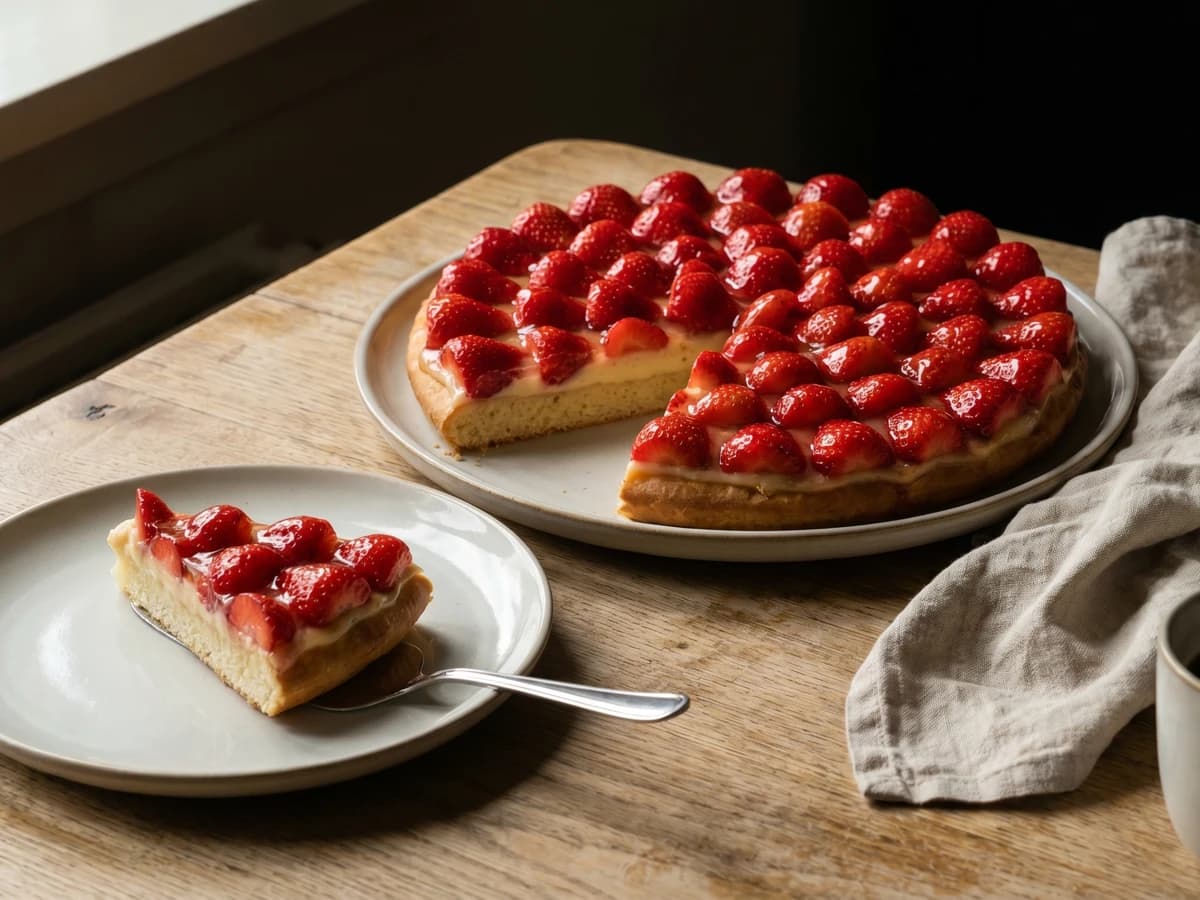
The summer vlaai that politely breaks Limburg's baked-fruit rule: soft gistdeeg, cool pastry cream, and strawberries left fresh because June knows better than the oven.
A cooking platform built around craft, culture, and the stories behind what we eat.
Created by
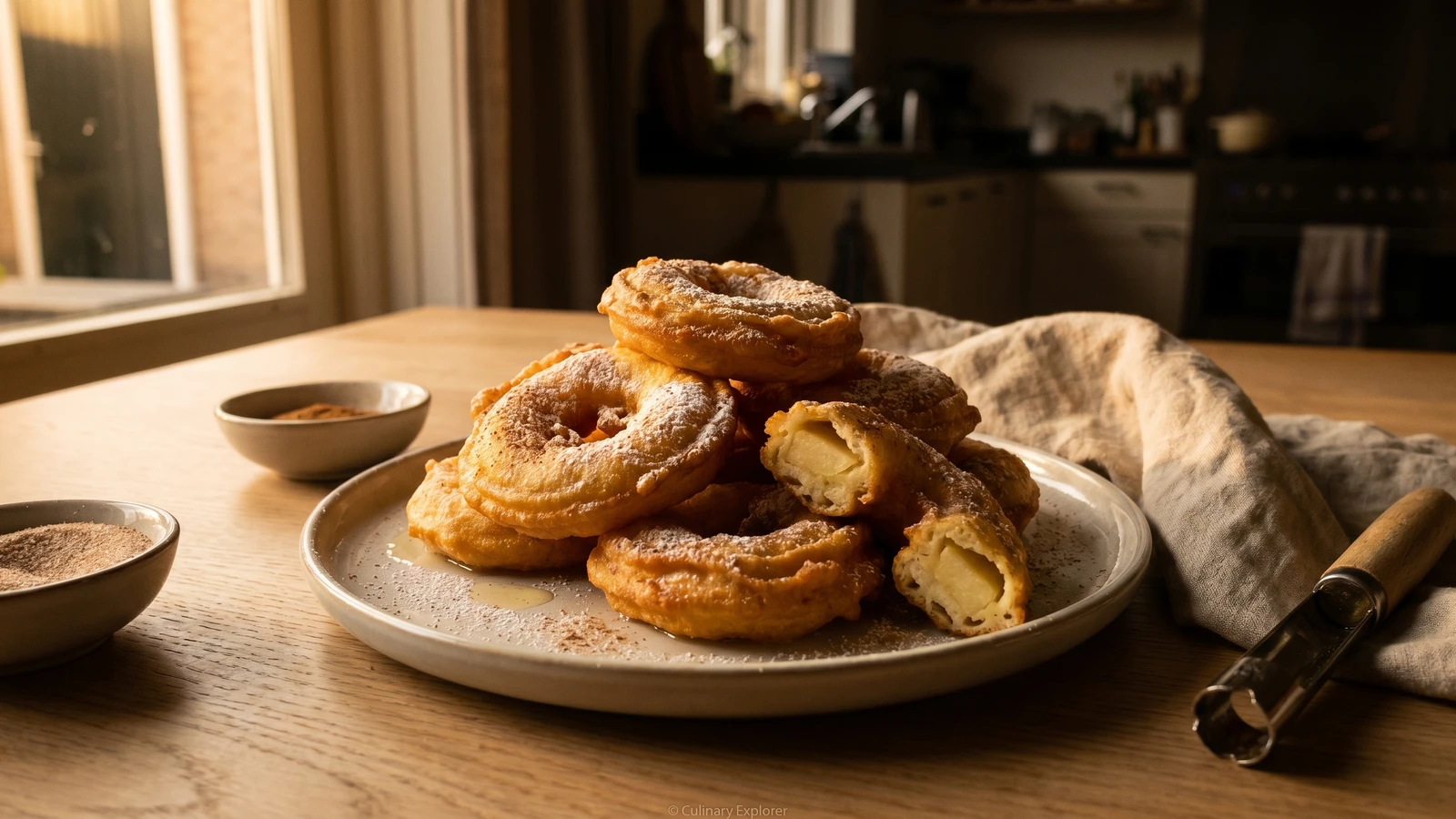
A winter apple ring in light batter, fried for oudejaarsavond, New Year's Eve, when the oliebol makes the noise and the quieter beignet keeps the cinnamon-sugared secret.
On oudejaarsavond, New Year's Eve, the Dutch house announces itself before you ring the bell. You smell hot oil in the hallway, sugar in the air, and somebody opening the back door because December guests are patient but curtains are not. In my grandmother's second notebook, the oliebollen got the larger page. The appelbeignets were written in the margin. For obvious reasons, I took this as a challenge.
The name already tells you two things: appel, the apple, and beignet, the French word Dutch borrowed for fruit or batter fried in fat. That little French coat on a Dutch apple is no accident. Dutch festive cookery has always been good at taking a useful word, a useful spice, or a useful method and placing it on the table as if it had always lived in the cupboard. Exuberant cookery in a frugal country, there it is again.
But let me tell you a secret: the appelbeignet is not a small oliebol with fruit hiding in it. It is a whole ring of winter apple, tart enough to argue back, wrapped in batter only long enough to protect it from the oil. The cinnamon in the sugar is not decoration either; it is spice cargo made domestic, the same cupboard memory that perfumes speculaas and winter stews.
That is why the batter is made at the last moment. Let it sit and it grows heavy; slice apples too early and they weep. Hou het altijd simpel, always keep it simple: dry apple, fresh batter, oil hot enough to seal, and cinnamon sugar while the edge is still crisp. Eat them standing near the stove if you like. The calendar will forgive you. It is the old year leaving.
Fritters cooked in oil belong to the Dutch New Year table at least from the seventeenth century; De verstandige kock of 1667 includes oliekoecken, the ancestor of the oliebol, in the same winter frying tradition that later made room for apple fritters. The French word beignet entered Dutch cookery for batter-fried morsels, and by the nineteenth and twentieth centuries appelbeignets had become a common oudejaarsavond, New Year's Eve, companion to oliebollen. Their use of storage apples and cinnamon suits the season exactly: the apple came from the winter pantry, the spice from the Dutch trade cupboard.
Quantity
4 large
peeled, cored, and sliced into 1cm rings
Quantity
2 tablespoons
Quantity
200g
Quantity
2 teaspoons
Quantity
1 tablespoon
Quantity
1/2 teaspoon
Quantity
1 teaspoon
Quantity
1 large
Quantity
225-250ml
Quantity
1.5 liters
for frying
Quantity
60g
Quantity
1 teaspoon
for dusting
| Ingredient | Quantity |
|---|---|
| tart apples, preferably Goudreinet or Belle de Boskooppeeled, cored, and sliced into 1cm rings | 4 large |
| lemon juice | 2 tablespoons |
| plain flour | 200g |
| baking powder | 2 teaspoons |
| fine sugar | 1 tablespoon |
| fine salt | 1/2 teaspoon |
| ground cinnamon | 1 teaspoon |
| egg | 1 large |
| cold pilsner or sparkling water | 225-250ml |
| neutral oilfor frying | 1.5 liters |
| poedersuiker (powdered sugar) | 60g |
| ground cinnamonfor dusting | 1 teaspoon |
Peel the apples, core them cleanly, and slice them into rings about 1cm thick. Toss the rings with lemon juice so they stay pale, then pat them dry very well. Batter clings to a dry apple; a wet apple slips out of its coat like a child escaping church clothes.
Pour the oil into a heavy pot, no more than halfway full, and heat it to 180C. Set a wire rack over a tray for draining. If you have no thermometer, drop in a little batter; it should sink, rise at once, and bubble steadily without darkening in seconds.
Whisk the flour, baking powder, sugar, salt, and cinnamon in a bowl. Beat in the egg and 225ml cold pilsner or sparkling water, adding the last splash only if the batter is too thick. You want something like thick cream: loose enough to coat the apple, thick enough to leave a soft ridge. Do not beat it smooth for sport. A few small lumps are better than a tired batter.
Dip one apple ring into the batter, let the excess drip back into the bowl, then lower it carefully into the oil. Fry two or three rings at a time, about 2 minutes per side, until deep golden and crisp at the edges. Keep the oil near 175-180C; too cool and the beignets drink oil, too hot and the apple stays stubborn inside.
Lift the beignets onto the rack and let them drain for a minute. Stir the poedersuiker, powdered sugar, with the cinnamon and dust it over while the edges are still crisp. Serve at once. Appelbeignets are not patient pastries, and neither should you be.
1 serving (about 100g)
Culinary guides, cultural storytelling, and the editorial depth that makes cooking meaningful.
Discover Culinary ExplorerChef Joost
The summer vlaai that politely breaks Limburg's baked-fruit rule: soft gistdeeg, cool pastry cream, and strawberries left fresh because June knows better than the oven.

Chef Joost
A Limburg vlaai is not a pie trying to be grand. It is a thin yeast-dough round, fruit-bright and generous, made for birthdays, coffee, and second slices.

Chef Joost
The December bakery counter made small: cold leafed pastry wrapped around lemon-scented amandelspijs, brushed gold, and scattered with almonds so one person gets the whole holiday in both hands.

Chef Joost
A thin Amsterdam cookie carrying a cog ship in its name: caramelized butter dough, almond nougatine, and a 1934 contest that turned municipal pride into something for coffee.