
Chef Lupita
Acúmara Tatemada al Comal
Michoacán's Lake Pátzcuaro acúmara, a whole kurucha from the lago tatemada on a comal de leña and served with chile perón atápakua, corn tortillas, and P'urhépecha discipline.
A cooking platform built around craft, culture, and the stories behind what we eat.
Created by
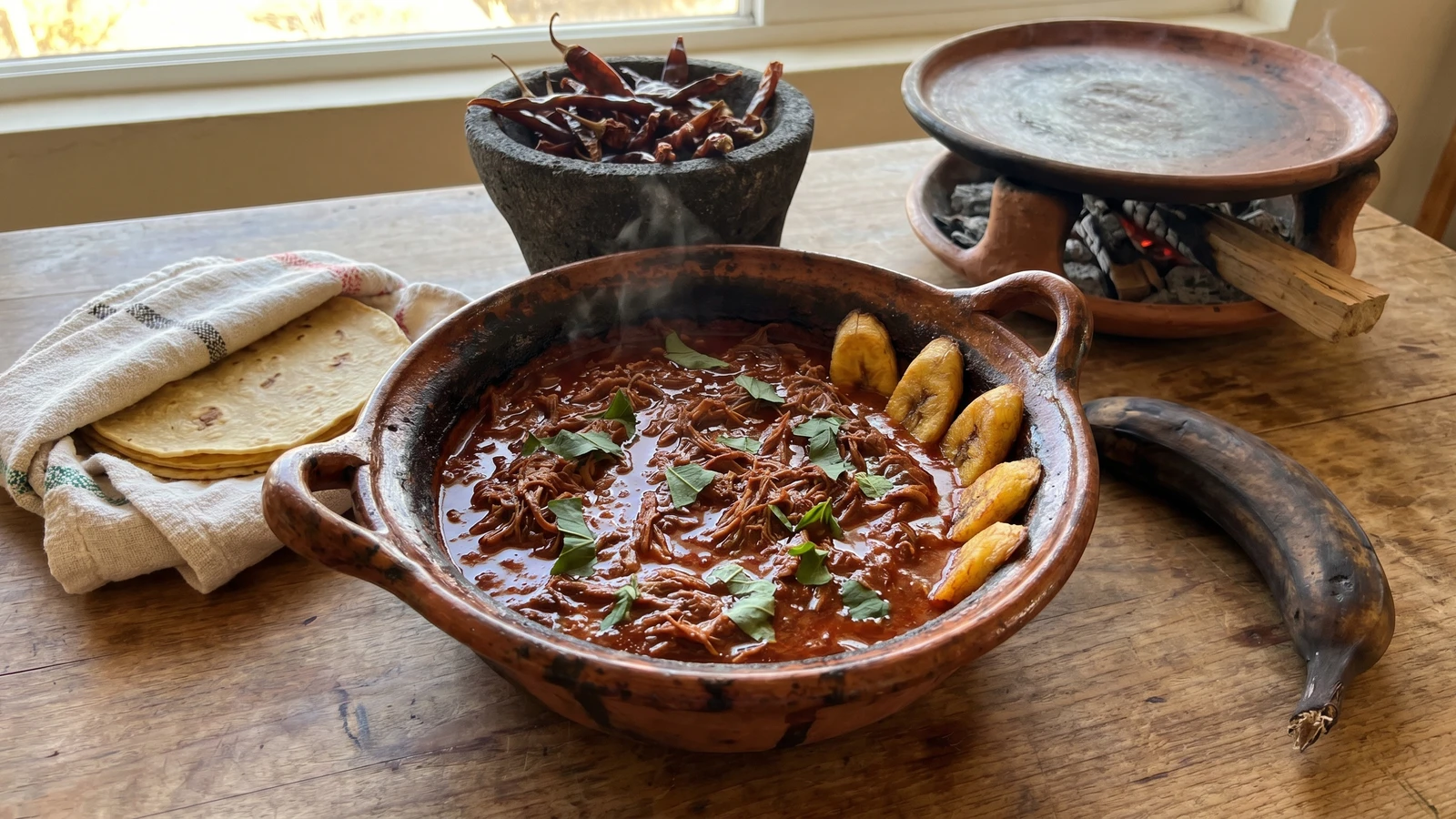
Guerrero's Costa Chica cooks dry their cattle into cecina, pound it to fibers on a stone, and stew it slow in chile costeño and epazote. The Afro-Mexican noon meal, built on lard, no eggs in this one.
This is Guerrero. Not the Guerrero of the Acapulco hotels. The Costa Chica, the coast that runs south from Acapulco toward Oaxaca, and the town of Cuajinicuilapa, where the people are Afro-Mexican and the food carries the third root of this country. La tercera raíz no es nota al pie. Es plato principal.
Aporreado is cattle-country food. The Costa Chica raises cows, and what you can't eat fresh you salt and dry into cecina, beef that keeps for weeks in the heat with no refrigerator. To cook it you have to bring it back to life. You toast it on the comal until it's brittle, then you beat it on a stone until it breaks into fibers. That beating is the dish. Aporrear means to club, to pound. The name tells you the work.
The sauce is chile costeño, the thin red chile that grows on this coast and tastes like nowhere else. I build it with guajillo for body and a little pasilla oaxaqueño for smoke, because the Costa Chica doesn't stop at the Guerrero line. It runs into Oaxaca, and the cooking runs with it. Then the whole thing fries in manteca de cerdo, because on this coast the fat is not up for debate. La manteca es el sabor. This is the comida version, the noon meal, no eggs. The eggs go in at breakfast. Know which one you're making.
I learned this in a kitchen in Cuajinicuilapa, from a woman who pounded the cecina on a stone worn smooth by her mother and her mother before her, talking the whole time about the cattle her family used to run. I wrote it down the way she said it. Salt last. Epazote at the end. Don't drown it in water. My own mother was from Jalisco and never cooked this in her life. But she gave me the rule that carried me to that kitchen. Saber cocinar es saber vivir. So I went, and I learned, and now so will you.
The Costa Chica, the Pacific coastal strip running from Acapulco through Cuajinicuilapa and into Oaxaca, was settled during the colonial period in part by Africans brought to New Spain as enslaved laborers, many of whom worked the cattle haciendas of the coast; their descendants built the ranching culture whose salted, dried beef underlies dishes like aporreado. The dish's name comes from the Spanish verb 'aporrear,' to beat or to club, describing how the brittle dried beef is pounded on a stone until it breaks into fibers before it is stewed. Mexico's Afro-descendant population, long left out of the national story, gained recognition in the Constitution through a 2019 reform to Article 2 and was counted in the national census for the first time in 2020.
Quantity
1 1/2 pounds
dried and salted, rinsed if very salty
Quantity
8
stemmed and seeded
Quantity
4
stemmed and seeded
Quantity
2
stemmed and seeded
Quantity
3
Quantity
1/2 medium
Quantity
4 cloves
unpeeled
Quantity
1/2 teaspoon
Quantity
4
Quantity
1
Quantity
3 sprigs
Quantity
3 tablespoons
Quantity
2 to 3 cups
Quantity
to taste
add at the very end
Quantity
for serving
sliced and fried in lard
Quantity
for serving
Quantity
for serving
Quantity
for serving
warmed
Quantity
for serving
| Ingredient | Quantity |
|---|---|
| beef cecina (cecina de res) or beef tasajodried and salted, rinsed if very salty | 1 1/2 pounds |
| dried chile costeñostemmed and seeded | 8 |
| dried chile guajillostemmed and seeded | 4 |
| dried chile pasilla oaxaqueñostemmed and seeded | 2 |
| Roma tomatoes | 3 |
| white onion | 1/2 medium |
| garlicunpeeled | 4 cloves |
| cumin seeds | 1/2 teaspoon |
| whole black peppercorns | 4 |
| whole clove | 1 |
| fresh epazote | 3 sprigs |
| pork lard (manteca de cerdo) | 3 tablespoons |
| water or beef broth | 2 to 3 cups |
| saltadd at the very end | to taste |
| ripe plátano macho (plantain) (optional)sliced and fried in lard | for serving |
| black beans (optional) | for serving |
| white rice (optional) | for serving |
| hand-pressed corn tortillas (optional)warmed | for serving |
| lime halves (optional) | for serving |
Heat a dry comal or heavy skillet over medium. If your cecina tastes very salty, rinse it quickly under cold water and pat it completely dry first. Lay the sheets on the comal and toast a few seconds per side until they darken, stiffen, and smell toasty and beefy. You are not cooking it through. You are drying it brittle so it will break apart. Work in batches and set the pieces aside to cool.
This is the step that names the dish. On a metate, in a large molcajete, or on a sturdy board with a meat mallet or a smooth heavy stone, pound the cooled cecina until it cracks and breaks into coarse fibers. Pull and tear the bigger pieces apart with your hands. You want a loose tangle of shreds, not whole sheets and not powder.
On the same comal over medium heat, toast the costeño, guajillo, and pasilla oaxaqueño separately, pressing each flat for a few seconds per side until it puffs slightly and turns fragrant. The costeño and the pasilla oaxaqueño are thin and burn fast. Watch them.
Put the toasted chiles in a bowl and cover them with hot tap water, not boiling. Boiling water cooks the skins and turns the sauce bitter. Hot water softens the flesh and keeps the flavor clean. Soak 15 to 20 minutes, until pliable.
While the chiles soak, char the tomatoes, the half onion, and the unpeeled garlic on the comal, turning, until blackened in spots and softened. Peel the garlic once it cools. This roasting builds the backbone of the chile rojo. Raw tomato gives you a flat sauce. Charred tomato gives you depth.
Drain the chiles and save the soaking water. Blend the chiles, tomatoes, onion, garlic, cumin, peppercorns, and clove with about 1 cup of the soaking liquid until completely smooth. Strain through a fine sieve, pressing on the solids, to leave the skins behind. You want a clean, deep chile rojo, not a chunky soup.
In a cazuela de barro or heavy pot, melt the lard over medium heat until it shimmers. Pour in the strained sauce and stand back, because it will spatter. Fry, stirring, 8 to 10 minutes, until the color deepens to brick red and a rim of red fat separates at the edge. This is the sazón. La manteca es el sabor. Skip this and the chile tastes raw.
Stir the pounded cecina into the sauce until every fiber is coated. Lay in the epazote and pour in enough water or broth to loosen it into a stew, starting with 2 cups. Simmer gently 20 to 30 minutes, until the dried beef softens and drinks in the chile. Add more liquid if it tightens. Taste for salt only now, at the end.
Serve hot from the cazuela with warm corn tortillas, black beans, white rice, and slices of ripe plátano macho fried in lard. No eggs in the noon version. A squeeze of lime if you like. This is how they eat it in Cuajinicuilapa at midday. Recetas probadas y garantizadas.
1 serving (about 560g)
Culinary guides, cultural storytelling, and the editorial depth that makes cooking meaningful.
Discover Culinary ExplorerChef Lupita
Michoacán's Lake Pátzcuaro acúmara, a whole kurucha from the lago tatemada on a comal de leña and served with chile perón atápakua, corn tortillas, and P'urhépecha discipline.

Chef Lupita
Puebla's weekday adobo of pork shoulder braised in a thick guajillo and ancho sauce sharpened with vinegar, cumin, and clove. The deep red of a market spice stall, the dish a poblana cooks without thinking.

Chef Lupita
Loreto's pit-roasted clams, planted hinge-up in beach sand and tatemadas under a fast fire of dried romerillo brush, the resinous Baja desert shrub that gives this dish its smoke.

Chef Lupita
Oaxaca's eighth mole, the silky, almond-and-cinnamon almendrado, served over poached chicken. Mild, sweet, restrained, and a quiet rebuttal to anyone who thinks Mexican food has to be hot to be Mexican.