
Chef Joost
Advocaat (Dutch Egg Liqueur)
Advocaat is the Dutch liqueur you eat with a spoon: brandewijn, yolks and sugar turned into a glossy Easter glass, with a hat of slagroom and no apology.
A cooking platform built around craft, culture, and the stories behind what we eat.
Created by
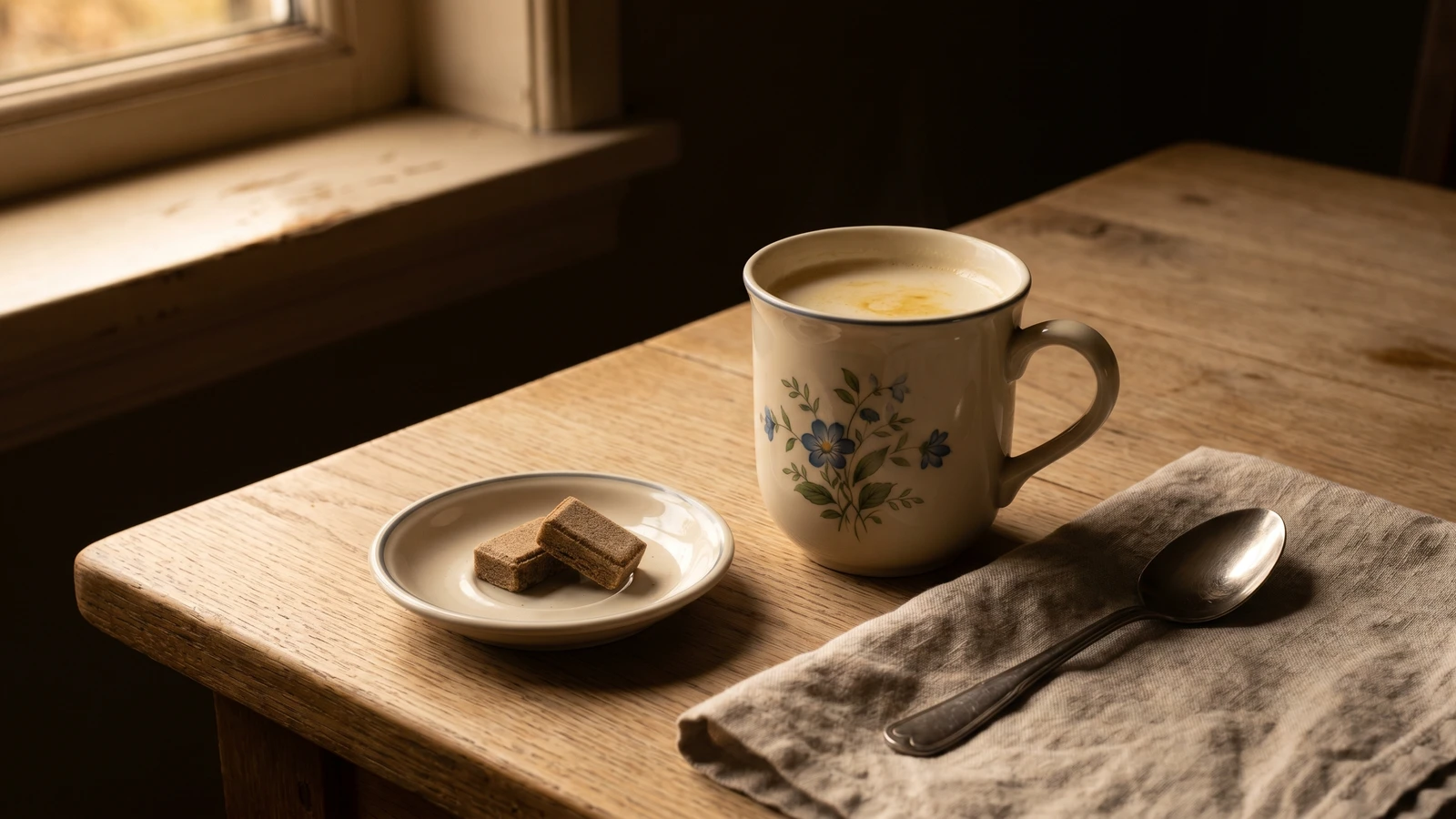
Anijsmelk is the Dutch night drink of cold hands and quiet kitchens: milk, anise, a little butter, and the sweet medicinal smell every child remembers.
In my grandmother's second notebook, between pancakes and a pudding that never quite set, there is a line so short it almost disappears: melk, anijs, klontje boter. Milk, anise, knob of butter. That was enough. Some recipes are written for strangers; this one was written for a house that already knew the weather.
But let me tell you a secret. Anijsmelk looks like nothing, just a pale cup held between two hands, and yet it carries half the Dutch nursery with it. The name already tells you the honest truth: anijs is anise, melk is milk. No grand disguise. The seed came to Dutch kitchens as both spice and household remedy, the same sweet liquorice scent that appears on beschuit met muisjes, rusks with aniseed sprinkles, when a child is born. At night, it softened milk into something almost ceremonial.
The pressed anijsblokje, the little anise block, is the practical Dutch answer to a longer infusion: sugar and anise held together until hot milk persuades them apart. The butter is older kitchen wisdom, not luxury. It rounds the edge of the anise, gives the milk a faint golden gloss, and makes the cup feel sustaining after the walk home from ice. Hou het altijd simpel. Heat the milk gently, melt the block completely, whisk in the butter, and stop before the milk boils hard. Scalded milk tells on you immediately.
Anijsmelk belongs to the Dutch household tradition of warm medicinal drinks, where aniseed was valued for digestion, sleep, and the soothing of children long before it became a supermarket convenience. In the twentieth century, pressed anijsblokjes made the drink almost instant: one block dissolved into hot milk gave a consistent cup without steeping and straining whole seed. Its close cousin at the Dutch table is beschuit met muisjes, the birth rusk covered with sugared aniseeds, proof that the same spice marked both the beginning of life and the quiet end of an ordinary winter day.
Quantity
500ml
Quantity
2
one per mug
Quantity
2 teaspoons
use only if anijsblokjes are unavailable
Quantity
1 to 2 teaspoons
use with whole aniseed, to taste
Quantity
10g
Quantity
1 small pinch
| Ingredient | Quantity |
|---|---|
| whole milk | 500ml |
| pressed anijsblokjesone per mug | 2 |
| whole aniseed (optional)use only if anijsblokjes are unavailable | 2 teaspoons |
| sugar or honey (optional)use with whole aniseed, to taste | 1 to 2 teaspoons |
| unsalted butter | 10g |
| fine sea salt | 1 small pinch |
Pour the milk into a small saucepan and set it over low heat. Warm it slowly until it trembles at the edge and tiny bubbles gather around the pan, but do not let it boil. Milk that has been hurried tastes cooked, and anijsmelk is supposed to be gentle.
Add the anijsblokjes and whisk until they dissolve completely. The milk will turn faintly sweeter and smell of liquorice and old cupboards in the best possible way. If you are using whole aniseed instead, crush the seeds lightly, warm them in the milk for five minutes, then strain the milk back into the pan and sweeten it to taste.
Whisk in the butter and the tiny pinch of salt until the surface looks glossy and the butter has vanished into the milk. The salt should not announce itself. It only steadies the sweetness and makes the anise taste clearer.
Pour into two warmed mugs and drink while the surface still holds that pale golden shine. This is not a drink for ceremony. It belongs at the kitchen table, socks drying somewhere nearby, the house going quiet around you.
1 serving (about 265g)
Culinary guides, cultural storytelling, and the editorial depth that makes cooking meaningful.
Discover Culinary ExplorerChef Joost
Advocaat is the Dutch liqueur you eat with a spoon: brandewijn, yolks and sugar turned into a glossy Easter glass, with a hat of slagroom and no apology.

Chef Joost
Beerenburg is Friesland in a small glass: bitter herbs, old jenever, cold quays, and a name that belongs not to bears but to an Amsterdam spice merchant.

Chef Joost
The bishop's red wine, scented with orange and clove, belongs to Pakjesavond as surely as pepernoten: a small pot of spice-route history passed between cold hands.

Chef Joost
The name means farm boys, but the jar is pure celebration: raisins swollen with brandy, cinnamon, and patience, spooned out at New Year like a northern Dutch secret.