Culinary Explorer
A cooking platform built around craft, culture, and the stories behind what we eat.
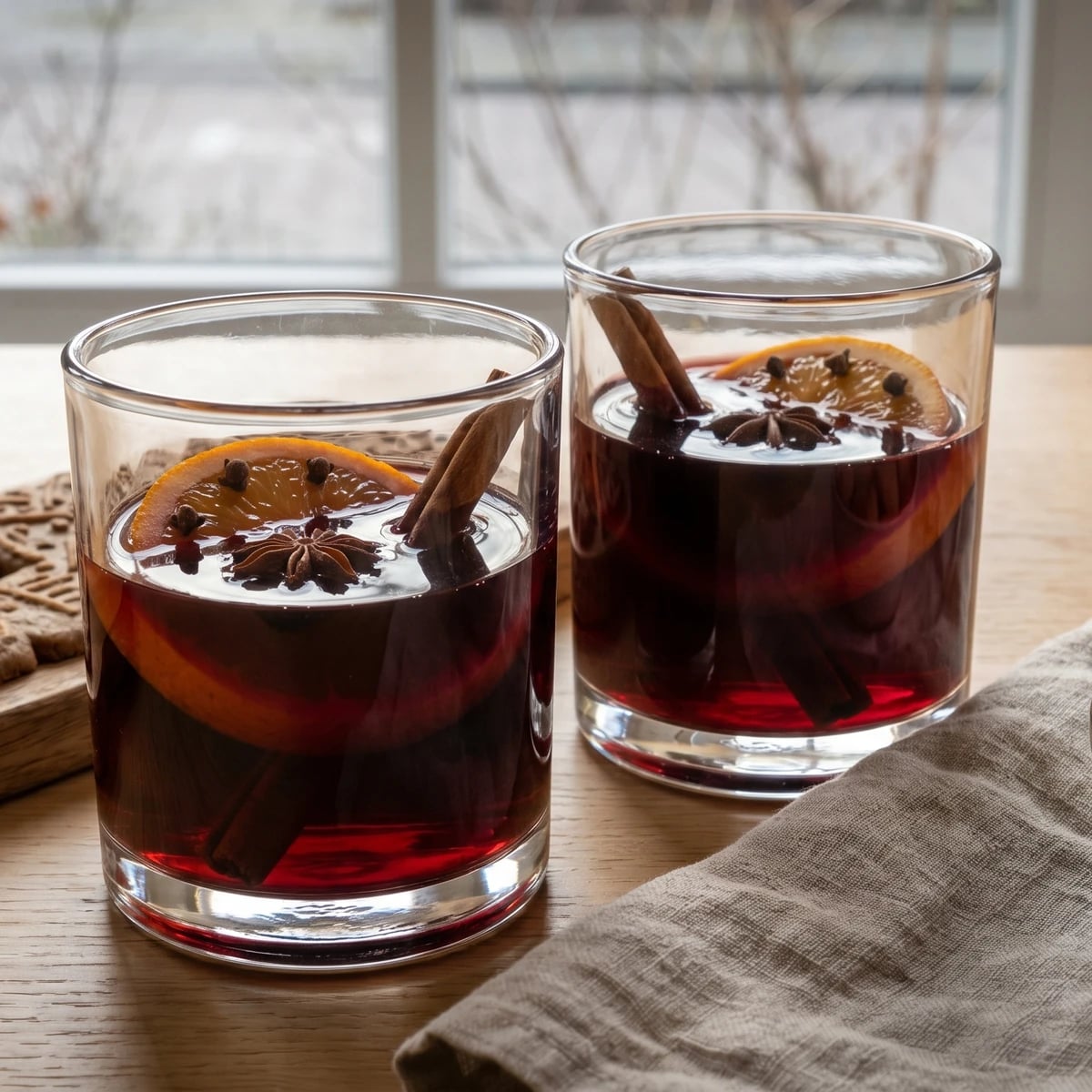
Bisschopswijn (Dutch Bishop's Wine)
Created by Chef Joost
The bishop's red wine, scented with orange and clove, belongs to Pakjesavond as surely as pepernoten: a small pot of spice-route history passed between cold hands.
On Pakjesavond, package evening, a Dutch house learns to smell before it speaks. The shoes are near the door, the pepernoten have rolled under a chair, and somewhere a pan of red wine holds orange peel, clove, and cinnamon at the edge of a simmer. In my grandmother's second notebook, the recipe takes less room than a shopping list. That is proper. The drink is not meant to impress the room; it is meant to warm the hands that have just come in from December dark.
The name already tells you, provided you listen in Dutch. Bisschop is bishop, wijn is wine, and the bishop at the table is Sinterklaas, Saint Nicholas of Myra, with his mitre and red cloak and the annual talent for turning grown adults into children with bad handwriting. But let me tell you a secret: this is also a spice-route drink hiding in plain sight. Cinnamon and clove, the same perfumes that make speculaas a cargo manifest in biscuit form, slip into an ordinary bottle of red wine and make it festive without making it grand.
The method is a lesson in restraint. Wine is not soup, so don't boil it. Warm it until the surface shines and the spices open, then let it sit covered so the orange gives its oil and not its bitterness. Hou het altijd simpel, always keep it simple: a modest red, a real orange, whole spices, and enough sugar to soften the edge. Then ladle it into small glasses and let the bishop do his quiet work.
Ingredients
soft dry red wine
Quantity
750ml
unwaxed orange
Quantity
1
scrubbed
whole cloves
Quantity
8
| Ingredient | Quantity |
|---|---|
| soft dry red wine | 750ml |
| unwaxed orangescrubbed | 1 |
| whole cloves | 8 |
Where cooking meets culture.
Culinary guides, cultural storytelling, and the editorial depth that makes cooking meaningful.
Discover Culinary Explorer