
Chef Juliette
Mayonnaise de Volaille
Cold roast chicken, ciseled lettuce, and a shining coat of homemade mayonnaise, arranged with capers, olives, anchovies, eggs, and lettuce hearts, then tossed at the table as the canon intends.
A cooking platform built around craft, culture, and the stories behind what we eat.

Created by Chef Juliette
Based on No. 809, Mayonnaise de Saumon, from Le Guide Culinaire (1907) by Auguste Escoffier
A cold composed salad that teaches restraint: tender salmon, crisp Cisel lettuce, and proper mayonnaise, finished by hand with anchovy, capers, olives, egg, radish, and lettuce hearts.
Mayonnaise de Saumon (cold salmon with mayonnaise) teaches the grammar of a composed salad. Know this before touching the pan: it is not salmon salad to be stirred into a paste. The cold fish remains in generous flakes, the mayonnaise lies over it as a distinct emulsion, and each sharp, salty garnish has its own place.
The source entry assumed a garde-manger, the cold-kitchen station, with cooked salmon, hard-cooked eggs, and mayonnaise already waiting, plus practiced hands that needed no quantities. It needs neither a stockpot nor a salamander at home. One gently poached fillet, one bowl and whisk, and one shallow salad bowl serve four. The separate station work is brigade scaffolding and goes; what stays is the dish itself: moderately seasoned Cisel lettuce below, salmon thoroughly cleared of skin and bones above, mayonnaise coating rather than binding, then anchovy, caper, olive, egg, lettuce hearts, and radish arranged by hand. One cook, one stove, one evening.
When it is right, the bowl holds cool rose-coral flakes under an ivory gloss, crisp green beneath, and little strikes of salt and vinegar throughout. The step that decides everything is cooling the salmon completely before composition. Warm fish loosens the mayonnaise, wilts the lettuce, and steals the clean shape this dish requires.
Mayonnaise de Saumon belongs to the French garde-manger and the Parisian cold table rather than to a single fishing region; its structure follows the classical composed salad, where cooked fish, seasoned leaves, sauce, and garnishes remain distinct. From formal cold buffets it passed naturally to bourgeois summer lunches and outdoor tables because the elements could be prepared ahead and assembled cool. Its name is sometimes mistaken for a mixed salmon salad, but mayonnaise here describes the sauce and presentation: the salmon is flaked, coated, and decorated, never mashed into the emulsion.
Quantity
1¼ pounds (570 g)
Quantity
4 cups (950 ml / 950 g), plus more as needed
Quantity
2 teaspoons (10 ml / 12 g)
divided
Quantity
2
Quantity
1
at room temperature
Quantity
1 teaspoon (5 ml / 5 g)
Quantity
1 tablespoon plus 1 teaspoon (20 ml / 20 g)
divided
Quantity
¾ cup plus 1 tablespoon (195 ml / 179 g)
at room temperature and divided
Quantity
1 tablespoon (15 ml / 15 g)
as needed
Quantity
¼ teaspoon (1.25 ml / 0.5 g)
divided
Quantity
1 large head, about 10 ounces (285 g)
outer leaves separated and tender heart leaves reserved
Quantity
6 fillets, about 1 ounce (28 g)
drained
Quantity
2 tablespoons (30 ml / 18 g)
drained
Quantity
12, about 2 ounces (55 g)
pitted
Quantity
6, about 4 ounces (115 g)
trimmed and cut into thin roundels
| Ingredient | Quantity |
|---|---|
| center-cut skin-on salmon fillet | 1¼ pounds (570 g) |
| cold water | 4 cups (950 ml / 950 g), plus more as needed |
| fine sea saltdivided | 2 teaspoons (10 ml / 12 g) |
| large eggs | 2 |
| pasteurized large egg yolkat room temperature | 1 |
| Dijon mustard | 1 teaspoon (5 ml / 5 g) |
| white wine vinegardivided | 1 tablespoon plus 1 teaspoon (20 ml / 20 g) |
| neutral oilat room temperature and divided | ¾ cup plus 1 tablespoon (195 ml / 179 g) |
| cold water for the mayonnaiseas needed | 1 tablespoon (15 ml / 15 g) |
| ground white pepperdivided | ¼ teaspoon (1.25 ml / 0.5 g) |
| butter lettuceouter leaves separated and tender heart leaves reserved | 1 large head, about 10 ounces (285 g) |
| oil-packed anchovy filletsdrained | 6 fillets, about 1 ounce (28 g) |
| capersdrained | 2 tablespoons (30 ml / 18 g) |
| brine-cured black olivespitted | 12, about 2 ounces (55 g) |
| small radishestrimmed and cut into thin roundels | 6, about 4 ounces (115 g) |
Bring the 4 cups of water and 1½ teaspoons of the salt to the barest simmer in a wide, shallow pan. Lower in the salmon skin-side down, adding only enough extra water to cover it, then reduce the heat until the surface merely trembles. Cover and poach for 8 to 12 minutes, until the thickest part is opaque, separates into moist flakes, and reaches 145°F (63°C). If white albumin gathers heavily on the surface, the water is too hot; slide the pan off the heat for a minute, then continue more gently. Lift the salmon out without breaking it, cool uncovered for 15 minutes, then refrigerate until completely cold, about 45 minutes.
While the salmon cools, lower the 2 eggs into a small pan of simmering water and cook for 10 minutes. Cool them promptly under cold running water, peel, and cut each into neat quarters or roundels. Keep them chilled until assembly.
Measure off 1 tablespoon of the oil for the lettuce. In a steady bowl, whisk the pasteurized yolk with the Dijon mustard, 2 teaspoons of the vinegar, ¼ teaspoon of the salt, half the white pepper, and 1 teaspoon of cold water. Add the remaining ¾ cup oil first drop by drop, then in a thin thread once the emulsion has taken hold, whisking constantly. Stop when the mayonnaise is glossy, thick, and capable of holding a soft ridge. If it splits, don't pour it out. Ça se rattrape: put 1 teaspoon of cold water in a clean bowl, then whisk in the broken mayonnaise one spoonful at a time until it becomes smooth again. Chill it promptly.
Peel away every scrap of skin from the cold salmon. Run clean fingertips slowly over the flesh and remove every pin bone, then separate the fish into generous flakes following its natural seams. Do not mash it. The original entry is exact on this point: all skin and bones must be cleared, but the salmon must still look like salmon.
Keep the smallest tender lettuce-heart leaves whole for the decoration. Dry the larger leaves thoroughly, stack them, and cut them crosswise into narrow ribbons. This is Cisel, the chaff-cutter cut named in the source. Toss the ribbons lightly with the reserved tablespoon of oil, the remaining 2 teaspoons of vinegar, the remaining ¼ teaspoon of salt, and the remaining white pepper. Moderately seasoned means bright and crisp, not drenched.
Spread the seasoned Cisel lettuce across the bottom of a wide, shallow salad bowl. Cover it evenly with the cold salmon flakes, keeping their shape, then spoon the mayonnaise over the fish and smooth it into a generous coating without stirring the layers together. If chilled mayonnaise has tightened too far, whisk in cold water 1 teaspoon at a time until it spreads softly. Arrange the anchovy fillets across the mayonnaise, scatter over the capers, set the olives and egg pieces around them, tuck in the small lettuce hearts, and finish with a border of radish roundels. Composition is the dish, not decoration added afterward.
Serve the Mayonnaise de Saumon at once, or cover it loosely and chill for no more than 30 minutes so the lettuce stays crisp and the mayonnaise keeps its satin finish. Bring the whole bowl to the table and serve down through every layer, giving each plate salmon, seasoned lettuce, mayonnaise, and a little of every garnish. À table!
1 serving (about 330g)
Culinary guides, cultural storytelling, and the editorial depth that makes cooking meaningful.
Discover Culinary ExplorerChef Juliette
Cold roast chicken, ciseled lettuce, and a shining coat of homemade mayonnaise, arranged with capers, olives, anchovies, eggs, and lettuce hearts, then tossed at the table as the canon intends.

Chef Juliette
Cold roast or poached chicken with fine ribbons of lettuce, dressed at the final moment with oil and vinegar: a composed salad whose freshness depends entirely on timing.
Chef Juliette
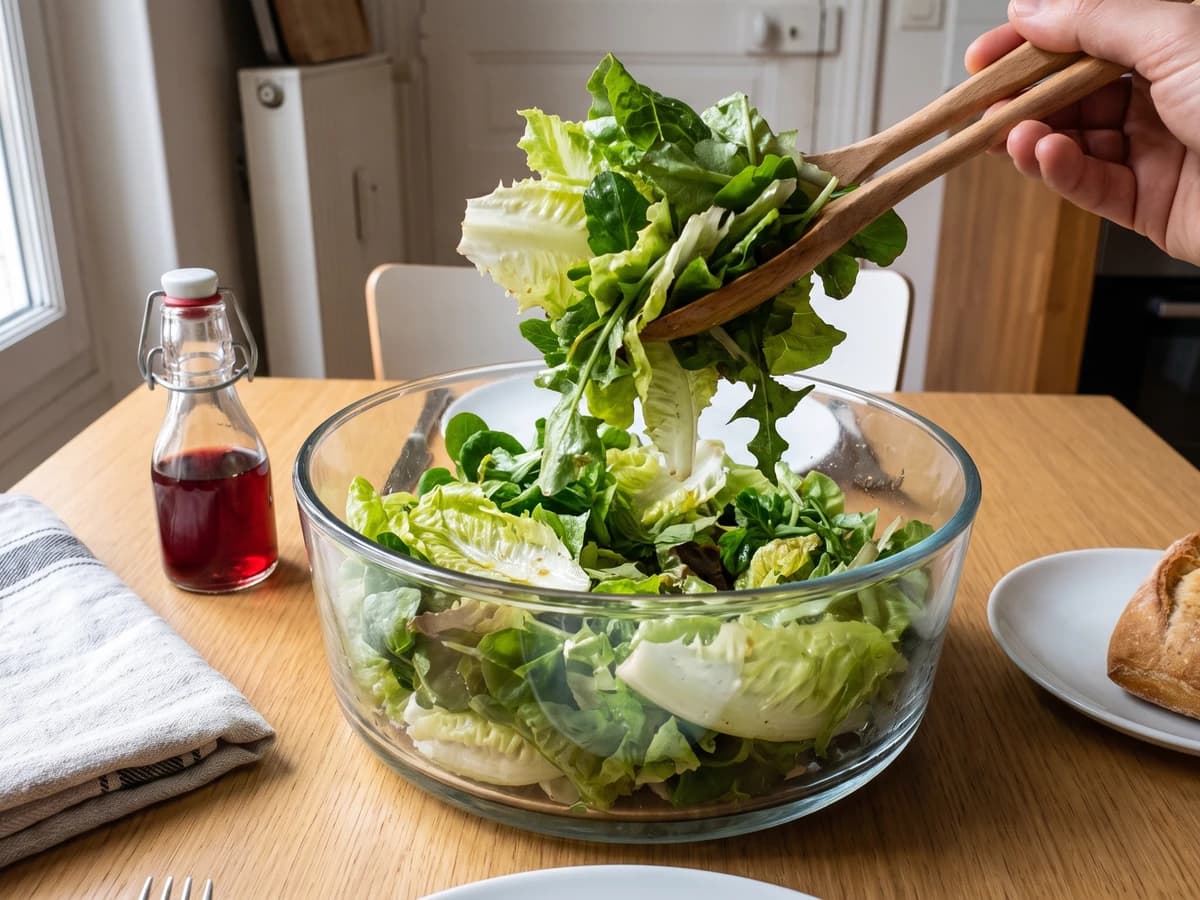
Five leaves, one living rule: laitue, romaine, chicorée, mâche, or pissenlit must be washed, dried, and dressed only as they go to the table, while every leaf still carries its light vinaigrette.
Chef Juliette
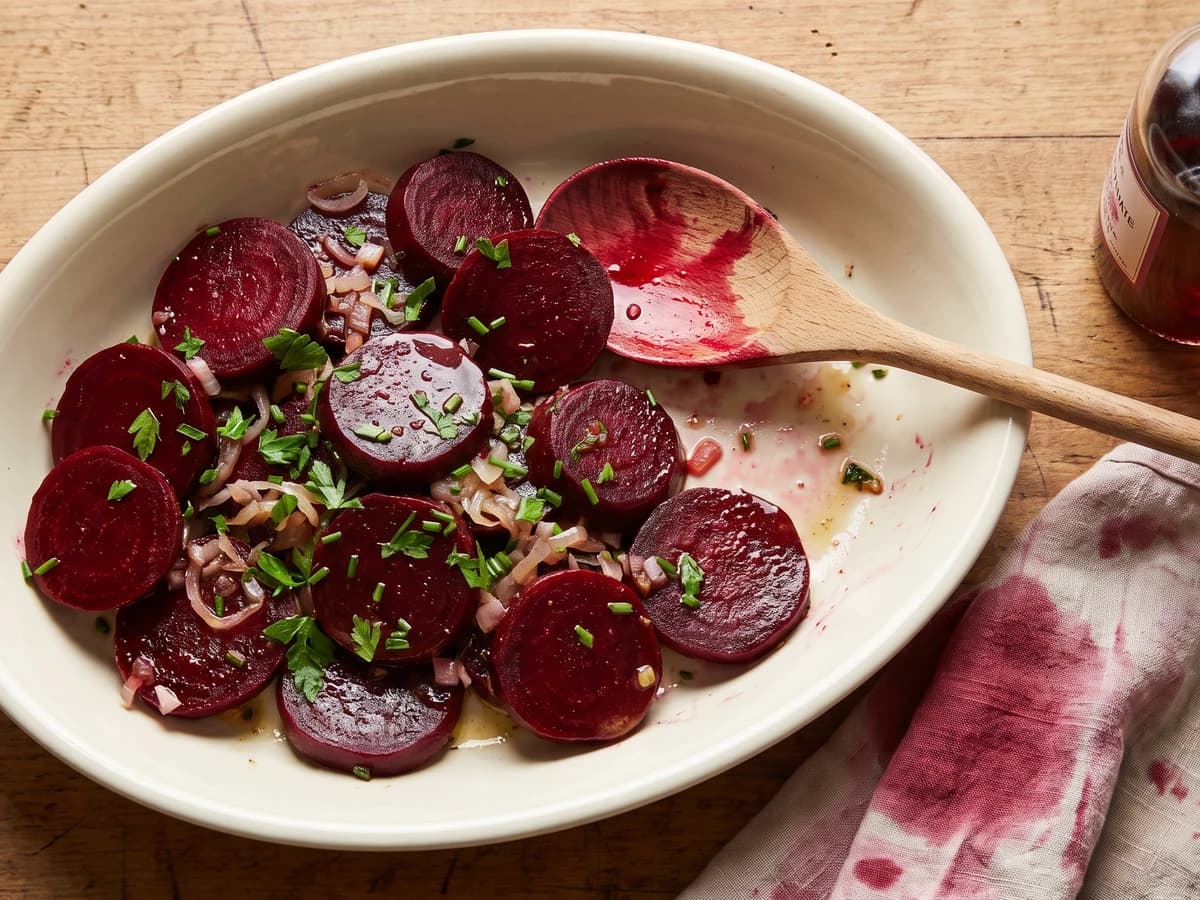
Salade de Betteraves proves that baking, not boiling, is the whole argument: concentrated garnet sweetness, tender baked onion, sharp mustard, and herbs cut into a weeknight salad worth making ahead.