
Chef Juliette
Omelette à l’Écossaise
A creamy omelette aux fines herbes closes around smoked-salmon-wrapped herring milts, gently poached in butter. Have the filling ready, then roll the eggs while they still shine.
A cooking platform built around craft, culture, and the stories behind what we eat.
Created by Chef Juliette
Based on No. 512, Omelet Parmentier, from Le Guide Culinaire (1907) by Auguste Escoffier
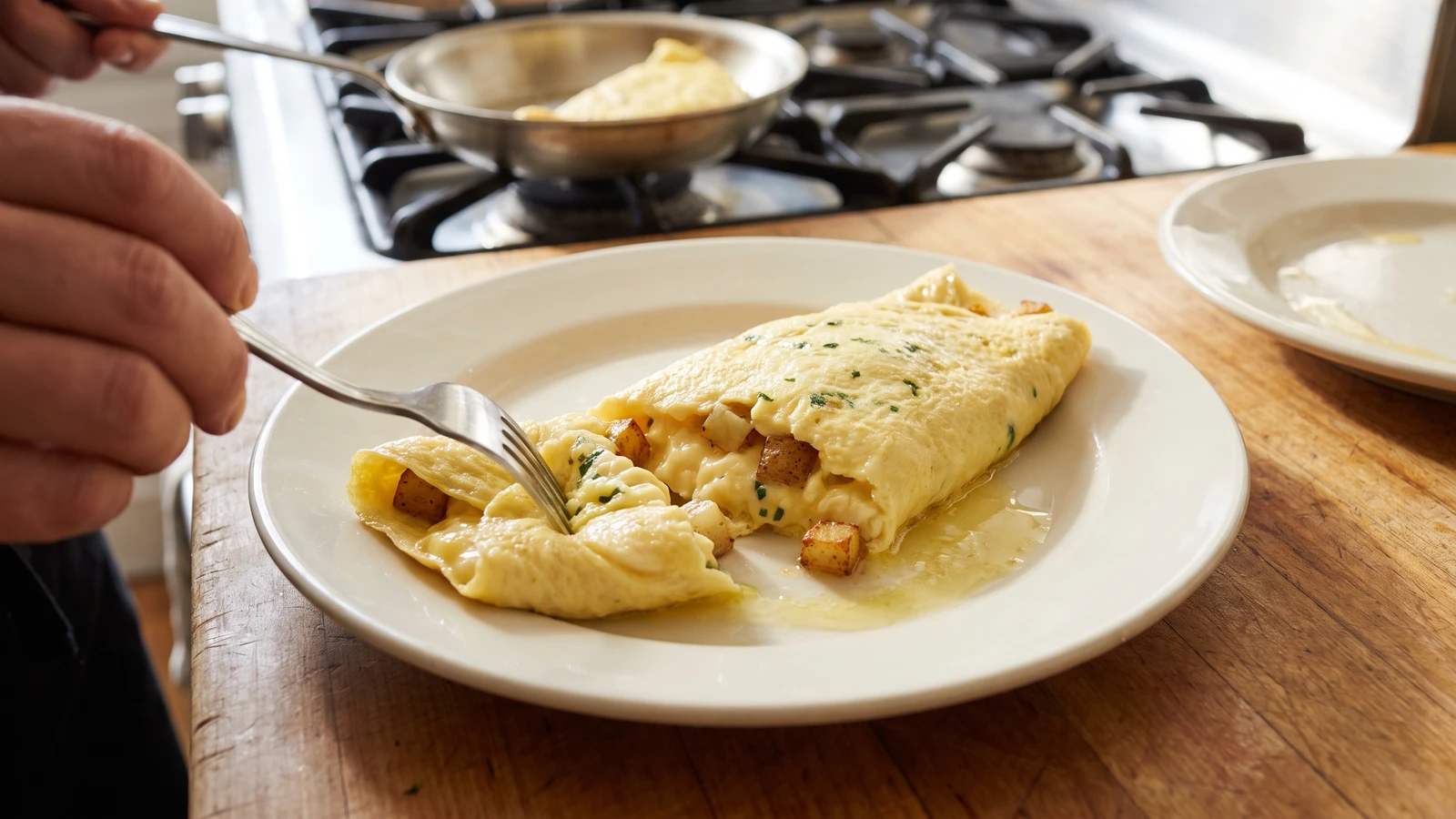
Hot butter-gold potato dice meet parsley-flecked eggs in Omelette Parmentier, a lesson in timing: keep the filling hot, the curds tender, and the pan moving, then fold and serve at once.
Omelette Parmentier (French potato omelet) teaches that an omelet is a matter of timing, not ornament. The one true thing to know before touching the pan is this: the potato dice must be fully tender, golden, and very hot when they enter the eggs. Cold potato drags down the heat, delays the curds, and leaves the omelet heavy rather than supple.
The source entry assumes a pan of seasoned, sautéed potato dice waiting hot at service and a cook who already understands the instruction to make the omelet in the usual way. No saucier, stockpot, or salamander belongs here. The brigade scaffolding was hot mise en place and repetition; at home, one small skillet handles both jobs. I have changed the batch size, not the proportion: make four individual omelets rather than one unwieldy twelve-egg affair, and give each the book's two tablespoonfuls of potato at the last instant. One cook, one stove, one evening.
What must stay is the dish itself: parsley in the eggs, seasoned potato sautéed gold in real butter, and those potatoes mixed in while still hot just before the eggs meet the pan. Each omelet should arrive pale butter-gold, plump at the center, and softly set within. Keep the potatoes hot and pull the eggs before they look completely done; those two moments decide everything.
Omelette Parmentier belongs to the French bourgeois table and the Parisian classical repertoire rather than to one province. Parmentier became the menu word for preparations centered on potato, whether soup, garnish, or omelet, so the name tells a trained diner what is inside before the plate arrives. Unlike a thick baked potato omelet, this one keeps its potato dice distinct: they are sautéed separately, held very hot, and added to the eggs only as the mixture goes to the pan.
Quantity
12
Quantity
1/2 cup (120 ml / 75 g)
peeled and cut into 1/4-inch (6 mm) dice
Quantity
4 generous pinches, about 4 teaspoons (20 ml / 5 g)
finely chopped
Quantity
1 tablespoon (15 ml / 14 g)
Quantity
4 teaspoons (20 ml / 19 g)
divided
Quantity
3/4 teaspoon (3.75 ml / 4.5 g)
divided
Quantity
1/4 teaspoon (1.25 ml / 0.6 g)
divided
| Ingredient | Quantity |
|---|---|
| large eggs | 12 |
| yellow potatopeeled and cut into 1/4-inch (6 mm) dice | 1/2 cup (120 ml / 75 g) |
| flat-leaf parsleyfinely chopped | 4 generous pinches, about 4 teaspoons (20 ml / 5 g) |
| unsalted butter for the potato | 1 tablespoon (15 ml / 14 g) |
| unsalted butter for the omeletsdivided | 4 teaspoons (20 ml / 19 g) |
| fine saltdivided | 3/4 teaspoon (3.75 ml / 4.5 g) |
| freshly ground white pepperdivided | 1/4 teaspoon (1.25 ml / 0.6 g) |
Cut the peeled potato into even 1/4-inch (6 mm) dice. Small and regular matters more than speed: every cube must become tender in the time its neighbors take to brown. Rinse away the surface starch, then dry the dice thoroughly between clean towels. Chop the parsley finely and set four plates within reach.
Melt 1 tablespoon (15 ml / 14 g) butter in the omelet pan over medium heat. When it foams, add the potato dice in one uncrowded layer and season with 1/4 teaspoon salt and a pinch of white pepper. Sauté for 8 to 10 minutes, turning often, until the dice are butter-gold on several sides and a knife slips through without resistance. If they color before becoming tender, lower the heat and cover the pan for 1 minute, then uncover and sauté again to restore their golden edges. Transfer them to a small warm bowl, cover loosely, and keep beside the stove. If they cool, return them to the pan for 30 seconds before proceeding. Ça se rattrape.
Work one omelet at a time. Break 3 eggs into a bowl, add one generous pinch of chopped parsley, 1/8 teaspoon salt, and a small pinch of white pepper. Beat with a fork only until yolks and whites are joined, without whipping in a cap of bubbles. Measure 2 tablespoons (30 ml) of the very hot potato dice into the eggs immediately before pouring. This sequence comes directly from the source and must stay: parsley first, hot potato at the last instant.
Wipe the skillet clean and heat it over medium-high heat. Add 1 teaspoon (5 ml / about 5 g) butter and swirl until the foam begins to subside but the butter remains golden, not brown. Pour in the egg and potato mixture all at once. Shake the pan while stirring briskly with a fork or flexible spatula for 20 to 30 seconds, drawing the loose egg into small, moist curds without crushing the potato. Stop stirring when the mixture is softly mounded but still glossy on top, then spread it into an even oval. If the eggs begin seizing into a firm sheet before you can stir them, lift the pan completely off the heat and keep it moving until the curds loosen.
Tilt the pan away from you and fold the far third of the omelet toward the center. Fold the near edge over it, then roll the omelet seam-side down onto a warm plate. The outside should be pale butter-gold and the center softly set, with distinct bronze-edged potato dice held inside. Serve it immediately and repeat with the remaining eggs, parsley, potatoes, seasoning, and butter. The table waits for an omelet; an omelet does not wait for the table. À table!
1 serving (about 165g)
Culinary guides, cultural storytelling, and the editorial depth that makes cooking meaningful.
Discover Culinary ExplorerChef Juliette
A creamy omelette aux fines herbes closes around smoked-salmon-wrapped herring milts, gently poached in butter. Have the filling ready, then roll the eggs while they still shine.

Chef Juliette
Four tender herbs, hot butter, and two eggs per pan: this rolled omelette teaches the quick hand and good judgment that keep the outside pale and the center creamy.

Chef Juliette
Four batters, one lesson: let the flour drink deeply before cooking, then spread the batter thinly in butter for crêpes and pannequets that bend without becoming tough.

Chef Juliette
Crêpes au Couvent trap ripe Williams pear dice between two thin pours of sweet batter, then turn in one clean toss and reach the table butter-gold, powdered, and burning hot.