
Chef Juliette
Mayonnaise de Volaille
Cold roast chicken, ciseled lettuce, and a shining coat of homemade mayonnaise, arranged with capers, olives, anchovies, eggs, and lettuce hearts, then tossed at the table as the canon intends.
A cooking platform built around craft, culture, and the stories behind what we eat.

Created by Chef Juliette
Based on No. 361, English Melons, from Le Guide Culinaire (1907) by Auguste Escoffier
Melon anglais asks for no sauce and forgives no poor ripeness: chill the yellow oval fruit whole, cut its pale flesh cleanly, and serve it when its cold, watermelon-like freshness is brightest.
Melon anglais (English melon) teaches the discipline of leaving well enough alone. There is no pan here, no sauce to hide behind, and no seasoning that can supply sweetness the fruit never had. The one true thing to know is this: judge the melon before you cut it. It should feel heavy, smell gently sweet, and yield faintly at the blossom end.
The source is a market note rather than a brigade formula. It assumed neither a saucier nor a stockpot, only a cook who could recognize this oval English variety by its thin, smooth yellow peel and white pulp, then serve it cold as a cantaloup. There is no professional scaffolding to preserve. The only honest home-scale change is to specify one medium melon for four people, a refrigerator in place of a cold pantry, and exact cutting directions. No sugar, wine, citrus, or mint has been invented, because the entry calls for none. One cook, one stove left cold, one evening.
Served properly, the flesh is pale, cool, and mild, nearer watermelon than the richer French melon. Cut it only when the table is nearly ready, because exposed melon soon releases its juice and loses its clean edge. Judge the fruit before the knife enters it; that is the step that decides the dish.
The melon anglais enters the French canon not as a regional French composition but as a market classification, destined for the bourgeois fruit course and the outdoor table. The source distinguishes it from French cantaloup by its oval shape, thin smooth yellow peel, and white flesh whose flavor approaches watermelon, judging it the lesser but still serviceable fruit. Its treatment remains deliberately spare: ripened carefully, chilled, and served as melon rather than disguised beneath syrup or liqueur.
Quantity
1 medium, about 3 lb (1.4 kg)
well chilled
| Ingredient | Quantity |
|---|---|
| ripe English melonwell chilled | 1 medium, about 3 lb (1.4 kg) |
Choose an oval melon with an evenly yellow, thin, smooth peel. It should feel heavy for its size, smell mildly sweet at the blossom end, and yield there under gentle pressure without feeling soft. If it is fragrant but a little firm, leave it uncut at cool room temperature for up to one day, then test again. Ça se rattrape. A hard, scentless melon will not gain sugar after picking, so change the fruit, not the standard.
Scrub the peel under cool running water and dry it thoroughly, because the knife can carry anything on the rind into the flesh. Refrigerate the whole melon for about 2 hours, until cold through but never frozen. Freezing damages its delicate white pulp and leaves it grainy.
Set the chilled melon on its side and cut it lengthwise with a large sharp knife. Scoop out the seeds and loose fibres with a sturdy spoon, following the seed cavity rather than gouging into the flesh. Taste a small piece now; its character should be mild and clean, closer to watermelon than cantaloup.
Cut each half into 4 wedges. Leave the yellow rind attached as a handle for a picnic, or run the knife closely between rind and flesh and cut each wedge into two broad pieces for a dinner platter. Work quickly while the melon is cold. If the pieces begin shedding excess juice, ça se rattrape: drain them briefly in a sieve and transfer them to a dry chilled platter.
Arrange the melon generously without stacking the pieces, and bring it to the table at once. Serve it plain and cold, exactly as the entry intends. Sugar, liqueur, citrus, and decorative herbs would conceal rather than improve its quiet character. À table!
1 serving (about 200g)
Culinary guides, cultural storytelling, and the editorial depth that makes cooking meaningful.
Discover Culinary ExplorerChef Juliette
Cold roast chicken, ciseled lettuce, and a shining coat of homemade mayonnaise, arranged with capers, olives, anchovies, eggs, and lettuce hearts, then tossed at the table as the canon intends.

Chef Juliette
Cold roast or poached chicken with fine ribbons of lettuce, dressed at the final moment with oil and vinegar: a composed salad whose freshness depends entirely on timing.
Chef Juliette
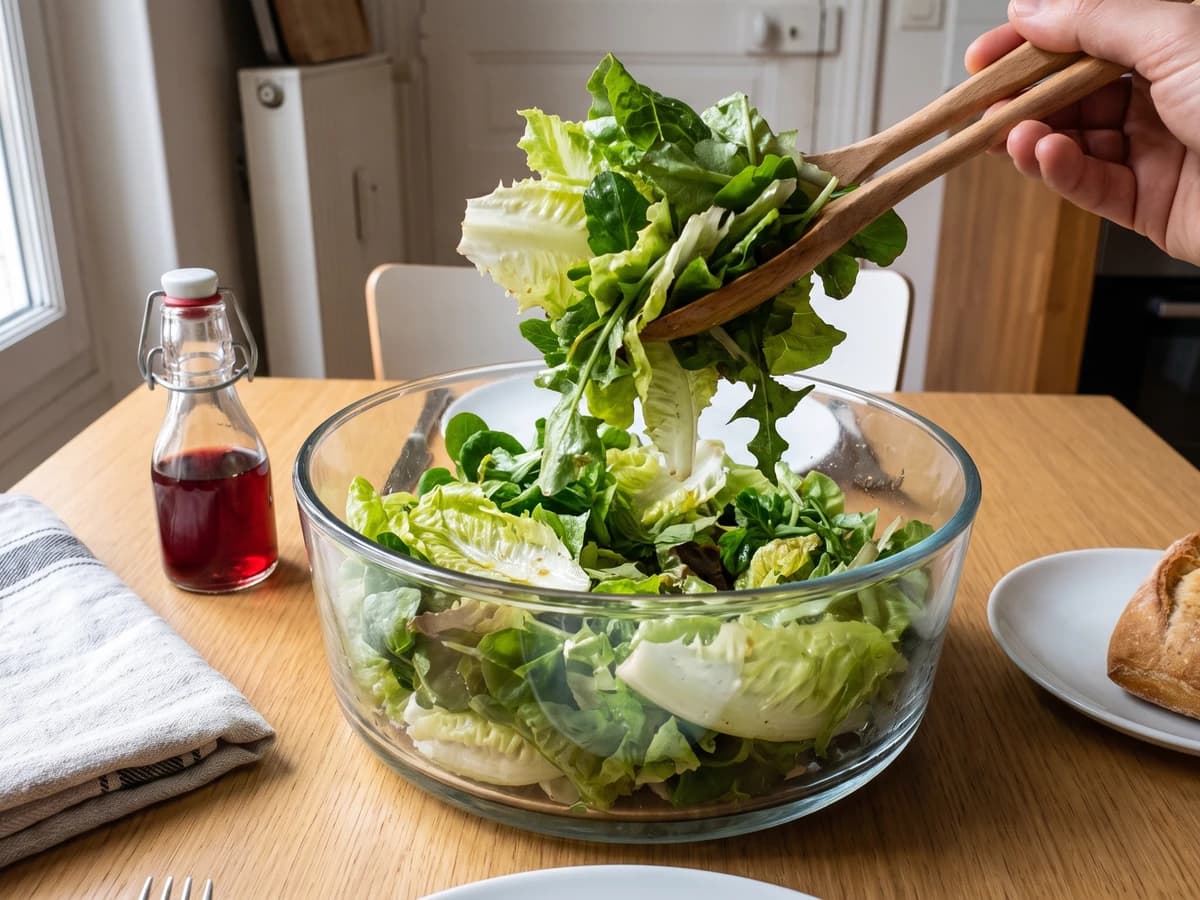
Five leaves, one living rule: laitue, romaine, chicorée, mâche, or pissenlit must be washed, dried, and dressed only as they go to the table, while every leaf still carries its light vinaigrette.
Chef Juliette
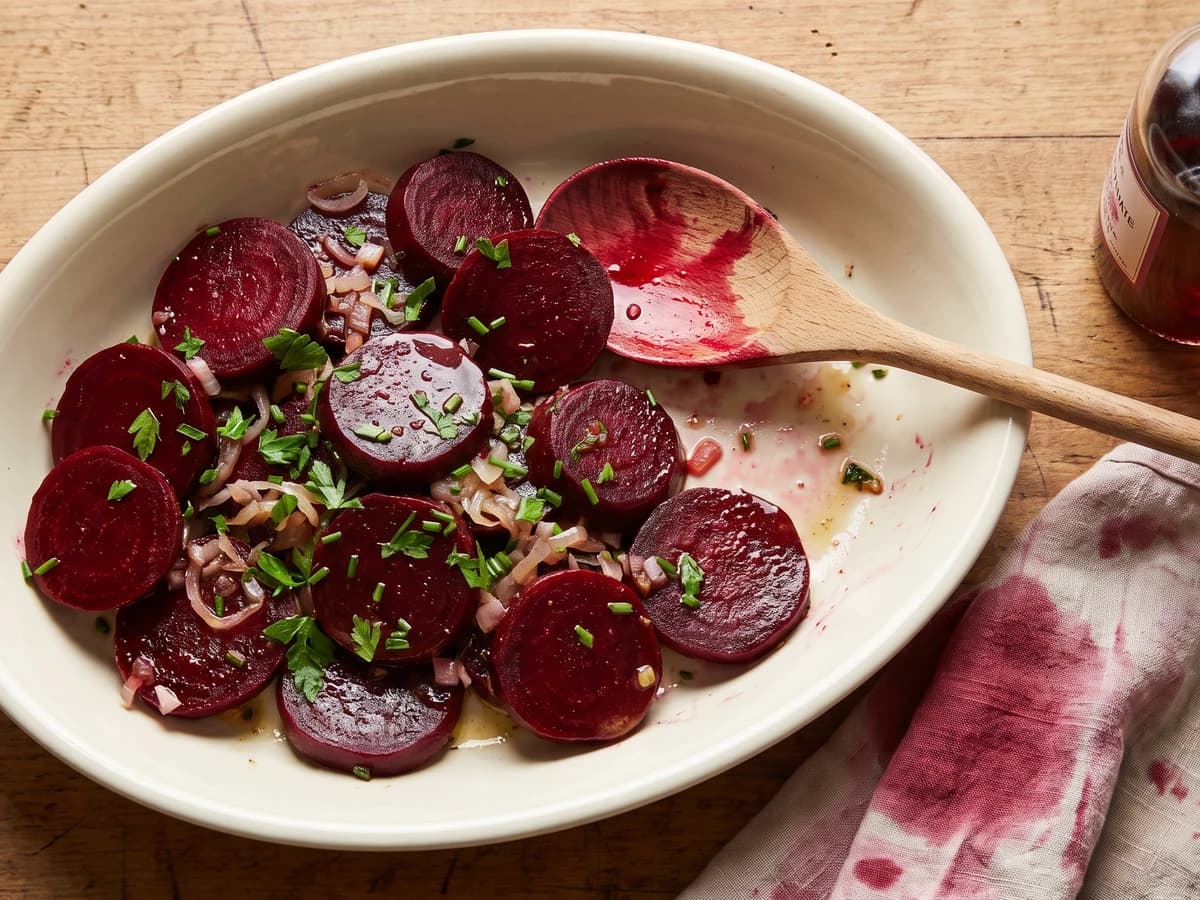
Salade de Betteraves proves that baking, not boiling, is the whole argument: concentrated garnet sweetness, tender baked onion, sharp mustard, and herbs cut into a weeknight salad worth making ahead.