
Chef Juliette
Mayonnaise de Volaille
Cold roast chicken, ciseled lettuce, and a shining coat of homemade mayonnaise, arranged with capers, olives, anchovies, eggs, and lettuce hearts, then tossed at the table as the canon intends.
A cooking platform built around craft, culture, and the stories behind what we eat.
Created by Chef Juliette
Based on No. 354, Lucas Herrings, from Le Guide Culinaire (1907) by Auguste Escoffier
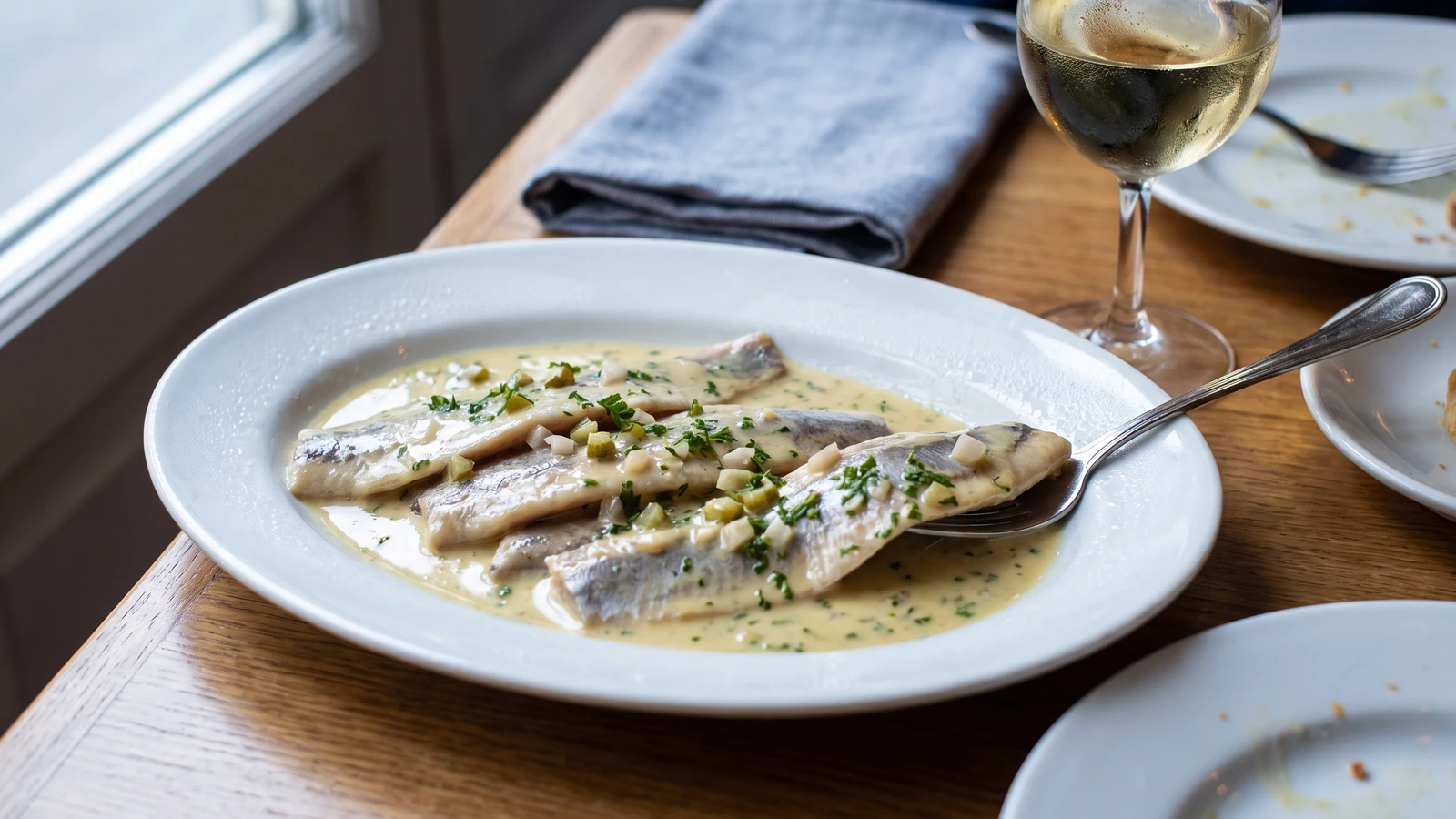
Harengs Lucas teaches controlled desalting and a loose mustard mayonnaise: firm salt-cured fish, softened first in water and then milk, coated with shallot, chervil, gherkin, and a quiet spark of cayenne.
Harengs Lucas (Lucas Herrings) teaches controlled desalting. The soaking is the dish, not preliminary housekeeping: water removes the cure's hard edge, milk draws out the remaining salt and rounds the fish, and careful drying lets the mustard mayonnaise cling rather than slide away. Before you reach for a whisk, know this one true thing: the herring should remain pleasantly salty. You're taming the cure, not erasing it.
The original entry assumed whole fine salted herrings, a commis to raise clean fillets, and someone free to beat the sauce for service. At home, buy ready-to-eat salt-cured fillets and use pasteurized yolks because the dressing remains uncooked. The filleting was brigade scaffolding and can go; the water-then-milk sequence, the two-yolk emulsion, and the exact five-parts-oil to two-parts-vinegar measure are the dish and must stay. I translate its single dessertspoon of chopped chervil and gherkin as two level teaspoons total, split evenly, and set four fillets for four starter portions. One cook, one stove, one evening, and the stove stays cold.
When it's right, the firm silver herring wears a pale ochre sauce, glossy with oil, green with chervil, and sharp enough to wake the appetite without bullying the fish. Dry the fillets thoroughly before they meet that sauce. This is the step that matters most.
Harengs Lucas belongs to the named cold hors-d'œuvre repertoire of the Parisian classical table, where salted fish appeared in small, appetite-waking portions distinguished by their dressings. Salt herring reached those tables through the curing ports of the Channel and North Sea, then acquired the mustard, herbs, pickles, and yolk-bound sauces of grand-kitchen service. Despite its proper name, Lucas is not a regional herring style: this preparation is defined by water-then-milk desalting and a mustard mayonnaise sharpened with shallot, chervil, gherkin, and cayenne.
Quantity
4 fillets (about 10 oz / 280 g)
Quantity
4 cups plus 1 teaspoon (965 ml / 965 g)
divided, for soaking and emulsion rescue if needed
Quantity
2 cups (480 ml / 495 g)
Quantity
2 large (about 2 tablespoons / 34 g)
Quantity
1 tablespoon (15 ml / 15 g)
Quantity
1 small pinch (about 0.3 g)
Quantity
1/8 teaspoon (0.6 ml / 0.3 g)
Quantity
5 tablespoons (75 ml / 68 g)
Quantity
2 tablespoons (30 ml / 30 g)
Quantity
1 small (about 3 tablespoons / 25 g)
very finely minced
Quantity
1 teaspoon (5 ml / 1 g)
chopped
Quantity
1 teaspoon (5 ml / 5 g)
finely chopped
Quantity
1 small pinch (about 0.3 ml / 0.1 g)
| Ingredient | Quantity |
|---|---|
| ready-to-eat salt-cured herring fillets | 4 fillets (about 10 oz / 280 g) |
| cold waterdivided, for soaking and emulsion rescue if needed | 4 cups plus 1 teaspoon (965 ml / 965 g) |
| whole milk | 2 cups (480 ml / 495 g) |
| pasteurized egg yolks | 2 large (about 2 tablespoons / 34 g) |
| Dijon mustard | 1 tablespoon (15 ml / 15 g) |
| fine salt | 1 small pinch (about 0.3 g) |
| freshly ground black pepper | 1/8 teaspoon (0.6 ml / 0.3 g) |
| neutral oil | 5 tablespoons (75 ml / 68 g) |
| white wine vinegar | 2 tablespoons (30 ml / 30 g) |
| shallotvery finely minced | 1 small (about 3 tablespoons / 25 g) |
| fresh chervilchopped | 1 teaspoon (5 ml / 1 g) |
| gherkinfinely chopped | 1 teaspoon (5 ml / 5 g) |
| cayenne pepper | 1 small pinch (about 0.3 ml / 0.1 g) |
Rinse the herring fillets briefly under cold running water, then lay them flat in a shallow nonreactive dish and cover them with 4 cups (960 ml / 960 g) of the cold water. Refrigerate for 1 hour. Taste a small flake near the thick end after 45 minutes; it should be distinctly salty but no longer harsh. If the cure still catches at the back of your throat, replace the water and soak for another 30 minutes. Ça se rattrape. Don't chase away every trace of salt, because herring without its cure has lost its backbone.
Drain the herring and return it to the cleaned dish. Pour over the whole milk, turning the fillets so every surface is covered, and refrigerate for exactly 1 hour. The milk draws out the remaining aggressive salt while softening the cure's aroma. Drain and discard the milk, then press the fillets thoroughly between clean kitchen towels. If they still feel slick with moisture, leave them on fresh towels for 10 minutes. Wet fish thins the sauce and keeps it from holding; drying restores the proper surface.
While the herring finishes soaking, mince the shallot as finely as you can without turning it to paste. Chop the chervil and gherkin separately, measuring 1 teaspoon of each so together they equal the source entry's single dessertspoon. Keep them ready beside the bowl. Their pieces should be small enough to travel with the sauce rather than fall away from the fillets.
Set a medium bowl on a folded towel so it cannot wander. Whisk the pasteurized yolks with the Dijon mustard, salt, and black pepper until smooth and slightly thickened. Add the neutral oil drop by drop for the first tablespoon, whisking constantly, then continue in a slender thread once the emulsion turns glossy and holds the trace of the whisk. Don't increase the oil to make an ordinary stiff mayonnaise. The source's yolk-rich, lightly oiled proportion gives a softer sauce that coats cured fish without burying it.
Whisk in the white wine vinegar gradually, one tablespoon at a time. The mayonnaise will loosen into a sharp coating sauce, which is exactly right. If it separates, stop pouring: whisk the reserved 1 teaspoon (5 ml / 5 g) cold water in a clean bowl, then add the broken sauce a teaspoon at a time until the emulsion gathers again. Ça se rattrape. Fold in the shallot, chervil, gherkin, and cayenne, then taste. The sauce should be mustard-forward and brighter than a table mayonnaise, because the herring will absorb its edge.
Lay the dried fillets in a shallow hors-d'œuvre dish. Pour over the sauce, turning each fillet until completely coated, then nestle them in a single layer and spoon the remaining sauce across the top. Serve at once, as the source directs, or cover and refrigerate for 30 minutes to 4 hours for an easier dinner-party service. Take the dish from the cold 10 minutes before serving so the oil loses its chill and the mustard opens. À table!
1 serving (about 120g)
Culinary guides, cultural storytelling, and the editorial depth that makes cooking meaningful.
Discover Culinary ExplorerChef Juliette
Cold roast chicken, ciseled lettuce, and a shining coat of homemade mayonnaise, arranged with capers, olives, anchovies, eggs, and lettuce hearts, then tossed at the table as the canon intends.

Chef Juliette
Cold roast or poached chicken with fine ribbons of lettuce, dressed at the final moment with oil and vinegar: a composed salad whose freshness depends entirely on timing.
Chef Juliette
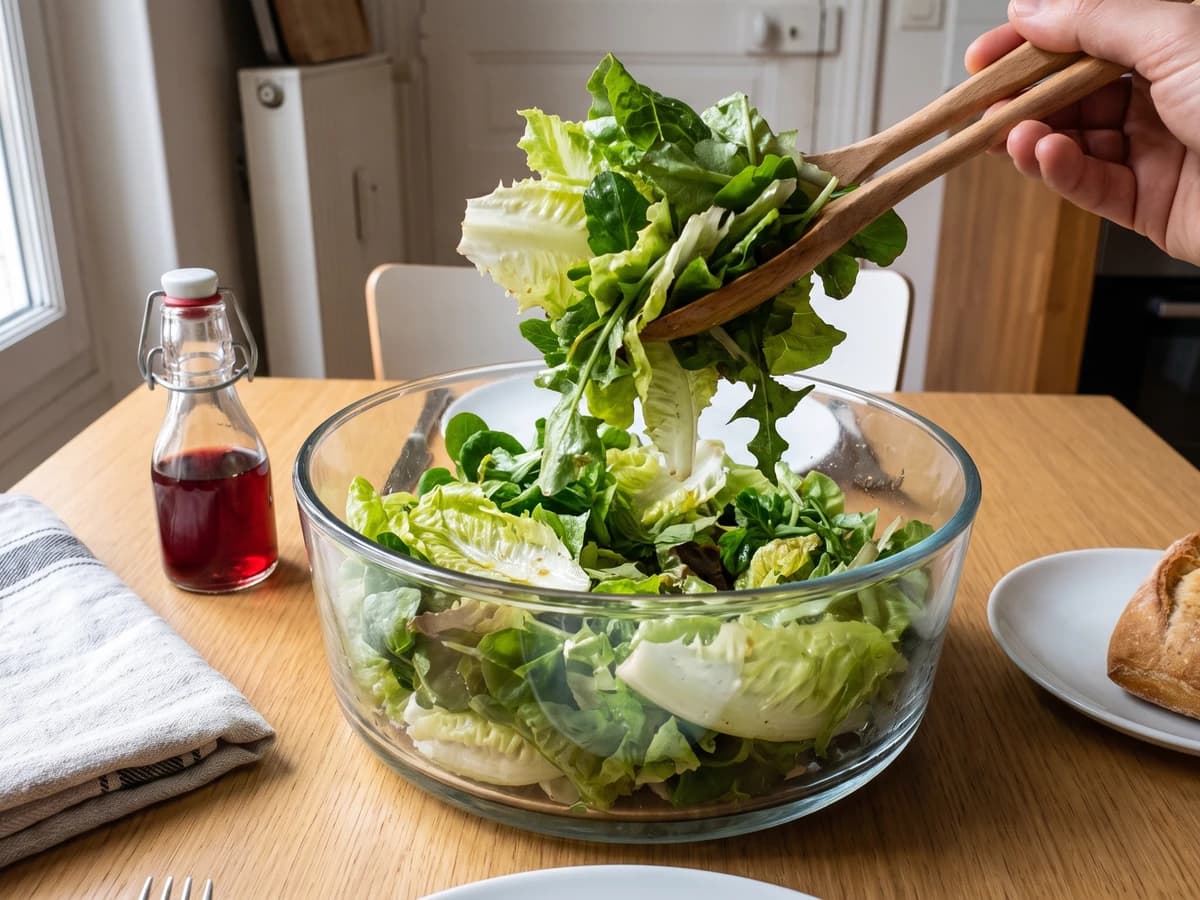
Five leaves, one living rule: laitue, romaine, chicorée, mâche, or pissenlit must be washed, dried, and dressed only as they go to the table, while every leaf still carries its light vinaigrette.
Chef Juliette
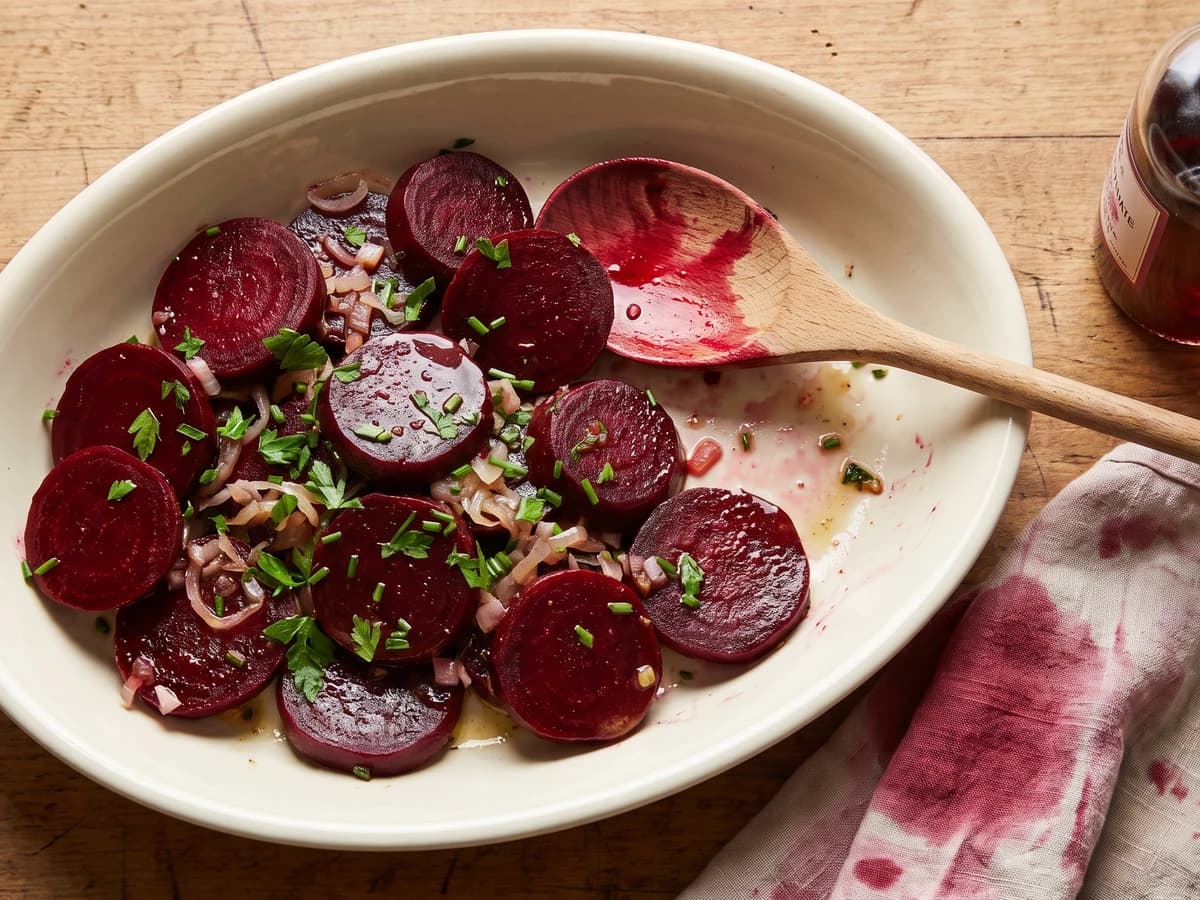
Salade de Betteraves proves that baking, not boiling, is the whole argument: concentrated garnet sweetness, tender baked onion, sharp mustard, and herbs cut into a weeknight salad worth making ahead.