
Chef Juliette
Various Almond Preparations
Five almond preparations, one discipline: remove the skins cleanly, dry every kernel through, then cut, toast, or cloak it in pale caramel without letting its fragrant oils escape.
A cooking platform built around craft, culture, and the stories behind what we eat.
Created by Chef Juliette
Based on No. 2932, Punch à la Romaine, from Le Guide Culinaire (1907) by Auguste Escoffier
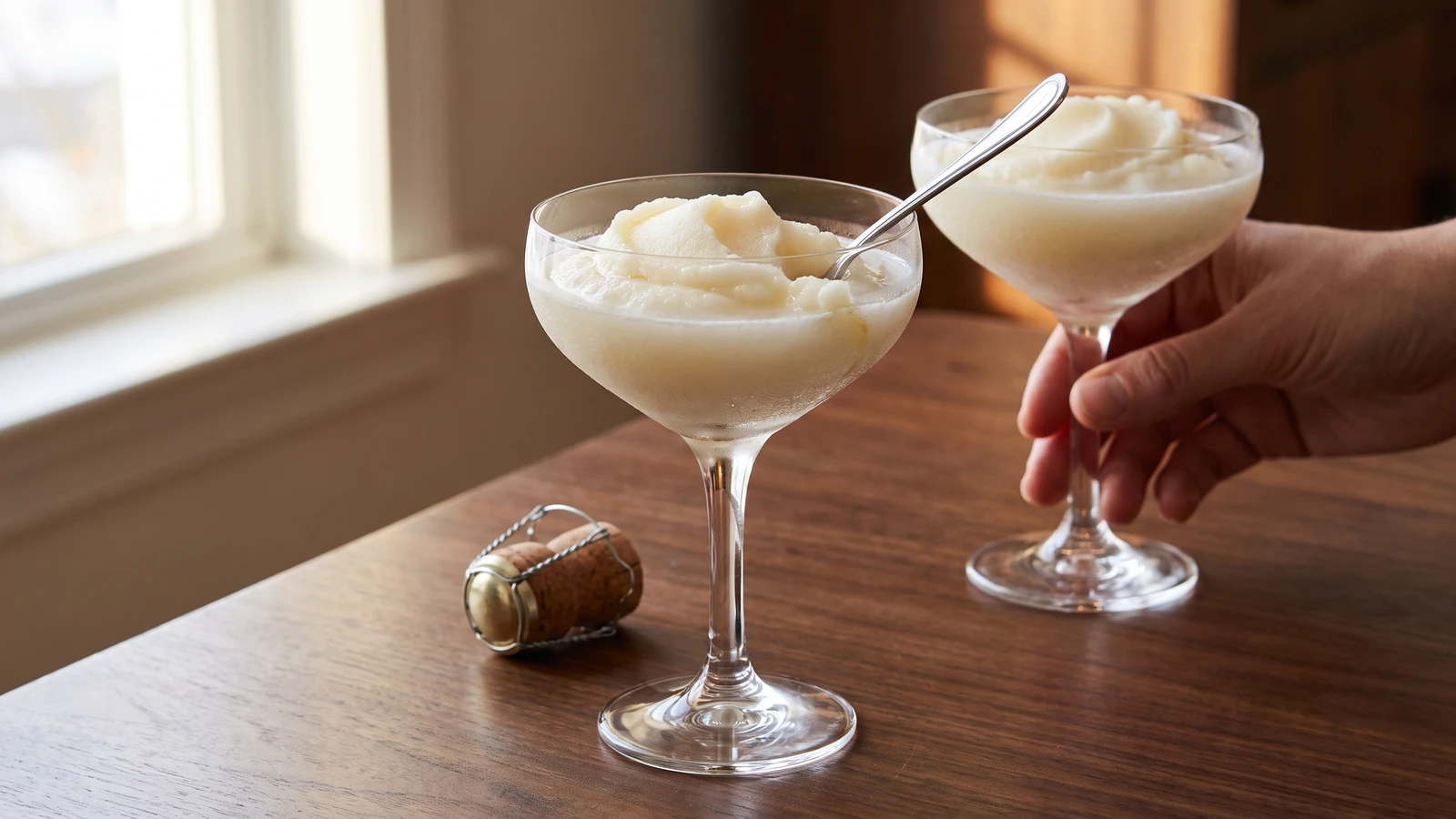
Champagne and citrus freeze to a bright, pale ice, then airy meringue and measured rum turn it spoonable, frothy, and ready for chilled glasses at a celebration table.
Punch à la Romaine (Champagne-citrus frozen punch) teaches one thing before all others: alcohol is part of the texture. Freeze the citrus and Champagne base until it stands in soft ridges, then add the rum by teaspoons. If the rum goes in before the ice has body, the punch will not hold its frothy spoonful.
The original kitchen assumed syrup held at 22° and checked with a saccharometer, a freezing pail watched by steady hands, and Meringue à l’Italienne (No. 2383), a hot-syrup meringue, ready from its own station. At home, measured sugar and water replace the density spindle, a shallow metal pan or small ice-cream machine replaces the freezing pail, and six glasses replace the brigade bowl. The repeated density checks were service scaffolding, so a measured formula takes their place. The one-hour zest infusion, the meringue at one quarter of the frozen base, and the little-by-little rum are the dish, and they stay.
Done properly, the Punch à la Romaine is pale ivory and feather-light, with orange first, lemon close behind, and rum arriving warmly at the finish. One cook, one stove, one evening. The decisive moment comes at service: fold the rum into a thoroughly frozen base a teaspoon at a time.
Punch à la Romaine belongs to the grand French celebration table, particularly the Parisian dining room, where frozen punches were served in small glasses between substantial courses rather than poured from a communal bowl. Its name points toward Italian sorbet and meringue practices absorbed into the French canon, not toward an everyday Roman household drink. Champagne or dry wine, citrus, meringue, and rum made it lighter and more festive than a plain sorbet, and generations of service kept it as a refreshing interlude as often as a final sweet.
Quantity
¾ cup (180 ml / 150 g)
for the 22° syrup
Quantity
1 cup minus 1 tablespoon (225 ml / 225 g)
for the 22° syrup
Quantity
2 tablespoons plus 2 teaspoons (40 ml / 39 g)
well chilled
Quantity
2 tablespoons (30 ml / 31 g)
strained
Quantity
1 tablespoon (15 ml / 16 g)
strained
Quantity
1 broad strip, about 3 by 1 inches (8 by 2.5 cm)
white pith removed
Quantity
1 broad strip, about 3 by 1 inches (8 by 2.5 cm)
white pith removed
Quantity
¼ of the frozen citrus base by volume, about 6 tablespoons plus 2 teaspoons (100 ml / 35 g) Meringue à l’Italienne (No. 2383)
fully cooled
Quantity
1 tablespoon plus 2 teaspoons (25 ml / 24 g)
well chilled
| Ingredient | Quantity |
|---|---|
| granulated sugarfor the 22° syrup | ¾ cup (180 ml / 150 g) |
| waterfor the 22° syrup | 1 cup minus 1 tablespoon (225 ml / 225 g) |
| dry Champagne or dry white winewell chilled | 2 tablespoons plus 2 teaspoons (40 ml / 39 g) |
| fresh orange juicestrained | 2 tablespoons (30 ml / 31 g) |
| fresh lemon juicestrained | 1 tablespoon (15 ml / 16 g) |
| orange zestwhite pith removed | 1 broad strip, about 3 by 1 inches (8 by 2.5 cm) |
| lemon zestwhite pith removed | 1 broad strip, about 3 by 1 inches (8 by 2.5 cm) |
| Meringue à l’Italiennefully cooled | ¼ of the frozen citrus base by volume, about 6 tablespoons plus 2 teaspoons (100 ml / 35 g) Meringue à l’Italienne (No. 2383) |
| rumwell chilled | 1 tablespoon plus 2 teaspoons (25 ml / 24 g) |
Combine the sugar and water in a small saucepan. Warm gently, stirring only until every crystal dissolves and the syrup turns clear, about 3 to 5 minutes. Do not let it boil away, because evaporation would make it heavier and sweeter than the source's 22° syrup. Cool completely. You will have about 1⅓ cups (320 ml), the home-scale equivalent of the old density mark.
Measure ½ cup (120 ml) of the cooled syrup into a nonreactive bowl and reserve the rest. Stir in the chilled Champagne or dry white wine. This measured dilution replaces the original instruction to keep adding wine until the syrup registered 17°. The bubbles will disappear, which is no loss here; Champagne brings wine, acidity, and perfume to the frozen base.
Stir the orange juice, lemon juice, orange zest, and lemon zest into the wine syrup. Cover and refrigerate for exactly 1 hour. Zest means only the glossy colored skin; white pith gives bitterness, so pare it away before the strip enters the bowl. Do not extend the infusion in pursuit of more flavor. After an hour, you have the citrus oils you want.
Pass the infusion through a fine sieve without crushing the zest against the mesh. Stir in all the reserved syrup. With the measured juices, this restores the base to the source's finishing concentration of about 18° without another density reading. Chill until thoroughly cold, at least 30 minutes. You should have about 1⅔ cups (405 ml) of citrus base.
Pour the base into a shallow metal pan and freeze for 2½ to 3½ hours, scraping the frozen edges into the center every 30 minutes, until the mixture is somewhat stiff and stands in soft ridges. An ice-cream machine may churn it to the same point. Do not freeze it into a solid block. If that happens, ça se rattrape: move it to the refrigerator for 10 minutes, scrape it into pieces, and beat until thick and even again.
Measure the frozen base by volume, then fold in one quarter of that volume of fully cooled Meringue à l’Italienne (No. 2383), about 6 tablespoons plus 2 teaspoons (100 ml) for this batch. Add it in three portions with a flexible spatula, turning the base from the bottom until it becomes uniformly pale and airy. Keep your hand light. Vigorous beating drives out the foam that distinguishes this punch from an ordinary citrus ice.
Return the punch to the shallow pan, cover it, and freeze for 45 to 60 minutes, until it holds a soft scoop without becoming hard. Put the serving glasses in the cold at the same time. The punch should be firm before the rum arrives, because alcohol lowers the freezing point and loosens everything it touches.
Just before serving, transfer the punch to a chilled bowl. Add the rum 1 teaspoon at a time, folding each addition in completely before the next. Pour it all at once and the punch may collapse into a slush. If it begins to flow, stop. Ça se rattrape: return the bowl to the freezer for 10 to 15 minutes, then finish adding the rum drop by drop. Spoon the Punch à la Romaine into the chilled glasses after the style of sherbets and serve immediately. À table!
1 serving (about 83g)
Culinary guides, cultural storytelling, and the editorial depth that makes cooking meaningful.
Discover Culinary ExplorerChef Juliette
Five almond preparations, one discipline: remove the skins cleanly, dry every kernel through, then cut, toast, or cloak it in pale caramel without letting its fragrant oils escape.

Chef Juliette
A pastry pantry lesson in one tray: filberts warmed only until their red skins release, rubbed clean, cooled, and chopped into a fragrant mise-en-place for cakes, creams, pralines, and petits fours.

Chef Juliette
The smallest pâtisserie discipline decides whether a cake leaves its mould intact: clarified butter in every corner, followed by the lightest veil of dry flour or fécule.
Chef Juliette
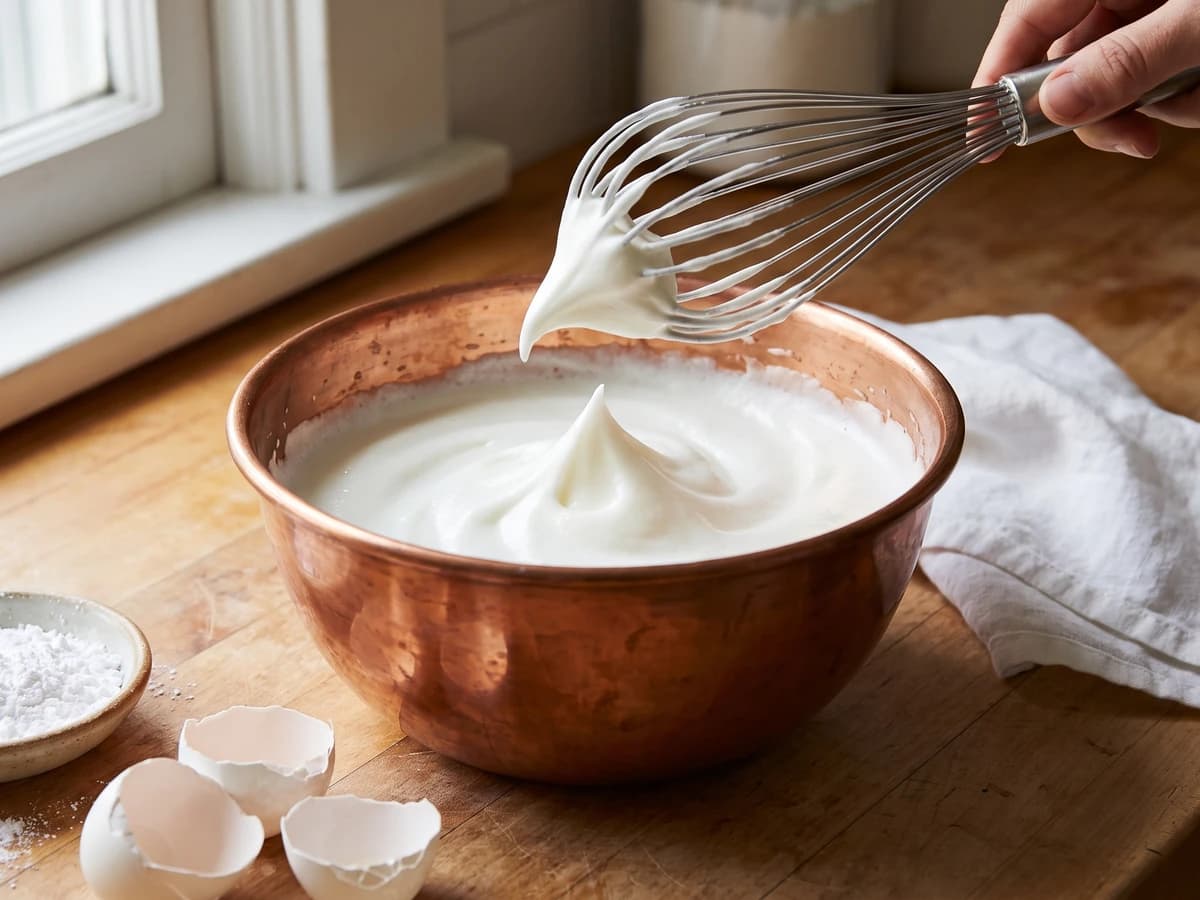
Four whites, one spotless bowl, and a patient change of speed: whisk gently until loosened, then briskly to glossy stiffness, with powdered sugar waiting if the foam begins to granulate.