
Chef Juliette
Various Almond Preparations
Five almond preparations, one discipline: remove the skins cleanly, dry every kernel through, then cut, toast, or cloak it in pale caramel without letting its fragrant oils escape.
A cooking platform built around craft, culture, and the stories behind what we eat.

Created by Chef Juliette
Based on No. 2927, Preparation for Sorbets, from Le Guide Culinaire (1907) by Auguste Escoffier
A classical wine-and-citrus sorbet, churned fine, lightened with a quarter its weight of Meringue à l’Italienne (No. 2383), and finished with liqueur only after freezing so it stays soft enough to drink.
Préparation des Sorbets (classical sorbet preparation) teaches one governing rule: alcohol belongs at the end. Freeze the wine, citrus, and syrup first, then fold in the Meringue à l’Italienne (No. 2383), and add the liqueur only when the sorbet is fully congealed. Put it in earlier and the mixture may never freeze beyond slush, no matter how patiently you wait.
The original kitchen assumed a turbine packed and turning, a saccharometer beside stocks of syrup at several densities, and a pastry station with Meringue à l’Italienne (No. 2383) ready. Your honest equivalents are an ice cream maker, a digital scale, and one measured syrup at 18° to 19° Baumé. The standing syrup stocks and brigade quantity are scaffolding, so they can go. Continuous freezing, the exact quarter-weight of meringue, and the last-minute liqueur are the dish itself and must stay. One cook, one stove, one evening.
When it is right, the sorbet is pale gold, finely frozen, and airy without becoming stiff. It should rise to a soft point in a chilled glass, then relax enough to drink by the spoonful. The step that decides everything is simple: freeze completely, fold the meringue gently, and let the liqueur be last.
Sorbet found a particular home in the confectioners and classical dining rooms of Paris, after sweetened sherbet drinks traveled through Mediterranean trade and Italian ice-making into French service. It could appear between courses or as a light entremets, especially when wine or liqueur made it aromatic and refreshing. The common notion that every sorbet must be a firm fruit-purée scoop misses this branch of the canon: this preparation is juice-based, lightened with meringue, and deliberately soft enough to drink.
Quantity
1 cup minus 1 tablespoon (225 ml / 190 g)
Quantity
1½ cups (355 ml / 355 g)
Quantity
2, yielding about ⅓ cup (80 ml / 80 g) juice
juiced and strained
Quantity
1, yielding about ½ cup (120 ml / 120 g) juice
juiced and strained
Quantity
1¼ cups (285 ml / about 300 g)
Quantity
about 2½ cups (600 ml / 260 g) Meringue à l’Italienne (No. 2383), exactly one-quarter the weight of the wine-citrus base
Quantity
scant ½ cup (115 ml / about 115 g)
Quantity
½ cup (120 ml / about 125 g)
for finishing the glasses
| Ingredient | Quantity |
|---|---|
| superfine sugar | 1 cup minus 1 tablespoon (225 ml / 190 g) |
| water | 1½ cups (355 ml / 355 g) |
| medium lemonsjuiced and strained | 2, yielding about ⅓ cup (80 ml / 80 g) juice |
| medium orangejuiced and strained | 1, yielding about ½ cup (120 ml / 120 g) juice |
| Sauternes or another good wine | 1¼ cups (285 ml / about 300 g) |
| Meringue à l’Italienne | about 2½ cups (600 ml / 260 g) Meringue à l’Italienne (No. 2383), exactly one-quarter the weight of the wine-citrus base |
| 35% to 40% ABV liqueur, such as orange liqueur or Cognac | scant ½ cup (115 ml / about 115 g) |
| additional Sauternesfor finishing the glasses | ½ cup (120 ml / about 125 g) |
Combine the sugar and water in a small saucepan and warm gently, stirring only until every crystal dissolves. Do not reduce it. If it boils or loses visible volume, return the syrup to a scale and add enough water to restore its total weight to 545 g. Cool it completely, then chill it. This gives the 18° to 19° Baumé syrup prescribed for a liqueur sorbet; the lower density accounts for the liqueur that will enter at the end.
Combine the strained lemon and orange juices with the Sauternes, then stir in all the cold syrup. The mixture should measure close to 1 quart and weigh about 1,045 g, though the fruit may shift that slightly. Weigh the finished base and record the number, because the meringue must equal precisely one-quarter of it. Cover and chill for at least 2 hours, until thoroughly cold.
Start the ice cream maker before pouring in the cold base, then keep it running continuously until the mixture is completely congealed and firm enough to hold a soft mound, usually 20 to 30 minutes. The turning paddle replaces the packed turbine and constant scraping of the classical kitchen, so do not stop the machine to stir by hand. If a rigid collar freezes beyond the paddle's reach, stop once, scrape it into the center, and restart immediately. Ça se rattrape.
Transfer the frozen base to the chilled bowl. Weigh out exactly one-quarter of the base's starting weight in Meringue à l’Italienne (No. 2383), about 260 g for this batch, and fold it in gently in three additions. Turn the bowl and lift from underneath rather than beating; the meringue should lighten the ice without losing all its air. If the sorbet slumps before the meringue is incorporated, return the bowl to the freezer for 10 minutes, then finish folding. If it has become too hard to combine, leave it in the refrigerator for 5 minutes and try again.
Drizzle in the liqueur only now, when the sorbet is fully frozen and the meringue has been incorporated. Fold just until evenly distributed. This sequence is the dish: alcohol added before churning depresses the freezing point and can prevent the base from setting. If it was added too soon and the machine cannot firm the mixture, stop churning, spread it in a shallow metal pan, and freeze until softly congealed before folding in the meringue. Ça se rattrape, though the ice will be a little coarser.
Spoon the sorbet into eight chilled sorbet or sherry glasses and draw each portion into a soft point with the back of the spoon. Pour 1 tablespoon of the additional Sauternes over each glass. Serve at once, or hold briefly in the freezer. The proper consistency is loose enough to drink, not a hard ball that fights the spoon. If it firms during storage, rest it in the refrigerator for 10 minutes and work it gently before dishing. À table!
1 serving (about 195g)
Culinary guides, cultural storytelling, and the editorial depth that makes cooking meaningful.
Discover Culinary ExplorerChef Juliette
Five almond preparations, one discipline: remove the skins cleanly, dry every kernel through, then cut, toast, or cloak it in pale caramel without letting its fragrant oils escape.

Chef Juliette
A pastry pantry lesson in one tray: filberts warmed only until their red skins release, rubbed clean, cooled, and chopped into a fragrant mise-en-place for cakes, creams, pralines, and petits fours.

Chef Juliette
The smallest pâtisserie discipline decides whether a cake leaves its mould intact: clarified butter in every corner, followed by the lightest veil of dry flour or fécule.
Chef Juliette
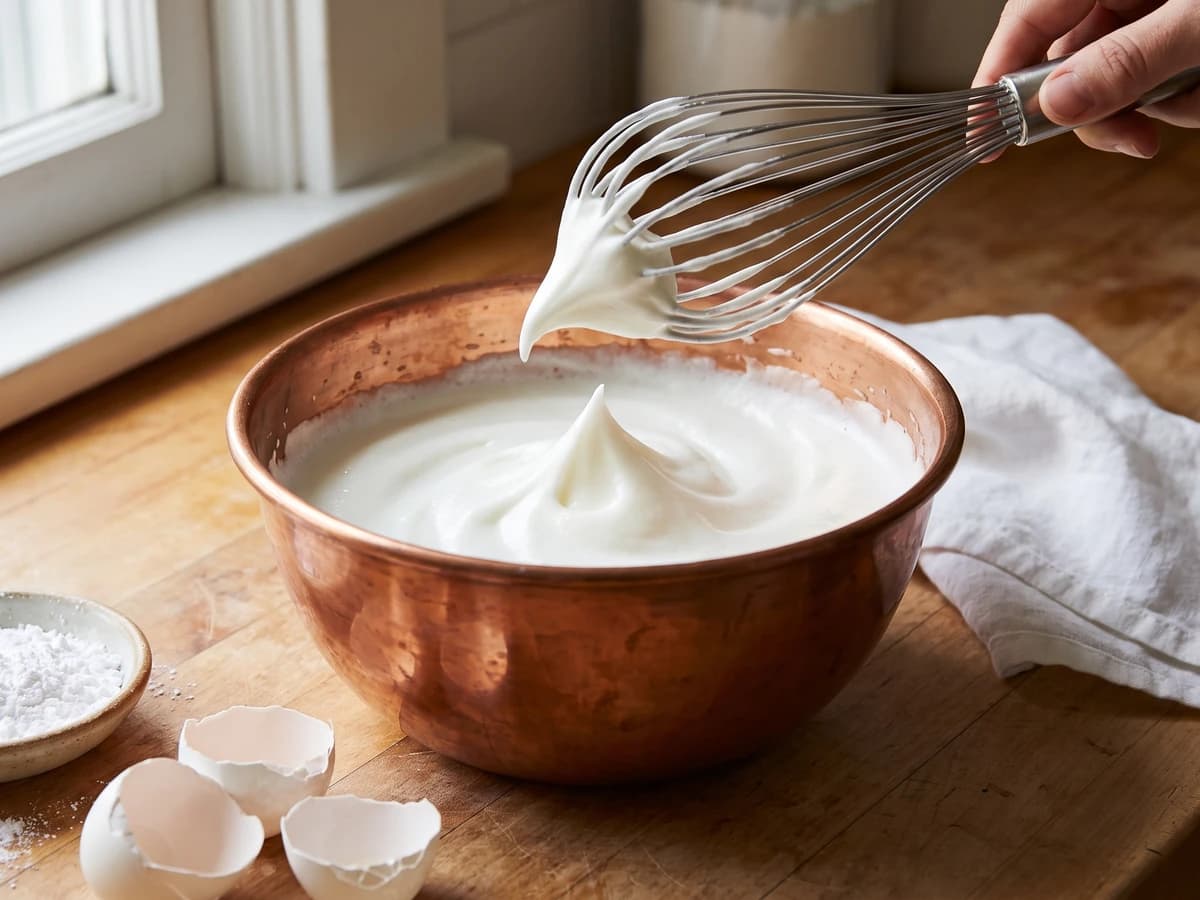
Four whites, one spotless bowl, and a patient change of speed: whisk gently until loosened, then briskly to glossy stiffness, with powdered sugar waiting if the foam begins to granulate.