
Chef Juliette
Various Almond Preparations
Five almond preparations, one discipline: remove the skins cleanly, dry every kernel through, then cut, toast, or cloak it in pale caramel without letting its fragrant oils escape.
A cooking platform built around craft, culture, and the stories behind what we eat.

Created by Chef Juliette
Based on No. 2923, Pudding Seymour, from Le Guide Culinaire (1907) by Auguste Escoffier
A frozen French pudding of kirsch-touched brioche, vanilla peaches, ripe William pears, and Bar-le-Duc currants held in a pale pink orgeat pâte à bombe, with every generous layer kept distinct.
Pudding Seymour (a frozen brioche and fruit pudding) teaches restraint through absorption. The brioche must drink enough kirsch cream to become supple, but never enough to lose its crumb. Soak it, never drown it. That is the one true thing to know before touching a pan.
The original formula assumed a pastry brigade with brioche mousseline ready, poaching syrup on the stove, a lidded bombe mould packed completely in salted ice, and enough hands to make every component at once. For one cook, one stove, one evening, a fine-crumbed day-old butter brioche replaces the separately baked mousselines, a 1.2-litre metal mould replaces the professional bombe mould, and the home freezer replaces the ice chest. Baking individual brioche is brigade scaffolding and can go. The vanilla-poached peaches, uncooked ripe William pears, Bar-le-Duc preserve, kirsch, orgeat, and pâte à bombe are the dish, so they stay.
When unmoulded, the pudding should show a pale rose shell around clear layers of butter-gold brioche, peach, ivory pear, and ruby currants. The fruit remains recognisable, the bombe cuts like frozen satin, and no cream runs from the slice. Measure the soaking patiently, because every later success begins there.
Pudding Seymour belongs to the cosmopolitan Parisian grand-kitchen repertory, where frozen entremets were assembled from fine brioche, poached fruit, preserves, and préparation à bombe already moving through the pastry section. Its English title is misleading to modern ears, since this is neither a baked nor a steamed pudding, but a moulded frozen sweet enriched in the French manner with yolks, cream, kirsch, and orgeat. Bar-le-Duc preserve brings a precise Lorraine luxury to the composition: red currants were seeded berry by berry so they remained whole and jewel-like in their syrup.
Quantity
6 thin slices, about 2½ cups loosely packed (590 ml / 125 g)
Quantity
½ cup (120 ml / 120 g)
kept liquid and unwhipped
Quantity
1 tablespoon (15 ml / 12 g)
Quantity
1 tablespoon (15 ml / 14 g)
Quantity
1 cup (240 ml / 240 g)
Quantity
½ cup (120 ml / 100 g)
Quantity
½
split lengthwise
Quantity
2 medium
peeled and thinly sliced
Quantity
2 small
peeled and thinly sliced immediately before layering
Quantity
⅓ cup (80 ml / 105 g)
Quantity
3
Quantity
⅓ cup (80 ml / 67 g)
Quantity
2 tablespoons (30 ml / 30 g)
Quantity
¾ cup (180 ml / 180 g)
divided
Quantity
2 tablespoons (30 ml / 38 g)
Quantity
1 tablespoon (15 ml / 14 g)
Quantity
1 tiny drop
| Ingredient | Quantity |
|---|---|
| day-old fine-crumbed butter brioche, the home equivalent of brioche mousseline | 6 thin slices, about 2½ cups loosely packed (590 ml / 125 g) |
| cold pasteurized heavy cream for soakingkept liquid and unwhipped | ½ cup (120 ml / 120 g) |
| granulated sugar for soaking | 1 tablespoon (15 ml / 12 g) |
| kirsch for soaking | 1 tablespoon (15 ml / 14 g) |
| water for vanilla syrup | 1 cup (240 ml / 240 g) |
| granulated sugar for vanilla syrup | ½ cup (120 ml / 100 g) |
| vanilla beansplit lengthwise | ½ |
| ripe but firm peachespeeled and thinly sliced | 2 medium |
| very ripe William or Bartlett pearspeeled and thinly sliced immediately before layering | 2 small |
| Bar-le-Duc red currant preserve | ⅓ cup (80 ml / 105 g) |
| large egg yolks | 3 |
| granulated sugar for pâte à bombe | ⅓ cup (80 ml / 67 g) |
| water for pâte à bombe | 2 tablespoons (30 ml / 30 g) |
| cold pasteurized heavy cream for pâte à bombedivided | ¾ cup (180 ml / 180 g) |
| orgeat syrup | 2 tablespoons (30 ml / 38 g) |
| kirsch for pâte à bombe | 1 tablespoon (15 ml / 14 g) |
| rose-pink gel food coloring (optional) | 1 tiny drop |
Chill a 1¼-quart (1.2-liter) metal pudding mould or deep stainless-steel bowl. Combine 1 cup water, ½ cup sugar, and the split vanilla bean in a small saucepan. Bring to a gentle simmer, stirring only until the sugar dissolves, then add the peeled peach slices. Poach at the barest tremble for 2 to 4 minutes, just until the slices bend without breaking. Lift them onto a rack, cool completely, and blot away every bead of syrup. Wet fruit creates icy seams in the finished pudding.
Stir 1 tablespoon sugar into ½ cup cold heavy cream until dissolved, then add 1 tablespoon kirsch. Keep the cream liquid and unwhipped. This is the source's raw cream, meaning unwhipped rather than unpasteurized. Lay the brioche in a shallow dish and spoon the cream over it gradually, turning once, until each slice is pliable and evenly moistened but no cream pools beneath it. If a slice begins to sag or tear, lift it immediately onto a rack and chill it for 10 minutes. Ça se rattrape. Never squeeze it, and never pour leftover cream into the mould.
Put the 3 yolks in the bowl of a stand mixer or in a deep heatproof bowl with an electric whisk ready. Combine ⅓ cup sugar and 2 tablespoons water in a small saucepan and boil without stirring. When the syrup reaches 230°F (110°C), begin beating the yolks at medium speed. At 244°F (118°C), remove the syrup from the heat and pour it in a thin stream down the bare inside wall of the bowl, never onto the moving whisk. Beat at high speed until the mixture is pale, thick enough to fall in a ribbon, and completely cool, about 6 to 8 minutes. If the syrup forms a hard thread on the bowl, stop pouring, remove the thread, and resume more slowly. If the bowl still feels warm, keep beating; warm pâte à bombe will melt the whipped cream.
Reserve 1 tablespoon of the ¾ cup cold cream, then whip the remainder only to soft peaks. Stir the orgeat, the remaining tablespoon of kirsch, and 1 teaspoon of ruby syrup taken from the Bar-le-Duc preserve into the cooled pâte à bombe. The orgeat is almond syrup, and it should perfume rather than dominate. Add the optional coloring only if the currant syrup has not produced a clear pale pink. Fold in the whipped cream in three additions, keeping as much volume as possible. If the cream was beaten too far and looks grainy, fold the reserved liquid cream into it before combining. Ça se rattrape.
Peel and thinly slice the very ripe William pears now, leaving them uncooked as the original formula directs. Spread a thin layer of pink bombe over the bottom and slightly up the sides of the cold mould. Add a fitted layer of soaked brioche, then some poached peach and raw pear slices, a few small spoonfuls of Bar-le-Duc preserve, and enough bombe to fill the spaces. Repeat the layers without crushing the fruit, ending with bombe levelled across the top. Tap the mould twice against a folded towel to release large air pockets, but do not compact it.
Press a disc of baking parchment directly onto the surface, then close the mould with its lid or cover it tightly with foil. Freeze for at least 6 hours, preferably overnight. The professional method surrounded a small metal bombe mould completely with salted ice and could set it rapidly; still air in a home freezer works more slowly, so the longer freezing time is an honest equipment change, not an alteration to the pudding.
Chill the serving platter. Remove the cover and parchment, wrap the sides of the mould in a warm damp towel for 5 to 8 seconds, and invert it onto a perfectly clean, lint-free white napkin laid flat on the platter, as the classical service directs. If the pudding does not release, repeat with the warm towel in 3-second turns; prolonged warmth will soften the pink shell. Let it stand for 8 minutes, then cut with a knife dipped in hot water and wiped dry between slices. Serve while the layers hold their clear edges. À table!
1 serving (about 210g)
Culinary guides, cultural storytelling, and the editorial depth that makes cooking meaningful.
Discover Culinary ExplorerChef Juliette
Five almond preparations, one discipline: remove the skins cleanly, dry every kernel through, then cut, toast, or cloak it in pale caramel without letting its fragrant oils escape.

Chef Juliette
A pastry pantry lesson in one tray: filberts warmed only until their red skins release, rubbed clean, cooled, and chopped into a fragrant mise-en-place for cakes, creams, pralines, and petits fours.

Chef Juliette
The smallest pâtisserie discipline decides whether a cake leaves its mould intact: clarified butter in every corner, followed by the lightest veil of dry flour or fécule.
Chef Juliette
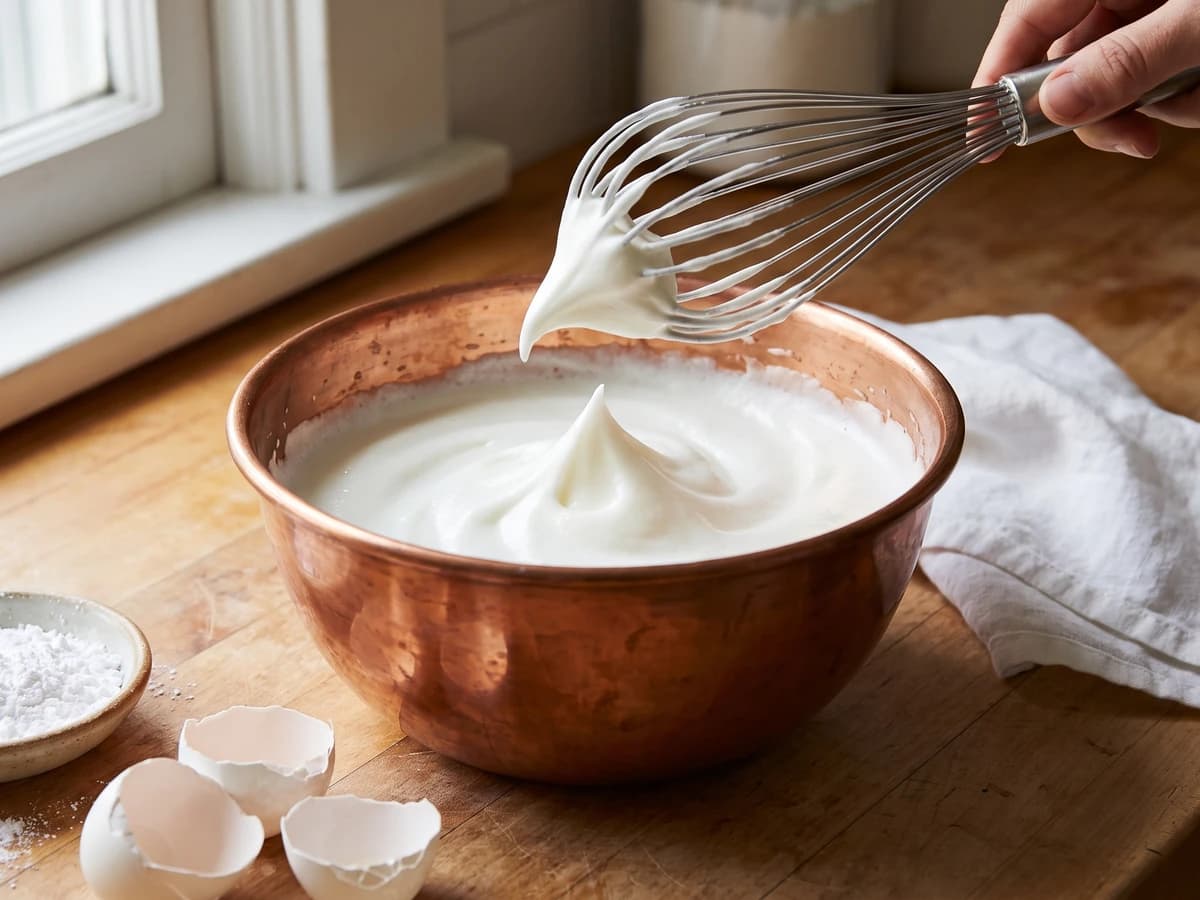
Four whites, one spotless bowl, and a patient change of speed: whisk gently until loosened, then briskly to glossy stiffness, with powdered sugar waiting if the foam begins to granulate.