
Chef Juliette
Various Almond Preparations
Five almond preparations, one discipline: remove the skins cleanly, dry every kernel through, then cut, toast, or cloak it in pale caramel without letting its fragrant oils escape.
A cooking platform built around craft, culture, and the stories behind what we eat.
Created by Chef Juliette
Based on No. 2920, Pudding de Castries, from Le Guide Culinaire (1907) by Auguste Escoffier
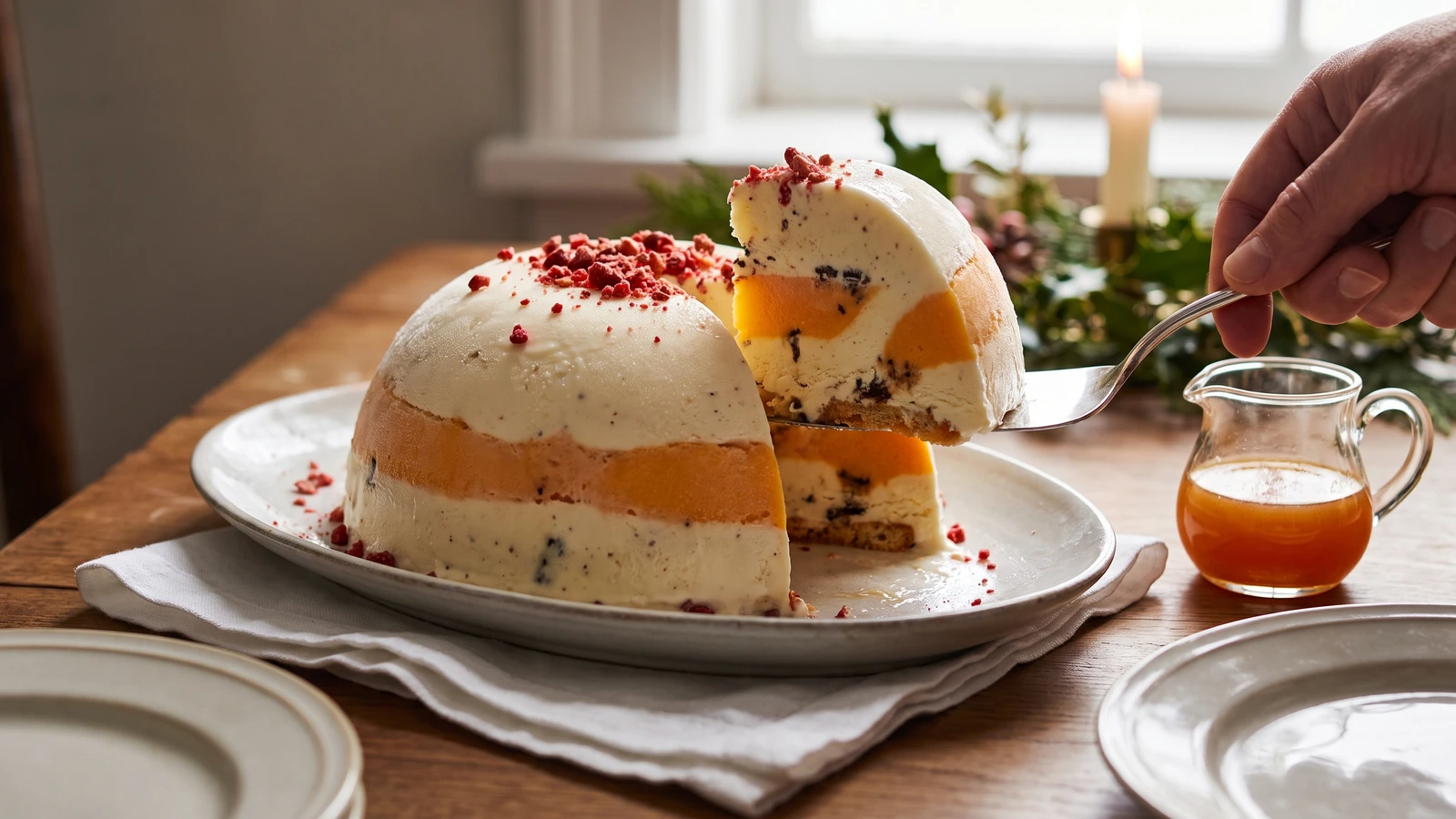
A frozen bombe built by patience: vanilla ice around alternating vanilla and tangerine creams, anisette-touched biscuits, chocolate, and red pralin, with bright tangerine syrup waiting at the table.
Pudding de Castries (a layered frozen mould) teaches one law above all: cold is structure. The vanilla and tangerine bands must freeze firm before they touch, or their clean stripes run together and the bombe loses the architecture that makes each slice splendid.
The original kitchen needed neither a saucier nor a stockpot for this dessert. Its privilege was a glacier managing several frozen preparations and a metal bombe packed tightly in salted ice. At home, one pâte à bombe is divided and flavoured two ways, a full-fat vanilla ice cream clothes and seals the mould, and the coldest shelf of an ordinary freezer replaces the ice chest. Making a separate churned vanilla ice is brigade scaffolding, so good prepared ice cream may take that job. The vanilla shell, alternating bombe preparations, anisette biscuits, chocolate, red pralin, and tangerine syrup are the dish itself, and every one stays.
When it is cut, the ivory shell should hold broad pale-gold and tangerine-coloured bands, little cubes of fragrant biscuit, and fine chocolate between them. Freeze each band until a fingertip leaves no mark before adding the next. That pause is the step that decides the dish.
Pudding de Castries belongs to the Parisian repertoire of frozen entremets, where the glacier assembled named bombes for formal celebration tables. Despite the word pudding, it is neither steamed nor baked: the classical French usage here means a moulded ice, clothed with vanilla ice cream and filled with richer bombe preparations. Its title follows the Parisian custom of giving elaborate entremets distinguished family names, rather than marking it as a regional pudding from the town of Castries.
Quantity
2 cups (475 ml / 430 g)
softened only until spreadable
Quantity
1½ cups (360 ml / 370 g)
Quantity
Finely grated zest of 2 tangerines
Quantity
½ cup (120 ml / 100 g)
Quantity
5 large
Quantity
½ cup plus 2 tablespoons (150 ml / 125 g)
Quantity
3 tablespoons (45 ml / 45 g)
Quantity
1½ cups (360 ml / 355 g)
Quantity
2 teaspoons (10 ml / 12 g)
Quantity
8 biscuits (about 1½ cups diced / 80 g)
cut into small dice
Quantity
3 tablespoons (45 ml / 42 g)
Quantity
¼ cup (60 ml / 35 g)
finely grated
Quantity
1 technique-only cross-reference (No. 916)
consulted for clothing the mould; no aspic is used
| Ingredient | Quantity |
|---|---|
| full-fat vanilla ice creamsoftened only until spreadable | 2 cups (475 ml / 430 g) |
| strained fresh tangerine juice | 1½ cups (360 ml / 370 g) |
| tangerine zest | Finely grated zest of 2 tangerines |
| granulated sugar for the tangerine syrup | ½ cup (120 ml / 100 g) |
| pasteurized egg yolks | 5 large |
| granulated sugar for the pâte à bombe | ½ cup plus 2 tablespoons (150 ml / 125 g) |
| water | 3 tablespoons (45 ml / 45 g) |
| cold heavy cream | 1½ cups (360 ml / 355 g) |
| vanilla bean paste | 2 teaspoons (10 ml / 12 g) |
| ladyfinger biscuitscut into small dice | 8 biscuits (about 1½ cups diced / 80 g) |
| anisette | 3 tablespoons (45 ml / 42 g) |
| dark chocolatefinely grated | ¼ cup (60 ml / 35 g) |
| red Pralincoarsely crushed | 3 tablespoons (45 ml / 30 g) (No. 2352) |
| Another Method of Preparing Aspics de Filets de Solesconsulted for clothing the mould; no aspic is used | 1 technique-only cross-reference (No. 916) |
Clear a level place on the coldest freezer shelf and chill a 1.5-liter metal bombe mould or deep metal bowl for 20 minutes. The operational idea comes from Another Method of Preparing Aspics de Filets de Soles (No. 916): clothing the mould means coating its entire interior with a thin, even layer that is set before the filling arrives. Only that technique crosses into this dessert, never the fish aspic preparation.
Work about two-thirds of the softened vanilla ice cream over the bottom and sides of the chilled mould in an even layer about 6 mm thick. Use the back of a cold spoon or a small offset spatula, pressing out air pockets and filling every bare patch. Freeze for 30 minutes, then inspect the shell against the light and repair any thin places with more ice cream. Reserve the remainder for the closing layer and return both it and the mould to the freezer.
Reserve 2 tablespoons of the tangerine juice for correcting the syrup. Combine the remaining juice, tangerine zest, and ½ cup sugar in a small saucepan. Bring it gently to a simmer, skimming any pale foam, then reduce it to 1 cup. It should taste brighter and sweeter than juice but remain fluid when cold. Strain it and cool it over ice. Reserve ¼ cup for the tangerine bombe and chill the rest for serving. If the syrup reduces too far and turns sticky, whisk in the reserved juice a spoonful at a time. Ça se rattrape.
Put the yolks in the mixer bowl and begin beating at medium speed. Combine the remaining sugar and water in a small saucepan, dissolve them over gentle heat, then boil without stirring to 118°C. With the mixer running, pour the hot syrup in a thin stream down the inside of the bowl, keeping it away from the whisk. Beat at high speed until the pâte à bombe triples in volume, holds a thick ribbon, and the bowl feels cool, about 8 minutes. If the syrup crystallizes in its pan, cover it for 30 seconds so condensation washes the sides, then let the crystals dissolve before continuing. If a few cooked threads form in the yolks, press the warm mixture through a fine sieve and resume whisking immediately.
Whip the cold cream to soft peaks, stopping when it holds its shape but still folds easily. Fold one-third into the pâte à bombe to loosen it, then fold in the rest without crushing the air. Divide the mixture evenly between two cold bowls. Fold the vanilla bean paste into one bowl and the reserved ¼ cup cold tangerine syrup into the other. Keep both preparations cold while you assemble the mould. If the tangerine mixture loosens noticeably, chill it for 10 minutes and give it one gentle fold before using.
Put the diced ladyfingers in a shallow bowl and sprinkle the anisette evenly over them, turning once with a spoon. They should be fragrant and lightly moistened, not collapsed into paste. Leave them for 5 minutes so the liqueur distributes through the crumb.
Spread half the vanilla bombe preparation inside the frozen shell in a broad, level band. Scatter half the anisette biscuits over it and add a light pinch of grated chocolate. Freeze until completely firm, 25 to 35 minutes. Add half the tangerine preparation, level it without pressing, sprinkle lightly with chocolate, and freeze it firm. Repeat with the remaining vanilla preparation, biscuits, and chocolate, then finish with the remaining tangerine preparation and a final pinch of chocolate, stopping about 1 cm below the rim. Keep the waiting mixtures covered in the refrigerator. If a new layer breaks through the one beneath, lift away the loose mixture at once and refreeze the mould for 20 minutes before trying again. Ça se rattrape, but only if you stop rather than stirring the colours together.
Soften the reserved vanilla ice cream just enough to spread, then cover the final layer completely, filling the mould to its rim. Smooth the surface and close it tightly with its lid, or with plastic wrap pressed to the ice and a second layer of foil. Freeze for at least 6 hours, preferably overnight. The original mould was packed in salted ice for two or three hours; a home freezer cools more gently, so the longer still freeze is the honest equivalent.
Chill the serving platter and its folded white napkin. Dip only the outside of the mould in hot tap water for 5 seconds, dry it, then invert it onto the napkin. If the bombe does not release, repeat for another 3 seconds rather than warming it continuously. Return a softened bombe to the freezer for 15 minutes before decorating. Sprinkle the top and shoulders with the red, coarsely crushed Pralin (No. 2352). Serve at once with the iced tangerine syrup in a cold pitcher, slicing with a hot, dry knife. À table!
1 serving (about 180g)
Culinary guides, cultural storytelling, and the editorial depth that makes cooking meaningful.
Discover Culinary ExplorerChef Juliette
Five almond preparations, one discipline: remove the skins cleanly, dry every kernel through, then cut, toast, or cloak it in pale caramel without letting its fragrant oils escape.

Chef Juliette
A pastry pantry lesson in one tray: filberts warmed only until their red skins release, rubbed clean, cooled, and chopped into a fragrant mise-en-place for cakes, creams, pralines, and petits fours.

Chef Juliette
The smallest pâtisserie discipline decides whether a cake leaves its mould intact: clarified butter in every corner, followed by the lightest veil of dry flour or fécule.
Chef Juliette
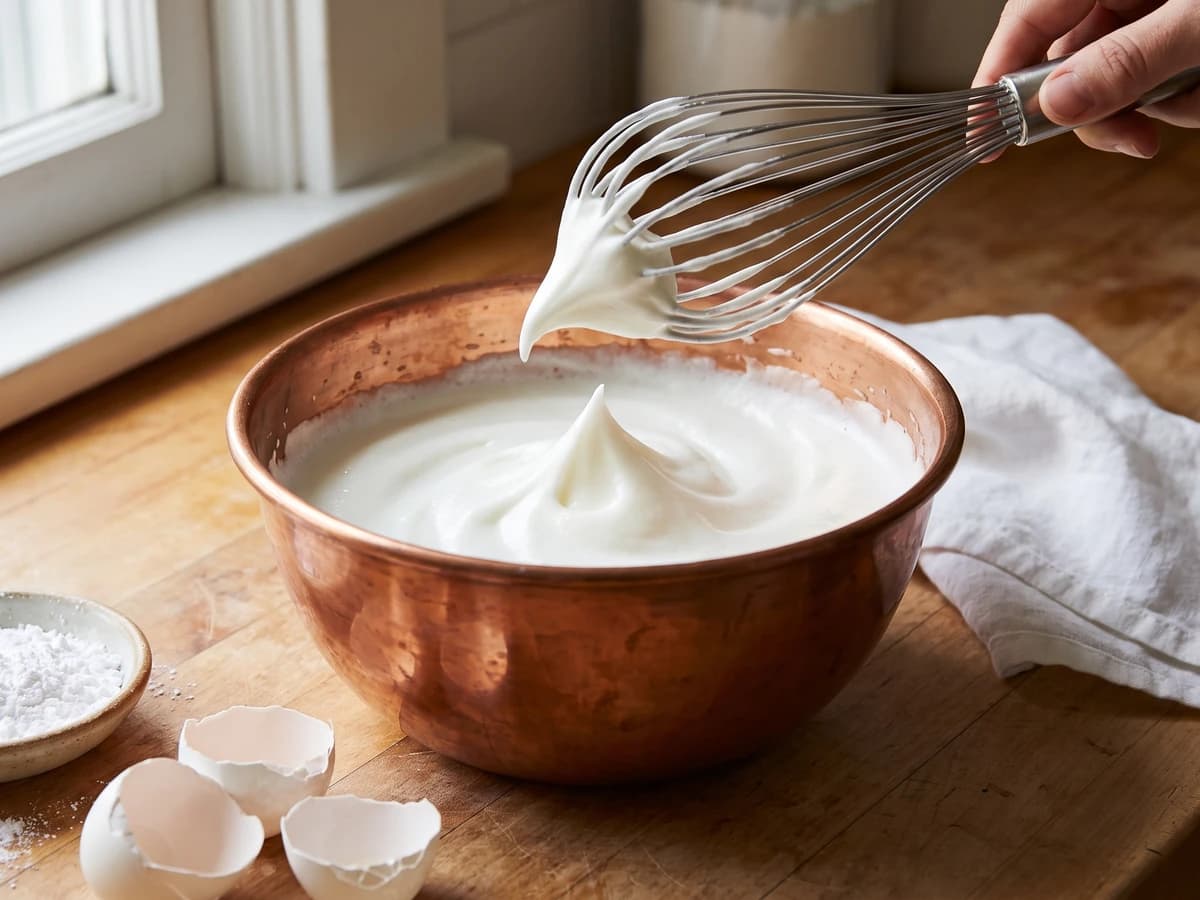
Four whites, one spotless bowl, and a patient change of speed: whisk gently until loosened, then briskly to glossy stiffness, with powdered sugar waiting if the foam begins to granulate.