
Chef Juliette
Various Almond Preparations
Five almond preparations, one discipline: remove the skins cleanly, dry every kernel through, then cut, toast, or cloak it in pale caramel without letting its fragrant oils escape.
A cooking platform built around craft, culture, and the stories behind what we eat.
Created by Chef Juliette
Based on No. 2912, Bombe Vénitienne, from Le Guide Culinaire (1907) by Auguste Escoffier
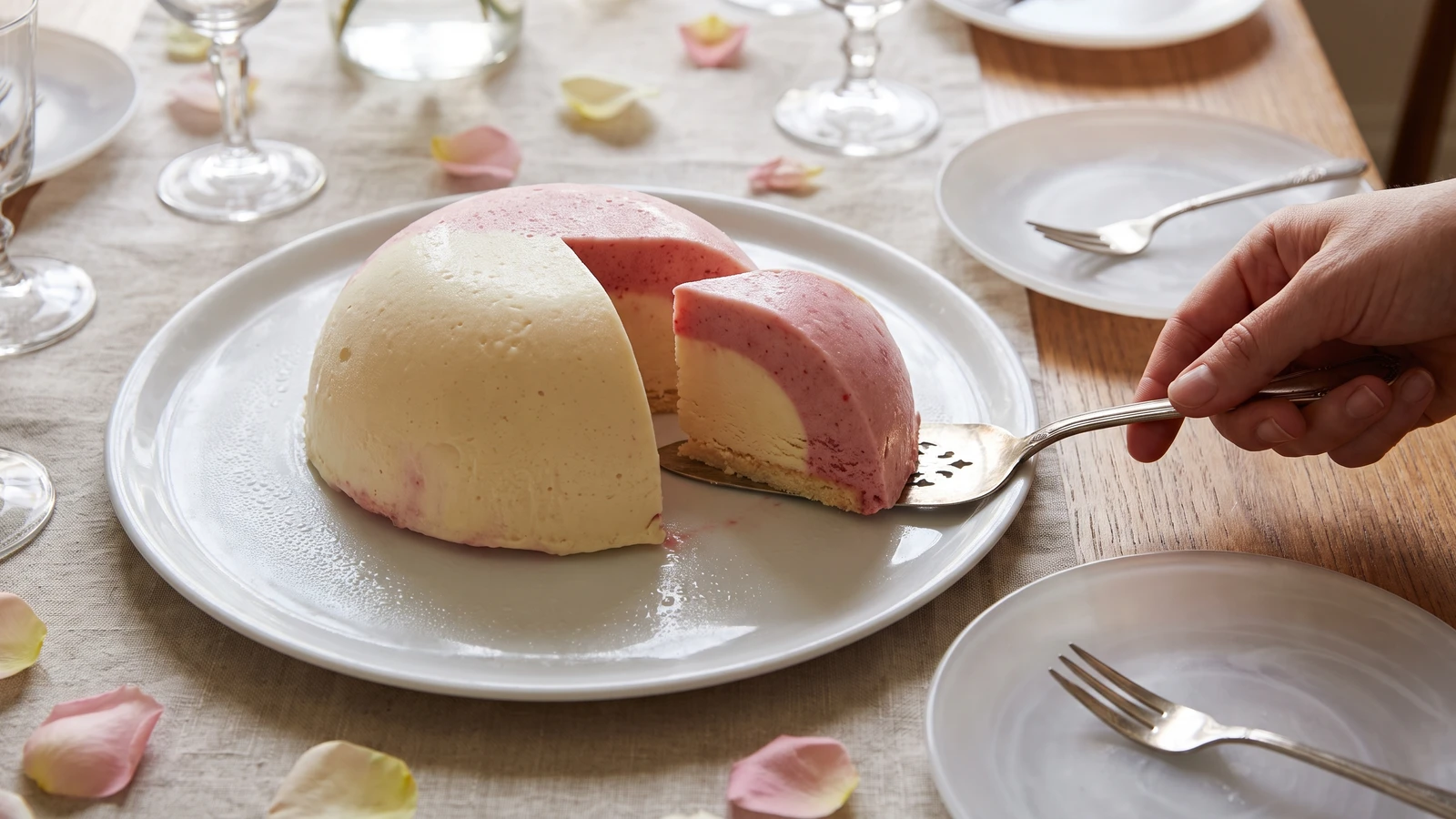
A half-vanilla, half-strawberry shell encloses a silk-soft Maraschino and Kirsch pâte à bombe. Freeze each coloured half before the next, and every slice reveals the discipline.
Bombe Vénitienne (Venetian frozen bombe) teaches that cold is architecture. Vanilla and strawberry form two distinct halves of the outer shell, while a pâte à bombe, a cooked-syrup yolk foam, carries Maraschino and Kirsch at the centre. The one true thing to know before touching the pan is this: each section must freeze firm before the next one touches it, or the colours wander and the clean line disappears.
The original assumed two finished ices waiting in the freezing cabinet, a chilled bombe mould, and enough hands to clothe it while the pâtissier prepared the filling. At home, a 1.5-litre metal mould, the coldest part of an ordinary freezer, and dense ice cream bought or made ahead do the same work. This version makes one celebration bombe for eight. Churning two separate ices during assembly is brigade scaffolding and can go; the cooked pâte à bombe and the two-stage lining are the dish, so they stay. One cook, one stove, one evening, followed by a proper freeze.
Freeze the vanilla half until it resists firm pressure before spreading the strawberry half beside it. That pause decides the cut face, and the cut face is where a Bombe Vénitienne shows its hand.
Bombe Vénitienne belongs to the French repertoire of entremets glacés, moulded frozen sweets made by clothing a chilled mould with one or more ices and concealing a softer bombe preparation within. Its title does not make it Venetian household food; it reflects the grand French kitchen's decorative naming, while Maraschino and Kirsch came from the liqueur cabinet used for festive desserts. The sharply divided vanilla and strawberry shell is more than ornament, since every slice records the cook's control of staged freezing.
Quantity
2 cups (475 ml / 450 g)
softened only until spreadable
Quantity
2 cups (475 ml / 450 g)
softened only until spreadable
Quantity
5 (about 75 ml / 85 g)
Quantity
1/2 cup (120 ml / 100 g)
Quantity
3 tablespoons (45 ml / 45 g)
Quantity
1 1/4 cups (300 ml / 300 g)
Quantity
1 tablespoon (15 ml / 16 g)
Quantity
1 tablespoon (15 ml / 14 g)
Quantity
1 technique reference, Another Method of Preparing Aspics de Filets de Soles (No. 916)
consulted for the mould-lining action only
| Ingredient | Quantity |
|---|---|
| dense vanilla ice creamsoftened only until spreadable | 2 cups (475 ml / 450 g) |
| smooth strawberry ice cream without fruit piecessoftened only until spreadable | 2 cups (475 ml / 450 g) |
| large egg yolks | 5 (about 75 ml / 85 g) |
| granulated sugar | 1/2 cup (120 ml / 100 g) |
| water | 3 tablespoons (45 ml / 45 g) |
| cold heavy cream | 1 1/4 cups (300 ml / 300 g) |
| Maraschino liqueur | 1 tablespoon (15 ml / 16 g) |
| Kirsch | 1 tablespoon (15 ml / 14 g) |
| clothing-the-mould technique referenceconsulted for the mould-lining action only | 1 technique reference, Another Method of Preparing Aspics de Filets de Soles (No. 916) |
Put a 1.5-litre metal bombe mould or deep round bowl in the freezer for 20 minutes. Mark two opposite points on the outside rim with small pieces of tape so you can divide the interior into equal vertical halves. The book directs the cook to the clothing-the-mould method in Another Method of Preparing Aspics de Filets de Soles (No. 916): here, that means pressing an even frozen lining against a thoroughly chilled mould. Only the action carries over, naturally, not the fish preparation. C'est la même grammaire.
Soften only the vanilla ice cream until a spoon passes through it with some resistance, about 8 to 12 minutes at room temperature. Leave the strawberry ice cream frozen. Nest the chilled mould at an angle in a folded towel, then press vanilla ice cream over one complete vertical half, working from one tape mark to the other and from the rim down to the base. Make the shell about 1.25 cm thick and leave the centre hollow. If the ice cream slides instead of clinging, both mould and ice cream have become too warm; return them to the freezer for 10 minutes, then press the lining back into place. Freeze for at least 45 minutes, until hard under firm pressure.
Soften the strawberry ice cream to the same spreadable consistency. Press it over the empty half of the mould at the same thickness, meeting the frozen vanilla precisely along both seams without dragging one colour through the other. Smooth the rim and check that no bare metal remains. If the boundary smears, scrape the blurred section straight with a chilled spoon while the strawberry is still pliable, repack each colour, and freeze again. Ça se rattrape. Freeze the completed shell for 1 hour.
Whip the cold cream to soft peaks that bend at their tips. Stop before it becomes stiff or grainy, since firm cream will leave white flecks rather than folding smoothly into the pâte à bombe. Transfer it to the refrigerator. Whipping the cream first lets one cook use the same beaters for the yolks without stopping midway to wash equipment.
Put the yolks in a deep mixing bowl and begin beating them at medium speed. Heat the sugar and water in a small saucepan, stirring only until the sugar dissolves, then boil without stirring to 118°C. If crystals gather at the edge, cover the pan for 30 seconds so condensation washes them down; if the syrup turns sandy, add 1 tablespoon of water, dissolve it completely over gentle heat, and begin the boil again. With the mixer running, pour the hot syrup into the yolks in a thin thread down the inside of the bowl, never directly onto the beaters. Continue beating until the mixture is very pale, holds a thick ribbon, and the bowl no longer feels warm, about 6 to 8 minutes.
Beat the Maraschino and Kirsch into the cooled pâte à bombe just until evenly dispersed. Fold in one-third of the whipped cream to lighten it, then fold in the remainder with broad turns from the bottom of the bowl until no white streaks remain. Keep the air you worked for. If the filling becomes loose because the pâte was still warm, set the bowl over ice for 5 to 10 minutes and fold gently once or twice as it thickens; don't try to rescue it by beating, which knocks out the volume.
Take the frozen shell from the freezer and spoon the Maraschino and Kirsch pâte à bombe into the hollow centre. Press the first spoonful carefully against the shell to prevent air pockets, then add the rest without disturbing the two-colour lining. Tap the mould twice against a folded towel, smooth the filling level with the rim, and cover it closely. Freeze in the coldest part of the freezer for at least 8 hours, preferably overnight.
Chill the serving platter. Dip the outside of the mould in warm water for 5 seconds, dry it, cover it with the platter, and invert decisively. If the bombe refuses to release, wrap the mould in a warm damp towel for another 3 seconds and try again. If the surface begins to soften before release, return everything to the freezer for 15 minutes. Let the unmoulded bombe stand for 5 minutes, then cut it with a long knife dipped in hot water and wiped dry between slices. The vanilla and strawberry should meet in a clean line around the liqueur-scented centre. À table!
1 serving (about 181g)
Culinary guides, cultural storytelling, and the editorial depth that makes cooking meaningful.
Discover Culinary ExplorerChef Juliette
Five almond preparations, one discipline: remove the skins cleanly, dry every kernel through, then cut, toast, or cloak it in pale caramel without letting its fragrant oils escape.

Chef Juliette
A pastry pantry lesson in one tray: filberts warmed only until their red skins release, rubbed clean, cooled, and chopped into a fragrant mise-en-place for cakes, creams, pralines, and petits fours.

Chef Juliette
The smallest pâtisserie discipline decides whether a cake leaves its mould intact: clarified butter in every corner, followed by the lightest veil of dry flour or fécule.
Chef Juliette
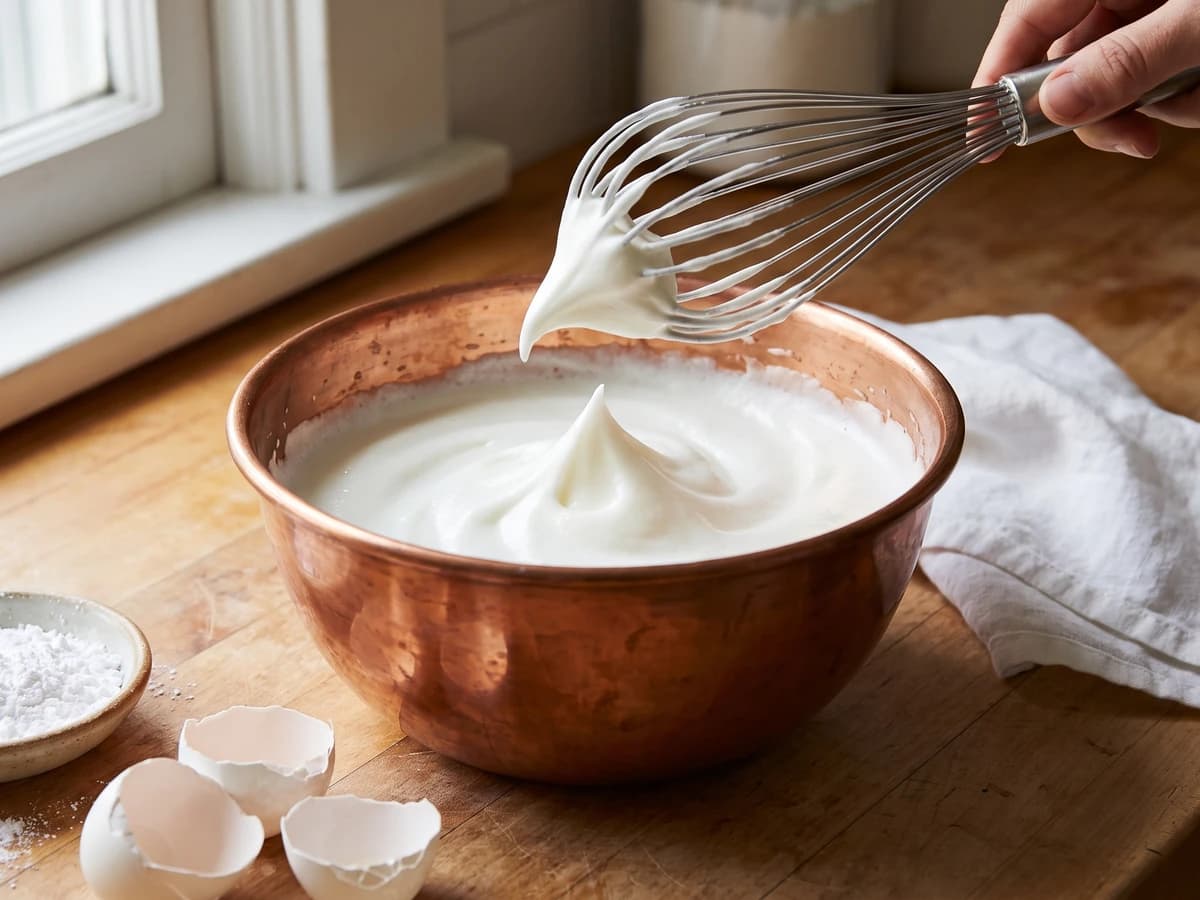
Four whites, one spotless bowl, and a patient change of speed: whisk gently until loosened, then briskly to glossy stiffness, with powdered sugar waiting if the foam begins to granulate.