
Chef Juliette
Various Almond Preparations
Five almond preparations, one discipline: remove the skins cleanly, dry every kernel through, then cut, toast, or cloak it in pale caramel without letting its fragrant oils escape.
A cooking platform built around craft, culture, and the stories behind what we eat.
Created by Chef Juliette
Based on No. 2908, Bombe Tosca, from Le Guide Culinaire (1907) by Auguste Escoffier
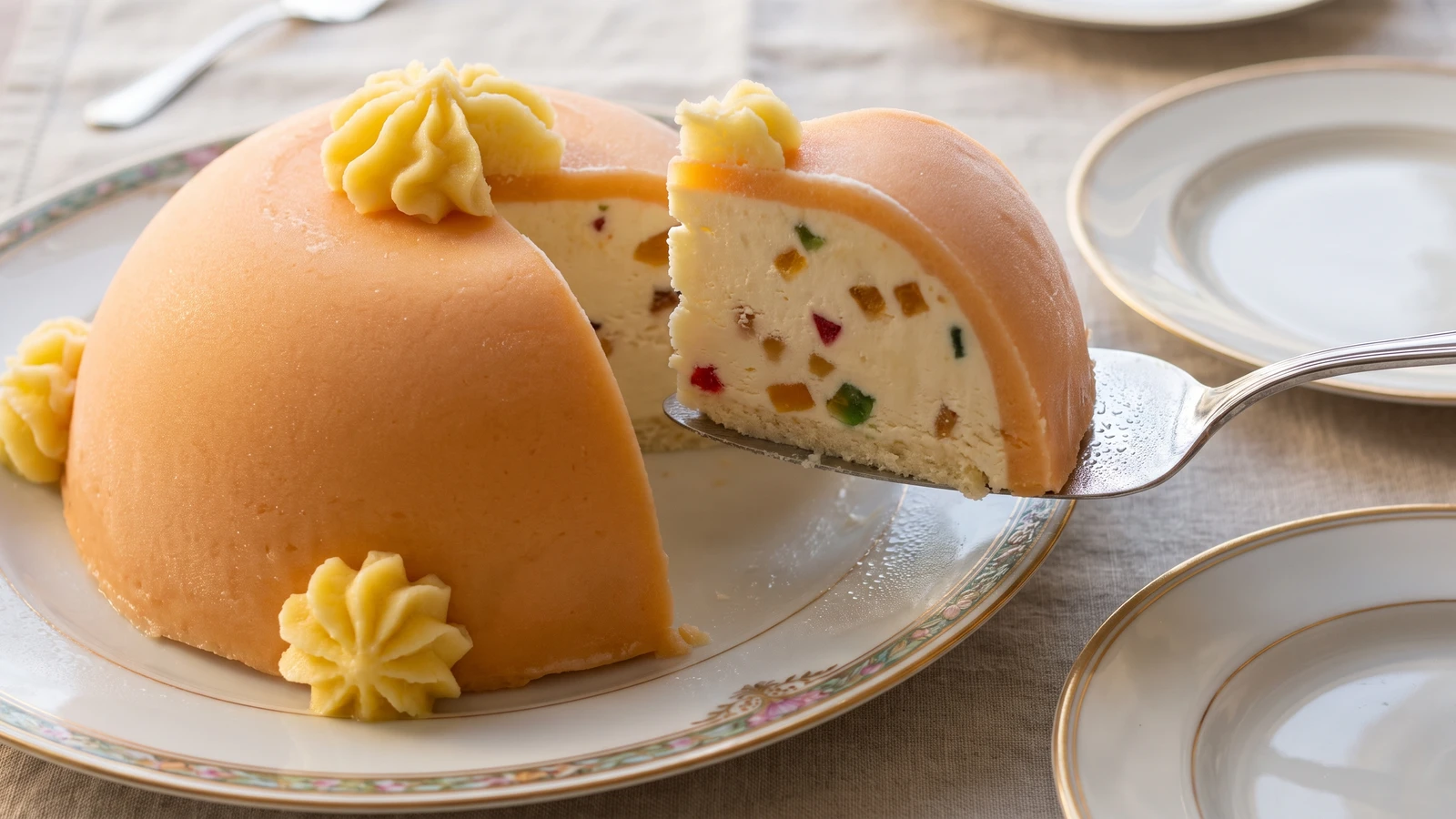
Bombe Tosca turns three frozen textures into one celebration: tart apricot ice, a rich Maraschino fruit pâte à bombe, and lemon ice laid over the turned-out dome before it reaches the table.
Bombe Tosca (an apricot-lined frozen bombe with Maraschino fruit cream) teaches that frozen desserts are built by temperature and order, not force. The one true thing to know before touching a pan is this: each layer must be cold and firm before the next arrives, or three distinct preparations collapse into one sweet blur.
The original assumed a pâtissier with tubs of apricot and lemon ice already waiting, a hard-freezing cabinet, and enough hands to coat moulds while another cook prepared the filling. Your honest equivalent is a chilled metal bowl, two good full-fruit sorbets, and a cooked pâte à bombe (hot-syrup egg-yolk foam) made in a home mixer. Making several separate ices was brigade scaffolding, so it can go; clothing the mould continuously, cooking the pâte à bombe, and applying the lemon ice only after unmoulding are the dish itself, and they stay. This version fills one celebration table instead of a dining room. One cook, one stove, one evening's work, with the freezer carrying it safely to tomorrow.
When it is right, the turned dome wears a deep apricot-orange shell, its pale centre is studded with jewel-like fruit, and sharp lemon ice cuts cleanly through the Maraschino and cream. Give your full attention to the apricot shell: build it evenly, freeze it hard, and patch every thin place before filling.
The bombe glacée belongs to the Parisian tradition of frozen entremets, assembled in a rounded metal mould whose compact silhouette gave this family of desserts its name. From confectioners and grand dining rooms it passed naturally to private celebration tables because its separate ices could be prepared ahead and held in the cold. Tosca follows the classical habit of naming showpiece desserts for figures of the stage, but its culinary identity is precise: apricot outside, Maraschino and fruit within, lemon ice applied after unmoulding.
Quantity
2 cups (475 ml / about 450 g)
Quantity
1½ cups (360 ml / about 340 g)
Quantity
¾ cup (180 ml / 120 g)
finely diced
Quantity
3 tablespoons (45 ml / 43 g)
Quantity
4 large (about 72 g)
Quantity
½ cup (120 ml / 100 g)
Quantity
¼ cup (60 ml / 60 g)
Quantity
1 cup (240 ml / 240 g)
Quantity
1 technique reference (No. 916)
consulted only for clothing the mould; not added to the dessert
| Ingredient | Quantity |
|---|---|
| apricot ice or smooth full-fruit apricot sorbet | 2 cups (475 ml / about 450 g) |
| lemon ice or smooth full-fruit lemon sorbet | 1½ cups (360 ml / about 340 g) |
| mixed glacé fruits, such as cherries, apricots, and angelicafinely diced | ¾ cup (180 ml / 120 g) |
| Maraschino liqueur | 3 tablespoons (45 ml / 43 g) |
| large egg yolks | 4 large (about 72 g) |
| granulated sugar | ½ cup (120 ml / 100 g) |
| water | ¼ cup (60 ml / 60 g) |
| cold heavy cream | 1 cup (240 ml / 240 g) |
| Another Method of Preparing Aspics de Filets de Solesconsulted only for clothing the mould; not added to the dessert | 1 technique reference (No. 916) |
Place a 1.4 litre metal bombe mould or deep stainless-steel bowl in the freezer for 30 minutes. Chill the serving dish as well. Toss the diced glacé fruits with 1 tablespoon (15 ml) of the Maraschino and leave them for 20 minutes, then drain them in a fine sieve; reserve the liquid and combine it with the remaining Maraschino. The fruit should carry the perfume without dripping syrup into the filling.
Let the apricot ice soften for 5 to 10 minutes, only until a spoon passes through it without cracking. Use the mould-clothing method cross-referenced in Another Method of Preparing Aspics de Filets de Soles (No. 916): press the apricot ice over the bottom and sides of the frozen mould in a continuous layer about 1 cm thick, leaving the centre hollow. This citation supplies the technique only; nothing from the aspic enters the dessert. Freeze for 20 minutes, hold the mould toward a light, and patch any thin or translucent places. If the ice slides toward the bottom, both mould and ice became too warm. Freeze them for 10 minutes, lift the pooled ice back into place, and continue. Ça se rattrape.
Beat the egg yolks in the mixer just until loosened. Put the sugar and water in a small saucepan, bring them to a boil without stirring, and cook the syrup to 118°C. With the mixer running at medium speed, pour the syrup in a thin stream down the inside of the bowl, keeping it clear of both whisk and hands. Increase the speed and beat for 6 to 8 minutes, until the pâte à bombe is pale, thick enough to fall in a ribbon, and no longer warm. If the syrup crystallizes in the pan, add a spoonful of water and dissolve it gently before returning it to temperature. If only a few cooked yolk threads appear, pass the base through a fine sieve while it is still supple, then continue beating.
Whip the cold cream to soft peaks in a clean bowl. Fold one-third into the completely cooled pâte à bombe to loosen it, then fold in the remainder with broad strokes. Add the drained fruit and all the measured Maraschino, including the liquid reserved from macerating. Stop as soon as the fruit is evenly distributed. The filling should hold a soft mound; if it turns loose because the base was still warm, chill it for 10 minutes and fold it once more. Do not add extra liqueur, since too much alcohol prevents a clean freeze.
Confirm that the apricot shell is frozen hard. Spoon in the fruit pâte à bombe, pressing it gently against the curved shell so no large air pockets remain, then level the surface at the rim. Cover the filling directly with reusable freezer wrap or parchment, cover the mould again, and freeze for at least 6 hours, preferably overnight. If the centre still yields deeply when pressed after 6 hours, give it more time; the freezer finishes this dessert, impatience does not.
Fill a basin with warm, not hot, water. Uncover the bombe, dip the outside of the mould to just below its rim for 5 to 8 seconds, and dry it at once. Invert the chilled serving dish over the mould, turn both together, and lift gently. If the bombe resists, wrap the mould in a warm towel for 2 or 3 seconds and try again. Never pull at the dessert. If the surface softens during release, return the turned bombe to the freezer for 15 minutes before decorating.
Soften the lemon ice just until pipeable, then work quickly on the turned bombe, exactly in the source sequence. Pipe generous fluted rosettes around the crown and base with a large star tip, or form neat scallops with two chilled spoons. If the lemon ice begins to slump, freeze everything for 10 minutes and resume with cold tools. Hold the finished bombe in the freezer until 5 minutes before serving, then cut it with a hot, thoroughly dried knife. À table!
1 serving (about 175g)
Culinary guides, cultural storytelling, and the editorial depth that makes cooking meaningful.
Discover Culinary ExplorerChef Juliette
Five almond preparations, one discipline: remove the skins cleanly, dry every kernel through, then cut, toast, or cloak it in pale caramel without letting its fragrant oils escape.

Chef Juliette
A pastry pantry lesson in one tray: filberts warmed only until their red skins release, rubbed clean, cooled, and chopped into a fragrant mise-en-place for cakes, creams, pralines, and petits fours.

Chef Juliette
The smallest pâtisserie discipline decides whether a cake leaves its mould intact: clarified butter in every corner, followed by the lightest veil of dry flour or fécule.
Chef Juliette
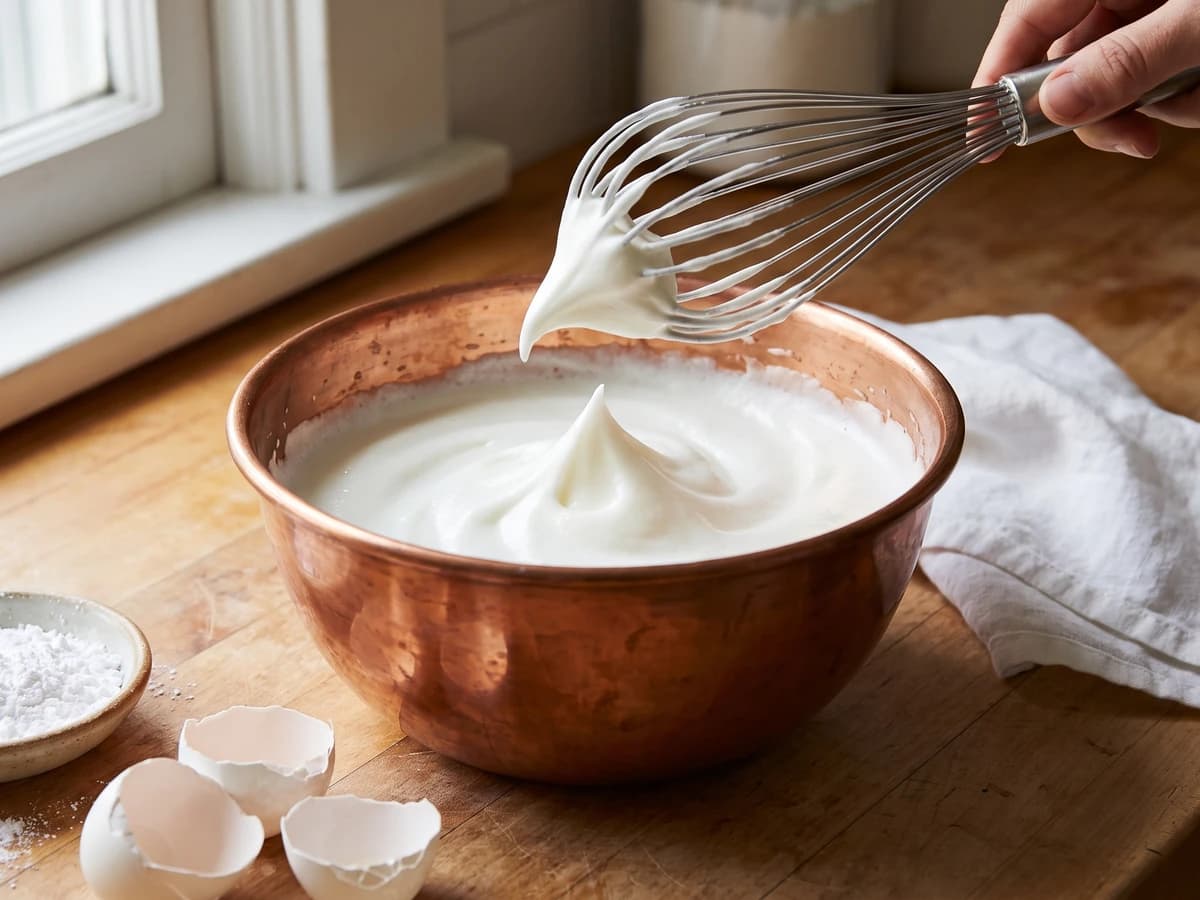
Four whites, one spotless bowl, and a patient change of speed: whisk gently until loosened, then briskly to glossy stiffness, with powdered sugar waiting if the foam begins to granulate.