
Chef Juliette
Various Almond Preparations
Five almond preparations, one discipline: remove the skins cleanly, dry every kernel through, then cut, toast, or cloak it in pale caramel without letting its fragrant oils escape.
A cooking platform built around craft, culture, and the stories behind what we eat.
Created by Chef Juliette
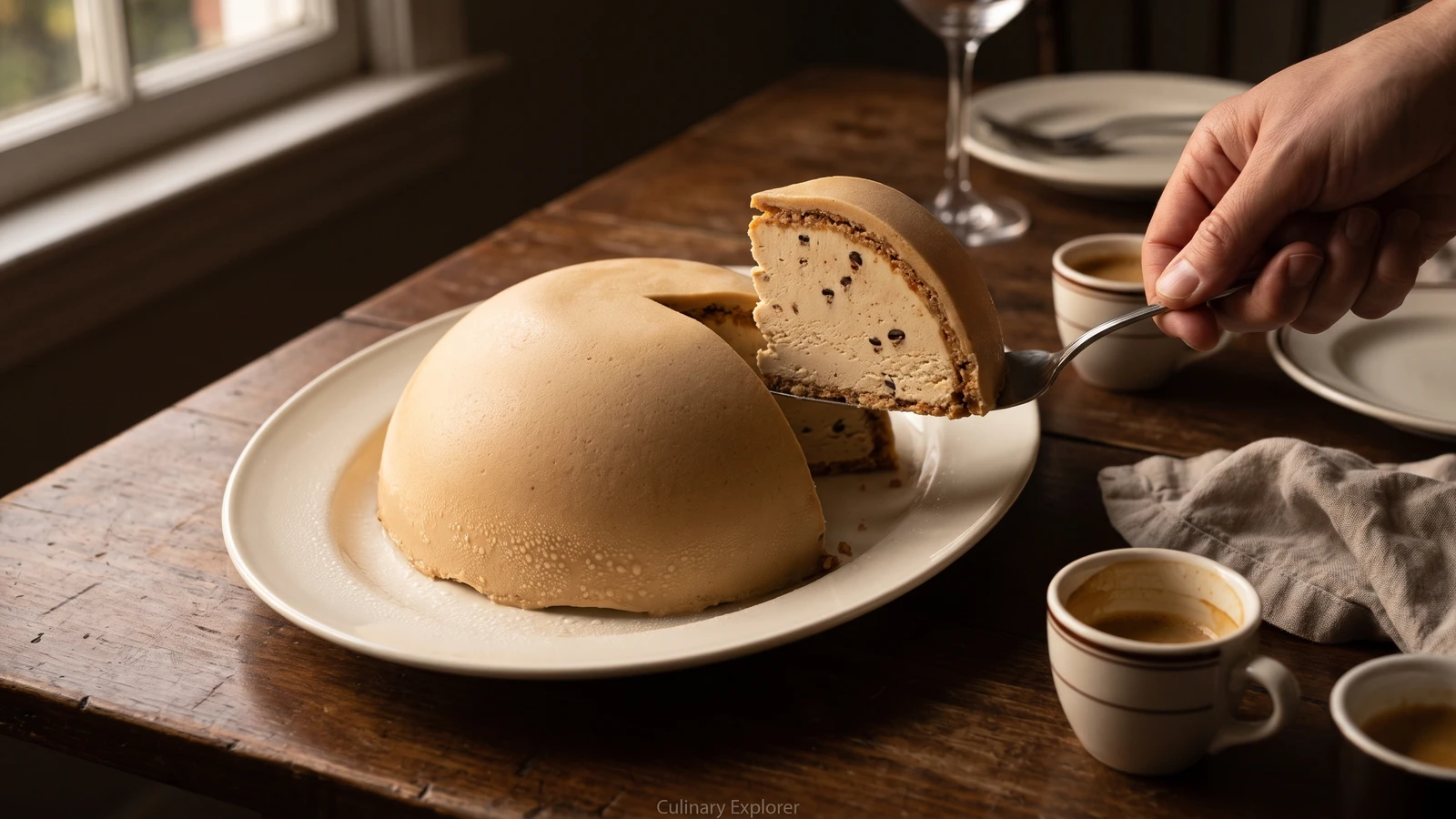
Based on No. 2907, Bombe Tortoni, from Le Guide Culinaire (1907) by Auguste Escoffier
Praline ice forms the satin shell, coffee pâte à bombe fills the heart, and finely crushed coffee seeds give the quiet crunch that makes this frozen Parisian bombe unmistakably Tortoni.
Bombe Tortoni (a praline-lined coffee frozen bombe) teaches the architecture of a bombe: firm ice outside, lighter pâte à bombe (egg-yolk foam cooked with hot sugar syrup) at the center, and no watery seam between them. The one true thing is temperature. The pralined shell must be hard before the filling enters, and the coffee filling must be fully cool before cream is folded into it; miss either point and two clean layers become one slumped blur.
The original entry assumed a glacier's station with finished pralined ice, a deeply chilled bombe mould, and enough hands to keep one component frozen while another was prepared. Your honest equivalent is an ice cream machine, a stainless-steel bowl, and a household freezer used in stages. The brigade's prepared tubs and extra hands are scaffolding, so they go. The pralined ice, coffee pâte à bombe, and coffee seeds are the dish, so they stay in their proper sequence. The active work fits one cook, one stove, one evening; the freezer takes the night watch.
Coffee flavor belongs in the hot syrup. Brewed coffee brings extra water, and water becomes coarse ice, so roasted beans infuse the syrup before it reaches the soft-ball stage. Hold that temperature line, then freeze the pralined shell until it feels unyielding before you make the center.
The Tortoni name belongs to Parisian café culture, where an Italian confectioner's family became celebrated for frozen creams and the name passed into the French repertory. In the grand-kitchen canon, bombe describes the domed mould and its layered construction: here pralined ice clothes a center of coffee pâte à bombe studded with coffee seeds. Biscuit Tortoni, commonly portioned in cups with macaroon crumbs, is a traveling cousin rather than this moulded French bombe.
Quantity
1 cup (240 ml / 240 g)
Quantity
3/4 cup (180 ml / 180 g)
Quantity
4
Quantity
1/4 cup (60 ml / 50 g)
Quantity
1/2 cup (120 ml / 150 g)
Quantity
1/8 teaspoon (0.6 ml / 0.75 g)
Quantity
1/4 cup (60 ml / 25 g)
divide into 18 g coarsely cracked for infusion and 7 g crushed to sesame-seed size
Quantity
1/2 cup (120 ml / 100 g)
Quantity
1/4 cup (60 ml / 60 g)
Quantity
5
Quantity
1 1/4 cups (300 ml / 300 g)
reserve 2 tablespoons, then whip the remainder to soft peaks
Quantity
1 application of Another Method of Preparing Aspics de Filets de Soles (No. 916)
| Ingredient | Quantity |
|---|---|
| whole milk, for the pralined ice | 1 cup (240 ml / 240 g) |
| heavy cream, for the pralined ice | 3/4 cup (180 ml / 180 g) |
| large egg yolks, for the pralined ice | 4 |
| superfine sugar, for the pralined ice | 1/4 cup (60 ml / 50 g) |
| smooth French almond praliné paste | 1/2 cup (120 ml / 150 g) |
| fine sea salt | 1/8 teaspoon (0.6 ml / 0.75 g) |
| medium-roast coffee beansdivide into 18 g coarsely cracked for infusion and 7 g crushed to sesame-seed size | 1/4 cup (60 ml / 25 g) |
| superfine sugar, for the coffee syrup | 1/2 cup (120 ml / 100 g) |
| water | 1/4 cup (60 ml / 60 g) |
| large egg yolks, for the coffee pâte à bombe | 5 |
| very cold heavy creamreserve 2 tablespoons, then whip the remainder to soft peaks | 1 1/4 cups (300 ml / 300 g) |
| mould-clothing technique, procedural reference only | 1 application of Another Method of Preparing Aspics de Filets de Soles (No. 916) |
Heat the milk and 3/4 cup cream until small bubbles gather around the saucepan. Whisk the four yolks with the 1/4 cup sugar until smooth, then temper them with one-third of the hot dairy. Return everything to the saucepan and stir constantly over gentle heat until the crème anglaise, the stirred custard, reaches 82 to 84°C (180 to 183°F) and is nappé, coating the back of a spoon in a clean film. Remove it immediately, whisk in the praliné paste and salt, then strain into a bowl set over ice. This is pralined in the source's sense: the ice is flavored with pralin.
Cover the pralined base directly on its surface and chill it until completely cold, at least 2 hours. Set the 6-cup (1.4 L) metal mould in the freezer at the same time. Churn the base until it stands like firm soft-serve ice cream. Reserve about 3/4 cup (180 ml) in a covered container for sealing the bombe, and keep it frozen.
Chemiser, to clothe the mould, using the procedure preserved in Another Method of Preparing Aspics de Filets de Soles (No. 916): press the freshly churned pralined ice evenly over the bottom and sides of the frozen mould, making a shell about 3/4 inch (2 cm) thick. The cross-reference supplies the geometry only; no aspic or fish preparation enters this dessert. Smooth the inside, check the base and rim for thin spots, then freeze until completely hard, 60 to 90 minutes.
Put the 18 g of coarsely cracked coffee beans, the 1/2 cup sugar, and the water in a small narrow saucepan. Heat gently until the sugar dissolves, remove from the heat, cover, and infuse for 12 minutes. Strain into a clean saucepan without pressing the beans, then boil without stirring until the syrup reaches 118°C (244°F), the soft-ball stage. Do not substitute brewed coffee. Its extra water dilutes the syrup and encourages an icy filling.
When the syrup reaches about 110°C (230°F), begin beating the five yolks at medium speed. At 118°C (244°F), pour the syrup into the moving yolks in a thin stream, aiming between the whisk and the bowl so it does not harden against either. Increase the speed and beat until the pâte à bombe is thick, pale, and cool enough that the bowl no longer feels warm, 7 to 10 minutes. It should fall from the whisk in a broad ribbon.
Make certain the pâte à bombe is below 24°C (75°F); if it is warmer, keep beating over an ice bath. Whip all but the reserved 2 tablespoons of cold cream to soft peaks. Fold one-third into the coffee base to lighten it, then fold in the remainder in two additions. Add the 7 g of coffee beans crushed to sesame-seed size. These are the source's coffee seeds, small enough to give fragrance and a delicate crunch without leaving whole frozen beans under the teeth.
Check that the pralined shell is completely hard. Spoon in the coffee pâte à bombe, pressing it gently against the shell so no empty pockets remain, and stop about 1/2 inch (1.5 cm) below the rim. If the shell yields under the spoon, return it to the freezer before continuing. Soften the reserved pralined ice for a few minutes, spread it over the filling as a level cap, cover tightly, and freeze for at least 6 hours, preferably overnight.
Chill the serving platter. Wrap the mould in a warm damp towel for 5 to 8 seconds, invert it over the platter, and lift gently. If it holds, repeat for only 3 seconds at a time; prolonged warming melts the clean outer shell. Return a softened bombe to the freezer for 10 minutes before cutting. Slice with a knife warmed in hot water and wiped dry between every cut. À table!
1 serving (about 150g)
Culinary guides, cultural storytelling, and the editorial depth that makes cooking meaningful.
Discover Culinary ExplorerChef Juliette
Five almond preparations, one discipline: remove the skins cleanly, dry every kernel through, then cut, toast, or cloak it in pale caramel without letting its fragrant oils escape.

Chef Juliette
A pastry pantry lesson in one tray: filberts warmed only until their red skins release, rubbed clean, cooled, and chopped into a fragrant mise-en-place for cakes, creams, pralines, and petits fours.

Chef Juliette
The smallest pâtisserie discipline decides whether a cake leaves its mould intact: clarified butter in every corner, followed by the lightest veil of dry flour or fécule.
Chef Juliette
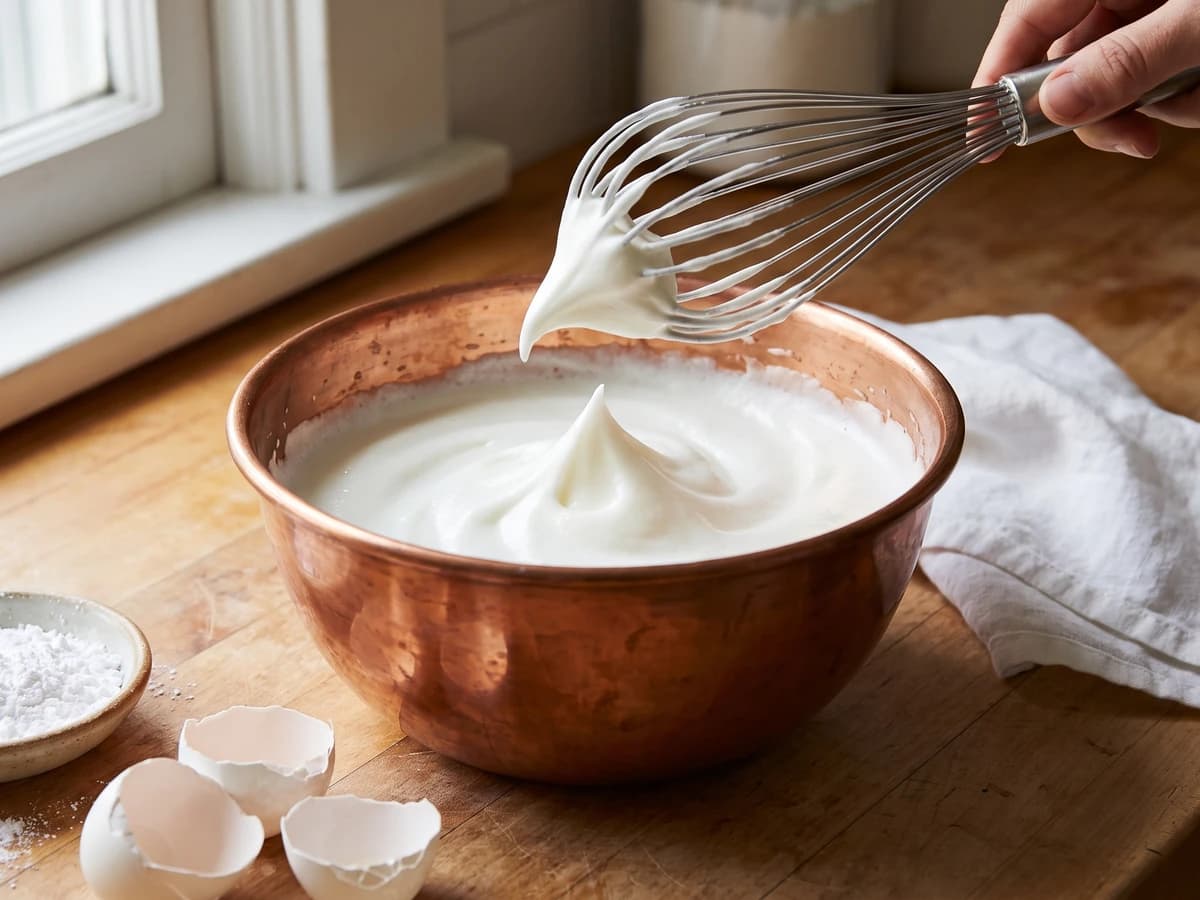
Four whites, one spotless bowl, and a patient change of speed: whisk gently until loosened, then briskly to glossy stiffness, with powdered sugar waiting if the foam begins to granulate.