
Chef Juliette
Various Almond Preparations
Five almond preparations, one discipline: remove the skins cleanly, dry every kernel through, then cut, toast, or cloak it in pale caramel without letting its fragrant oils escape.
A cooking platform built around craft, culture, and the stories behind what we eat.
Created by Chef Juliette
Based on No. 2904, Bombe Succês, from Le Guide Culinaire (1907) by Auguste Escoffier
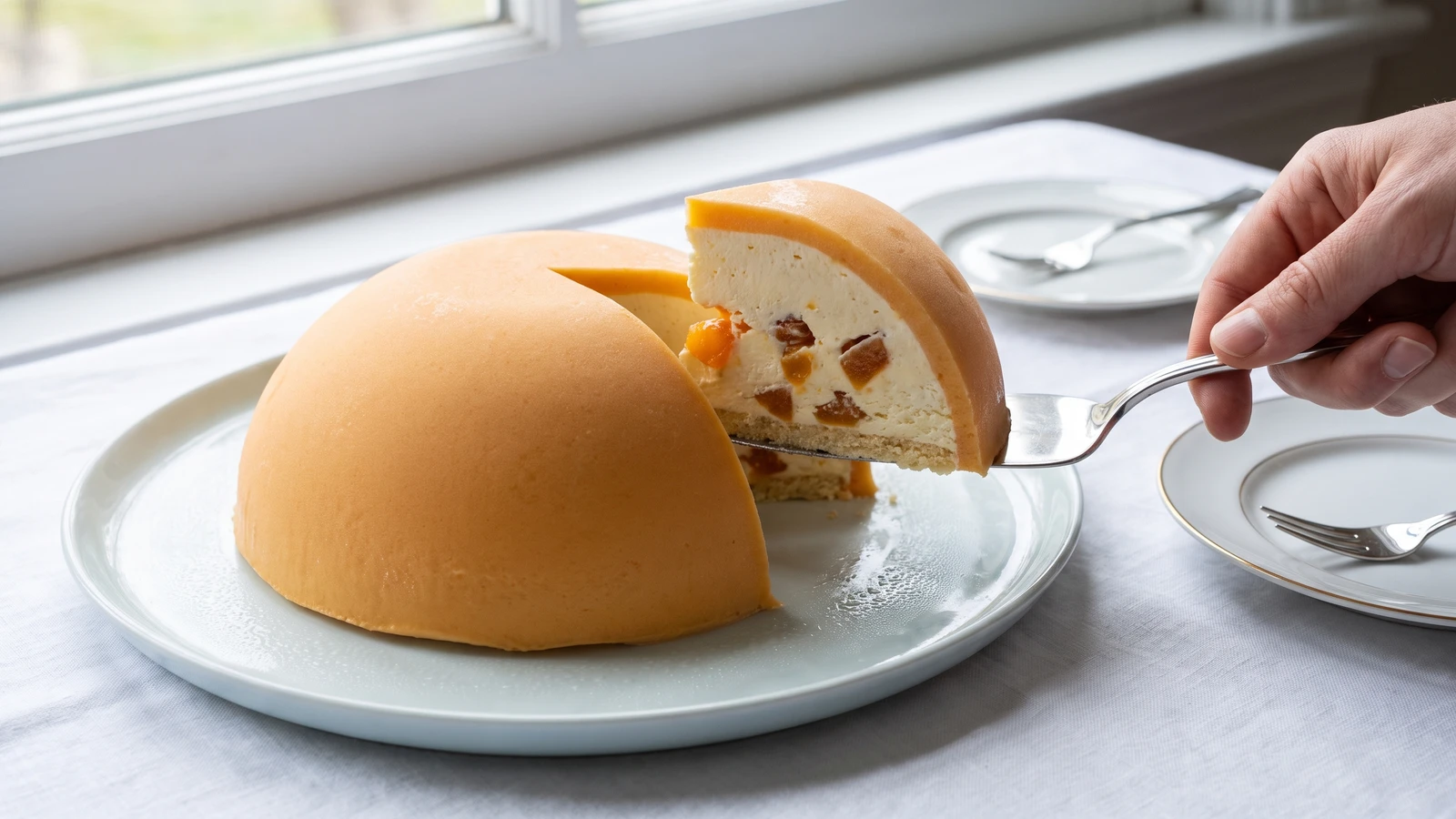
Apricot ice forms the bright shell; inside, Kirsch Chantilly stays soft and pale around jewel-like candied apricot dice. The triumph is structural: clean slices, supple cream, no heaviness.
Bombe Succês (apricot ice bombe with Kirsch Chantilly) teaches cold structure. The one true thing to know before you reach for the whisk is this: stop the cream at soft peaks. Chantilly whipped stiff may look impressive in the bowl, but it freezes waxy and pushes the candied fruit away instead of holding it tenderly.
The original entry assumed apricot ice already waiting in the confectioner's freezer, a bombe mould worked over broken ice, and another pair of hands preparing the filling. Your honest equivalent is a smooth apricot sorbet, a 1.5 litre metal mould, and a household freezer used in short, deliberate turns. The broken-ice station is brigade scaffolding and can go. The chemisage, the even clothing of the mould, and the softly whipped Kirsch cream are the dish and must stay. One cook, one stove, one evening.
When it is right, the first slice reveals a clear apricot-orange shell around pale Chantilly, its center freckled with amber dice of candied fruit. Freeze every layer until firm before adding the next, but guard the cream from overwhipping. That soft peak is the step that decides the whole bombe.
Bombes glacées belong to Parisian confectionery and the grand dining room, where a domed mould allowed contrasting ices and creams to be frozen in concentric layers and carried whole to a celebration table. Bombe Succês keeps that grammar spare: apricot ice outside, Kirsch Chantilly and candied apricot within. Its cross-reference to a sole aspic is technical, not gustatory: both depend on chemisage, showing how the classical canon carried the same moulding discipline between savory and sweet kitchens.
Quantity
4 cups (950 ml / about 760 g)
firm but scoopable
Quantity
1½ cups (360 ml / 355 g)
Quantity
¼ cup (60 ml / 30 g)
Quantity
2 tablespoons (30 ml / 28 g)
Quantity
¾ cup (180 ml / 140 g)
cut into 6 mm dice and blotted dry
Quantity
1 application (No. 916)
mould-clothing technique only, using apricot ice in place of fish jelly
| Ingredient | Quantity |
|---|---|
| smooth apricot ice or apricot sorbetfirm but scoopable | 4 cups (950 ml / about 760 g) |
| cold heavy cream, at least 35 percent fat | 1½ cups (360 ml / 355 g) |
| confectioners' sugar | ¼ cup (60 ml / 30 g) |
| Kirsch | 2 tablespoons (30 ml / 28 g) |
| candied apricotscut into 6 mm dice and blotted dry | ¾ cup (180 ml / 140 g) |
| Another Method of Preparing Aspics de Filets de Solesmould-clothing technique only, using apricot ice in place of fish jelly | 1 application (No. 916) |
Clear a level shelf in the freezer. Chill the bombe mould, mixing bowl, and whisk for 20 minutes. Reserve 2 tablespoons of the heavy cream in the cold for a possible rescue, then keep everything else chilled. Dice the candied apricots, blot away any clinging syrup, and refrigerate them; wet fruit loosens Chantilly and makes icy pockets.
Set aside about 1 cup of the apricot ice in the freezer for sealing the bombe. Let the remainder stand just until a spatula passes through it without encountering a hard block, about 5 to 10 minutes; it must be spreadable, never liquid at the edges. The source reaches back to Another Method of Preparing Aspics de Filets de Soles (No. 916) for the mould-clothing principle. That savory preparation rocks melted jelly over broken ice. Here, spread a 5 mm layer of apricot ice over the bottom and sides of the cold mould, rotate it as you work, and freeze for 15 minutes. No fish jelly enters this dessert.
Apply a second layer of apricot ice, concentrating on thin patches and building the shell to about 1 cm throughout. Keep the interior hollow and the rim clean. Freeze for another 20 to 30 minutes, until the shell is hard enough that a fingertip pressed against it leaves no mark. If part of the shell slides, the sorbet became too warm. Ça se rattrape: freeze the mould for 10 minutes, press the displaced ice back into place, and freeze again before continuing.
Whisk the remaining heavy cream with the confectioners' sugar until it forms soft peaks whose tips bow over. Add the Kirsch in a thin stream while whisking slowly, then stop as soon as the cream holds gentle folds. Overwhipped cream freezes waxy and rejects the fruit. If it begins to look grainy but has not separated, ça se rattrape: fold in the reserved cold cream one teaspoon at a time until the Chantilly becomes smooth and supple again.
Scatter one third of the candied apricot dice over the Chantilly and fold twice with a broad spatula. Repeat with the remaining fruit in two additions, turning the bowl as you work. Stop when the dice are evenly suspended. Vigorous mixing knocks out the air that keeps the frozen center tender.
Spoon the Kirsch Chantilly into the frozen apricot shell, pressing it gently into the curve so no large air pockets remain. Fill to about 1 cm below the rim and level the surface. Freeze for 30 minutes, until the filling is firm enough to support the seal. Soften the reserved apricot ice just enough to spread, cover the filling completely, and smooth it flush with the rim. Cover closely with parchment and then the mould lid or foil.
Freeze the bombe on a level shelf for at least 6 hours, preferably overnight. The center must become firm enough to slice while the fat and air in the Chantilly preserve its tenderness. Do not hurry this stage with repeated temperature changes; steady cold gives the cleanest shell and the smallest ice crystals.
Chill the serving platter. Remove the covering and dip only the outside of the mould into lukewarm water for 5 seconds, then dry it immediately. Invert onto the platter and lift the mould straight upward. If it clings, wrap the mould briefly in a warm, damp towel and try again; a long soak melts the apricot shell. Return a softening bombe to the freezer for 15 minutes. Cut generous wedges with a knife dipped in warm water and wiped dry between slices. À table!
1 serving (about 165g)
Culinary guides, cultural storytelling, and the editorial depth that makes cooking meaningful.
Discover Culinary ExplorerChef Juliette
Five almond preparations, one discipline: remove the skins cleanly, dry every kernel through, then cut, toast, or cloak it in pale caramel without letting its fragrant oils escape.

Chef Juliette
A pastry pantry lesson in one tray: filberts warmed only until their red skins release, rubbed clean, cooled, and chopped into a fragrant mise-en-place for cakes, creams, pralines, and petits fours.

Chef Juliette
The smallest pâtisserie discipline decides whether a cake leaves its mould intact: clarified butter in every corner, followed by the lightest veil of dry flour or fécule.
Chef Juliette
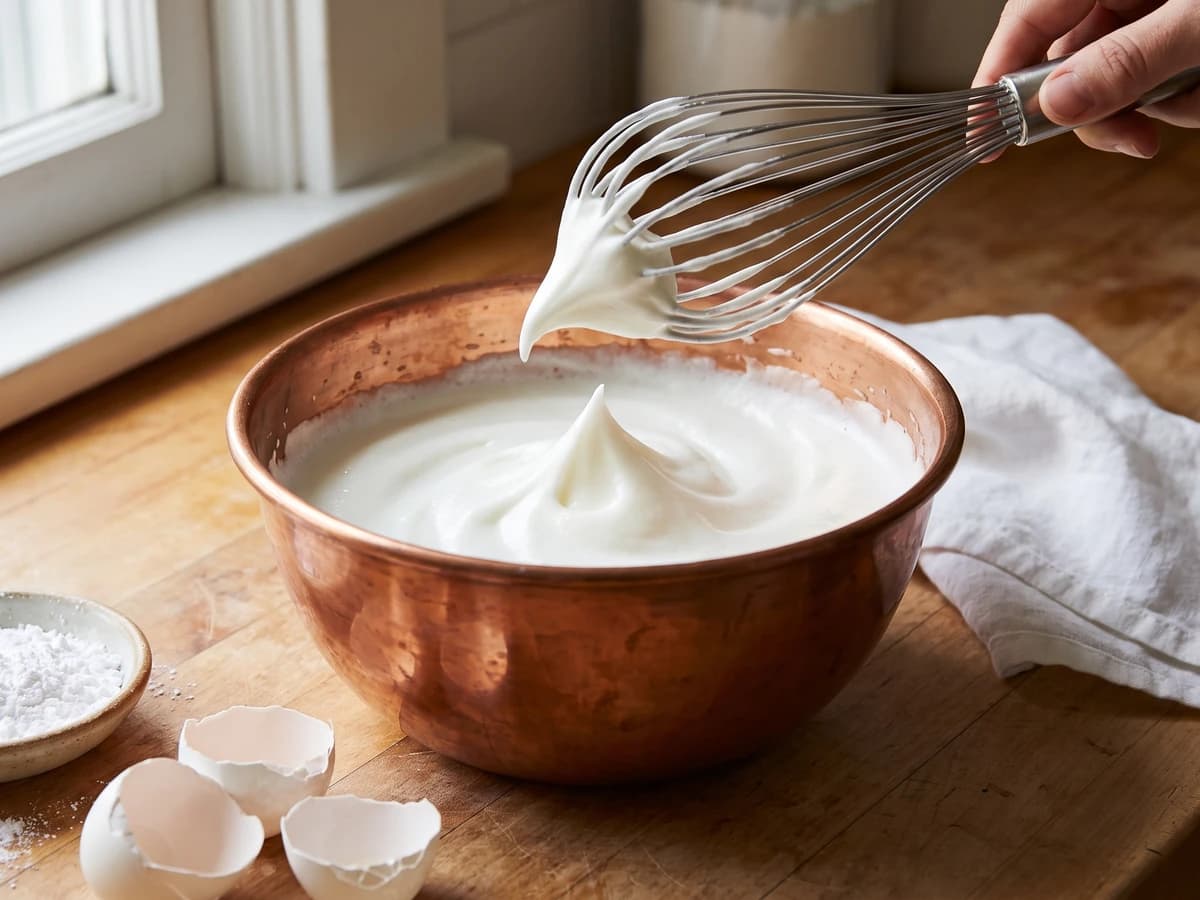
Four whites, one spotless bowl, and a patient change of speed: whisk gently until loosened, then briskly to glossy stiffness, with powdered sugar waiting if the foam begins to granulate.