
Chef Juliette
Various Almond Preparations
Five almond preparations, one discipline: remove the skins cleanly, dry every kernel through, then cut, toast, or cloak it in pale caramel without letting its fragrant oils escape.
A cooking platform built around craft, culture, and the stories behind what we eat.

Created by Chef Juliette
Based on No. 2896, Bombe Prophète, from Le Guide Culinaire (1907) by Auguste Escoffier
Strawberry ice outside, pineapple ice within, and no custard between them: Bombe Prophète teaches the clean architecture of a molded frozen dessert, where bold sweetness and patient layering preserve two distinct fruits.
Bombe Prophète (strawberry ice enclosing pineapple ice) teaches one uncompromising truth before you touch the saucepan: cold flattens sweetness. Both fruit bases must taste sweeter than politeness permits while liquid, or the finished bombe will taste bright in color and dim on the tongue.
The source gives one spare instruction because it assumed a pastry brigade with two finished ices waiting, a sorbetière packed with salt and ice, and a bombe mould already buried in the freezing chest. This version measures those ices for a 1.25-liter mould, replaces the hand-tended freezing tub with a home ice cream machine, and allows a stainless-steel bowl when no bombe mould lives in the cupboard. The salt packing and service quantities are brigade scaffolding, so they can go. The separate fruit ices and the clothed strawberry shell are the dish, so they stay.
Cut open, the bombe should show a vivid strawberry border around a clean pineapple-gold center, fruit against fruit with no yolks or cream between them. The step that decides everything is the chemisage, the even clothing of the mould. Freeze that shell until it cannot be dented before the pineapple goes in.
Bombe Prophète belongs to the Parisian classical repertoire of entremets glacés, molded frozen desserts assembled from prepared ices kept ready by the pastry kitchen. Its name is a catalogue title rather than a regional claim, while the rounded bombe mould gives the larger family of desserts its identity. The surprising reference to sole aspic is purely technical: savory aspic and frozen pâtisserie both clothe a mould with an outer layer before filling its center, proof that the same grammar traveled across the cold kitchen.
Quantity
2⅔ cups (630 ml / 400 g)
hulled; fresh or frozen and thawed with their juices
Quantity
¾ cup (180 ml / 150 g)
Quantity
6 tablespoons (90 ml / 90 g)
Quantity
1 tablespoon (15 ml / 15 g)
Quantity
3 cups (710 ml / 450 g)
diced; fresh or canned in juice and well drained
Quantity
⅔ cup (160 ml / 130 g)
Quantity
¼ cup (60 ml / 60 g)
Quantity
1 tablespoon (15 ml / 15 g)
Quantity
1 procedural reference
consulted only for clothing the mould; not incorporated
| Ingredient | Quantity |
|---|---|
| strawberrieshulled; fresh or frozen and thawed with their juices | 2⅔ cups (630 ml / 400 g) |
| granulated sugar for the strawberry ice | ¾ cup (180 ml / 150 g) |
| water for the strawberry ice | 6 tablespoons (90 ml / 90 g) |
| fresh lemon juice for the strawberry ice | 1 tablespoon (15 ml / 15 g) |
| pineapple fleshdiced; fresh or canned in juice and well drained | 3 cups (710 ml / 450 g) |
| granulated sugar for the pineapple ice | ⅔ cup (160 ml / 130 g) |
| water for the pineapple ice | ¼ cup (60 ml / 60 g) |
| fresh lemon juice for the pineapple ice | 1 tablespoon (15 ml / 15 g) |
| Another Method of Preparing Aspics de Filets de Soles (No. 916)consulted only for clothing the mould; not incorporated | 1 procedural reference |
Put the strawberry sugar and water in a small saucepan. Bring them just to a boil, stirring until the sugar disappears, then pour the clear syrup into a bowl. Repeat with the pineapple sugar and water in the same pan. Neither syrup should color; caramel would trample the fresh fruit. Cool both completely, using an ice bath if you want to keep the evening moving.
Blend the strawberries with their syrup and lemon juice until smooth, then press the mixture through a fine sieve to remove the seeds. Blend the pineapple with its syrup and lemon juice until no fibers remain; sieve it too if the fruit is coarse. Chill both bases thoroughly. Taste them cold: each should seem a little sweeter than you would serve as a drink, because freezing mutes sugar. If either tastes flat, ça se rattrape: dissolve 1 tablespoon (15 ml / 12 g) sugar in 2 teaspoons (10 ml / 10 g) hot water, cool it, blend it into that base, and taste again.
Chill the bombe mould or stainless-steel bowl while you churn the strawberry base according to your machine's instructions. Stop when the ice has the close, pliable texture of firm soft serve. If it pours, it needs more churning; a loose ice cannot hold against the wall of the mould.
Chemiser, to clothe the mould, is the technique carried over from Another Method of Preparing Aspics de Filets de Soles (No. 916). Pack roughly three quarters of the strawberry ice over the bottom and sides of the cold mould, making an even layer about 1½ cm thick and leaving a hollow center. Reserve the remaining strawberry ice, covered, for the base. Freeze the clothed mould until the shell cannot be dented with a fingertip, about 45 minutes. If the ice slides down before it sets, don't scrape it out. Ça se rattrape: freeze it for 10 minutes, press it back into place, and build the thin spots in a second pass.
Churn the pineapple base until it is firm but spreadable. Spoon it into the frozen strawberry shell, pressing gently into the curve so no large air pockets remain, and stop about 1½ cm below the rim. Soften the reserved strawberry ice for a few minutes if necessary, stir it smooth, and spread it over the pineapple to seal the bombe. Keep the colors distinct. Swirling them together may look merry, but it abandons the dish's whole architecture.
Press a piece of parchment directly against the surface, wrap the mould well, and freeze until completely solid, at least 4 hours. The original kitchen packed its mould into salt and broken ice under constant attention; a covered mould in the coldest part of a home freezer does the same work more evenly, with fewer hands.
Chill the serving platter. Remove the wrapping, wipe the outside of the mould with a warm damp towel for 10 seconds, and invert it onto the platter. If it holds, repeat for 5 seconds rather than forcing it. If the surface begins to soften before releasing, return the whole mould to the freezer for 10 minutes and begin again. Let the unmoulded bombe stand for 8 to 10 minutes, then cut it with a long knife dipped in hot water and wiped dry between slices. À table!
1 serving (about 155g)
Culinary guides, cultural storytelling, and the editorial depth that makes cooking meaningful.
Discover Culinary ExplorerChef Juliette
Five almond preparations, one discipline: remove the skins cleanly, dry every kernel through, then cut, toast, or cloak it in pale caramel without letting its fragrant oils escape.

Chef Juliette
A pastry pantry lesson in one tray: filberts warmed only until their red skins release, rubbed clean, cooled, and chopped into a fragrant mise-en-place for cakes, creams, pralines, and petits fours.

Chef Juliette
The smallest pâtisserie discipline decides whether a cake leaves its mould intact: clarified butter in every corner, followed by the lightest veil of dry flour or fécule.
Chef Juliette
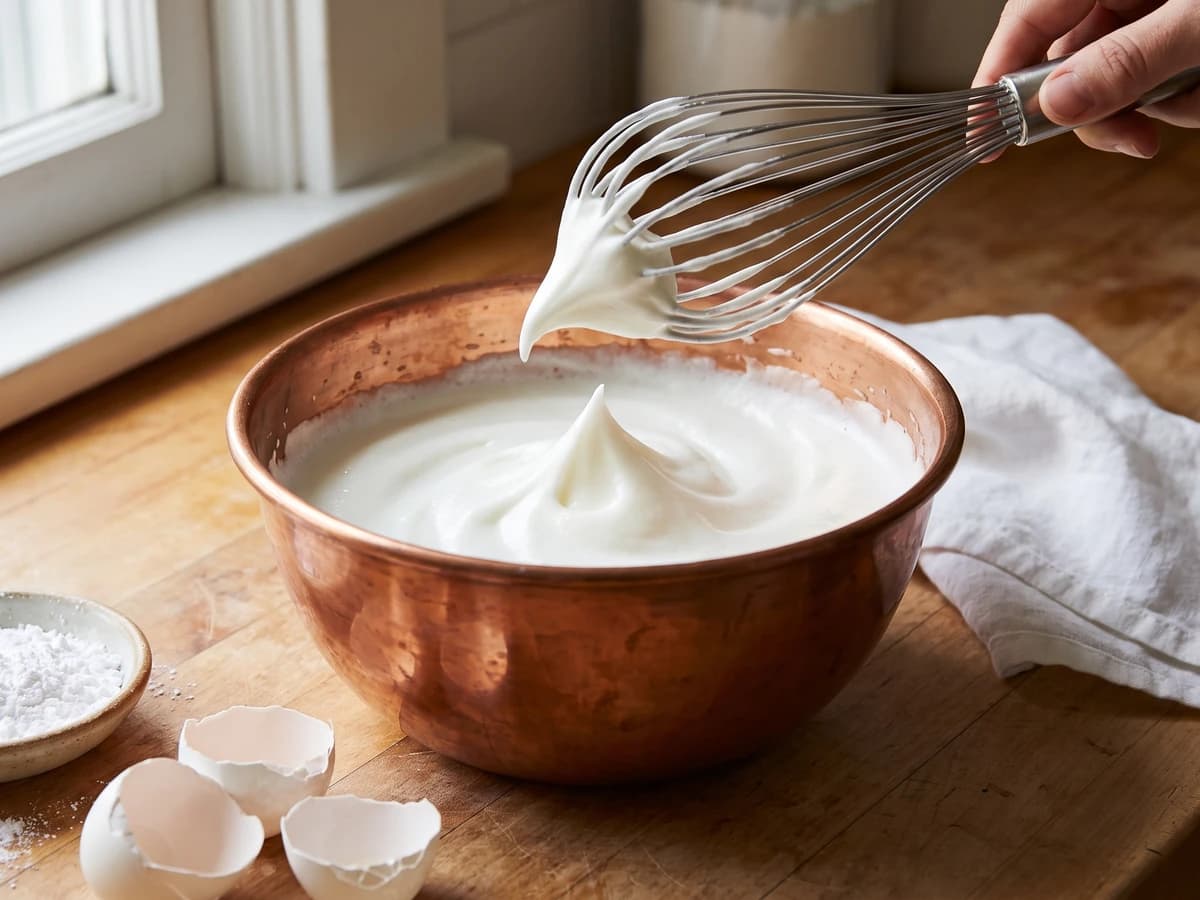
Four whites, one spotless bowl, and a patient change of speed: whisk gently until loosened, then briskly to glossy stiffness, with powdered sugar waiting if the foam begins to granulate.