
Chef Juliette
Various Almond Preparations
Five almond preparations, one discipline: remove the skins cleanly, dry every kernel through, then cut, toast, or cloak it in pale caramel without letting its fragrant oils escape.
A cooking platform built around craft, culture, and the stories behind what we eat.
Created by Chef Juliette
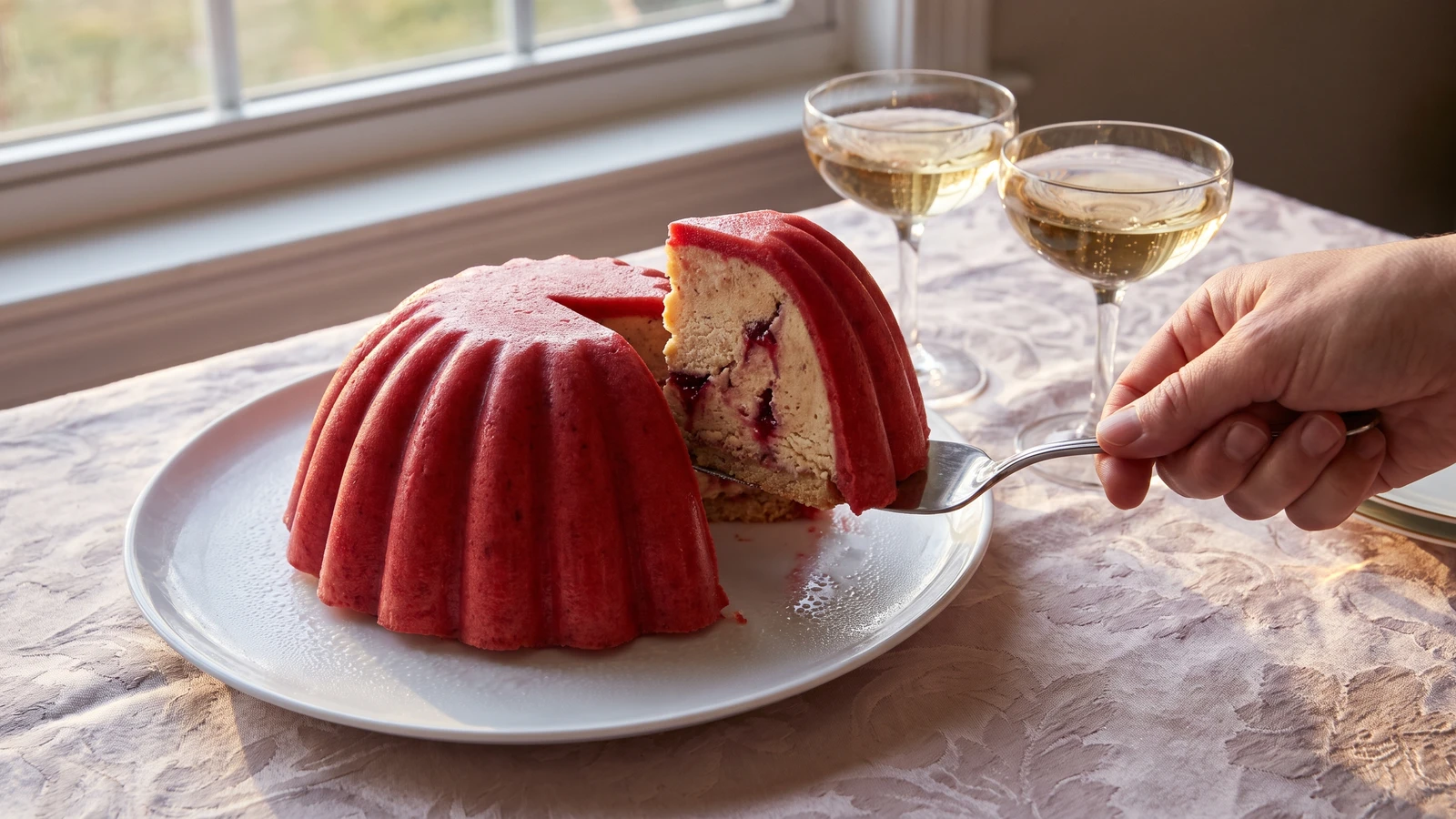
Based on No. 2894, Bombe Petit Duc, from Le Guide Culinaire (1907) by Auguste Escoffier
Strawberry ice holds a pale hazelnut pâte à bombe streaked with Bar-le-Duc red-currant preserve. Ripple, never stir, so every clean slice carries bright garnet veins through the soft cream.
Bombe Petit Duc (strawberry ice enclosing hazelnut pâte à bombe and red-currant preserve) teaches one true thing: temperature is structure. The strawberry shell must be firm enough to hold its shape, while the hazelnut centre stays supple enough to carry distinct veins of preserve. Stir those veins away and you lose the Petit Duc's bright, tart interruption.
The original entry assumed an entremetier with several frozen preparations already waiting and a mould buried in salted ice. Your honest equivalents are an ice-cream machine, a domestic freezer, and a 1.5 litre metal mould. I've reduced the brigade volume to one celebration bombe for eight, but kept the architecture intact: strawberry ice outside, hazelnut pâte à bombe inside, Bar-le-Duc preserve running through it. Stockpiling tubs of prepared ices was brigade scaffolding. Clothing the mould and keeping the preserve distinct are the dish, so those stay.
Pâte à bombe means yolks cooked and aerated with hot sugar syrup, then lightened here with real cream. Make the strawberry shell first and freeze it hard before filling. That pause decides whether the bombe unmoulds in one proud piece or settles into a pink drift on the platter.
Bombe glacée belongs to the Parisian grand-kitchen repertoire of moulded entremets, while Petit Duc takes its clearest geographical accent from Bar-le-Duc in Lorraine, where red currants are traditionally seeded with a goose quill before being preserved. Its savory cross-reference, Another Method of Preparing Aspics de Filets de Soles (No. 916), contributes no fish or jelly; it supplies the shared classical operation called clothing the mould, meaning the formation of a thin, even shell against its interior. The title follows the fanciful naming habits of classical entremets, but the contrast of strawberry, hazelnut, and sharp currant preserve is entirely practical.
Quantity
3 cups (710 ml / 500 g)
hulled and sliced; use unsweetened frozen berries, thawed, when fresh fruit is poor
Quantity
½ cup plus 2 tablespoons (150 ml / 125 g)
Quantity
½ cup (120 ml / 120 g)
Quantity
2 tablespoons (30 ml / 42 g)
Quantity
1 tablespoon (15 ml / 15 g)
Quantity
⅛ teaspoon (0.6 ml / 0.75 g)
Quantity
5 (⅓ cup / 90 g)
pasteurized if needed
Quantity
½ cup (120 ml / 100 g)
Quantity
3 tablespoons (45 ml / 45 g)
Quantity
½ cup (120 ml / 150 g)
at room temperature
Quantity
1½ cups (360 ml / 360 g)
very cold
Quantity
⅛ teaspoon (0.6 ml / 0.75 g)
Quantity
½ cup (120 ml / 150 g)
at cool room temperature
Quantity
1 reference, Another Method of Preparing Aspics de Filets de Soles (No. 916)
use the mould-coating operation only; no aspic ingredients enter the dessert
| Ingredient | Quantity |
|---|---|
| ripe strawberrieshulled and sliced; use unsweetened frozen berries, thawed, when fresh fruit is poor | 3 cups (710 ml / 500 g) |
| granulated sugar for the strawberry ice | ½ cup plus 2 tablespoons (150 ml / 125 g) |
| water for the strawberry ice | ½ cup (120 ml / 120 g) |
| glucose syrup or light corn syrup | 2 tablespoons (30 ml / 42 g) |
| fresh lemon juice | 1 tablespoon (15 ml / 15 g) |
| fine sea salt for the strawberry ice | ⅛ teaspoon (0.6 ml / 0.75 g) |
| large egg yolkspasteurized if needed | 5 (⅓ cup / 90 g) |
| granulated sugar for the pâte à bombe | ½ cup (120 ml / 100 g) |
| water for the pâte à bombe | 3 tablespoons (45 ml / 45 g) |
| smooth roasted hazelnut praline pasteat room temperature | ½ cup (120 ml / 150 g) |
| heavy creamvery cold | 1½ cups (360 ml / 360 g) |
| fine sea salt for the filling | ⅛ teaspoon (0.6 ml / 0.75 g) |
| Bar-le-Duc red-currant preserveat cool room temperature | ½ cup (120 ml / 150 g) |
| method reference for clothing the moulduse the mould-coating operation only; no aspic ingredients enter the dessert | 1 reference, Another Method of Preparing Aspics de Filets de Soles (No. 916) |
Combine the strawberry-ice sugar, water, glucose syrup, and salt in a small saucepan. Heat gently, stirring only until the sugar dissolves, then bring to a brief boil and remove from the heat. Cool for five minutes. Blend this syrup with the strawberries and lemon juice until completely smooth, then pass it through a fine sieve. Chill the mixture until thoroughly cold, at least one hour. A warm base churns slowly and forms coarse crystals; if you're pressed for time, set the bowl over ice and stir until it feels colder than your hand.
Place the empty metal bombe mould in the freezer while the strawberry base chills. Churn the base in an ice-cream machine until it holds like soft sorbet but remains spreadable, usually twenty to thirty minutes. If it comes from the machine too loose to cling to a spatula, freeze it for ten minutes and stir once. Ça se rattrape. Do not freeze it solid before lining the mould.
Reserve about 1 cup of the strawberry ice for closing the bombe. Spoon the remainder into the chilled mould, then rotate the mould as you press the ice into an even layer about 1 cm thick across the bottom and sides. The source calls this clothing the mould and points to Another Method of Preparing Aspics de Filets de Soles (No. 916); borrow only its thin, even coating motion, never its ingredients. Freeze the lined mould for at least forty-five minutes. If the ice slips or leaves a bare patch, freeze it for ten minutes, patch it with more strawberry ice, and continue.
Stir the Bar-le-Duc red-currant preserve just enough to make it spoonable. If it is very firm, warm the jar briefly in a bowl of lukewarm water, then cool the preserve again before assembly. It must remain thick enough to hold a ribbon. Do not whisk it into smoothness and do not dilute it into a sauce; those currant veins are the sharp little pulse of the dish.
Put the yolks in the mixer bowl and begin beating them at medium speed. Combine the pâte à bombe sugar and water in a clean saucepan, dissolve the sugar over gentle heat, then boil without stirring to 118°C. Pour the syrup into the moving yolks in a thin stream down the side of the bowl, keeping it away from the whisk, and beat until the mixture triples in volume, turns pale, and falls in a thick ribbon, about seven minutes. If the syrup crystallizes in its pan, add a tablespoon of water and return it to gentle heat. Ça se rattrape. If the whipped yolks remain warm, whisk the bowl over ice before proceeding; warm pâte à bombe melts the cream.
Whisk the hazelnut praline paste and salt into the cool pâte à bombe until no streaks remain. In a separate cold bowl, whip the cream to soft peaks that bend at their tips. Fold one-third of the cream into the hazelnut mixture to loosen it, then fold in the rest with broad strokes until the filling is even and softly mounded. If it loosens and begins to flow because the base was still warm, set the bowl over ice and fold gently until it regains body. Never beat it hard at this point or you will throw away the air you just built.
Spoon one-third of the hazelnut filling into the frozen strawberry shell and trail over a few narrow ribbons of red-currant preserve. Repeat twice, ending with filling. Draw a thin knife through the centre in two broad turns, no more. Ripple it, do not stir; the preserve should run in garnet veins, not vanish into pink-beige cream. Leave about 1 cm beneath the rim and freeze for thirty minutes, until the surface is firm enough to touch lightly.
Let the reserved strawberry ice soften just until spreadable, then cover the firm filling from edge to edge, joining this cap cleanly to the frozen lining. Level the surface, cover the mould tightly, and freeze for at least six hours, preferably overnight. This closed strawberry shell is not decoration. It protects the softer pâte à bombe and gives every slice its proper border.
Chill the serving platter. Dip the outside of the mould into lukewarm water for five to eight seconds, dry it, then invert it firmly onto the platter. If the bombe does not release, wrap the mould briefly in a warm damp towel and try again; do not keep dipping until the strawberry shell melts. Return the unmoulded bombe to the freezer for fifteen minutes if its surface has softened. Let it stand for five minutes before cutting with a knife warmed in hot water and wiped dry between slices. À table!
1 serving (about 200g)
Culinary guides, cultural storytelling, and the editorial depth that makes cooking meaningful.
Discover Culinary ExplorerChef Juliette
Five almond preparations, one discipline: remove the skins cleanly, dry every kernel through, then cut, toast, or cloak it in pale caramel without letting its fragrant oils escape.

Chef Juliette
A pastry pantry lesson in one tray: filberts warmed only until their red skins release, rubbed clean, cooled, and chopped into a fragrant mise-en-place for cakes, creams, pralines, and petits fours.

Chef Juliette
The smallest pâtisserie discipline decides whether a cake leaves its mould intact: clarified butter in every corner, followed by the lightest veil of dry flour or fécule.
Chef Juliette
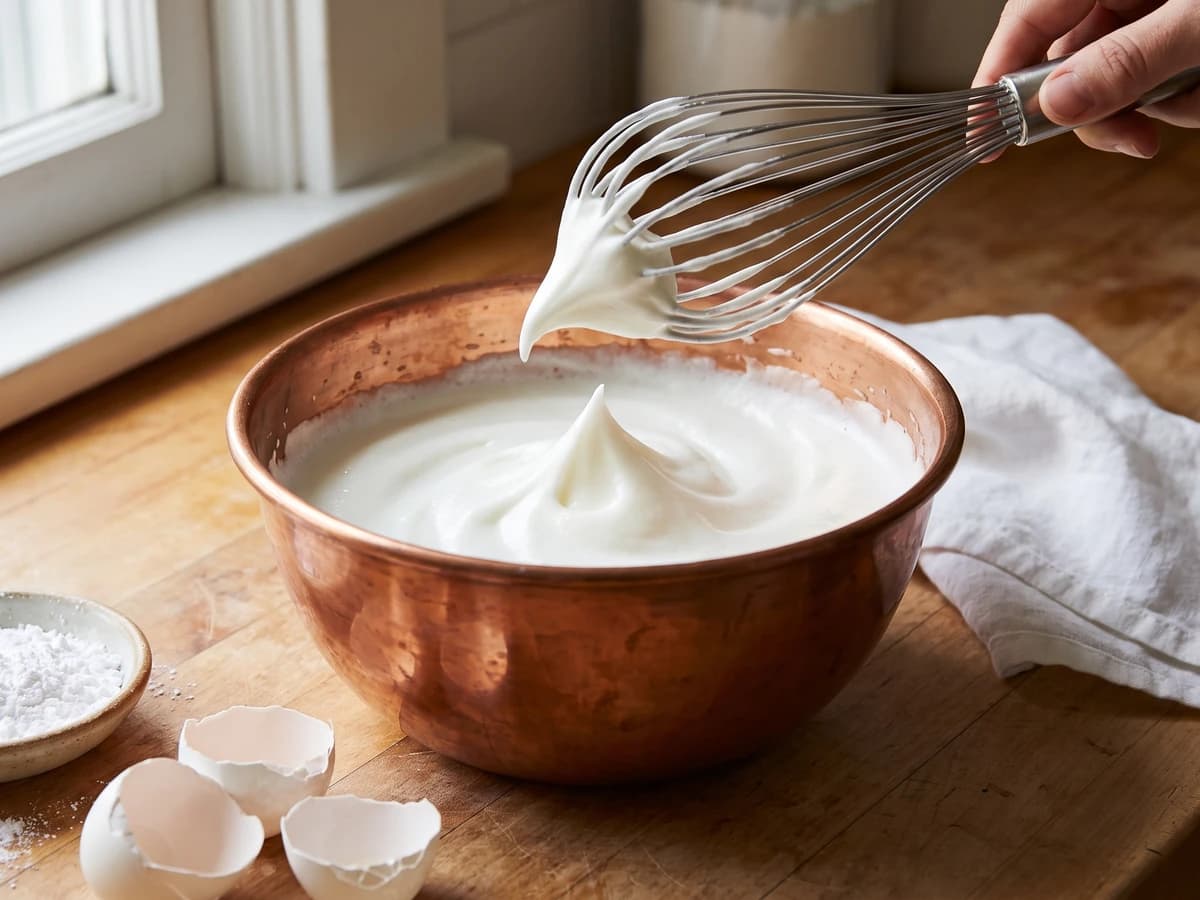
Four whites, one spotless bowl, and a patient change of speed: whisk gently until loosened, then briskly to glossy stiffness, with powdered sugar waiting if the foam begins to granulate.