
Chef Juliette
Various Almond Preparations
Five almond preparations, one discipline: remove the skins cleanly, dry every kernel through, then cut, toast, or cloak it in pale caramel without letting its fragrant oils escape.
A cooking platform built around craft, culture, and the stories behind what we eat.
Created by Chef Juliette
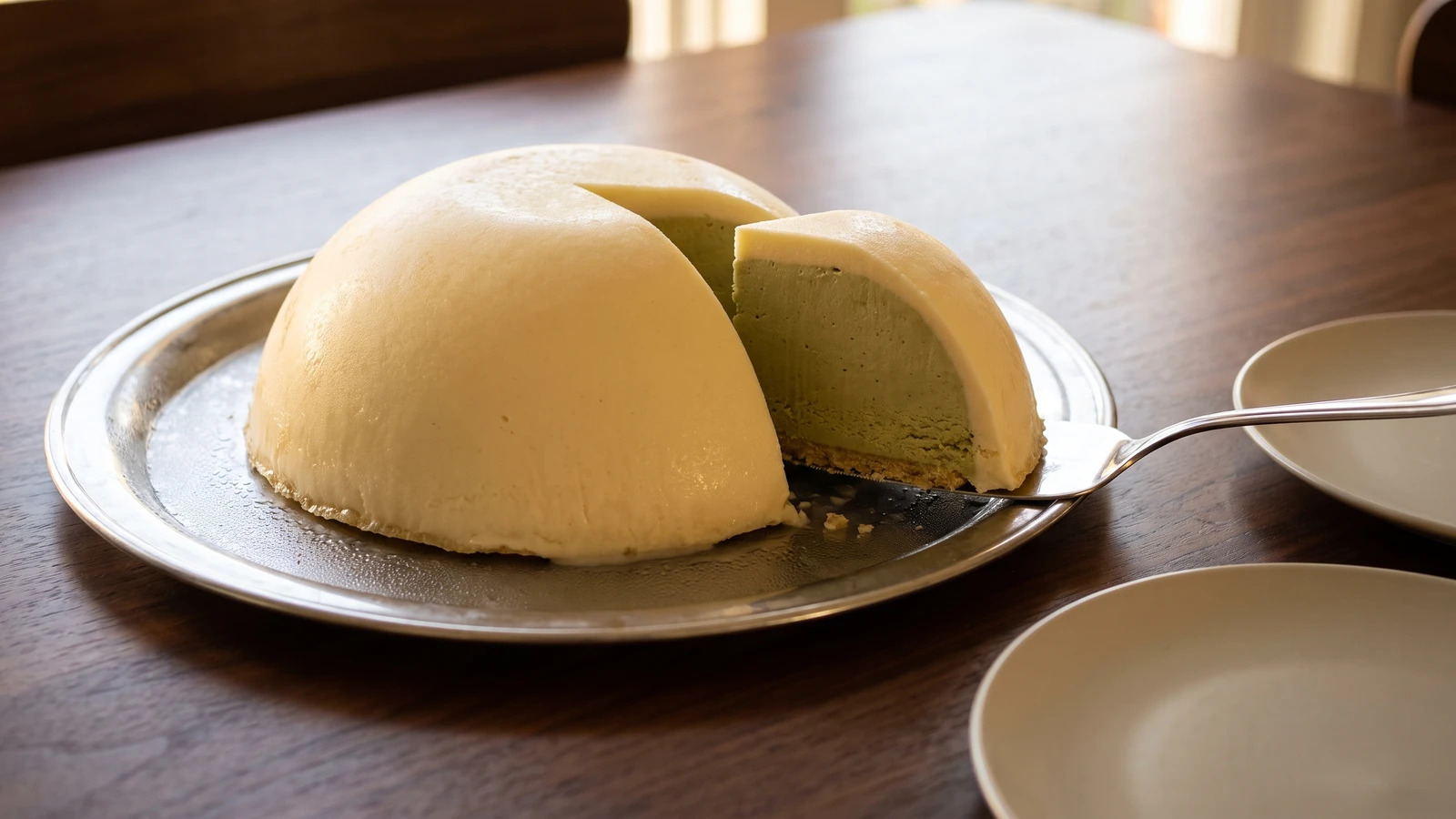
Based on No. 2892, Bombe Orientale, from Le Guide Culinaire (1907) by Auguste Escoffier
A domed ginger ice shell gives way to a silken pistachio pâte à bombe: a grand frozen dessert translated to one bowl, one mixer, and the patience to freeze each layer properly.
Bombe Orientale (a ginger-ice dome filled with pistachio frozen cream) teaches the architecture of a bombe glacée: a firm shell must be built before a lighter filling enters it. The one true thing to know is this: if the pistachio pâte à bombe is warm or the ginger ice is soft, the layers blur. Cold first, assembly second.
The original entry assumed a pastry brigade with ginger ice and Bombe-preparation already turning, a dedicated metal bombe mould, and a freezing chest packed with salted ice. Your honest equivalents are a countertop ice-cream machine, a mixer, a 6-cup metal bowl, and an ordinary freezer. Separate cooks and service-size moulds were brigade scaffolding, so they go; the ginger shell, pistachio filling, and two-stage freeze are the dish itself, so they stay. One cook, one stove, one evening of preparation, then the freezer does the night work.
Clothing the mould is the step that decides everything. Press the ginger ice into an even layer, lock it firm in the freezer, and patch any thin place before filling. If it cracks, don't begin again. Ça se rattrape: soften a spoonful of ice, press it over the gap, and freeze once more.
Bombe glacée belongs to the Parisian confectioner's and grand-kitchen repertoire, where frozen creams and water ices were layered in domed metal moulds and held in packed ice for service. Orientale was the classical menu's broad, imagined label for flavors such as ginger and pistachio, not the name of a French regional tradition. The surprise is that bombe describes the moulded architecture rather than one fixed flavor, so the ginger exterior and pistachio centre give this particular entry its identity.
Quantity
2 cups (480 ml / 480 g)
Quantity
1 cup (240 ml / 200 g)
Quantity
1 loosely packed cup (240 ml / 100 g)
peeled and sliced 3 mm thick
Quantity
2 tablespoons (30 ml / 30 g)
Quantity
5 large yolks (about 90 g)
Quantity
½ cup (120 ml / 100 g)
Quantity
3 tablespoons (45 ml / 45 g)
Quantity
½ cup (120 ml / 125 g)
Quantity
1½ cups (360 ml / 355 g)
Quantity
1 application
technique reference only; no aspic ingredients enter the dessert
| Ingredient | Quantity |
|---|---|
| water for the ginger ice | 2 cups (480 ml / 480 g) |
| granulated sugar for the ginger ice | 1 cup (240 ml / 200 g) |
| fresh gingerpeeled and sliced 3 mm thick | 1 loosely packed cup (240 ml / 100 g) |
| fresh lemon juice | 2 tablespoons (30 ml / 30 g) |
| pasteurized egg yolks | 5 large yolks (about 90 g) |
| granulated sugar for the pistachio Bombe-preparation | ½ cup (120 ml / 100 g) |
| water for the pistachio Bombe-preparation | 3 tablespoons (45 ml / 45 g) |
| unsweetened pure pistachio paste | ½ cup (120 ml / 125 g) |
| cold heavy cream | 1½ cups (360 ml / 355 g) |
| Another Method of Preparing Aspics de Filets de Soles (No. 916), clothing-the-mould referencetechnique reference only; no aspic ingredients enter the dessert | 1 application |
Place a 6-cup (1.5 L) smooth metal bombe mould or stainless-steel bowl in the freezer for at least 30 minutes. Chill the serving platter as well. Metal carries cold quickly and releases cleanly later; thick glass responds slowly and is more likely to warm the ginger shell during assembly.
Combine the water and sugar in a saucepan and warm gently, stirring only until the sugar dissolves. Add the sliced ginger, bring the syrup to a quiet simmer for 2 minutes, then cover, remove from the heat, and infuse for 30 minutes. Strain through a fine sieve without forcing ginger pulp through, then add the lemon juice. The ginger fibres must come out because they won't soften in a frozen ice. Chill the syrup completely over an ice bath, then in the refrigerator if necessary.
Churn the cold ginger syrup in an ice-cream machine until thick, smooth, and spreadable. Apply the clothing-the-mould principle from Another Method of Preparing Aspics de Filets de Soles (No. 916): press the ginger ice over the bottom and sides of the frozen mould in an even layer about ⅜ inch (1 cm) thick. Work in two passes if the ice slides, freezing the first thin coat for 15 minutes before completing it. Hold the clothed mould in the freezer for 45 minutes, until the shell is hard. If a crack or thin patch appears, soften a spoonful of ginger ice, press it over the fault, and refreeze. Ça se rattrape.
Place the yolks in the mixer bowl and begin whisking at medium speed. Combine the sugar and water in a small clean saucepan, stir over low heat until clear, then stop stirring and boil to 244°F (118°C). If crystals gather on the pan, cover it for 30 seconds so condensation washes them down, then continue; ça se rattrape, but don't scrape those crystals into the syrup. With the mixer running, pour the hot syrup in a thin stream down the inside of the bowl, clear of the whisk. Increase the speed and beat for 8 to 10 minutes, until the pâte à bombe is thick, pale, cool to the touch, and holds a broad ribbon.
Stir one quarter of the pâte à bombe into the pistachio paste to loosen it, then fold this mixture back into the remaining pâte à bombe until the color is even. In a chilled bowl, whip the heavy cream to soft peaks that bend at their tips. Fold it into the pistachio base in three additions, preserving as much air as possible. The filling must be cool and softly mounded before it touches the ginger shell. If it feels warm or runs from the spatula, refrigerate it for 10 to 15 minutes, fold once, and check again.
Spoon the pistachio Bombe-preparation into the frozen ginger shell, pressing gently against the sides so no large air pockets remain. Fill to the rim and level the base with a spatula. Cover the surface directly with parchment, seal the mould with its lid or foil, and freeze on a level shelf for at least 6 hours, preferably overnight. Don't rush this freeze: a soft centre collapses when the mould is lifted.
Remove the parchment and dip only the outside of the mould into warm water for 3 to 5 seconds. Dry it, invert the chilled platter over the mould, then turn both together and lift. If the bombe clings, wrap the mould briefly in a warm damp towel or dip it for another 2 seconds. If the surface softens too far, return the unmoulded bombe to the freezer for 15 minutes. Let it stand for 5 minutes before slicing with a knife dipped in hot water and wiped dry between cuts. The ginger shell should cut cleanly around the silken pistachio centre. À table!
1 serving (about 175g)
Culinary guides, cultural storytelling, and the editorial depth that makes cooking meaningful.
Discover Culinary ExplorerChef Juliette
Five almond preparations, one discipline: remove the skins cleanly, dry every kernel through, then cut, toast, or cloak it in pale caramel without letting its fragrant oils escape.

Chef Juliette
A pastry pantry lesson in one tray: filberts warmed only until their red skins release, rubbed clean, cooled, and chopped into a fragrant mise-en-place for cakes, creams, pralines, and petits fours.

Chef Juliette
The smallest pâtisserie discipline decides whether a cake leaves its mould intact: clarified butter in every corner, followed by the lightest veil of dry flour or fécule.
Chef Juliette
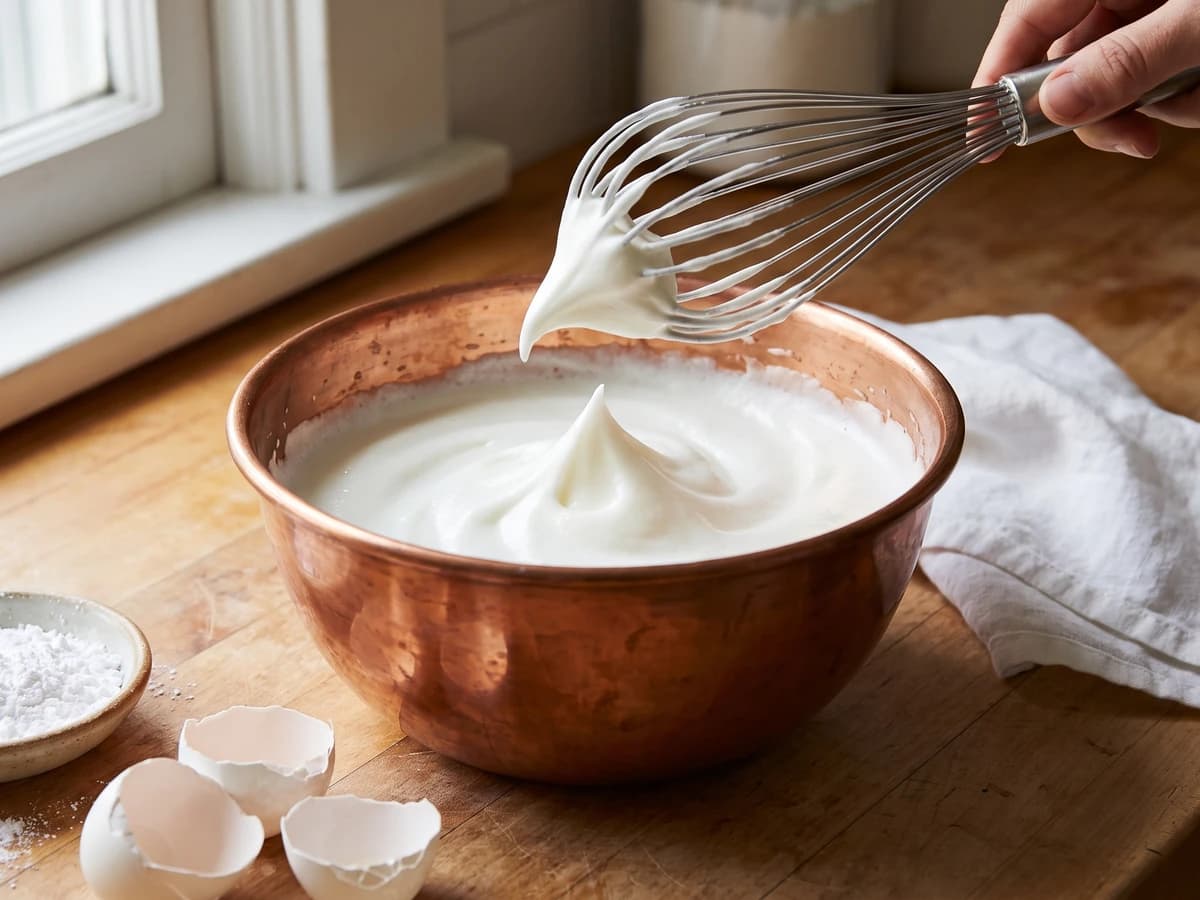
Four whites, one spotless bowl, and a patient change of speed: whisk gently until loosened, then briskly to glossy stiffness, with powdered sugar waiting if the foam begins to granulate.