
Chef Juliette
Various Almond Preparations
Five almond preparations, one discipline: remove the skins cleanly, dry every kernel through, then cut, toast, or cloak it in pale caramel without letting its fragrant oils escape.
A cooking platform built around craft, culture, and the stories behind what we eat.

Created by Chef Juliette
Based on No. 2885, Bombe Nabab, from Le Guide Culinaire (1907) by Auguste Escoffier
A shell of praline ice cream holds a Cognac and orange liqueur pâte à bombe, with candied fruit diced small and scattered through every slice. The point is disciplined freezing, not pastry-shop machinery.
Bombe Nabab (a praline-shelled frozen dessert with brandied candied fruit) teaches the architecture of a moulded frozen dessert: firm ice outside, a lighter center within, and clean contrast in every slice. The one true thing is temperature. If the shell softens while you fill it, those beautiful layers blur before the freezer can save them.
The original assumed a pâtissier could reach for pralined ice and an appareil à bombe already waiting, then clothe a large metal mould in a room built for cold work. At home, good praline ice cream supplies the outer ice, while five yolks make a small pâte à bombe, a yolk foam cooked with hot sugar syrup. Churning a separate ice and making brigade quantities are scaffolding, so they go. Chemiser, to clothe the mould evenly, is the dish and must stay. One cook, one stove, one evening of work, then the freezer keeps watch.
Dice the candied fruit smaller than a pea and scatter it between layers of filling. Stir it carelessly through a loose mixture and gravity gathers every jewel at the pointed end. Keep the praline shell hard as you fill it; that is the step that decides the Bombe Nabab.
The bombe glacée belongs to Parisian pâtisserie and the formal French table, where contrasting frozen preparations were layered in metal moulds and turned out whole for celebration service. Nabab comes through the French word for a nawab and was used on menus to suggest princely abundance; it does not make the dessert Indian, nor does it point to a French region. Its richness lies in the pastry architecture itself: pralined ice outside, liqueur-brandy pâte à bombe within, and preserved fruit scattered through the center.
Quantity
3 cups (720 ml / about 600 g)
softened just until spreadable
Quantity
3/4 cup (180 ml / 120 g)
diced into 5 mm pieces
Quantity
1 tablespoon (15 ml / 14 g)
Quantity
1 tablespoon (15 ml / 15 g)
Quantity
5
Quantity
1/2 cup (120 ml / 100 g)
Quantity
1/4 cup (60 ml / 60 g)
Quantity
1 cup (240 ml / 240 g)
very cold
| Ingredient | Quantity |
|---|---|
| praline ice creamsoftened just until spreadable | 3 cups (720 ml / about 600 g) |
| mixed candied fruitdiced into 5 mm pieces | 3/4 cup (180 ml / 120 g) |
| Cognac | 1 tablespoon (15 ml / 14 g) |
| orange liqueur | 1 tablespoon (15 ml / 15 g) |
| large egg yolks | 5 |
| granulated sugar | 1/2 cup (120 ml / 100 g) |
| water | 1/4 cup (60 ml / 60 g) |
| heavy cream with at least 35 percent fatvery cold | 1 cup (240 ml / 240 g) |
Freeze a 1.5-liter metal bombe mould or freezer-safe bowl for 30 minutes. Chill the mixer bowl and whisk as well. Dice the candied fruit into 5 mm pieces, smaller than a pea, and blot away any sticky surface syrup. Combine the Cognac and orange liqueur, pour them over the fruit, and leave it for 20 minutes. Drain thoroughly, reserving the fragrant liquid, then return the fruit to the cold.
Chemiser, to clothe the mould, is the technique for which the source points to Another Method of Preparing Aspics de Filets de Soles (No. 916). Spoon about two-thirds of the softened praline ice cream into the frozen mould and spread it over the point and sides in an even layer about 1 cm thick. Freeze for 20 minutes, inspect the shell against a light, and patch every thin place with more ice cream. Reserve about 1/2 cup (120 ml / 100 g) for sealing the base, then freeze the clothed mould until completely hard. If the ice cream slides instead of holding, stop and freeze everything for 10 minutes before continuing.
Put the sugar and water in a small heavy saucepan and warm gently until the sugar dissolves. Bring it to a boil without stirring and cook to 118°C or 244°F. If crystals collect around the edge, cover the pan for 30 seconds so condensation washes them down. If the syrup turns opaque and grainy, add a spoonful of water, dissolve it gently, and begin the boil again. Ça se rattrape.
Begin whisking the yolks at medium speed as the syrup reaches temperature. Reduce the mixer to low and pour the hot syrup in a thin stream down the inside of the bowl, keeping it away from the moving whisk so it doesn't splatter or spin into hard threads. Increase the speed and whisk for 6 to 8 minutes, until the pâte à bombe is pale, greatly increased in volume, and falls in a thick ribbon from the whisk. The bowl must feel no warmer than your hand. If it remains warm, set it over an ice bath and keep whisking; warm pâte à bombe melts the cream and weakens the frozen center.
Beat the reserved Cognac-orange liquid into the cool pâte à bombe a teaspoon at a time. In the chilled bowl, whip the heavy cream to medium peaks that hold their shape but still bend at the tip. Fold one-third of the cream into the pâte à bombe to lighten it, then fold in the remainder with broad, deliberate strokes. If the filling becomes loose or glossy, chill it for 10 minutes before filling the mould. Don't try to repair it by beating harder, which only knocks out the air you need.
Return the hard praline shell to the freezer until the moment you are ready to fill it. Spoon in one-third of the pâte à bombe, scatter over one-third of the drained candied fruit, and repeat until the mould is filled to within 1 cm of the rim. Do not stir all the fruit through the filling and do not thump the mould on the counter; either action sends it toward the point. Smooth the surface, cover it with the reserved praline ice cream, and freeze immediately.
Press parchment directly against the ice cream base, wrap the entire mould well, and set it level in the coldest part of the freezer for at least 6 hours, preferably overnight. Alcohol and sugar keep the center tender, which is lovely on the spoon but demands a full freeze. A Bombe Nabab that has had only a hurried chill will slump when turned out.
Chill the serving platter. Remove the wrapping and press a warm, well-wrung towel around the mould for 5 to 8 seconds, then invert it onto the platter. If the bombe refuses to release, give it another 3 seconds of warmth, no more. If the surface begins to soften before serving, return the unmoulded bombe to the freezer for 15 minutes. Cut with a long knife dipped in hot water and wiped dry between slices. À table!
1 serving (about 150g)
Culinary guides, cultural storytelling, and the editorial depth that makes cooking meaningful.
Discover Culinary ExplorerChef Juliette
Five almond preparations, one discipline: remove the skins cleanly, dry every kernel through, then cut, toast, or cloak it in pale caramel without letting its fragrant oils escape.

Chef Juliette
A pastry pantry lesson in one tray: filberts warmed only until their red skins release, rubbed clean, cooled, and chopped into a fragrant mise-en-place for cakes, creams, pralines, and petits fours.

Chef Juliette
The smallest pâtisserie discipline decides whether a cake leaves its mould intact: clarified butter in every corner, followed by the lightest veil of dry flour or fécule.
Chef Juliette
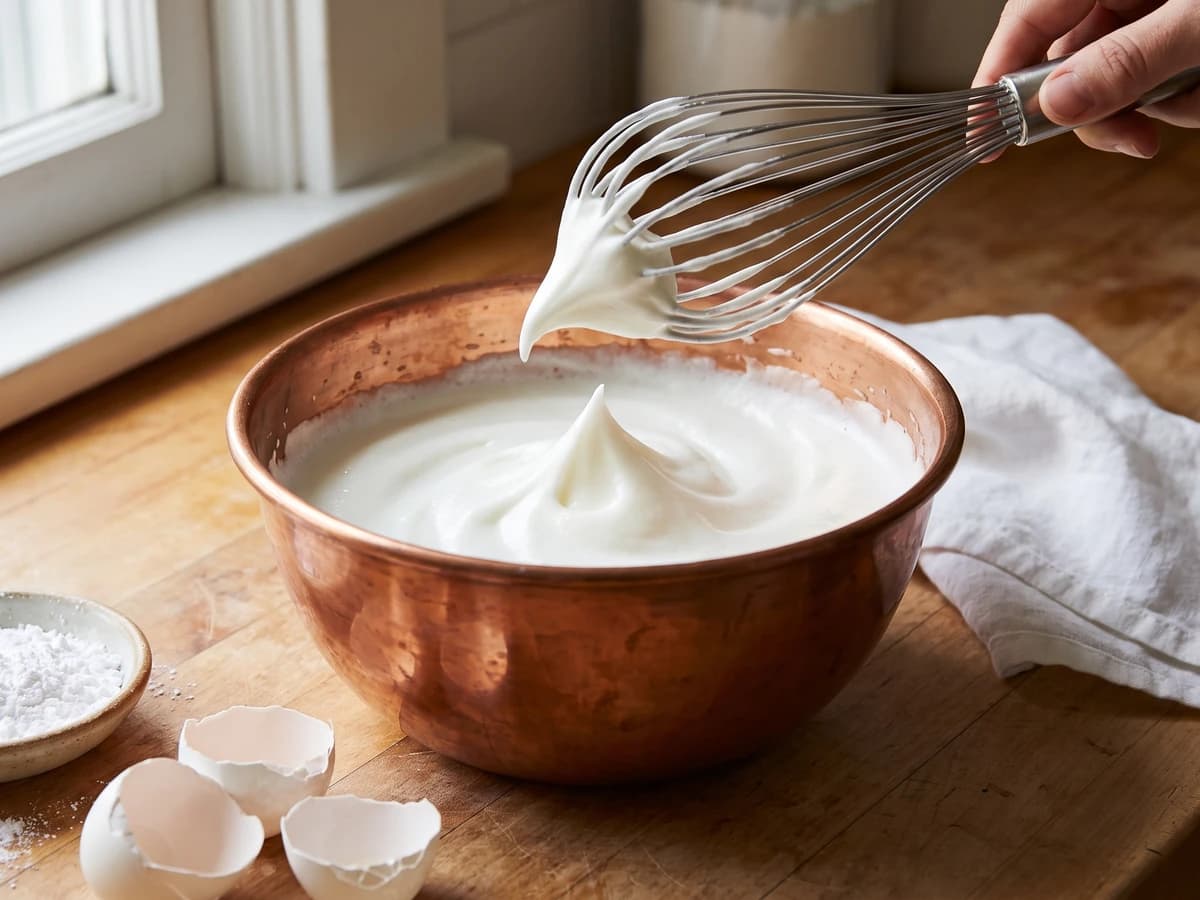
Four whites, one spotless bowl, and a patient change of speed: whisk gently until loosened, then briskly to glossy stiffness, with powdered sugar waiting if the foam begins to granulate.