
Chef Juliette
Various Almond Preparations
Five almond preparations, one discipline: remove the skins cleanly, dry every kernel through, then cut, toast, or cloak it in pale caramel without letting its fragrant oils escape.
A cooking platform built around craft, culture, and the stories behind what we eat.
Created by Chef Juliette
Based on No. 2884, Bombe Mousseline, from Le Guide Culinaire (1907) by Auguste Escoffier
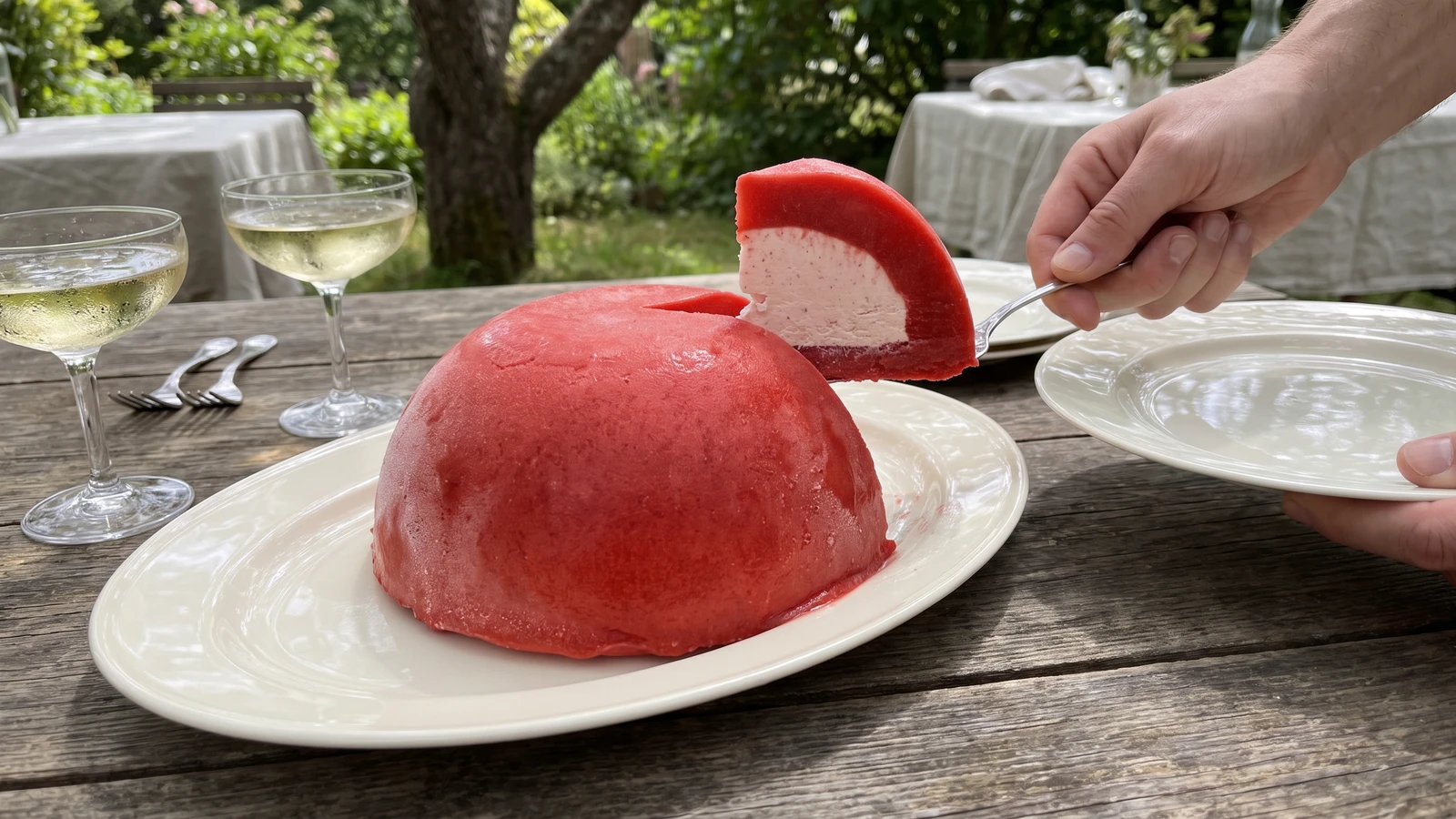
A scarlet shell of strawberry ice, a pale strawberry Chantilly within, and one decisive movement: fold the purée in cold so the filling stays airy and the bombe slices clean.
Bombe mousseline (a strawberry-ice shell filled with strawberry Chantilly) teaches the difference between mixing and folding. The one true thing to know is this: the purée must be cold, and it must meet the whipped cream under a spatula, not a whisk. Whisking after the fruit goes in drives out the air that makes the centre mousseline.
The original entry assumed strawberry ice and Chantilly waiting at separate stations, a rounded metal mould held over broken ice, and spare hands to clothe it in stages. Your honest equivalents are a stainless-steel bowl, an ordinary freezer, and short intervals of work followed by cold. The broken-ice choreography is brigade scaffolding and can go. The even strawberry shell and the gentle fold are the dish, so they stay. One cook, one stove, one evening.
Cut into the bombe and you should find a vivid strawberry-red shell around a soft blush centre, cream-rich but lifted by fresh fruit. Before the filling begins, chill the purée completely, then fold it into the Chantilly with a spatula. That fold decides everything.
Bombes glacées belong to the classical Parisian dining-room repertoire, where frozen creams and fruit ices were layered in rounded metal moulds and unmoulded whole for service. The cannonball silhouette gave the bombe its name, while mousseline describes the lightness of the whipped filling, not a sauce or a savory forcemeat. In this strawberry form, the outer water ice supplies a clear fruit edge and the Chantilly supplies softness, a contrast preserved as the dish traveled from brigade service to home freezers.
Quantity
3⅔ cups (550 g)
hulled and quartered
Quantity
¾ cup (150 g)
Quantity
½ cup (120 ml / 120 g)
Quantity
1⅓ cups (200 g)
hulled
Quantity
1½ cups (360 ml / 355 g)
Quantity
¼ cup (30 g)
sifted
Quantity
1 method reference (No. 916)
consulted only for the mould-clothing technique; no savory component is used
| Ingredient | Quantity |
|---|---|
| ripe strawberries for the strawberry icehulled and quartered | 3⅔ cups (550 g) |
| superfine sugar | ¾ cup (150 g) |
| water | ½ cup (120 ml / 120 g) |
| ripe strawberries for the Chantillyhulled | 1⅓ cups (200 g) |
| cold heavy cream, at least 35% fat | 1½ cups (360 ml / 355 g) |
| confectioners' sugarsifted | ¼ cup (30 g) |
| Another Method of Preparing Aspics de Filets de Solesconsulted only for the mould-clothing technique; no savory component is used | 1 method reference (No. 916) |
Place a 1.75-liter metal bombe mould or stainless-steel bowl in the freezer. Chill the mixing bowl, mixer beaters, flexible spatula, and serving platter as well. Cold equipment buys you working time and keeps the strawberry ice firm while you build the shell.
Bring the superfine sugar and water to a boil in a small saucepan, stirring only until the sugar dissolves. Boil for one minute, then cool completely. Blend the 550 g portion of strawberries with the cold syrup until smooth and pass it through a fine sieve. Separately blend and sieve the 200 g portion for the filling, then refrigerate that unsweetened purée until thoroughly cold.
Chill the sweetened strawberry mixture until cold, then churn it in an ice-cream machine until thick and softly frozen, usually 20 to 25 minutes. Without a machine, freeze it in a shallow metal pan and beat it thoroughly with a food processor or sturdy whisk every 30 minutes until fine-textured and spreadable. If it freezes into a hard, icy block, soften it in the refrigerator until a knife enters easily, then process it briefly. Ça se rattrape.
Chemiser means to clothe or line the mould. The source points to Another Method of Preparing Aspics de Filets de Soles (No. 916) for that principle: an even coating is set against a deeply chilled mould. Here only the geometry travels; no aspic or savory ingredient enters the bombe. Reserve one-quarter of the strawberry ice for the base, then press the remainder over the bottom and sides of the frozen mould in an even layer about 1 cm thick. Smooth it with the back of a cold spoon and freeze for 30 minutes. If a patch slides, stop and return the mould to the freezer for 10 minutes before repairing it.
Reserve 2 tablespoons of the cold cream, then whip the remainder with the confectioners' sugar until it holds medium peaks whose tips curl softly. If the cream turns grainy, fold in the reserved liquid cream a teaspoon at a time until smooth. Add the cold strawberry purée in three additions, cutting down through the centre with a flexible spatula and lifting the cream over itself while turning the bowl. Do not whisk once the purée enters; whisking knocks the air straight out. If the filling loosens, chill it for 10 minutes and give it two or three gentle folds. Ça se rattrape, though a badly warmed filling will freeze a little denser.
Spoon the strawberry Chantilly into the frozen shell in broad, light spoonfuls, easing it into the curve without beating out its air. Leave enough room for a 1 cm base. Spread the reserved strawberry ice over the filling, working quickly and sealing it completely to the frozen edge. Cover the surface closely and freeze for at least 4 hours, until the bombe is firm through the centre.
Set the chilled platter over the mould and invert both together. Press a warm, damp towel against the outside for 5 to 8 seconds, then lift away the mould. If it resists, repeat for another 3 seconds rather than warming it continuously. Return the bombe to the freezer for 10 minutes if its surface softens. Cut eight wedges with a knife dipped in hot water and wiped dry between slices, then serve at once. À table!
1 serving (about 175g)
Culinary guides, cultural storytelling, and the editorial depth that makes cooking meaningful.
Discover Culinary ExplorerChef Juliette
Five almond preparations, one discipline: remove the skins cleanly, dry every kernel through, then cut, toast, or cloak it in pale caramel without letting its fragrant oils escape.

Chef Juliette
A pastry pantry lesson in one tray: filberts warmed only until their red skins release, rubbed clean, cooled, and chopped into a fragrant mise-en-place for cakes, creams, pralines, and petits fours.

Chef Juliette
The smallest pâtisserie discipline decides whether a cake leaves its mould intact: clarified butter in every corner, followed by the lightest veil of dry flour or fécule.
Chef Juliette
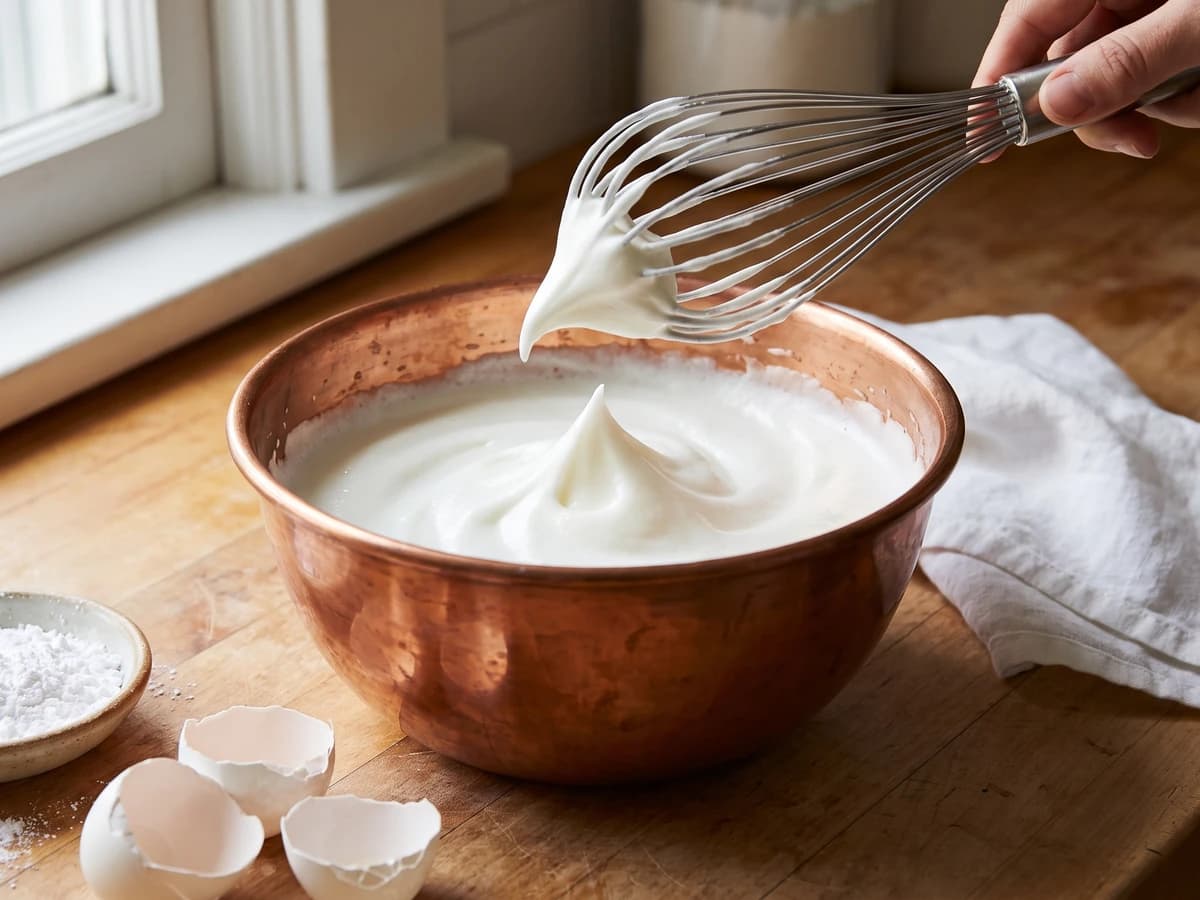
Four whites, one spotless bowl, and a patient change of speed: whisk gently until loosened, then briskly to glossy stiffness, with powdered sugar waiting if the foam begins to granulate.